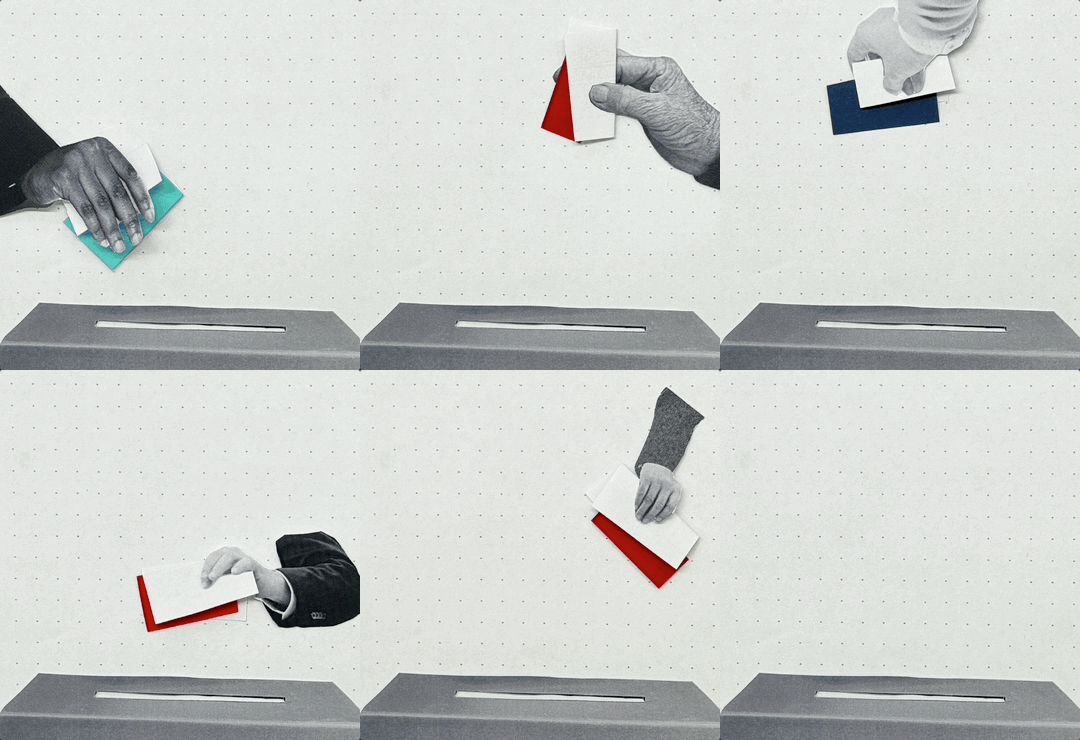
- DESIGN (It's nice that) – Tired of spending hours in Adobe for your videos and illustrations? Say hello to good old scissors and a scanner. It's the formula now favored by The Guardian, which has chosen to adopt a more "handcrafted" style using — real — paper for its visuals. The goal? To bring authenticity back in vogue in a field where AI is taking up more and more space. (And it looks great).
- PAPER (New York Times) — Print media isn't dead; in fact, it's experiencing a surprisingly strong renaissance in certain circles. One of them: "the outdoors" (meaning outdoor activities, but cooler). Magazines like The Surfer's Journal and Ori are betting on "niche" subjects by concentrating their efforts on a specific audience. Their "premium" formats turn their publications into keepsakes worth holding onto.
P.S.: Among the magazines mentioned in this article: Mountain Gazette, a biannual magazine on mountain sports that has, over generations, written its history with its readership. For Medianes, Margaux Vulliet met with its owner, Mike Rogge.
- PLATFORMS (The Verge) — How can you combat misinformation while mobilizing your community? X users, you've probably already seen "Community Notes," those boxes designed to provide context or refute certain false information spread in a tweet. It's now YouTube's turn to jump in by announcing that it will soon roll out a similar system for its videos.
P.S. : Using contributions from its community to make it a true tool? An approach that reminds us of Équipe, which we told you about in a previous edition, and which recently introduced a new section that summarizes, with the help of AI, comments from its readers.
- TRENDS (The New Yorker) — The American magazine explores the rise of "curators." Their role? To produce a selection from the many contents circulating on the Internet and share it with their community on Instagram or through newsletters. A new practice that particularly appeals to young people, who are looking for a more authentic and human relationship with their sources of information.
- SPORT (International Olympic Committee) — If you're going to cover this summer's Olympic Games (good luck), this guide could be useful to you. Written by the International Olympic Committee, it provides media and journalists with a series of recommendations for better coverage of women's competitions and the journeys of transgender athletes. An essential resource, especially since the sports world is far from being spared from transphobia and everyday misogyny.
- INNOVATION (Le Temps) — Modular journalism. That's the new formula imagined by Swiss media outlet Le Temps, whose articles will now be accompanied by inserts — or modules — designed to highlight expert opinions, provide definitions, context, additional sources, or shed light on the behind-the-scenes of a story. An interesting way to allow readers to explore a subject in depth and make an article more useful over the long term.
- INDEPENDENCE (Arrêt sur images) — Finding journalists from Arrêt sur images on your doorstep, camera and microphone in hand, would give many newsrooms cold feet. Others open their doors willingly. As part of their series "At the Indies," ASI meets with several media outlets and showcases the diversity of structures, economic models and editorial lines that make up the independent press.
- AI (TechCrunch) — As deals between media outlets and AI companies multiply, some journalists want to include clauses protecting their work. Because while AI has quickly disrupted newsroom organization and strategy, its democratization has also created a legal gray area. These initial negotiations could therefore prove crucial in establishing protections that might eventually extend across the entire industry.
- MISINFORMATION (Washington Post) — Media outlets struggle to keep pace with AI and organized networks churning out fake news at breakneck speed. The fact-checking work carried out by certain newsrooms — which tends to go far less viral — often comes too late. Why not act upstream? That's the principle of "pre-bunking", which works — much like a vaccine — by exposing internet users to misinformation and giving them the tools to spot it so they develop good habits.
- FEDIVERSE (TechCrunch) — Last week, many of you expressed interest in the fediverse (and I'm thrilled about that). The topic interests you but you're not sure how to get started? Perfect timing, the TechCrunch editorial team has put together a guide to help you get familiar with the terms and tools!