



The era of vast, glamorous offices fantasized by cinema has become anachronistic. Television acknowledges this shift. The project by the creators of The Office, The Paper, tells the story of a dysfunctional and struggling American local newspaper. This narrative reflects an imagination that no longer romanticizes the newsroom as a heroic or prestigious place, even though it has long been an intimidating, sometimes hostile space—one that only "white men with thick skin" remember fondly, notes researcher William Mari.
Journalism has changed, and so have newsrooms. More than just production spaces, editorial offices have become strategic environments where identity, organization, and public relations are shaped. They are not merely functional: they embody values and play a role in how a newsroom asserts its independence in a media landscape dominated by large corporations, vast fortunes, and widespread distrust. In an era marked by flexible office arrangements, tight budgets, and the need to rebuild community connections, media outlets have been forced to reimagine their spaces and redefine their purpose: transforming offices into editorial tools.


The office as backdrop
Digital media has transformed newsrooms' material needs: few now produce only a printed newspaper. Today's newsrooms need a podcast studio, booths for repeated video calls, spaces to film TikToks, a corner for a Twitch livestream… These organizational changes are just one aspect of the shift: digital media also changes how newsrooms present and tell their story. Polished, carefully curated environments are losing appeal; in the age of TikTok and Instagram, audiences prefer spontaneity. So out go the sleek, well-lit studios: it's now the messy offices and meeting rooms without natural light that capture attention.
- Mediapart produces its Twitch live streams and films some programs right in the middle of the newsroom.
- Some offices even become globally famous: in a video for Architectural Digest, NPR gives a tour of its Tiny Desk, a section of its offices transformed into a stage that has hosted great artists over the years. In reality, the office is no longer really used for work and functions more as a recording studio.
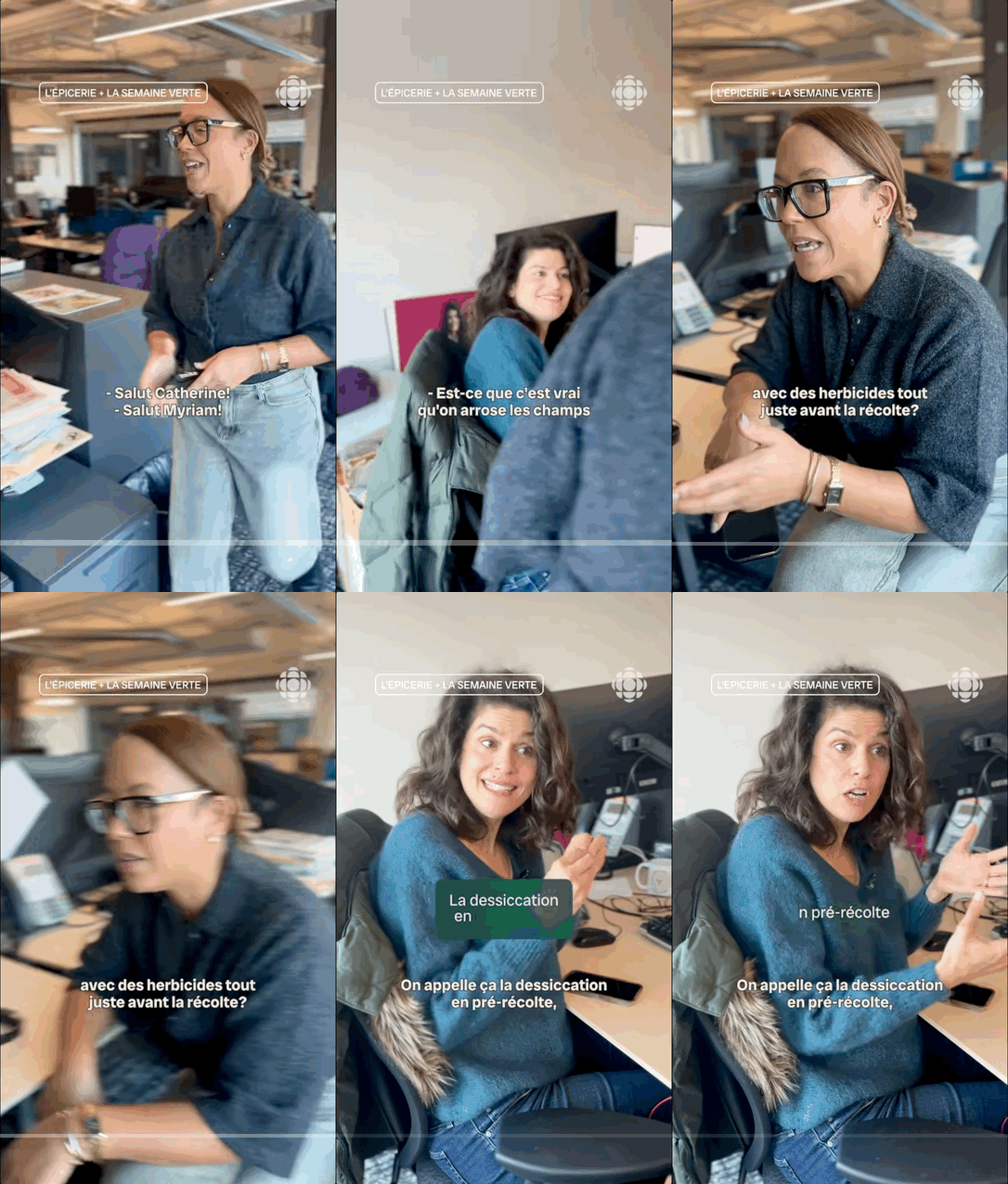
- On TikTok and Instagram, many media outlets film themselves directly in their open offices, interacting with newsroom members right from their desks. Radio-Canada is an example, with formats that prioritize spontaneity above all, even urgency, as shown in this video covering Justin Trudeau's resignation.
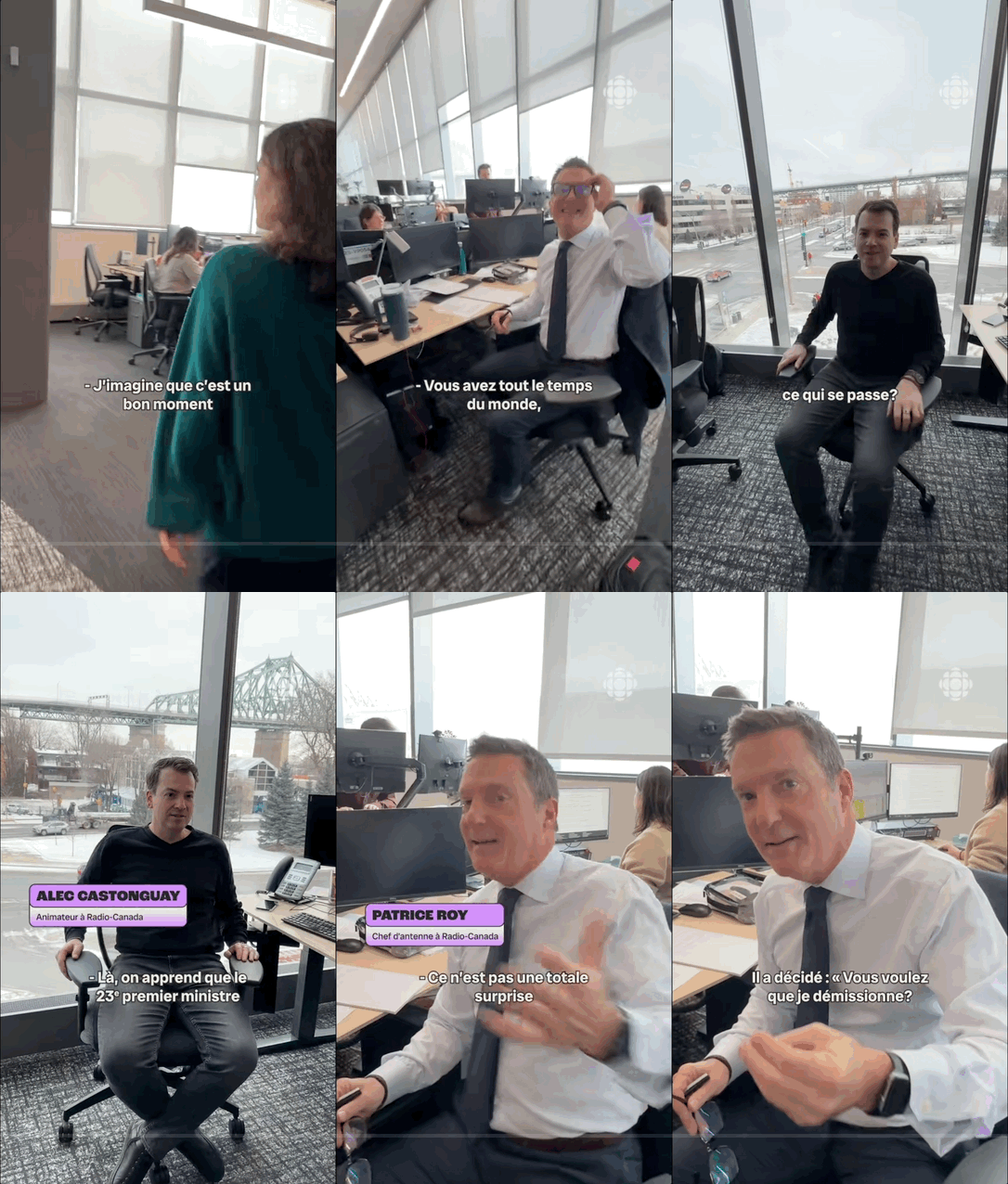
It's a way of making journalists into accessible, available and knowledgeable sources on their subjects.
- The Morning Brew fully embraces the "film set" vibe, turning its offices into sitcom-worthy sets to deliver and explain the news.
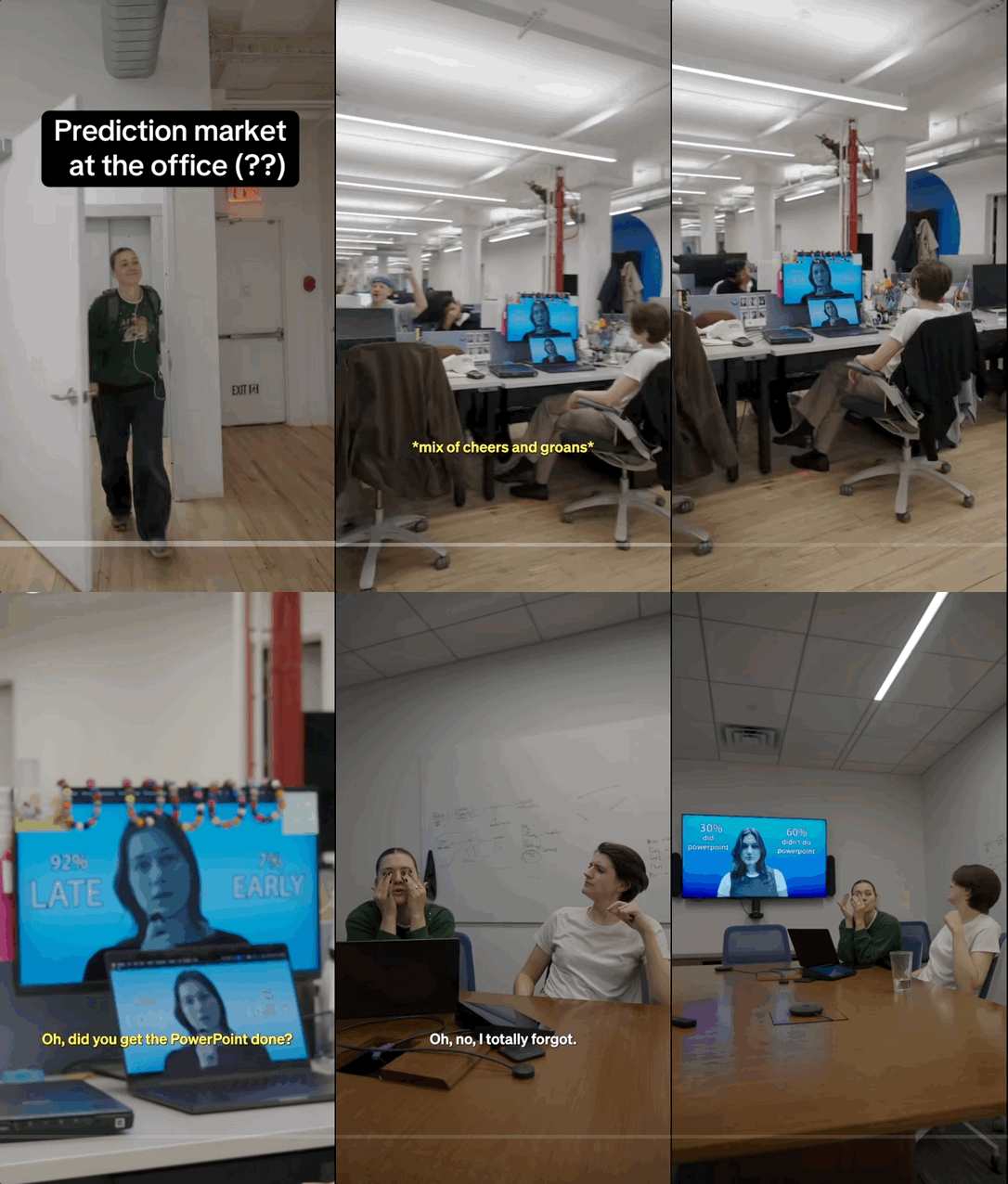
This trend also opens up an opportunity: if newsrooms don't have the budget for a large studio or camera crew, all the better. This raw transparency allows the public to become familiar with places and faces once perceived as impersonal. The newsroom becomes a full-fledged editorial tool, a medium for explanation and reassurance in an era of distrust, and a means of humanizing journalists who need it too.
Meeting places
Beyond videos filmed in their offices, newsrooms are now opening their doors to physically welcome their communities. They are becoming places of exchange, designed to rebuild trust, become accessible, and sometimes generate new revenue.
- In Scotland, Greater Govanhill and The Ferret have created a shared and open newsroom, designed to welcome the public, organize meetings and foster dialogue.

- In Brussels, Médor has set up its newsroom on the ground floor, behind a large bay window overlooking the street. The doors stay open: anyone can come in to chat with the team, ask questions, or simply buy a copy.

- In Berlin, the Publix project welcomes independent European press professionals. The venue brings together offices, studios, production facilities, and spaces dedicated to regularly organized events and discussions. The building was also designed with the public in mind: its ground floor, open to all, houses a café. It's even possible to rent a room there for the night.

- The Ferndale Enterprise, a small American local newspaper, has found an original way to support its operations: part of its historic premises is available for rent on Airbnb, generating supplementary revenue that funds its newsroom.
- In Marfa, Texas, the owners of the Big Bend Sentinel opened a café/shop adjacent to the newsroom to diversify the newspaper's revenue while creating a gathering place for the community.
The building as a symbol
Faced with financial pressure, reduced teams, and the need to rebuild their connection with their audience, many media outlets are leaving their historic downtown headquarters to relocate to the periphery. This phenomenon is not new: Fleet Street, the legendary hub of London's press, saw its last journalists depart a few years ago, after a long decline.
The location of a newsroom also says something about its culture, its organization, and its relationship with the public. Le Monde has extensively communicated about the reasons behind its move to Austerlitz, situated between old and new Paris: "From past to present, from print to digital, the building imagined by Norwegian architecture firm Snohetta seems to span the ages and turn toward the future." Nothing less. It also brings together, for the first time, all the group's titles under one roof. A strategic and financial gesture, but also symbolic of media concentration, as embodied (briefly) by the Altice Campus bringing together Libération and L'Express.
Like Publix in Berlin, the House of Free Media in France also aims to bring several independent media outlets together in one location, combining resource-sharing and public accessibility. An initiative designed to strengthen editorial independence and rebalance the playing field against the billions invested in conservative press… but one that raises questions about the role of major fortunes in the future of independent media.
Through their buildings, media outlets also display their values and attempt to communicate their vision of journalism. Some seek to materialize transparency, like the New York Times, whose open hall and large glass façade embody the absence of opacity. Others favor discretion, like AFP, consistent with its editorial work in the "background", which attached itself to a building steeped in history, reclaimed in 1944 from the Nazis by resistance journalists.
Choices that can speak to the public, but also to teams. In a study dedicated to newsrooms as a place of identity and community, several journalists said they felt more like "journalists" in the offices, driven by the history and aesthetics of the space that foster a sense of belonging, and this despite their flaws as evidenced by this photo essay on American local media.

But beware of illusions: office architecture and design are not a magic solution to the challenges facing the press. A staircase connecting offices and large windows are not enough to fix the deep dysfunctions of an organization, toxic management, or the significant sense of distrust toward newsrooms. It is a space with strong political significance, which still has much to do to address diversity issues, inclusivity, and workplace wellbeing that are affecting media organizations today.


