


While X and Facebook seem to be shunning the press, LinkedIn is welcoming it with open arms. The social network — which nevertheless conducted several rounds of layoffs last year — has "pulled out all the stops," according to Axios, to attract press professionals and convince them to publish content on its platform. In recent years, LinkedIn has hired journalists, launched a series of new features, and developed programs for journalists. Today, LinkedIn works closely with more than 400 newsrooms around the world to help them optimize their use of the platform and its features.
Once considered somewhat austere, the network now aims to reach one billion users by 2025, compared to around 900 million today, and wants to appeal to younger generations. According to a Reuters Institute study, media outlets believe LinkedIn would be the leading alternative to X (formerly Twitter) if the latter were to disappear. Meanwhile, LinkedIn users are increasingly using the professional network to stay informed. According to Similarweb, the number of visits to news websites from LinkedIn has been growing over the past three years, unlike other social networks such as X or Facebook.
To make the most of these features, we've listed below some functionalities and tools that will help you grow your audience on LinkedIn, optimize your content distribution, and develop your skills.
Optimize your posts' reach
LinkedIn has implemented a series of features designed to encourage the creation of new posts and optimize their distribution, as well as their search engine visibility. Users can, for example, select content to highlight in the
Beyond these features, there are several tricks that will help you maximize your chances of being promoted by the algorithm. The Algorithm Insights Report study notably recommends mentioning four accounts in your post and republishing it after four hours to double its reach. It also suggests commenting on your own post to add supplementary information. Obviously, these are not absolute rules and these recommendations will likely evolve with changes made by LinkedIn to its algorithm and the content it wants to highlight.
Create a newsletter
For the past few years, LinkedIn has allowed its users to publish a newsletter directly from and on the social network. 500,000 people are subscribed to at least one of them and 150 media publishers now have their own newsletter, according to Keren Baruch, Product Director at LinkedIn. Over the past year, LinkedIn has recorded a 150% increase in the number of newsletters published by media outlets and journalists on the platform, according to Axios.
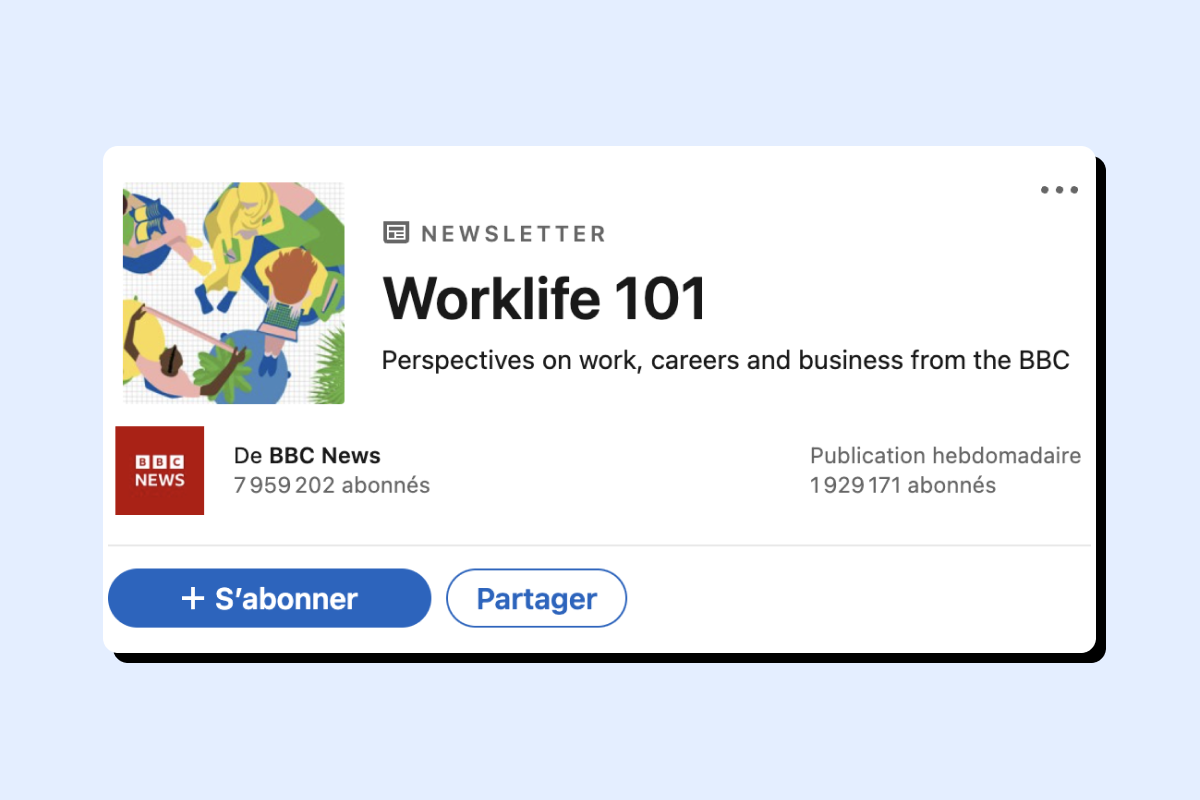
While many popular newsletters on the platform, such as 101 Worklife from the BBC or Career&Leadership from the Wall Street Journal, focus specifically on work and business topics, others have chosen not to limit themselves to these subjects. American news agency Associated Press offers, for example, a newsletter on environmental news. LinkedIn now allows users to create up to five newsletters from a single account, encouraging editorial teams to expand their newsletter catalog by covering different topics.
The feature is far from perfect and still lacks visibility. As Nieman Lab points out, it's difficult to discover new newsletters unless you search for them manually.
Join LinkedIn for Journalists (LIFJ)
The platform offers a program dedicated to « journalists, editors and producers working for or regularly contributing to reputable news organizations ». To participate, several calls for applications are organized throughout the year. Once admitted, program members can enjoy several benefits. They are notably granted a LinkedIn Premium Business subscription, giving them access to a range of features, such as the ability to precisely identify who is viewing their profile or to send messages to members not in their contacts.
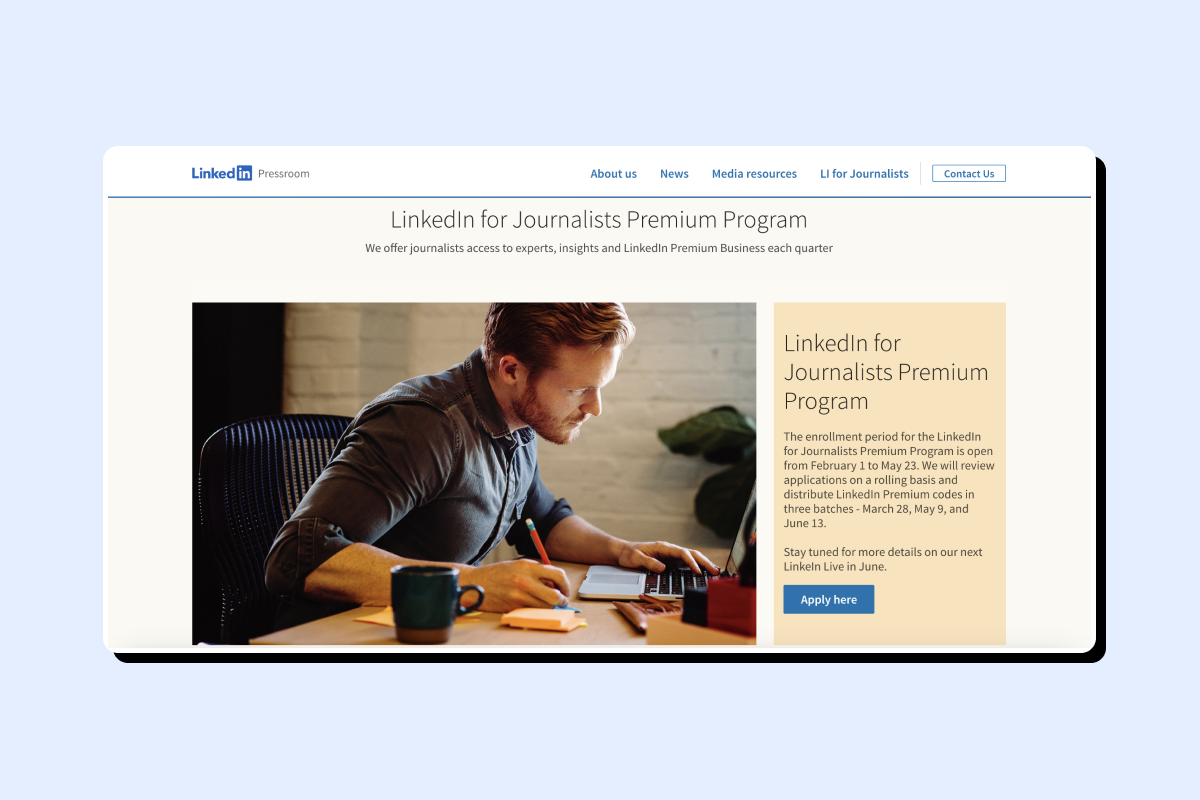
Members of this program will also be able to participate in training sessions to enhance their content and make full use of the platform's features.
Contribute to collaborative articles
Since last March, LinkedIn has been publishing collaborative articles. These texts, initially generated by artificial intelligence, are then submitted for comments from "experts" selected by LinkedIn. To do this, the social network identifies a series of relevant profiles based on their expertise, to whom LinkedIn proposes contributing. They can thus enhance the article with additional information drawn from their own knowledge or experience. Readers can indicate which comments they found most instructive. If an individual's feedback is deemed particularly useful on a topic, they may be awarded a "Top Voice" badge, certifying their expertise on the subject. Several collaborative articles on which you can showcase your knowledge cover topics related to journalism practice, such as "How can you quickly build a relationship of trust with a new source?" or "You're a journalist who missed a deadline. What's the best way to make it up to your editor?".
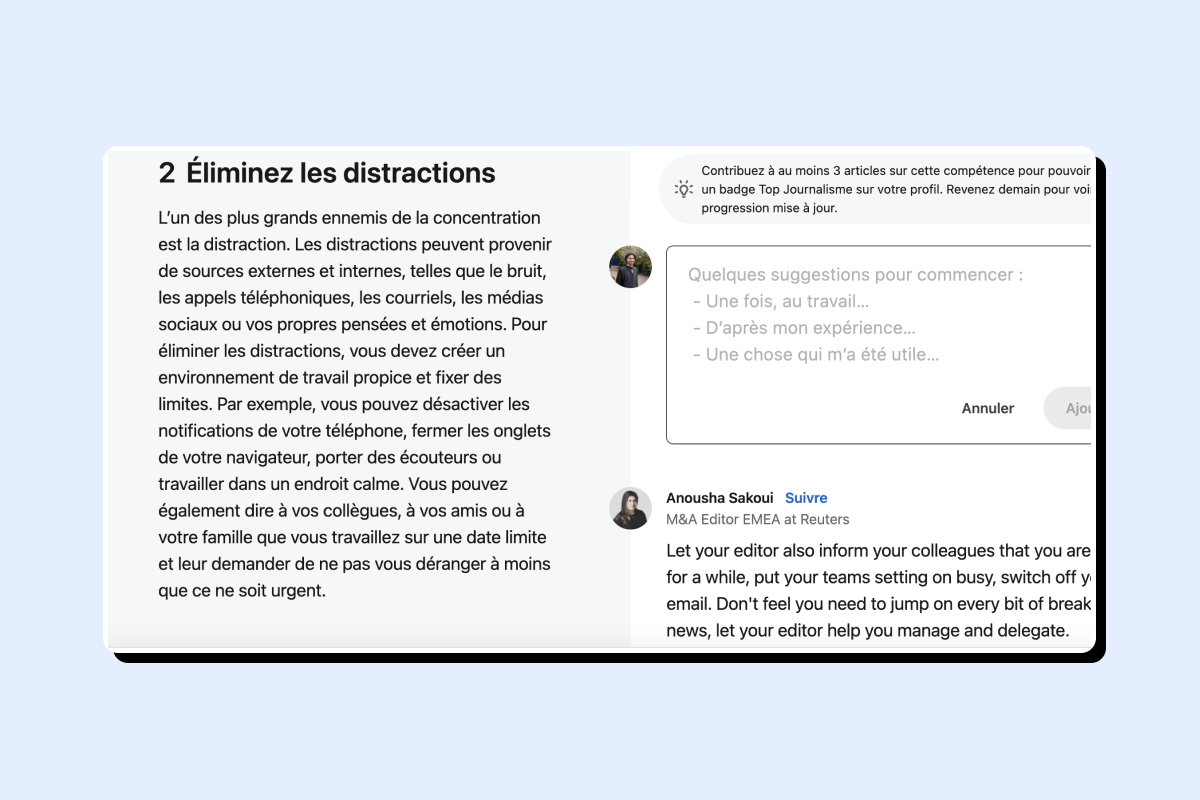
It is nevertheless important to keep in mind that these articles are indeed generated by artificial intelligence. The relevance of the topics covered and the information sometimes leaves something to be desired, and these articles rely largely on the contribution of


