


For media founders, balancing the preservation of their mental health with the stability of their project sometimes represents a delicate challenge. Yet a healthy media outlet cannot be (well) run by someone on the verge of burnout. So how can you preserve your well-being and avoid passing your stress on to your teams when pressure builds up?
In 2021, Christelle Tissot launched mūsae, a media outlet that explores and makes mental health accessible to 18-35 year-olds. The project is now expressed through articles, podcasts, newsletters and educational content on Instagram and TikTok. This makes Christelle Tissot the ideal person to break the taboo around mental health in media entrepreneurship.
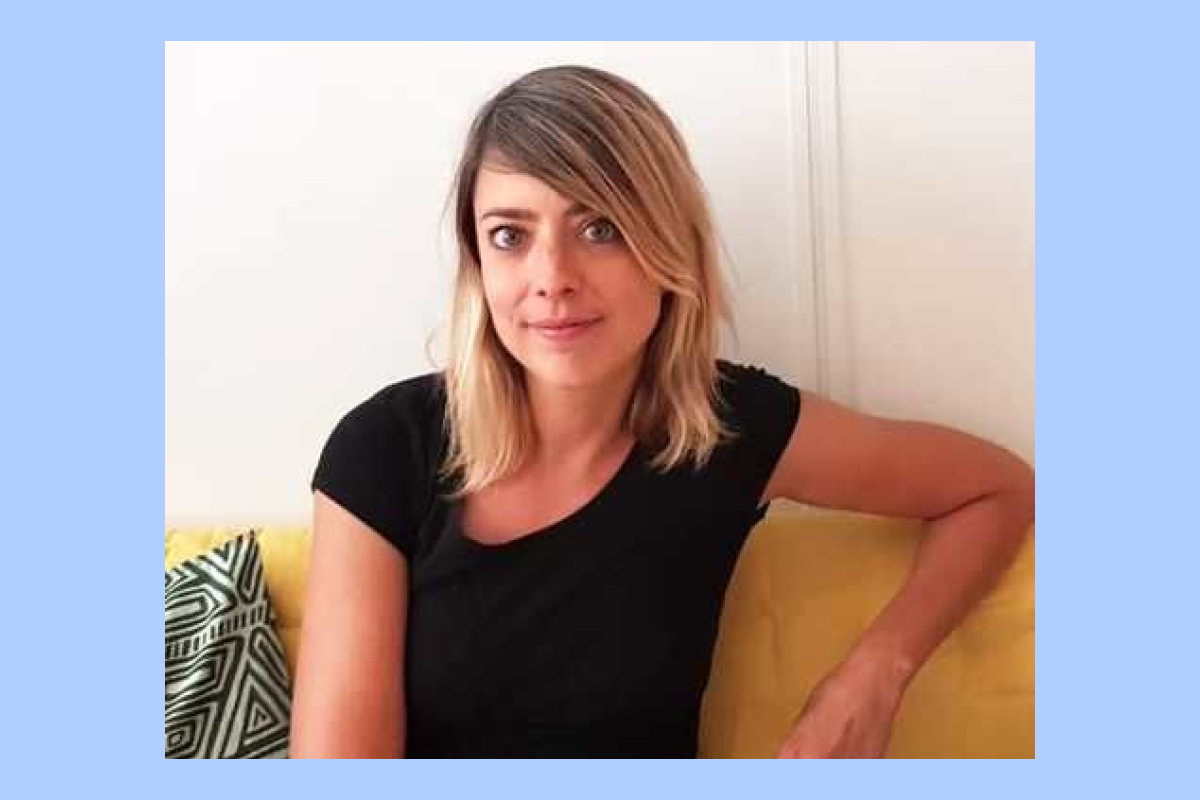
Hello Christelle, why mūsae?
A few years ago, I was directly affected by mental health issues following a traumatic experience. I remember searching for resources to educate myself, but I couldn't find French or French-language media that tackled the subject from a scientific angle while remaining accessible. I needed a society-focused media oriented toward solutions. mūsae is somewhat the media outlet I would have liked to find back then. Before launching it, I worked for Vice, an American media company. The English-language sections of the outlet covered mental health as a societal issue. That inspired me—I wanted to explore the subject further.
What are the benefits of choosing to work as a media creator compared to holding a salaried position at an established media company?
Clearly, editorial freedom motivated me to create my media outlet. I choose my topics, the people I'll entrust them to, those who will contribute, the format, the medium. Above all, I consider mūsae an engaged media platform. My media outlet also has an agency side, mūsae lab, which allows me both to have a business model and to collaborate with brands while trying to push boundaries. Of course, I can also choose to work with certain partners and not others. In terms of meaning, freedom, and creativity, I find the entrepreneurial experience far more interesting.
Are there also any downsides?
In terms of uncertainty and insecurity, it's pretty rough. At first, you don't have a regular salary coming in at the end of each month. And you never really know what you're getting into. It can be complicated sometimes, especially on social media where you're at the mercy of algorithms. Generally, uncertainty and financial insecurity don't go well together. There's also a very lonely side to it, especially when you launch solo and don't have partners. That's my situation. I started building the mūsae agency part in March 2020, just before Covid, and honestly, I was terrified. I felt really cut off from the world, impossible to meet anyone except over Zoom. The solitude of entrepreneurship can be incredibly dizzying.
How can I escape this isolation?
Just because you're a sole founder of your media outlet doesn't mean you have to go it alone. There are interesting places and networks out there. As for me, I was supported by Médianes when I launched mūsae at the end of 2020, and by Creatis. I had offices with them for two years. It's a place identified in the Paris region as a supporter and facilitator of media and culture projects. You find support, an outside perspective, you meet other people in the same situation as you. We give each other tons of advice. Among committed media entrepreneurs, there's a real sense of solidarity. Of course, you have to get into the right networks, the ones that suit you. There are also media networking groups that I don't connect with at all. It's important to meet people who share the same values, who have the same vision and roughly the same business models.
There's another very important thing, which is depersonalizing your media. mūsae isn't Christelle Tissot.
How did you manage the stress once the launch was over?
I've partially moved. For a year now, I've been living between Paris and Brussels. Leaving Paris does me good and allows me to see something different, to step away from all the media circus. When I'm in Paris, I schedule a lot of meetings, I meet partners and clients, I see people. My teams are also mostly based in Paris. And when I'm in Brussels, I have more time to write, to read, to do research, to conduct remote interviews. This allows me to have a work rhythm organized based on which city I'm in. The idea is also to diversify my circle. Sometimes, I don't feel like talking about media, mental health, my work. I need to surround myself with different people to nourish myself. There's another very important thing, which is to depersonalize one's media. mūsae is not Christelle Tissot. I try to create distance from a personal and emotional point of view. This allows me, for example, not to take failures personally, to be able to negotiate with a client with a clear mind, and to write from a perspective that isn't solely my own. It's just a business, really. Everything's fine.
Can you disconnect while you're on vacation?
When I go on vacation, I don't work. I don't take time off often, but when I do, it's sacred. Apart from major emergencies, everything is organized in advance so there's a proper handover. And conversely, when employees are on vacation or at school, when they're doing work-study programs, I don't send them messages. I don't like doing things halfway. Generally, I take two weeks in August and a week at Christmas.
Do you set boundaries with the people you interact with? How do you do it?
I'm very structured. I do my work well when I have proper hours. I work Monday to Friday and always at the office, whether that's Paris or Brussels. Working from home puts me in a bad headspace. Everything gets mixed up, you can't relax at home anymore. It ties into that whole thing about personification. I don't like when there's too much blurring between professional and personal. The advantage, when you run a mental health media outlet, is that your contacts understand that pretty quickly. So they avoid prying too much. That would be quite inappropriate.
How to take care of your employees' mental health?
The foundation is paying people properly. It seems obvious but it's not always the case when you work in media. Creating very clear job descriptions is important too, and holding regular check-ins. Every three months, I conduct a 360-degree review with each of my employees. I give feedback, set objectives, and review what worked and what didn't. It goes both ways: during the second part of the meeting, we look at how I can optimize things, do better, organize myself better as a manager. I also work hard to highlight the teams and the people who work on the media and create content. mūsae isn't a single vision with one person at the center, it's a team. On top of that, we're flexible about remote work, obviously. That doesn't stop us from scheduling meetings: we see each other in person in Paris at least twice a month. The rest of the time, everyone comes to the office when they want. Including the freelancers we work with. The offices aren't just for employees. They're also for partners who need a place to work.
You can sometimes find yourself in a pattern where you're asking your employees for as much involvement, passion and commitment as you give yourself. But it's not their company. So it's not the same thing, it's impossible.
How can you protect your teams from the pressure you feel about your own project?
That's the most complicated part, especially when you don't have partners. Without realizing it, you can sometimes find yourself in a pattern where you're asking your employees for as much commitment, passion, and dedication as you give yourself. But actually, it's not their company. So it's not the same thing—it's impossible. That's why breaks and stepping back help you maintain some distance and reset everyone's roles. After that, what matters is being in dialogue. I make sure voices are heard at mūsae. People have the opportunity to express what works for them, what doesn't, what they'd like to do differently. The key is that the founder remains accessible. That also means organizing moments where we step outside the usual framework, where we clear our heads, like a team retreat.
Must you absolutely throw yourself body and soul into an entrepreneurial project for it to work?
I think the main thing is to deconstruct the myths and clichés about entrepreneurship that are actually harmful to entrepreneurs' mental health. The current storytelling is devastating. Some people tell you it's super complicated and you're going to struggle, others think that with the start-up nation, it's mega easy, you'll raise millions and success is guaranteed. Obviously, the truth lies somewhere in between. You need to be patient, set achievable and measurable goals, step by step. At first, I tended to want to do too much. I wanted to immediately launch a bilingual media platform on mental health. I was doing everything, all by myself, in English and French. It's good to have a finished project in sight, but that's far too much for one person and for the beginning of a media outlet. We'll test a few pieces of content first, and then we'll translate and adapt them.
And if it fails?
In entrepreneurship, we tend to see failure as a dead end, when in fact it's part of learning and growth. Some things won't work out, and that's actually good because it lets us adjust course. What matters is setting achievable goals and celebrating when we reach them. We have a tendency to beat ourselves up over failures, but we don't celebrate our successes. Every year, I organize the anniversary of mūsae. I love it. There's stand-up comedy, DJ sets, exhibitions. That's how we celebrated our second anniversary at the Pavillon des Canaux in Paris last year. I had an amazing time, super festive. Plus, you get to meet the people who follow our media in person and connect with them.
How to know if entrepreneurship is right for you?
It's an environment where you need to be able to navigate uncertainty and insecurity. I don't think that comes naturally to everyone, and that's okay. There are a thousand ways to develop projects. An entrepreneur is someone who's resilient, who knows how to question themselves about their content, their clients, their employees. They're also someone capable of stepping back, bringing people together, building consensus. You have to be able to take people along on a vision and make it come alive. Finally, I think you need to know your limits and your needs so you can learn to say no. Because it's important to say no. You can quickly fall into the entrepreneur's FOMO [Acronym for "Fear of missing out", Editor's note]. You want to be everywhere, all the time, at this event, that dinner, for this project. You have to learn to prioritize and give yourself breaks. That eases the anxiety.
To go further
Resources at mūsae
- Why is mental health such a taboo for entrepreneurs? Agnès Sanso, entrepreneur and mental health activist, answers questions from Christelle Tissot in this newsletter.
- Over 50% of entrepreneurs experience mental health issues since the COVID crisis. Is that you? Plenty of resources to help you understand this phenomenon and feel better.
- What is FOMO and how to overcome it? A video talk with the founders of the inclusive media Nous Fomo specializing in mental health.
And at Médianes
- Got a media idea rattling around in your head? Looking to develop an existing project further? This sheet is designed to help you structure your project and bring your idea to fruition, step by step.
- How can we make sure everyone can leave with peace of mind, without feeling like they're leaving a huge project behind? We're sharing a few practices that we use at Médianes to make a clean break with confidence.
- Since 2020, Médianes' project has been developed remotely, and the team has gradually grown. We wanted to organize our work according to a few principles that we're sharing with you today. Here's our own case study.
- « The end never justifies the means. The only people who can take risks with a media outlet must be shareholders and do so with full knowledge of the consequences », explains Valentin Levetti, founder of the media Stupid Economics in this episode of our podcast Chemins.


