The context
Analyze and harmonize the Paris City information hub
Paris's information department today brings together over 55 professionals – writers, videographers, community managers, photographers – who collaborate daily to produce, edit, and publish content across the various channels and platforms of the city hall: the Paris.fr website, Que Faire à Paris, the Paris Ma Ville app, several newsletters, a bi-monthly magazine, and social media.
The teams in the information department ensure the creation, coordination and distribution of content, balancing political and editorial concerns while responding to the needs of their audiences—Paris residents. Teams with sometimes very different skills and profiles (writers, community managers, videographers…) working in a demanding institutional context undergoing significant change and under the scrutiny of Parisians.
In September 2025, the City of Paris asked Médianes to support two departments in this hub: social media (social networks and video) and editorial. The objective: to identify areas for improvement, encourage the sharing of best practices, and strengthen coordination between departments.
Conducted over several months, the mission unfolded in three phases: an immersion and audit phase with the teams, the presentation of concrete recommendations, and then training sessions.
Get into the daily routine of teams
Observe and analyze how
works
After presenting the mission to the entire information department team, we initiated a first audit phase to identify existing practices, production schedules, and interactions between departments.
We conducted individual interviews, shared a collective survey, and analyzed numerous internal documents related to editorial processes, as well as the content of newsletters and the website. In parallel, for one week, we were embedded within the two departments and observed the daily work of the teams.
This multi-faceted approach enabled us to map the hub's operations in detail, identify friction points, and also reveal the strengths of the collective: commitment, professionalism, and spirit of mutual support.
From findings to action plans
Return, share and prioritize improvement areas
Based on the audit findings, the Médianes team presented concrete and prioritized recommendations aimed at clarifying roles, harmonizing editorial workflows, and strengthening inter-departmental coordination. The recommendations thus addressed issues of project management and management practices, as well as tools: meeting formats, meeting minutes, information sharing tools, best practices regarding remote work and in-office work, use of AI, etc.
From theory to practice
Support and equip teams
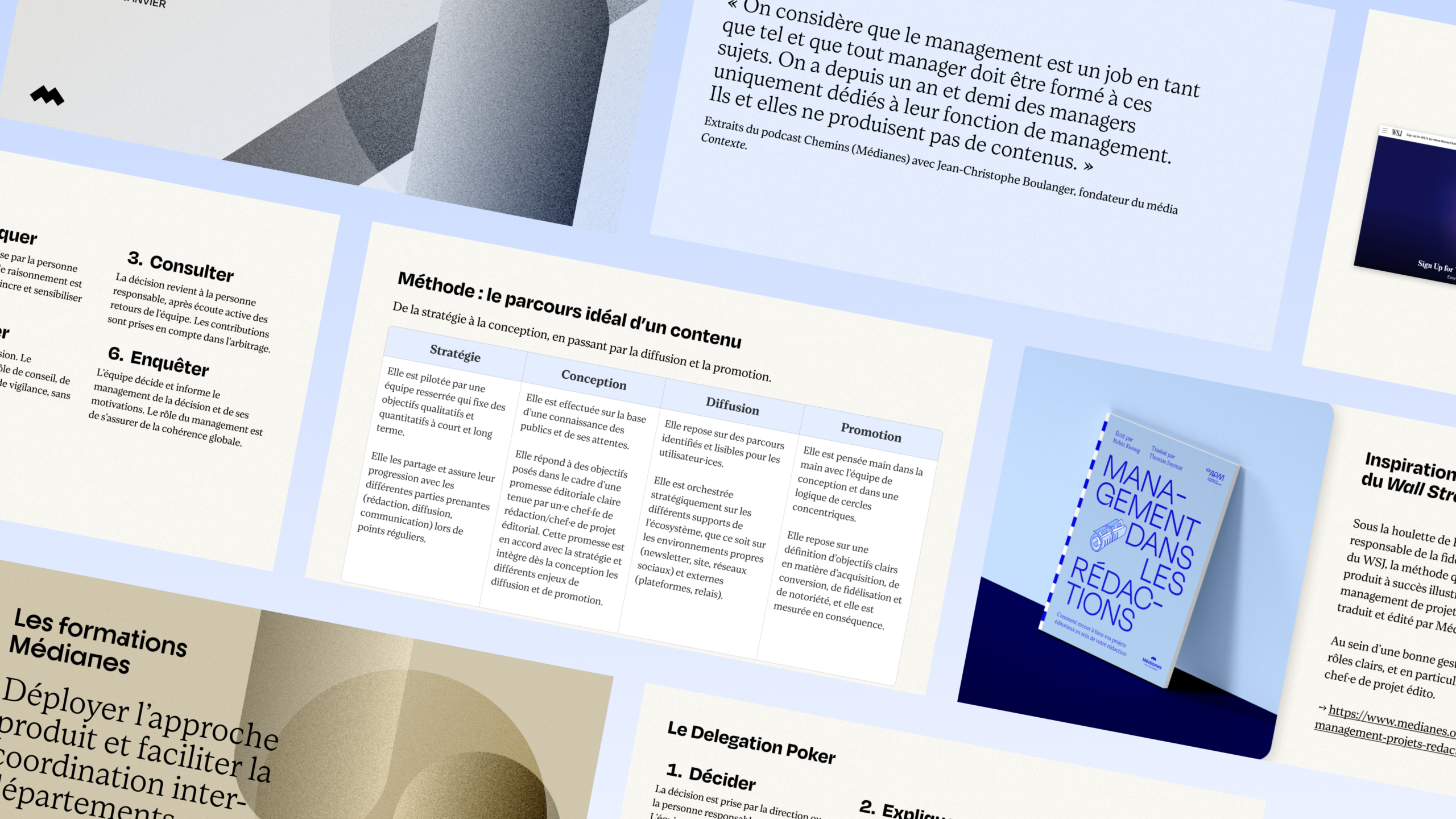
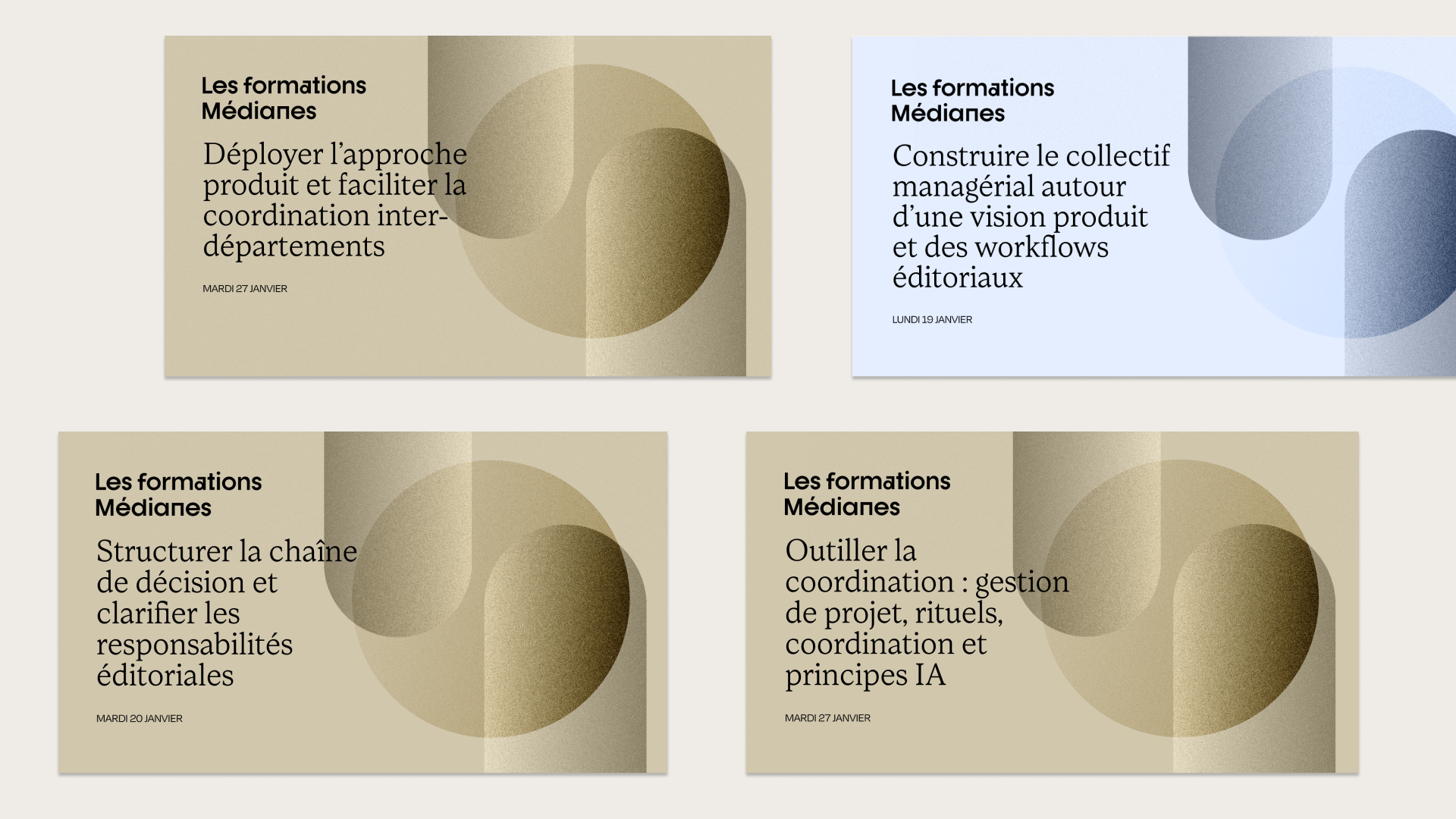
To translate recommendations into concrete practices, we facilitated several training sessions tailored for both managers and operational teams. The central theme: not simply to pass on external methods, but to collectively build tools grounded in the day-to-day reality of the hub.
One first initiative focused on structuring editorial workflows. Facing a team under intense pressure to respond immediately, we co-designed two separate production paths: one for in-depth projects (forward planning, cross-functional coordination, scheduled decisions) and a reactive path for breaking news, operating on a fast track with clear accountability. This work also provided an opportunity to introduce and formalize a new role within the organization—that of the editorial project lead: neither sole decision-maker nor absorber of tensions, but a coordinator who ensures information flows and secures decisions.
A second initiative clarified roles and responsibilities through the RACI matrix (Responsible, Accountable, Consulted, Informed). A simple tool that specifies, for each project or output, who performs the work, who approves it, who is consulted, and who is kept informed.
To guide editorial choices, we also introduced the Public Needs Compass, a tool based on a model developed by the BBC and adapted in France by Samsa, which makes it possible to think through each piece of content based on the need it addresses (to inform, to understand, to act, to debate) rather than based solely on section or format logic.
Finally, we laid the groundwork for shared practices around AI, helping teams identify relevant and responsible uses in the editorial workflow and formalize an initial collective framework for its use.
These sessions fostered exchanges between departments, shared best practices, and strengthened team autonomy.
A first step, not an end
Sustainably establish practices and support implementation
At the end of the mission, we shared all the deliverables: a comprehensive strategic audit, training materials, and a prioritized action plan. These tools provide a concrete foundation for anchoring new practices over the long term. Beyond the documents, a collective momentum was created between departments that often worked in parallel. Common spaces for dialogue and coordination were able to emerge, a first step toward a more fluid organization and teams better equipped to work together.
« This mission with Médianes was tremendously helpful in supporting the team, streamlining our work processes, and aligning our editorial practices! With a comprehensive audit, precise recommendations, and trained teams, it greatly helped structure the entire production workflow. It made it possible to establish a more fluid, collaborative organization that's completely suited to the challenges facing a public service in 2026! » — Damien Leborgne, Deputy Director of Content and Digital, City of Paris
Interested in support? → Discover our expertise in management and project management.
About
The City of Paris brings together more than 55 communication professionals—writers, videographers, community managers, photographers—tasked with producing and distributing Paris City Hall's content across all its channels: Paris.fr, Que Faire à Paris, the Paris Ma Ville app, newsletters, a bimonthly magazine and social media.