


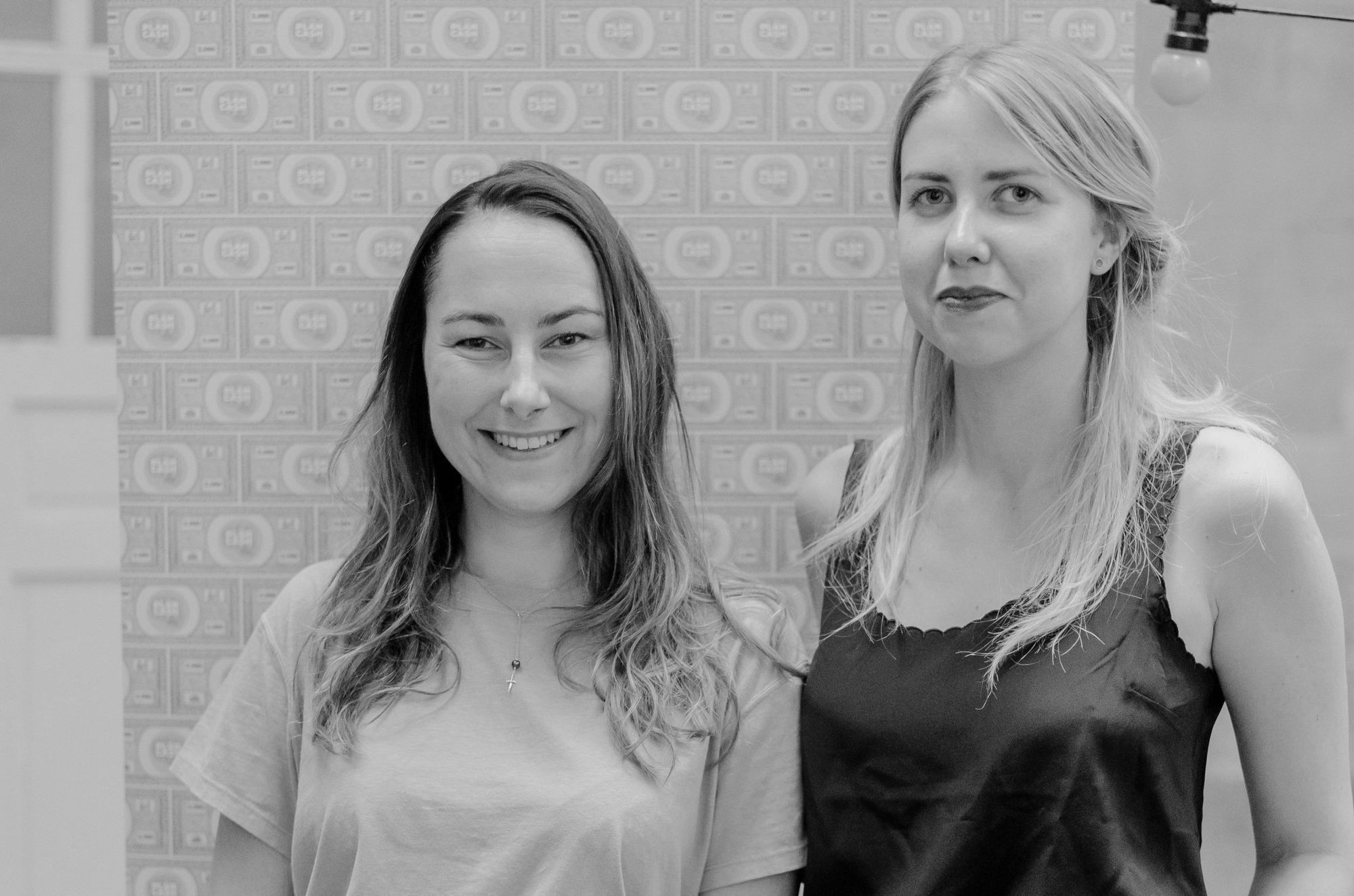
What was the idea behind Plan Cash?
Initially, Plan Cash consisted only of a newsletter and an Instagram account. The idea was to offer an economics media outlet that talks about money with women, young people and minorities. Overall, these groups are underrepresented in traditional economics press – only 26% of economic content, according to the Global Media Monitoring Project (GMMP) 2022, because they are absent or barely featured in photographs and among interviewees and experts. Furthermore, the jargon used in these media outlets doesn't necessarily speak to them, and the overall level of accessibility doesn't allow the general public to truly stay informed about the economy based on everyday topics. For these reasons, I launched Plan Cash, a feminist newsletter about money and investment with a concerned tone and ecological questions a year ago. When you're young, it seems important to me to understand where our money goes and what the connections are between the economy and major environmental challenges.
Why did you choose to launch independently?
When I came up with the idea for this newsletter, I pitched it to Challenges, the media outlet where I worked as a journalist. The editorial team had no interest whatsoever in a project whose potential they couldn't see. That's when I decided to launch it on my own. At first, it's always the same thing—you're bursting with ideas and want to grow as fast as possible. I had to learn to hold back and test whether my concept on paper would actually work: a fresh take on economics, money, and investing with a strong perspective, by and for women. I finally launched on December 15, 2021 with the newsletter. Today, Plan Cash has nearly 15,000 subscribers and publishes three times a month.
Was your immediate goal to monetize this newsletter?
I knew I could do it once I crossed the 5,000 subscriber mark with strong open rates. My goal was to reach that number early enough to find advertisers. It happened a little less than six months after launch, in April. I wanted to demonstrate my credibility to potential advertisers by showing them that my community was growing rapidly and that there was real demand for these topics. I was keen for my partnerships to align with my values of feminism and ecology. For me, feminism doesn't necessarily mean raising a fist and tearing down barriers. It simply means placing greater emphasis on inclusivity and accessibility to give women all the tools they need to make investment decisions. I also wanted an advertiser who would partner with me over several months because my job is to write, tell stories, explain. I don't want to spend too much time hunting for advertisers one by one; that's not my style. Fortunately, it worked out. We signed a partnership with Nalo, a life insurance company. Their team worked with me for three months.

Why did you decide to launch an Instagram account alongside the newsletter?
I was afraid that the newsletter alone would be insufficient to create what start-ups call scalability—that is, engagement, a desire to keep coming back and feel part of a community. Since I knew I wouldn't get coverage in the mainstream media at first, I had to turn to social media. I chose Instagram because it's the platform that best matches my target audience. Plan Cash readers are overwhelmingly women aged 28 to 45 who have already held one or two jobs. They have purchasing power or a budget to manage. They're either single women, sometimes recently divorced, or women in relationships who want to take control of their finances rather than leave it to their partner. It works out perfectly: you find roughly the same audience profiles on Instagram. Might as well use it! Today we have over 51,000 followers on Instagram.

Plan Cash account also includes a training component. Why?
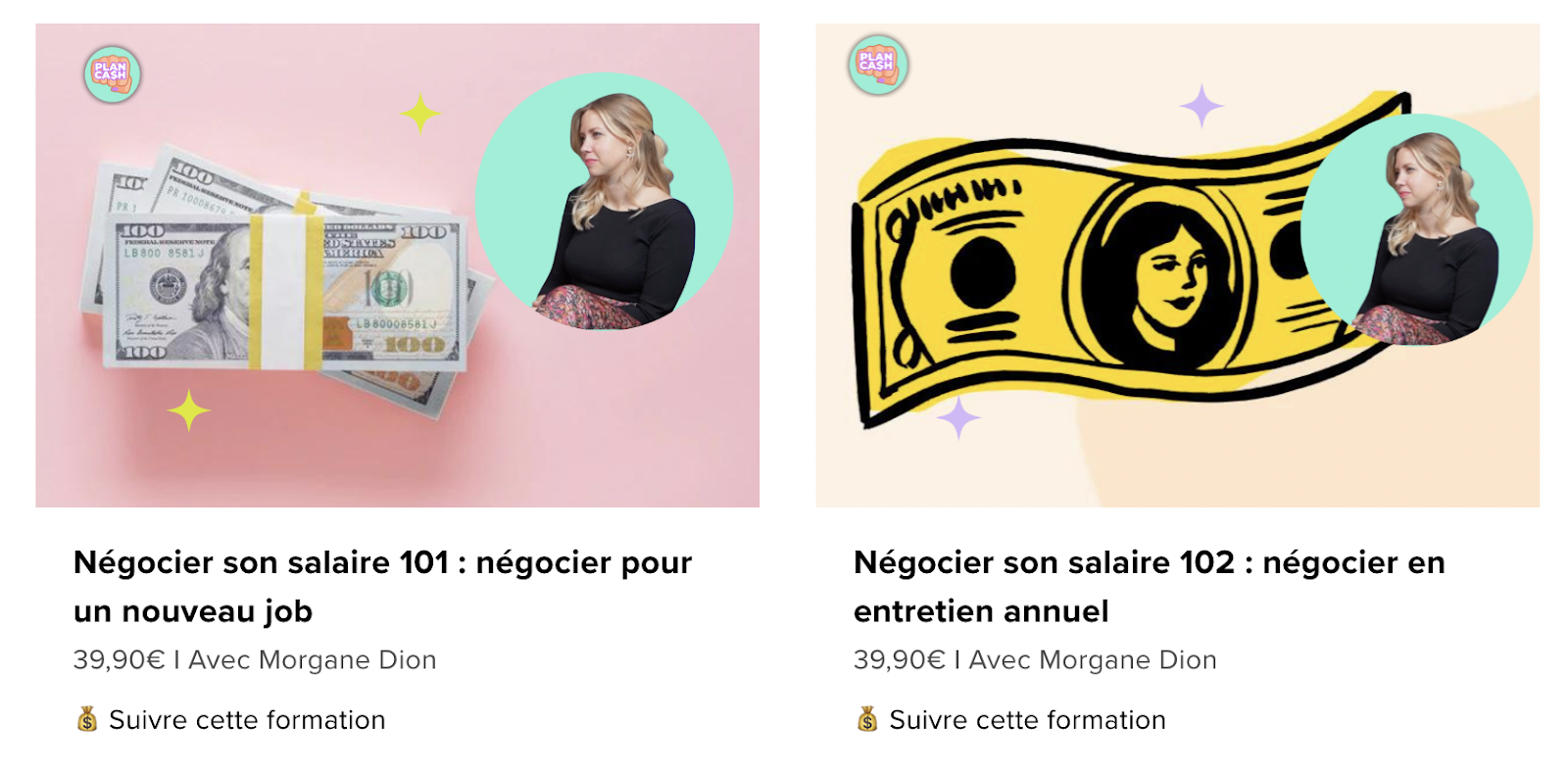
As a journalist, I know that business journalism struggles to find a profitable model. Today, people are increasingly unwilling to pay for information, but they're increasingly willing to pay for training. My idea was to make free the part for which these people are less able to pay, and to make the rest paid. This is notably what the American website The Financial Diet does, which talks about finance to women and is a mix of web media and training. I met my partner Morgane Dion in February 2022. She was actually developing a platform for financial literacy and investment training. We're still looking for the ideal business model, but for now, she manages the training part, and I handle the media and content side. And we're already breaking even financially, we each pay ourselves modest salaries.
Are you planning to test other monetization sources?
We created the Hotline Plan Cash, a page on our website where our readers can book an appointment with wealth management advisors who are attentive to feminist issues and how money is distributed within couples. We receive a small commission on first-time appointments.

You chose to use the Substack newsletter platform. Why?
The Plan Cash newsletter is free and ad-supported because I believe that if women aren't yet interested enough in money and investing to pay for a subscription, it's also because financial media doesn't speak to them. When choosing, we can already rule out many paid newsletter platforms. The second reason I chose Substack was because I wanted software that was very different from promotional platforms like Mailchimp, which are mainly used for marketing campaigns, especially since these tools have a reputation for frequent outages. I ultimately chose Substack to maintain my strong open rates. Today, we're testing Kessel because their team includes journalists and puts editorial content at the heart of everything. They've been particularly attentive to the features we needed to make our newsletter more professional.
So far, what features were you missing?
We needed a way to truly distinguish advertising from content by integrating dedicated blocks with specific colors into our newsletter, which we couldn't do on Substack. We're working toward being recognized as a press company, and newsletters that receive this distinction don't go through Substack because advertising can't be differentiated. Until now, we indicated it with a large custom banner, but that's not ideal. We also wanted to set up a referral program to allow all subscribers who recommend the newsletter to earn gifts, goodies, invitations to Plan Cash events, or free training. Yet another feature that Kessel allowed us to implement easily. We had lengthy discussions with their team about this.
What assessment do you make of this first year since launch?
I believe we've managed to make Plan Cash a participatory platform. We've always made sure to enable our community to participate as much as possible. Our trainers are qualified professionals, wealth management advisors, real estate agents, and mortgage brokers who also have their own small communities on social media. Sometimes it might be just 2,000 people, but that doesn't really matter. What counts is that we bring in outside voices. We don't just show our own faces all the time. Over a year on Instagram, we've replied to every message and every comment. We try to do live videos regularly. We have a highlight story format called "This is an investor" that lets community members share what they've invested in, what they've made money from, and what they've lost money on. Our goal is to show that anyone can do it.
To go further
- Substack's newsletter service has long been presented as the promised land for independent journalists. What's the verdict on how the platform is being used?
- This interview is part of our series on independent newsletters. Check out the previous episodes featuring Léry Jicquel, founder of Concentré Vélo; Jean Abbiateci, founder of the newsletter-based media outlet Bulletin; and François de Monès, co-founder of the epistolary and political media outlet La Disparition.


