


How weird-and-wonderful media outlets seized on the abortion debate; French YouTubers stirring the pot on gender parity; reflections on media coverage of mental health; an unsellable review: that's what's in this month's Papier pixel.
Overview
This month in the media, there has been extensive discussion of abortion (induced termination of pregnancy), with the inscription of the freedom to access it enshrined in the Constitution.
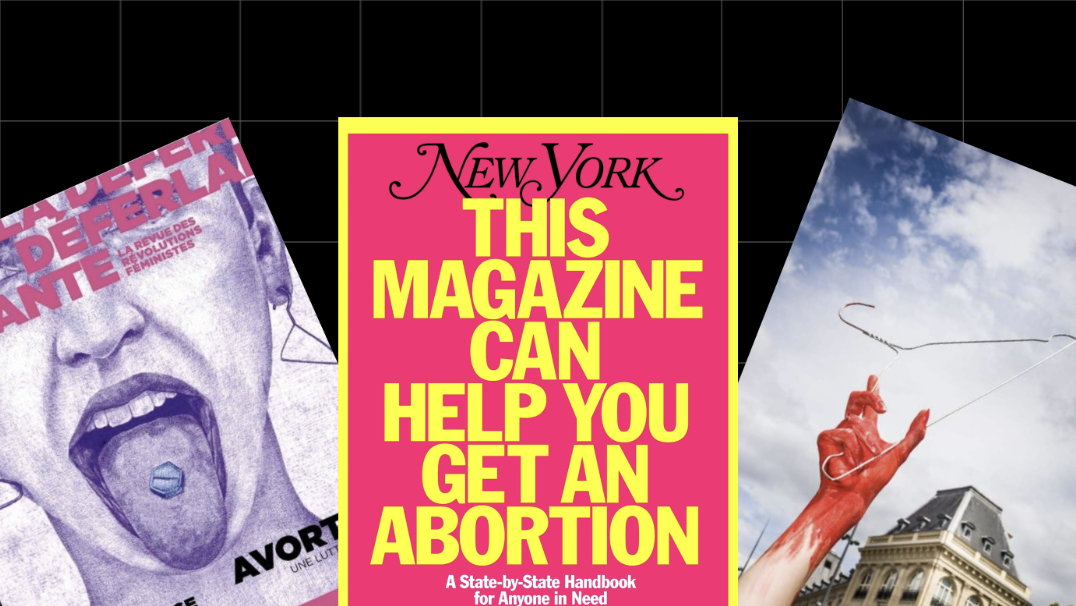
The feminist magazine La Déferlante dedicated its latest issue's theme to it, with a special feature commemorating activist struggles, "which, in the 1970s, prepared public opinion, the legislative ground, and enabled women living in France to end a pregnancy without fear of shame, prison, or death".
This folder reveals that one in four French women must travel to a different department to have an abortion, because between 2007 and 2017, mainland France lost 43 abortion clinics, out of a total of 624. We learn that the film Annie Colère, which tells how the Movement for the Freedom of Abortion and Contraception (MLAC) performed illegal abortions for years, is an exception. Because depictions of abortion in the visual arts are actually quite rare, notes journalist Nora Bouazzouni. When it does happen, as with Annie Colère, the action takes place in the past.
According to Élodie Hervé's writing, we learn that in Poland, it's still Annie Colère, because with the tightening of legislation concerning access to abortion, terminations are being performed by feminist activists: "according to figures provided by advocacy groups, 100,000 abortions are said to be handled by activists each year in Poland, outside official channels". Some speak of a war against women and LGBTQIA+ people.
The publication also features testimonies, such as that of Laurane, 22, who had an abortion for the first time in February 2022. "The next day, [she] went back to work." Her account reminds us of that of journalist Laury Caplat, read in a letter from the epistolary media La Disparition, so that the shame surrounding abortion disappears.

In this letter, Laury explains: "You may know it, everything changes when you walk into the doctor's office. […] You leave your past life behind, and the future takes on the look of a cold, empty old hospital room. So alone. Was it my fault that I was there, in front of him, eyes wide open, hands trembling? Do you think it was my fault? At that moment, I did. "
This letter is an investigation. To write it, Laury Caplat met with several women who, like her, had abortions at Pertuis hospital, near Marseille. Together, they wondered if the experience would have been the same in Paris or elsewhere. Would they have felt the same shame? «No definitive answers, but a series of harrowing testimonies that all tell a story of violence and humiliation», notes La Disparition. And even Annie Ernaux endorses it.
While digging through my archives, I also came across this cover of New York Magazine from May 23, 2022. We're stepping outside independent media here, but the initiative is noteworthy. Faced with the threat to abortion rights in the United States [following the overturning of Roe v. Wade, leaving American states free to ban abortion—Editor's note], the magazine became a public service guide to help people who need to have an abortion. The outlet notably removed the paywall on its website for articles on this subject. In its pages, journalists answered straightforward questions: where can I find a clinic? Who can I turn to? Necessary and commendable.

Finally, to wrap up this press review, the launch of a new series from online media outlet Les Jours. Journalist Pierre Bafoil reveals that a traditionalist Catholic family, the Philippe-Sentis, "has been pounding the digital pavement with anti-abortion misinformation for over fifteen years, spending lavishly on clicks and euros." This family is behind the Facebook page "Abortion, are you unsure? Come talk about it", which has 107,000 followers. It features guilt-inducing testimonies, amplified through heavy-handed sponsored promotion (nearly 150,000 euros spent) to reach the news feeds of "women aged 18 to 34". If you needed another reason to quit Meta…
It's on the radar
A few topics that caught my attention and that I was telling you about in previous Stratégie de Médianes newsletters. This way to not miss the next ones.
Claire Roussel, on Usbek&Rica ★ Another feminist media outlet? Great!
We've never had so many feminist podcasts, magazines, and Instagram pages. And that's good news—perhaps there aren't even enough. It's worth noting that media outlets for which feminism is a kaleidoscope generating cultural, social, and political topics enjoy considerable success. Especially when their financial health depends on mobilizing their community.
Lapeint, on YouTube ★ YouTube in the masculine
Why do the most followed YouTubers invite far more men than women to their channels? In this video, illustrator and YouTuber Lapeint counts them up. In the top 10 most followed YouTube channels – owned 100% by men — only 16% of the people invited in 2023 were women. A boys' club, you say?
→ To further explore the topic of women's invisibility on YouTube, I invite you to read this interview with Lapeint conducted by independent journalist Manon Boquen for Télérama.
It's Nice That features Lola Landekic ★ Top billing
Our designer Maëlle Ledu's pick for this series of interviews alongside the graphic designers behind the posters for the year's biggest films. From typography choices to color selections to photography, the entire design thinking behind the posters for Poor Things and Saltburn is detailed. A goldmine for inspiration and understanding how design influences audience choices.
Léna Dormeau, on Manifesto XXI ★ Never Sweet
This critique of media and new media coverage of mental health questions the repetitive form of narratives centered on personal accounts of psychological suffering. The author notably emphasizes that these formats do not allow for addressing underlying political issues, nor for letting true madness be heard, which is "never gentle" and "harshly suppressed".
And for dessert?
Recently, I spotted…
★ This article by independent journalist Vincent Manilève on the tense relationships between influencers and journalists.
★ The magazine Unsellable, a compilation of all the stories that a team of freelance journalists never managed to sell.
★ This article by independent journalist Manon Boquen on the end of Internettes, an association defending women's creative work on the Web.
★ This campaign to save Éditions Daronnes, which has offered politically engaged and feminist books since 2021.
★ This Instagram page that lists the best flans.


