


In recent weeks, the intensifying war between Israel and Hamas has dominated news coverage already heavily shaped by the conflict between Russia and Ukraine. Journalists have been dispatched to the scene, newsrooms have relocated, and media outlets have created new formats to inform their audiences. At the same time, disinformation has intensified, access to information has become more fragile, and several journalists have lost their lives covering these events. This anxiety-inducing context is reflected in the consumption habits of audiences who, year after year, are increasingly avoiding the news.
In these conflicts that tend to drag on indefinitely, how do media outlets ensure the production and distribution of reliable, quality information while making sure their readers can grasp sometimes complex issues and that their journalists' physical and mental health is not compromised?
In this new format, we're offering you a selection—admittedly not exhaustive—of trends and practices identified in the media. This selection may be updated periodically as the weeks go on.
Pedagogy
How can we put news in context, identify the key issues at stake in a conflict, and explain the consequences of an event in clear terms? When the public faces an overwhelming flow of news, the media must make sometimes harsh and violent realities accessible.
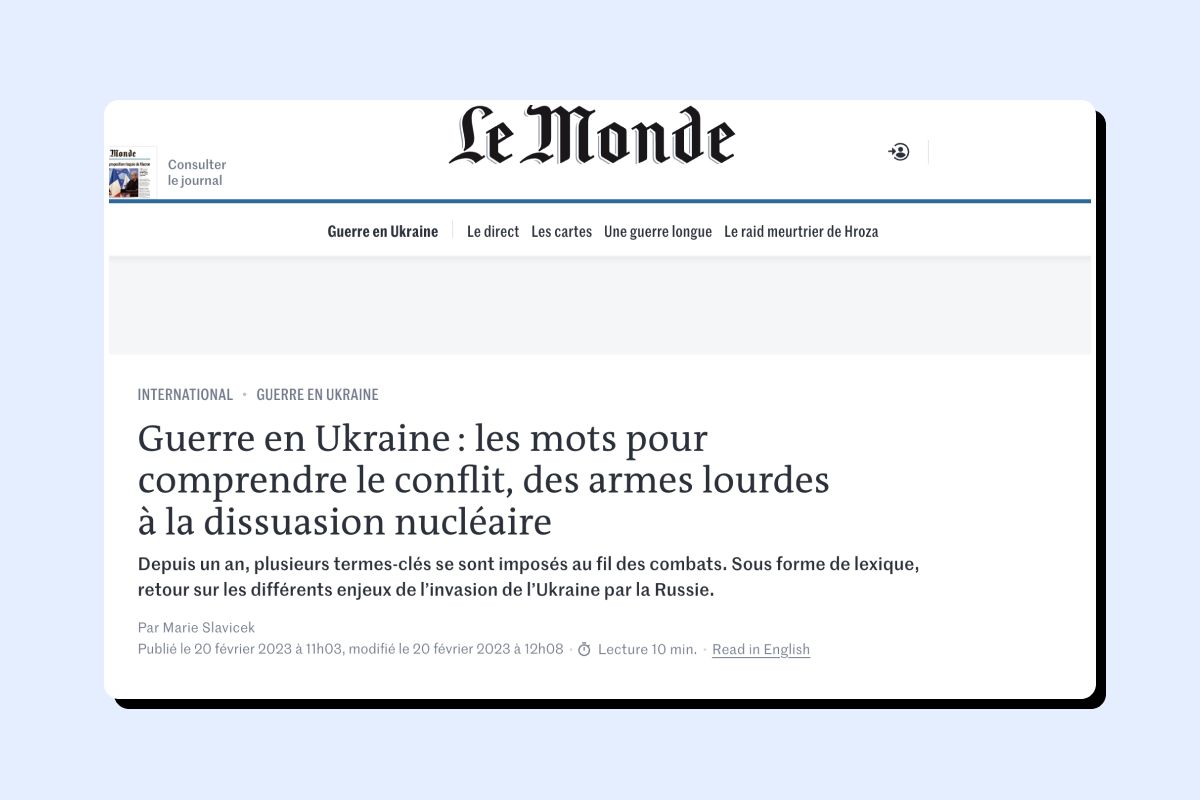
- French daily Le Monde offers its readers a glossary of terms they might encounter while reading the news:
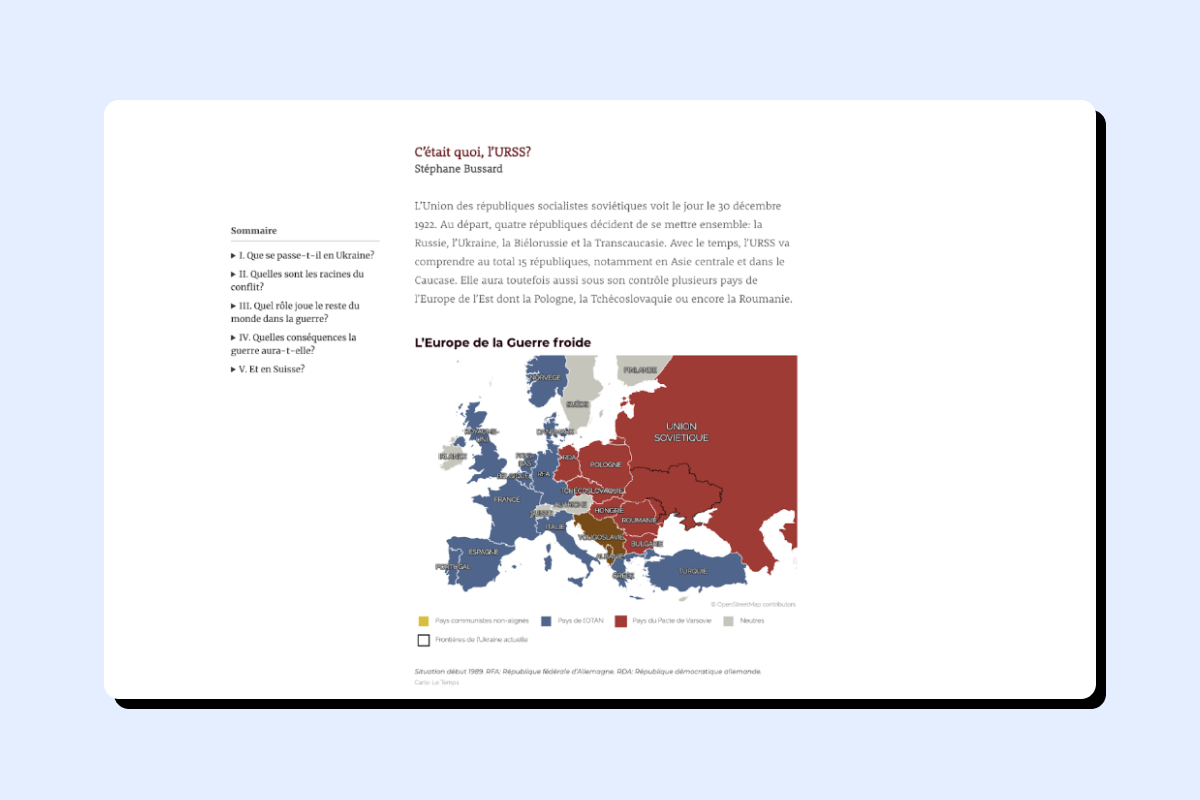
- In a special report on the war in Ukraine, Le Temps wanted to address "young people" directly, their "parents" and the "teaching staff". The Swiss daily answers a series of questions: "How many Ukrainians fled their country because of the invasion?", "UN, NATO and EU: who does what?" and "What consequences does the war have for sport?". A format rich in photos, maps and videos. Le Temps also invites teachers and their students to order a copy or to download a PDF version for free.
- War is explained to children who are increasingly exposed to content shared online at a young age. The weekly 1jour1actu made available its issue titled: "What happened in Israel?", just as it did with its issue on the war in Ukraine last year. In recent months, the media has also covered other similar topics, such as the work of a war correspondent or the laws of war.
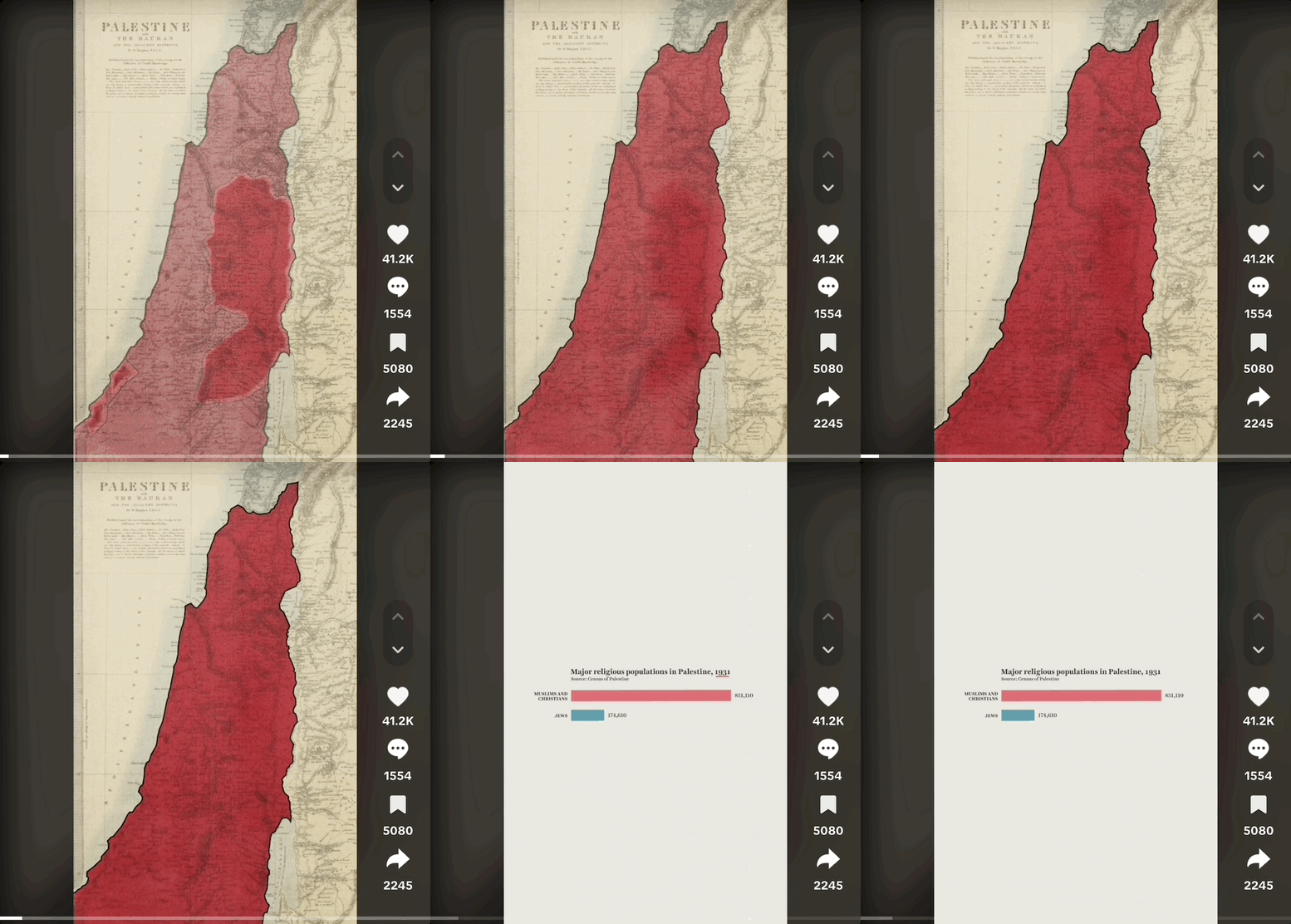
- To reach a wider audience, American online media outlet Vox recently decided to rebroadcast several videos about the Middle East on TikTok, originally published on its YouTube channel.
Working on misinformation
The Internet revolutionized information access and distribution. But social networks like X (formerly Twitter) or TikTok, where viral content predominates, are also platforms conducive to the spread of misinformation or even propaganda. This phenomenon has prompted media outlets to strengthen their work in this area, sometimes dedicating entire departments to it and establishing a presence on networks affected by disinformation.
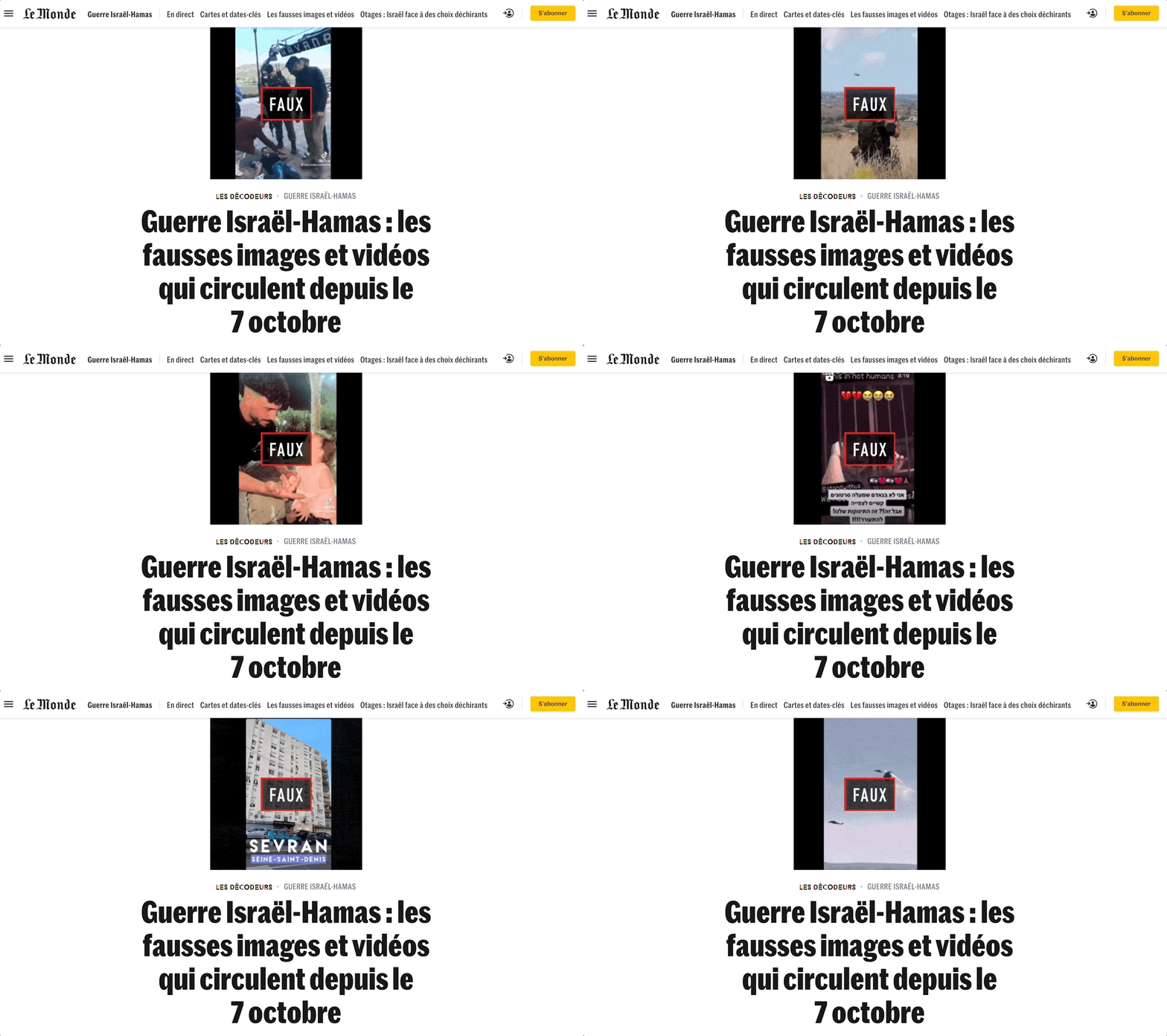
- In a regularly updated file, Le Monde's Decoders department has catalogued a range (non-exhaustive) of misleading videos and photos circulating online. The media outlet also offers its readers this guide to verify the authenticity and accuracy of an image.
- A year after the start of the war in Ukraine, RetroNews offered a series of archives on wartime information as part of "The 34th edition of Press and Media Awareness Week in Schools". A collection that notably reminds us that wartime misinformation was born long before the advent of the internet and social media.
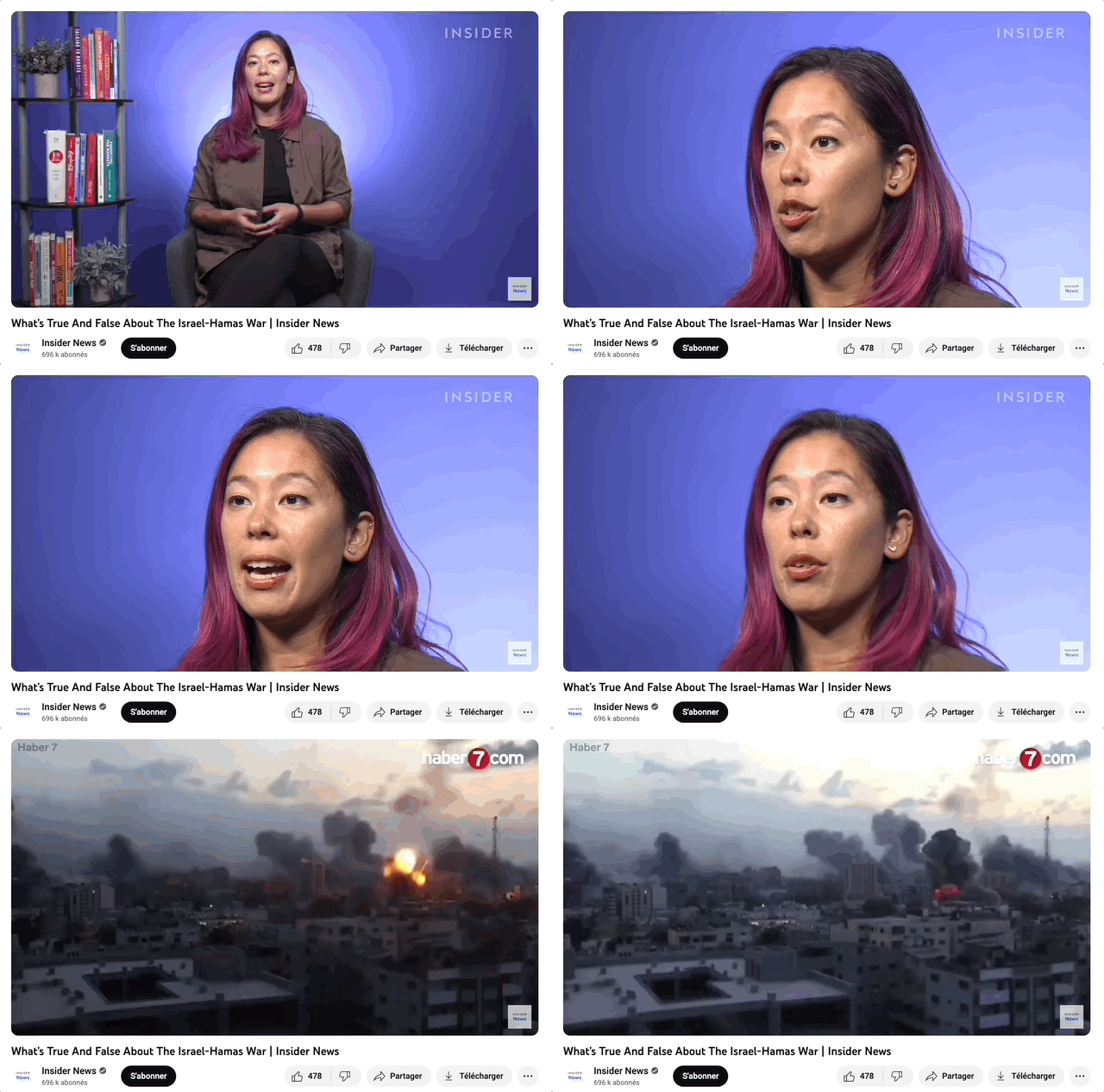
- Insider News interviewed researcher Kolina Koltai about the working methods used at Bellingcat in this video published on YouTube. She describes in particular the consequences of online misinformation in a conflict and how the NGO manages to identify false rumors circulating on the internet or manipulated videos.
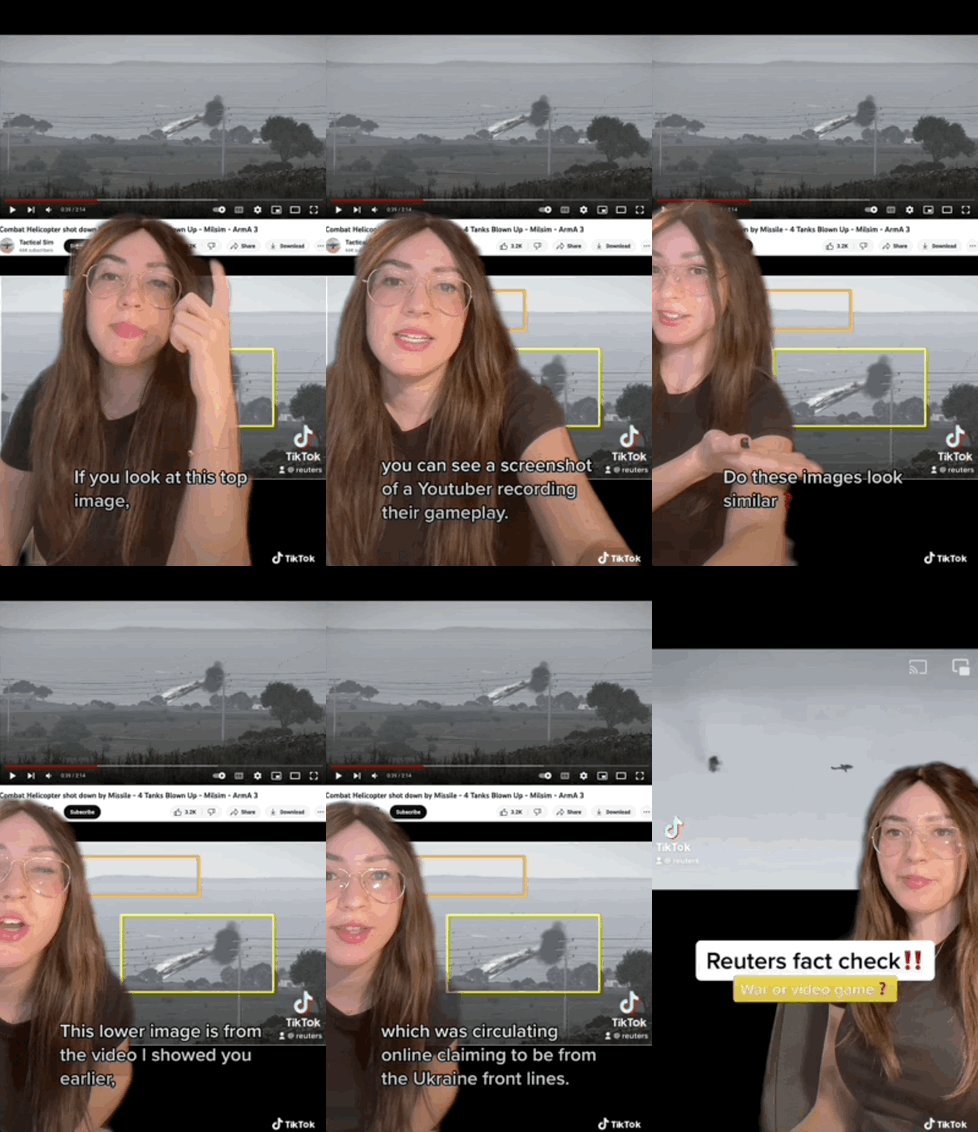
- On TikTok, a journalist from the American news agency Reuters explains how some internet users were able to confuse images originally from a video game with real events. By publishing this work on TikTok, the agency hopes to reach platform users directly who may have been deceived by this type of content.
Use data visualization and mapping
Mapping can illustrate, in a clear and detailed way, a number of sometimes complex issues through a simple article. It can facilitate the identification of different conflict zones or track the movement of armed forces. Several media outlets have leveraged maps and data visualization to illustrate and enhance their editorial offerings, providing a holistic understanding of conflicts.
- On its website, the Washington Post released an interactive map allowing readers to track the evolution of the border between Ukraine and Russia over 12 months of conflict. Information boxes inform the reader of the location of strategic points and territories that have been the subject of intense fighting. German weekly Die Zeit also offers its own interactive map tracking the conflict.
In its format, the Washington Post also suggests at the end of the reading a selection of articles, published during the year, to read or reread.
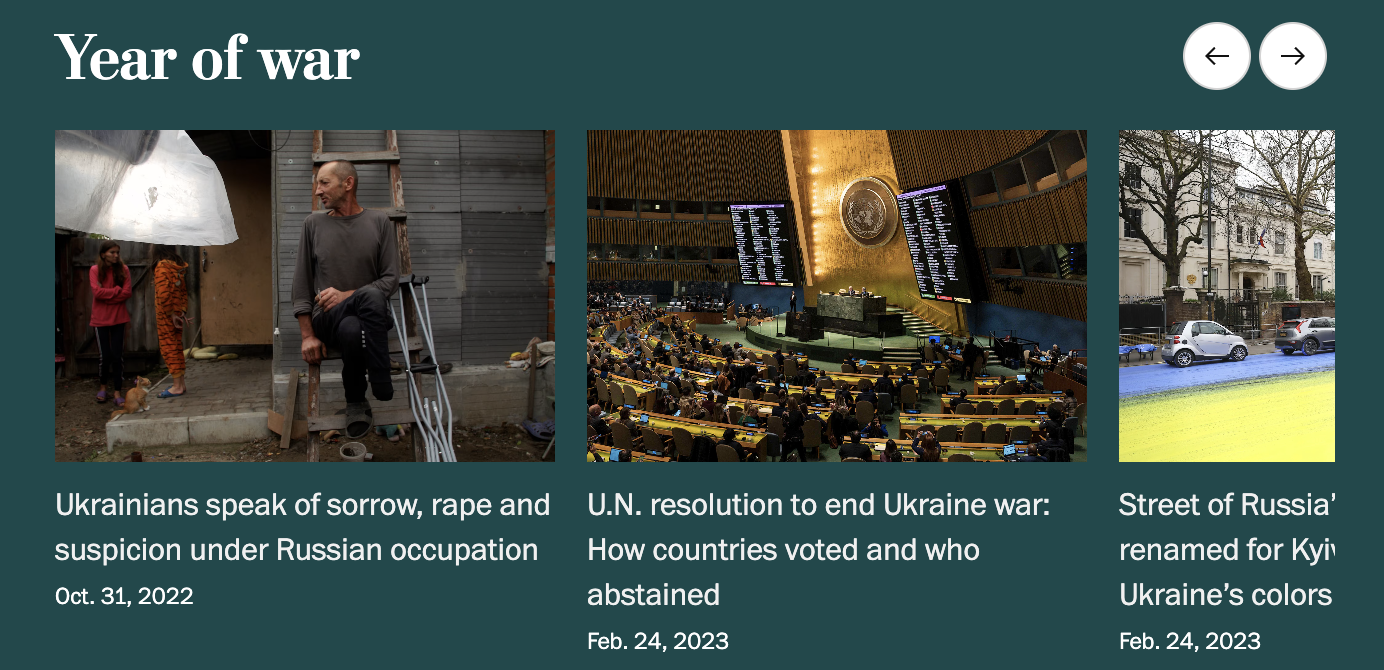
- Several pages of the first issue of Kometa, which aims to "put the East at the center of the map", are dedicated to cartography. The media outlet, which focuses on long-form narratives and photography, uses it to tell the story of how Russian territory has evolved over the past few centuries and to demonstrate how Moscow is revising schoolchildren's textbooks.
- When the conflict broke out in Ukraine, Le Figaro quickly mobilized part of its team to work on mapping. Work that, even to this day, continues to be a success in audience metrics. For La Revue des Médias from the INA, Stéphane Saulnier, head of the Data Visualization division, and Dario Ingiusto, deputy head of the Graphics department, discuss the behind-the-scenes process of designing a map and highlight the importance of this work in covering a conflict.
- In this conference, Nadja Kelms describes the data visualization work carried out by the editorial team of the independent media outlet Texty, based in Ukraine. She presents notably the different types of data collected by the team and how they are presented to readers.
- Thinking about using data visualization or mapping in your own conflict reporting but not sure where to start? Check out the Global Investigative Journalism Network's guide on the subject: How to Use Data Journalism to Cover War and Conflict
Transparency and honesty
Media and journalists are obviously not exempt from errors and inaccuracies, especially not in times of war. In such cases, they should acknowledge them with full transparency and correct them. The Council for Journalistic Ethics and Mediation offers, among other things, a series of recommendations in a guide on the subject.
- The New York Times recently apologized for failing to take sufficient precautions in its coverage of a hospital bombing in Gaza. A significant mea culpa, though the Nieman Lab nonetheless lamented some shortcomings in this correction exercise.
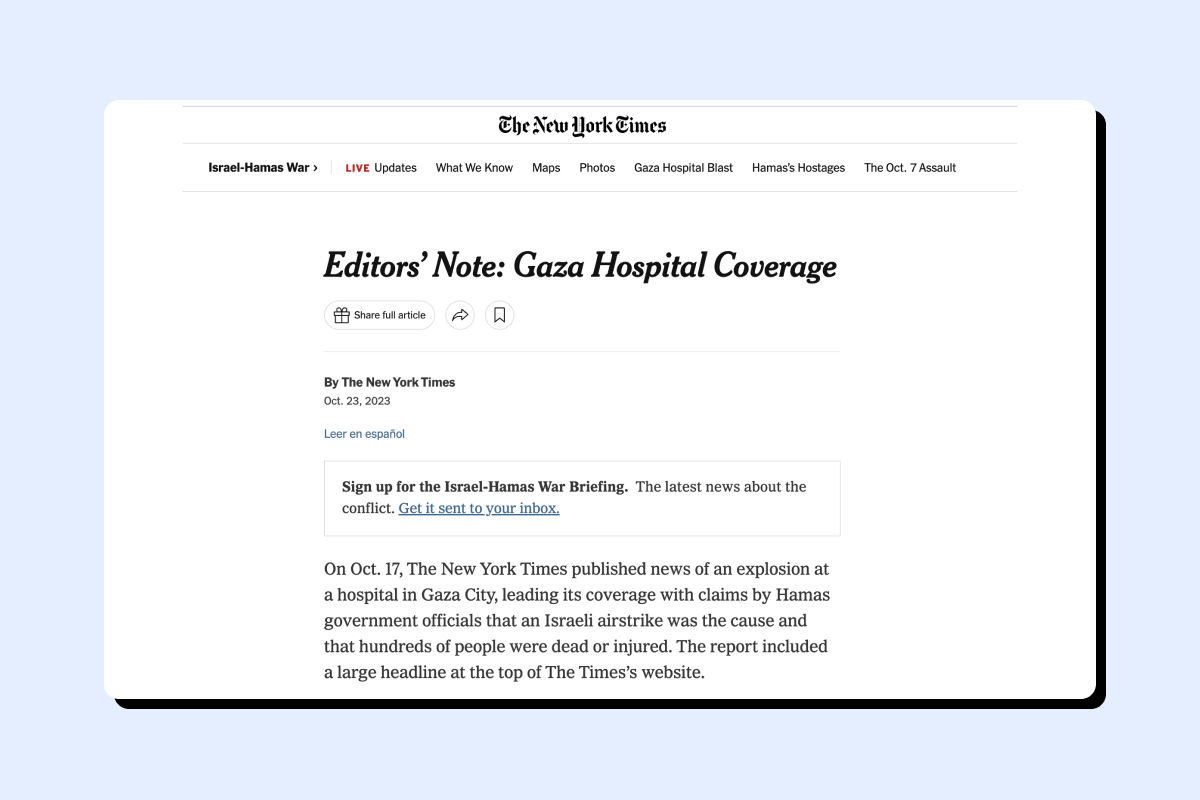
- Other media outlets also serve this watchdog role. The online media Arrêt sur images has for example reconstructed the timeline of how misinformation about the bombing of a hospital in Gaza spread, which was widely relayed by numerous media outlets across the world.
- As part of this effort toward transparency, it can also be useful to explain how journalists work. Maryse Burgot, senior correspondent for France Télévisions, answered questions from the public about her coverage of the conflict in Ukraine: "Do you have nightmares?" Hugo asks for example, or "How do you stay neutral in such situations?" Thibault wonders.
- As part of its Washington Post series "Behind the story" in which the American newspaper had 3 journalists share their perspectives on their work in Ukraine, the outlet showcases their firsthand accounts transcribed in this article, illustrated by their own reporting from on the ground.
Train and protect its journalists
Covering conflicts in Ukraine and the Middle East has cost many journalists their lives. Beyond their physical safety, these high-risk missions can also impact their mental health as Poynter reports.
- The France Médias Monde group (RFI, France 24, MCD) and the INA have been organizing a training program for several years for journalists who will be called upon to cover conflicts. The lessons taught cover best practices and reflexes to adopt online, as well as techniques to learn in order to treat a hemorrhage.
- In this behind-the-scenes format, Agence France-Presse mentions a few practices implemented within the agency to preserve the safety of journalists and their sources.
- Due to the nature of their work, journalists can also constitute valuable sources in the context of future proceedings aimed at punishing war crimes. The Reckoning Project seeks to train journalists to better gather information for their articles as well as evidence of war crimes that could, in the future, be used before international courts.
- This dossier compiled by the International Network of Journalists on « Tips and resources for covering the Israel-Gaza conflict » lists a series of resources for journalists and media outlets wishing to cover the conflict. A section is dedicated to physical and mental safety, in which IJNET notably mentions the Dart Center's guide on trauma management and the Committee to Protect Journalists' safety kit.


