


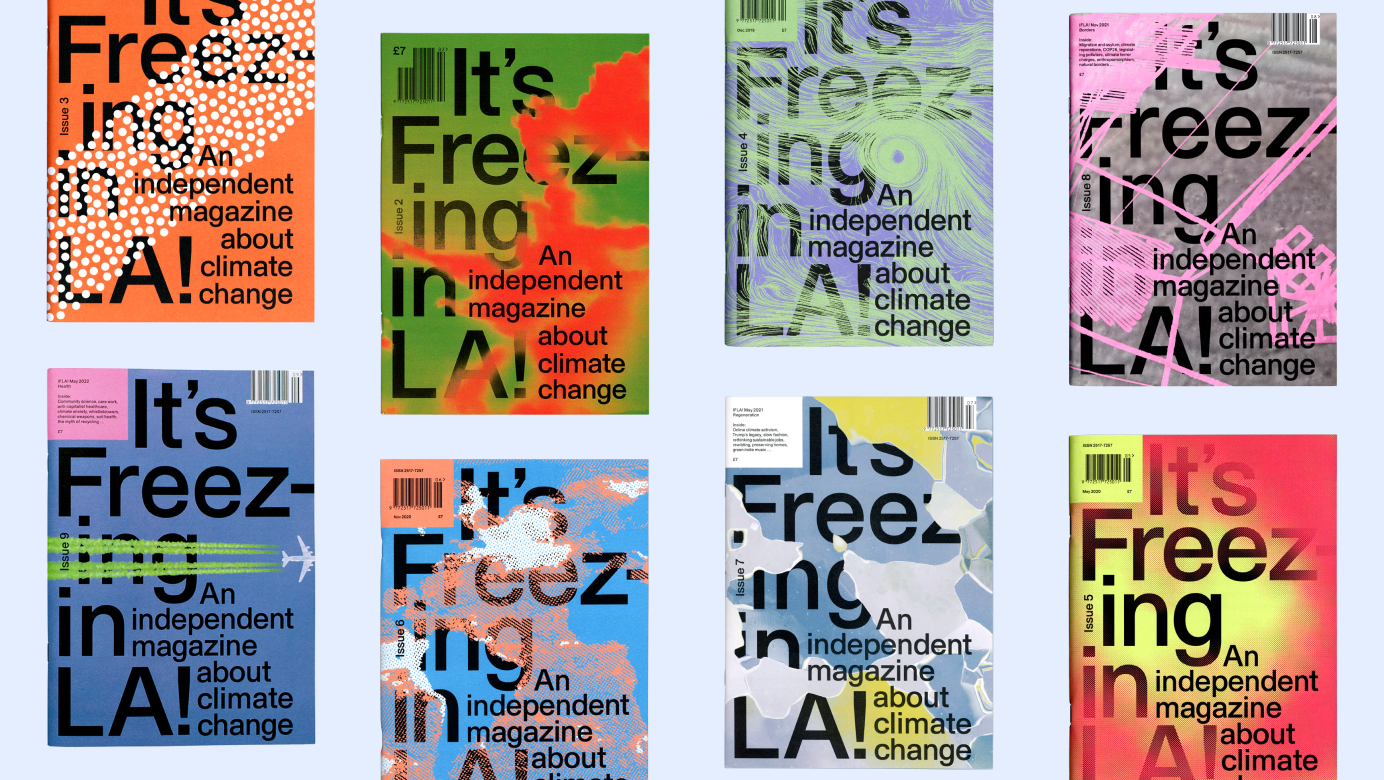
Name: It's Freezing in LA !
Nationality: English
Year of creation: 2018
Founders: Martha Dillon, Jackson Howarth, Matthew Lewis and Nina Carter
Business model: Subscription, single purchase
Format: paper and podcast
Media type: Ecology magazine
Publication language(s): English
In 2018, Martha Dillon, Jackson Howarth, Matthew Lewis and Nina Carter came together with a shared observation: few publications offered content connecting climate urgency, social justice and capitalism. This team would go on to launch It's Freezing in LA!, an independent biannual magazine based in London. From its launch, the publication found considerable success.
Each issue is built around a specific theme (health, greenwashing, or the relationship between humans and ecology) and invites numerous illustrators and writers to collaborate. This plurality of voices makes it possible to explore the same subject from a wide diversity of perspectives (art, opinion). Since 2021, audiobooks have been added to complement and revisit previously published articles.
A visual delight
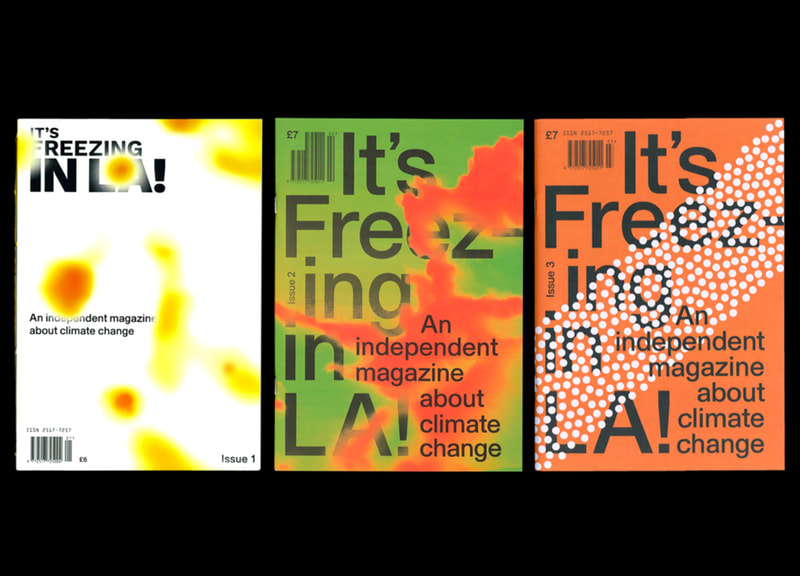
I discovered this magazine quite by chance—I came across their covers online and instantly loved them. What I particularly appreciate is that the cover's graphic choices harmonize with the content. The patterns used on the cover are inspired by the issue's theme and recur throughout the pages.
The magazine's layout integrates scientific imagery with graphic codes derived from fanzines, which reference a history of activism. A faithful association with the media's editorial line, between scientific journalism and activism. Faced with an audience that avoids the topic of ecology, it seems necessary to develop and explore new narrative and graphic forms to make the subject engaging to read. This is what Millie Servant, editor-in-chief of the journal Climax, recently observed when discussing ways to make ecology a stimulating, funny, and sensitive subject for an audience overwhelmed by anxiety-inducing information.
For their part, the designers of It's Freezing in LA! opted for bright colors and a minimalist approach, using a single stapled booklet. These choices helped build a strong visual identity in constant evolution. They avoided falling into the cliché of the eco-friendly magazine with shades of green, while keeping the publication accessible through an affordable price point.
Discovering Number 10
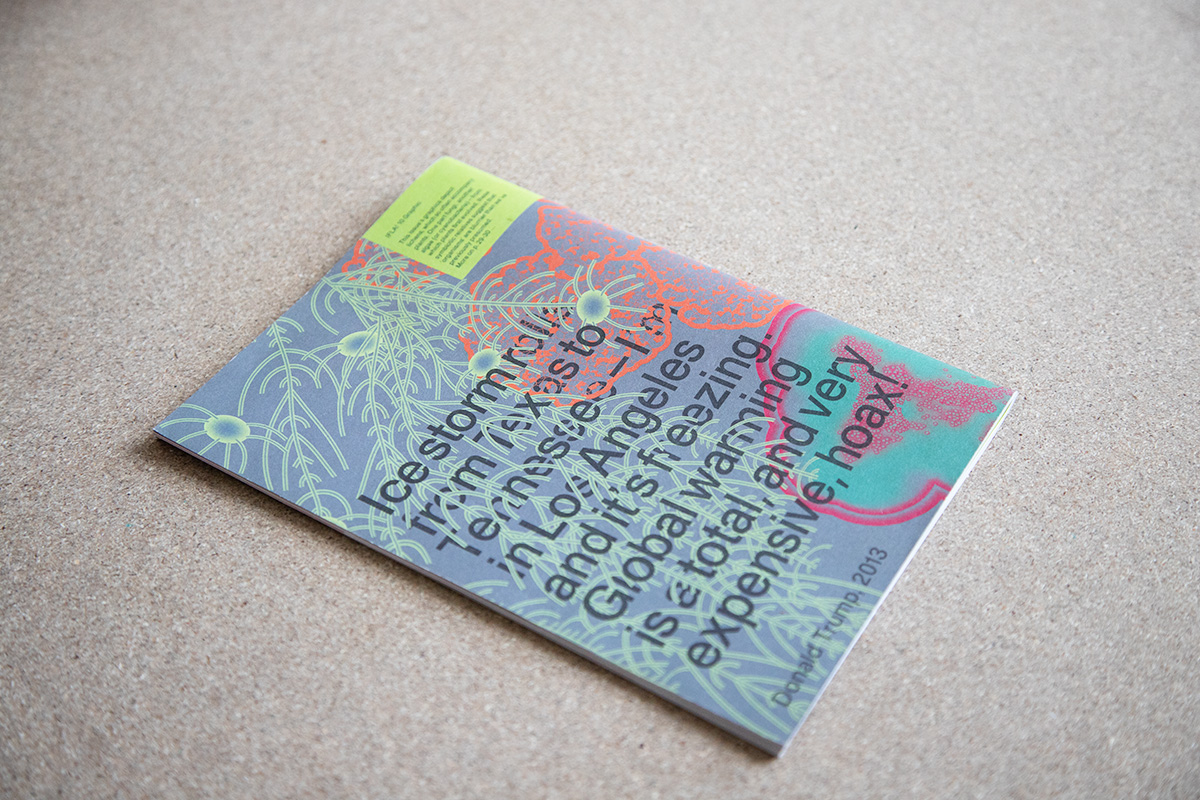
At Médianes' office, I was delighted to discover issue number 10 in one of the libraries. Once I had the long-awaited object in hand, I was able to study the magazine more carefully. The front cover, adorned with a gigantic It's Freezing in LA!, is covered with plant motifs, directly referencing the issue's theme: plants. The patterns deliberately overlap the title and thus play with the readability of the text. The back cover, for its part, highlights the origin of the magazine's title, a magnificent thumbing of the nose at a Donald Trump tweet from 2013: "A bitter cold front is spreading from Texas to Tennessee — I'm in Los Angeles and we're freezing. Global warming is an absolute and very costly hoax!". Ironic and sharp, this subversion immediately makes you want to dive into reading.
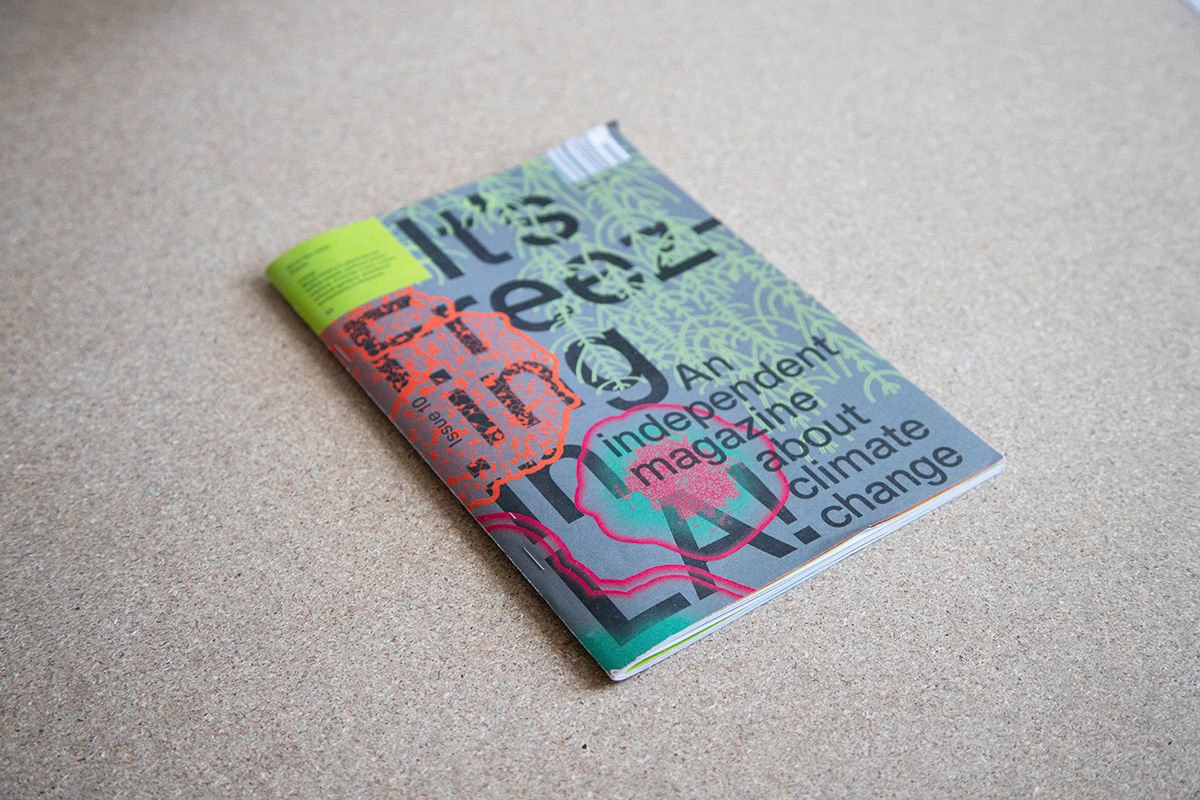
Each issue is characterized by a dominant color palette. Here, orange, red, green, and gray take center stage. Botanical patterns inspired by lichens—complex organisms that are part fungus, part algae—run throughout the magazine. At the heart of the issue, a two-page spread provides information about these plants and explains their ecological importance.
The guests invited for this issue are numerous, with artists, designers, as well as researchers and writers… There is great diversity of topics, covering history, architecture, infrastructure, geo-engineering… All centered around the question of plants.
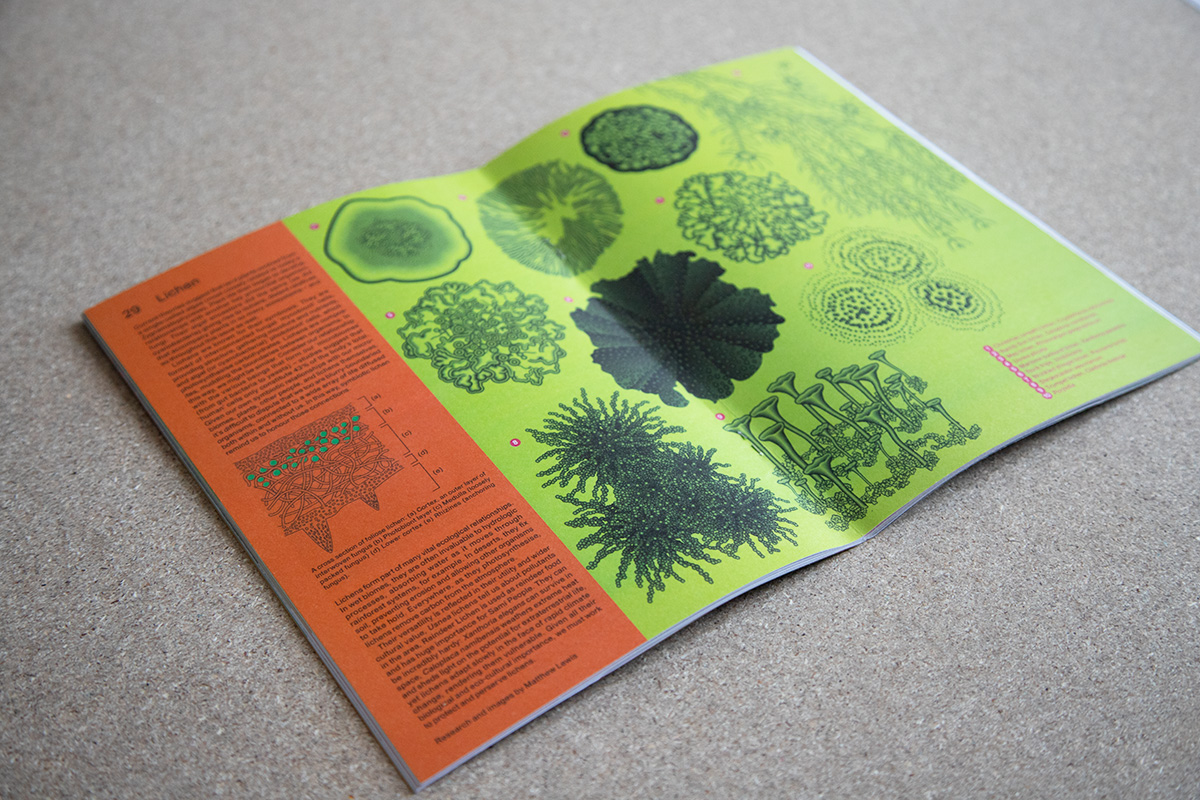
As I read through, I discover numerous essays, poems and different visual universes. The articles are fascinating, even if they often paint a bleak picture: « A very Victorian Water Crisis » investigates the evolution of water management in Great Britain, leading to the current pollution of rivers and beaches. Other pieces offer unexpected perspectives: « Gardens of desire » analyses the contradictions behind botanical gardens in India, which are both products of colonial history, revealing traditions and control, yet also complicit in queer romantic encounters.
Listen to articles with musical background
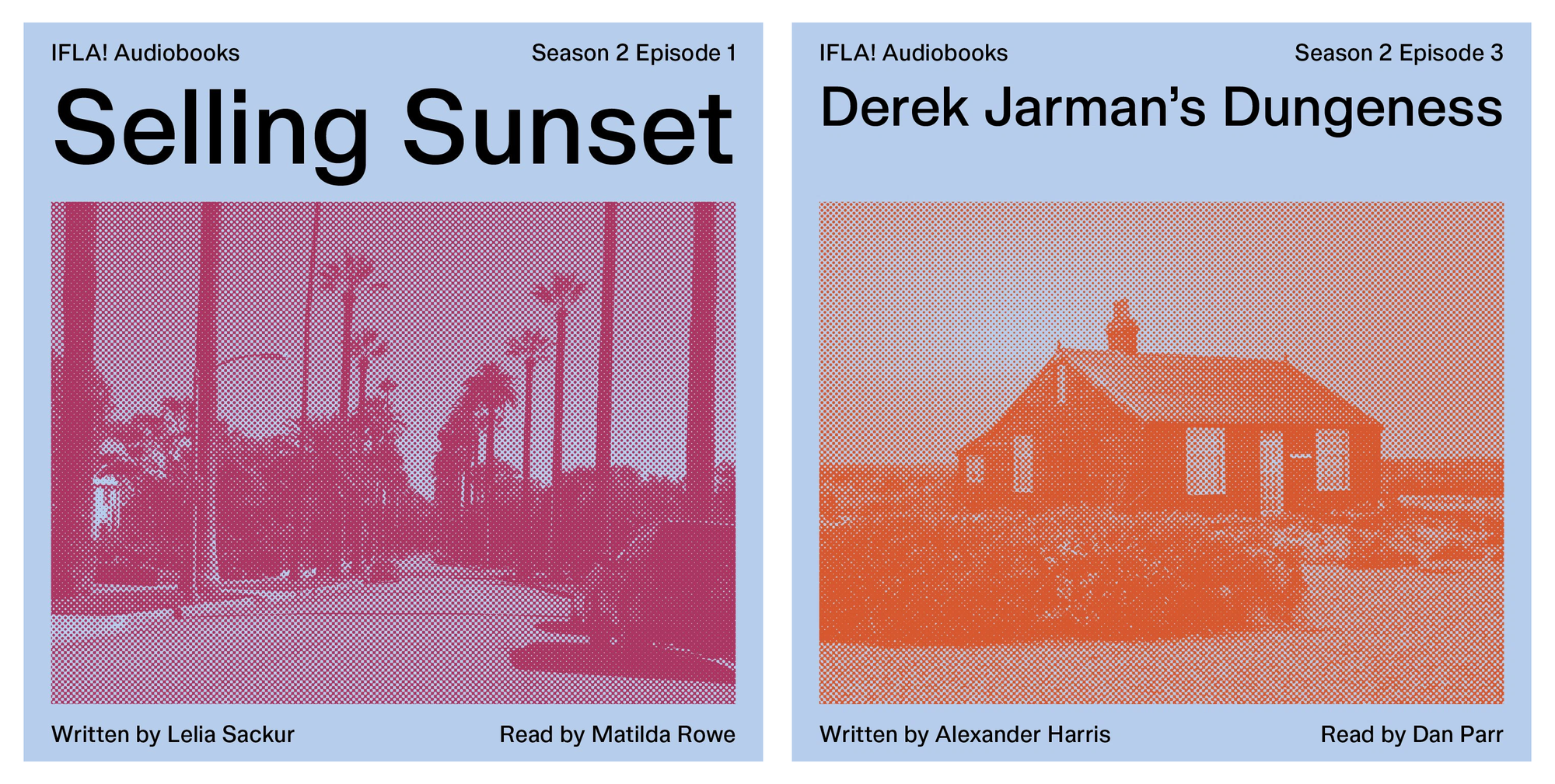
It's Freezing in LA! produces audiobooks that I've had the pleasure of listening to. Since 2021, the team has released two seasons, each featuring four episodes of around ten minutes. These episodes are based on articles already published. Episode 2 of season 2 features, for example, an article from issue 9 dedicated to the toxicity of tear gas in the United States. The topics are very diverse: ranging from the work of Derek Jarman, an artist who became a gardener, to the "dark reality" of Netflix's Selling Sunset.
In addition to an original soundtrack that perfectly complements the narrated texts, each episode features a different visual style. Here, photography is highlighted, overlaid with a vibrant color.
I strongly recommend visiting their website, where many articles are freely available. You can also subscribe to their newsletter for exclusive articles and texts.
For my part, I can't wait to read the special issue Visible Signs That Something Isn't Right: Creative Responses to the Climate Crisis. I hope to share my analysis with you soon.
To go further
- We are in year 59 after Patrick Drahi. All independent micro-publications have vanished along with the last punks. All of them? No! The fanzine still lives and breathes and is a wonderful source of inspiration for committed magazines. We reveal the secret ingredient of their potion to help you stand out from mainstream publications, without losing your identity.
- Lauren Boudard is co-founder of the newsletter TechTrash and of Climax, a newsletter about climate change news launched in 2021, which became a fanzine the following year. She is the guest of the fifth episode of the second season of Chemins, the podcast by Médianes.
- Out of ideas? Panicking to find inspiration? Here are some suggestions for resources to enhance your visual culture, whether for publishing, communication campaigns, typography, or color.
- Weight, texture, ink, finish: a series of practical insights to help you choose your paper.
- Printing means paper. What elements change from one type of paper to another? What impact does this have? We present some practical examples.


