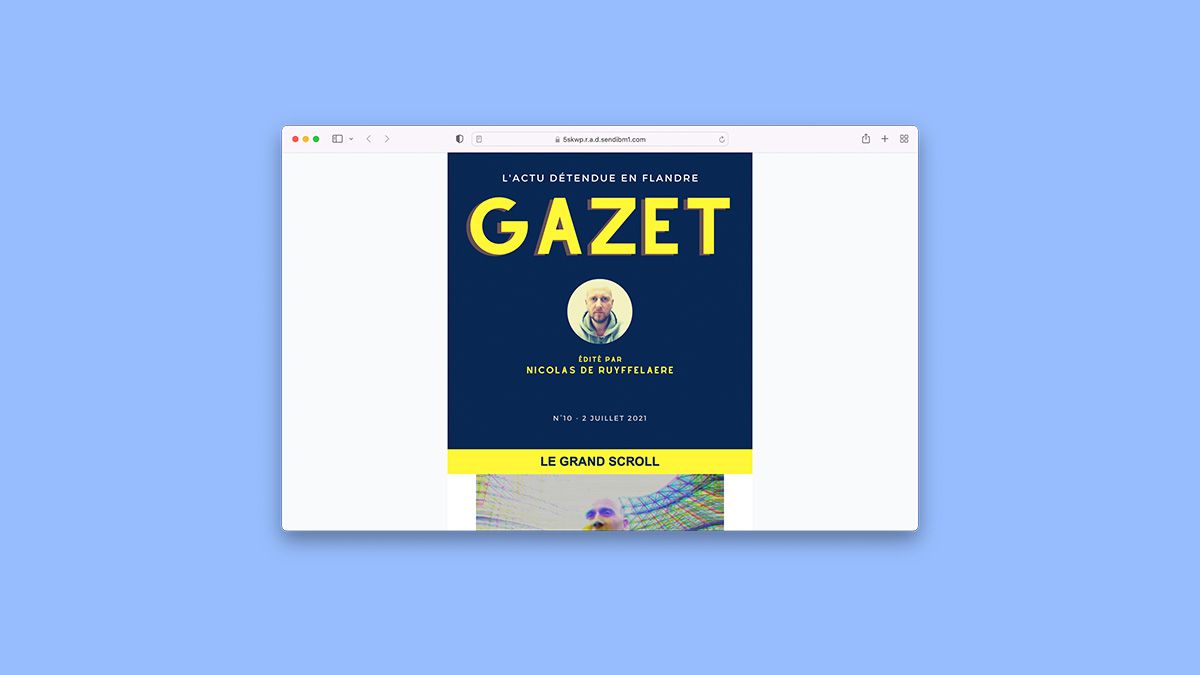
Gazet is a local publication that covers a part of Flanders, specifically the area between Lille and Dunkirk. This focus makes its newsletter a one-of-a-kind model in its region and easy to get started with for anyone interested. The first issue was released in February 2021. The tone is set right away: human, humorous, and full of stories.
Our series:
They launched their media outlet in 2021; they share their story
There are those like Anas Daif who launch their own media outlets right after graduation, and those who build a career in print media before taking the plunge. This is the case for Nicolas de Ruyffelaere, who is the guest on this second episode. He’s from northern France and worked for 15 years at a regional weekly newspaper. Boredom with his job prompted him to take the plunge and launch his own newsletter: Gazet.
Choosing a newsletter for a very local readership—between Lille and Dunkirk—is a bold move because it’s so narrowly targeted. Why did you choose this format?
Nicolas de Ruyffelaere: The goal is to stick to what I know how to do: local journalism. I’ve always lived in Flanders, so it made sense for me to focus on this region. I looked to see if there was any media outlet—other than the traditional ones—that offered the same thing, and the answer was no. I had several requirements: to create something easy to set up, to stick with the written format, and to speak directly to the reader. So the newsletter was the obvious choice. With Gazet, I want to maintain a human touch, tell stories, use humor, and offer it for free.
After working in the newsroom for 15 years, you left to devote yourself fully to the project and shift your focus to teaching journalism. How did you get started?
I wasn’t afraid to take the plunge. In October 2020, I thought about the format and content I wanted to offer. I reached out to my friends and fellow journalists to find out what they thought of the project. The most important thing? That it be a human-centered, authentic media outlet where people could recognize my style and voice. Between the first issue and the ones that followed, I’ve experimented with different formats and sections, and I’ve taken reader feedback into account. Right now, I have 600 subscribers and a 50% open rate. I’d like to reach 1,000 subscribers by the end of the year. The goal isn’t to make a living from this newsletter, but above all to have fun.
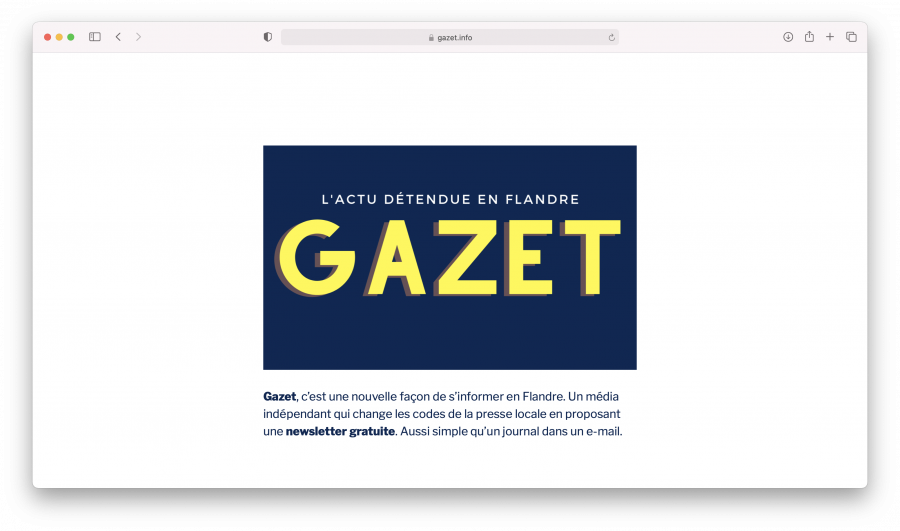
Between the first and last issues, you tested out different sections, and readers gave their feedback—how has your project evolved?
The advantage is that I can speak with sources I wouldn’t be able to reach if I worked for a traditional news outlet. So being an “independent journalist” is definitely an asset. Eventually, I’d like to delve deeper into the topics I cover—and maybe even do some investigative reporting. I want to keep telling the stories of our region, but I’d like to embody it even more. To do that, I plan to branch out into opinion pieces and analysis as well. In fact, after a few issues, I sent out a survey to find out which sections are the most popular and what readers would like to read.
What advice would you give to someone who wants to start a newsletter?
Don't be afraid to mess up; experiment with different formats. If the project holds up, don't be afraid to explore niche topics—there will always be an audience eager to read your work.
To go further
When Newsletters Change the Game for Local News: The Local News Initiative Explains Why Newsletters Are a Good Strategy for Local Newspapers.
Axios is focusing on local content; for example, in 2020, Axios launched a series of local newsletters.