On the occasion of major events such as the presidential election, certain newsrooms join forces to create collaborative editorial projects. A behind-the-scenes look at “alternative election night parties” with Loopsider and StreetPress.
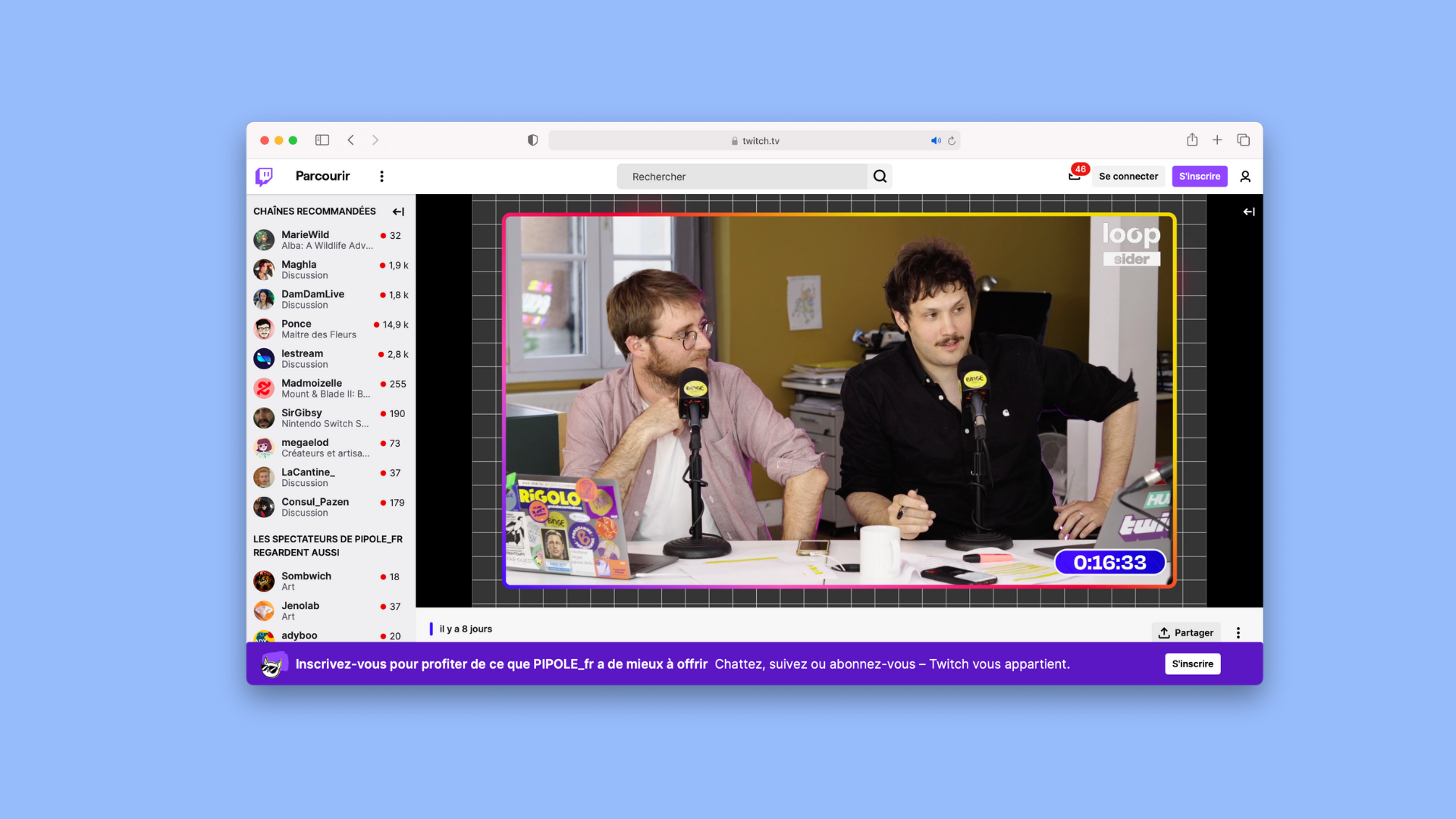
On the evenings of the first and second rounds of the presidential election, Loopsider, Binge Audio, and Pipole did not tune in to the major television coverage of the results. Instead, they chose to host their own show: the “counter-election night” on Twitch. “It’s not about turning our backs on the major networks; it’s a way to reach our audience, who, in any case, won’t be watching TF1 or France 2,” says Harold Grand, editor-in-chief at Loopsider. On the evening of the first round, the outlet partnered with the Twitch channel Pipole and the podcast studio Binge Audio. The goal of the evening? To talk about politics without politicians. Broadcast on Pipole’s channel using Binge Audio’s sound equipment and the Loopsider team, the show was conceived by the three editorial teams.
"Staying in step with demand"
On Sunday, April 10, at 5 p.m., even though the polls are far from closing, newsrooms are already kicking things off. To pass the time until the results are announced at 8 p.m., the teams from the three media outlets have planned a packed schedule and invited numerous guests: Alexandre Léchénet (data journalist and author of the Arobase newsletter) to discuss polls, and environmental activist Camille Étienne. Johan Hufnagel, co-founder of Loopsider, is the first to take the stage to explain the project: “The networks themselves have shown that election night coverage is losing steam. It seems pretty clear that today, audiences who want to stay informed are turning to online platforms. Even though the tradition of TV election results remains, the idea is to provide access to other debates, to break away from the usual narrative, and to stay in tune with our audience’s demands.”
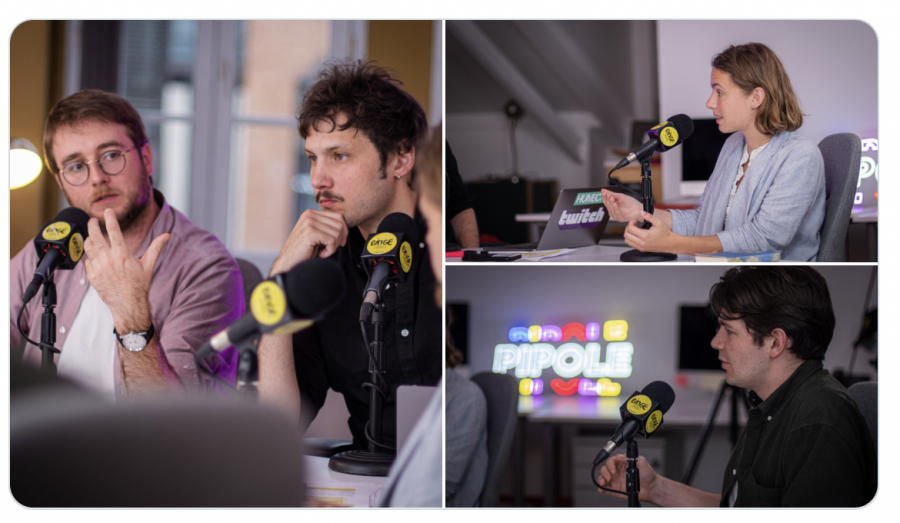
During the evening, a few minor technical glitches cropped up: with journalists reporting live from campaign headquarters, and the results being announced several minutes after they had already been reported on TV. That’s actually a good thing, since that’s what Twitch is all about: not always watching the clock, managing the live stream based on viewer comments, chatting, and covering the unexpected. For this first evening, the show—which was also streamed live on Loopsider’s Facebook page—garnered a cumulative total of 20,000 views on that platform.
"An editorial experiment"
"The Loopsider editorial team reached out to Binge Audio, since we know each other well and our editorial approaches complement each other," Harold Grand continues. “Our audience isn’t looking to watch an interview with a political figure, but rather concrete content featuring real-life witnesses,” he continues. “Then, we were looking for a distributor, so I contacted Pipole.” The program features discussions with journalists and activists to talk about health, education, and even the far right. The three media outlets therefore joined forces to offer a more substantial format.
A model that allows us to both distribute content that, “if we’d done it on our own, wouldn’t have turned out very well, Pipole already has the equipment, the production team, and high-quality production.” The other advantage is pooling audiences, even though the evening was more of an experiment: the teams didn’t have any targets for viewership or brand image—“it was just a learning experience for us.” The same thing happened on the evening of the second round, April 24, which drew 700 views on Pipole’s Twitch channel. Loopsider is already considering extanding this format to other events and, in the long run, find a way to create a more regular show. But “it’s really a lot of prep work, so we’ll have to see.”
Suggest an alternative
Other news outlets also came together for a counter-election night event: Le Média invited StreetPress, the Bondy Blog, Radio Parleur, and Regards to join them in their studio. “What we were interested in was moving beyond the sports-style commentary you find on the major networks,” explains Mathieu Molard, editor-in-chief of StreetPress, who co-hosted the show alongside Théophile Kouamouo from Le Média and Hélène Berkaoui from the Bondy Blog. For the first-round episode, Le Média recorded a total of about 120,000 views on its YouTube channel, followed by 93,000 views for the second round.
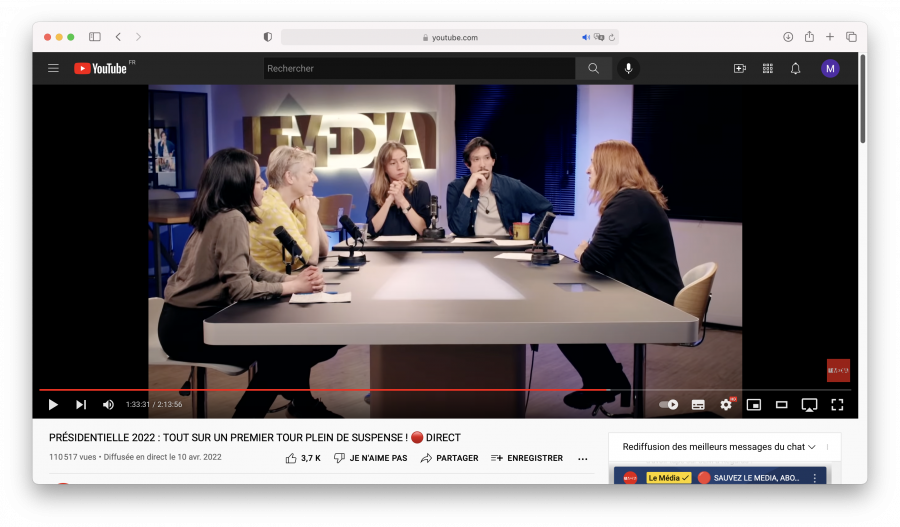
Without taking a direct stand against the major news networks, he is more interested in building an alternative: “On news channels, they tally the points, analyze the candidates’ techniques and tactics—they don’t talk about politics but about strategy. On our show, we want to give a voice to civil society and explain everyday political practices with activists and lawyers.” Over the course of the two-hour program, guests take turns on the set, including economist Thomas Porcher, Paris City Council member Danielle Simonet of France Insoumise, MP Aurélien Taché, and attorney Raphaël Kempf.
Reaching Other Audiences
This isn’t the first time the five news teams have worked together, as they had already interviewed the candidates for thepresidential election during the campaign, on *Face aux Indés*, a weekly show launched specifically for the occasion. To put together the election night broadcasts, “there’s a sense of trust among the journalists; it’s all about working well together. In practical terms, we had a Telegram group to organize the presentation and coordinate guests.” Strategically, Mathieu Molard believes it makes sense to form partnerships because “it’s a good way to raise our profile among the audiences of the media outlets we work with. We complement each other editorially; what interests me is also speaking to their audience.” It’s not so much an economic goal—“there’s no short-term return on investment from these events.” Most of these media outlets rely on donations, so the public is sensitive to that.
"Not all independent media outlets are the same."
For the editor-in-chief, surrounding himself with other newsrooms allows outlets like Le Média to re-establish their legitimacy after weathering multiple crises, such as suspicions of a close relationship with La France Insoumise. “Of course, not all independent media outlets are the same; there was some debate among us, particularly regarding the format the show should take: a post-election debrief or inviting guests from civil society.” He doesn’t intend to pit “mainstream” media against “independent” media: “Our audience consists of politically engaged people. That said, they’ll also watch the results on TV and then tune in to our show, for exemple.” When he looks at the trends in independent media, he says he’s satisfied: “Admittedly, there is a media crisis, but over the past ten years these media outlets have found a certain balance, are multiplying, and offer a wide range of content.”
It remains to be seen whether this alliance among independent media outlets will endure beyond major democratic milestones. Admittedly, this requires a similar editorial stance among the media outlets and editorial consistency in the proposed project. But pooling resources makes it possible, above all, to reach a new audience, offer an editorial alternative, and introduce new formats. This proposal allows us to draw on each other’s strengths—whether editorial or technical—to meet the needs of our audiences. Practical.
Editor's Note: Médianes, the studio, has been supporting StreetPress in its strategic development since 2021.
Learn More
When covering a major event like the presidential election, there’s strength in numbers. We mentioned this in our January 2022 newsletter, featuring Radio Parleur, Basta!, and Politis. These three media outlets joined forces to cover the presidential election and embark on a “tour of France’s social struggles” as part of the Hexagone project.