Transparency in the Face of Distrust. From “About Us” pages to journalists’ disclosures of interests, and including the sharing of work methods, newsrooms are laying their cards on the table with their audience. This commitment to trust is rewarded by the attention of readers who value clearer and more direct information.
Interest-free
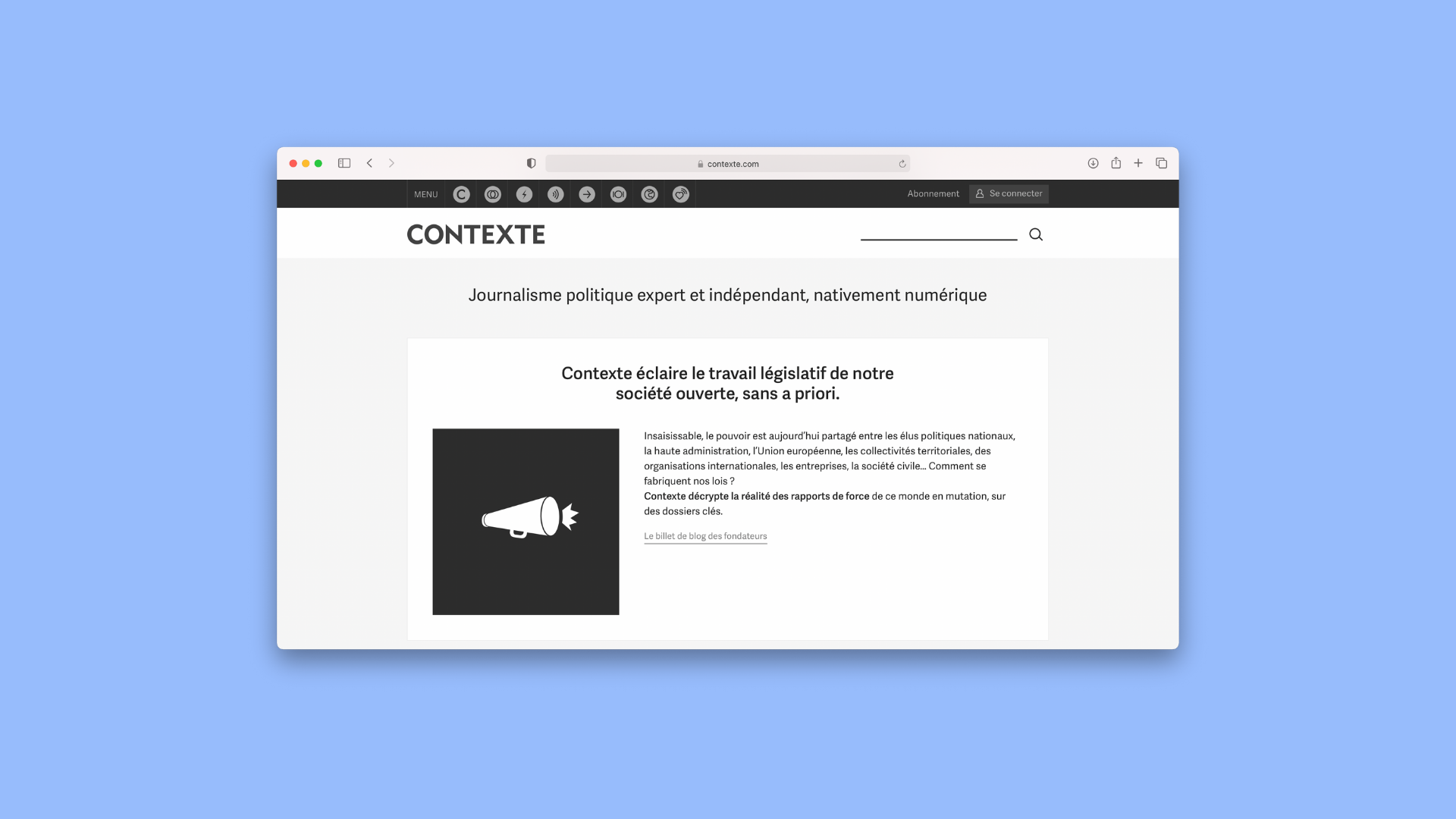
Since 2013, Contexte has been analyzing current events in French and European public policy. In this ecosystem, the topics covered are often sensitive or may lead to public skepticism about the relationship between journalists and elected officials. Hence the importance of demonstrating transparency to its readers through a code of ethics. Contexte has therefore published the media outlet’s declarations of interest and the percentage stake held by each shareholder in the company. Honest.
Share Your Approach
In the United States, The Markup is dedicated to investigating the interplay between institutions and new technologies. So far, nothing revolutionary, you might say. However, its trademark approach is based on sharing the data that its team uncovers. And that’s where it gets interesting! The Markup documents its research methods in detailed reports, publishes its databases, and shares its source code. An example? The way the team analyzed the most-shared content on Facebook.
Individual Partners
Are you a fan of “About Us” pages? The Marseille-based Marsac’tu goes a step further by disclosing the identities of its media, technical, and nonprofit partners. The “About” page thus proves useful not only for readers but also for the outlet’s staff. Reporterre follows the same strategy and lists the editorial activities that the editorial staff carries out alongside the website: publications, books, and media partnerships that account for 3% of its revenue.