


Hello Léry, could you tell us about the launch of your newsletter?
Like many young media outlets, it all started during Covid. Before that, I was writing articles every week on my Velook blog with the sole aim of helping people find a used bike. I always had something to share, I never experienced writer's block. Back then, there was a website called Actuvélo that served as a kind of monitoring hub on the bike theme. Some OVH servers caught fire two years ago and many websites, including that one, disappeared. It was never brought back and I thought that was a shame.
At the same time, I became heavily involved in the No-Code France community, which now has over 8,000 members [Editor's note: No Code allows you to create digital solutions without writing any lines of code]. I kept seeing tools like Substack and Revue that let you launch a newsletter very quickly without having to think about design, colors, or how to lay out the information. In short, you write and you launch. It was a period when I was experimenting with something bike-related every month. Since I consume a huge amount of news related to this sector, I thought I'd create a press review.
Was monetizing it always the objective?
Absolutely not. Originally, I'm a Product Manager. In my professional work, I focus on solving problems for my clients. And I'm so focused on that, that in my free time, I love to "create for the sake of creating." So I launched this newsletter with a base of 200 contacts by adopting the product approach I'm familiar with [Editor's note: delivering a solution to a problem through an editorial product]. I asked my subscribers for their feedback and analyzed my metrics to improve my product—the newsletter. Over time, through doing this work, I realized that what I was doing in Product Management was perfectly suited to building a media business with a viable economic model.
There is genuine demand for the topic you're addressing. Why maintain free access to Vélo Concentré?
Today, Le Concentré Vélo has 3,900 subscribers with an open rate of 60%. This last metric is the only one that matters. If I made my newsletter paid, who would keep reading it? Perhaps 5% of my readers. In short, that doesn't interest me. I don't want to be a media outlet for an elite. I think nothing is free, but my cause is to help those who are driving the cycling industry forward. If I restrict my newsletter to subscribers who can afford to pay, my impact will inevitably shrink. All the difficulty lies in finding that balance.
How did you find this balance in the business model?
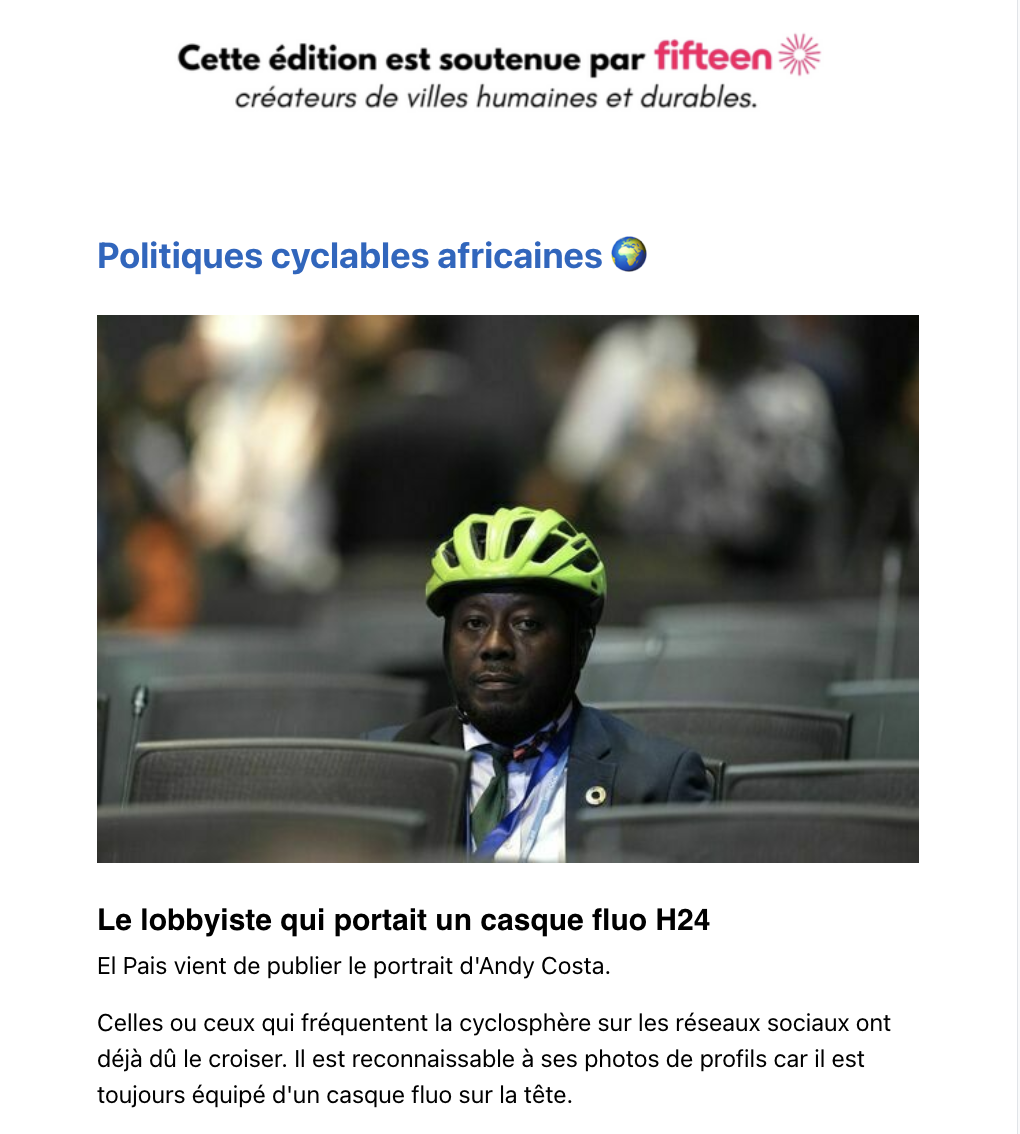
I've set up a banner clarifying that the newsletter is sponsored by Fifteen, a company that helps municipalities deploy bike-sharing services for short and long-term rental. They're the European market leader in this sector. The second sponsorship lever is the podcast, again with Fifteen who has been supporting me since the first season. I have a dedicated web page that outlines my various sponsorship offers, but clearly, my audience doesn't go there. Finding sponsors is something I have to pursue very directly myself.
"I'm trying to make my media outlet a useful and usable product"
Next, I have an agency side. My media outlet has a dual audience of individuals and professionals. Since the latter use it for monitoring trends, I try to capitalize on that to provide value to companies that need to find their customers. Concretely, I try to make my media outlet a useful and usable product. My agency follows the same principle: I will never create a promotional banner on Twitter even if I have the skills to do so. On the other hand, I have no problem designing a white paper or setting up a chatbot to help people understand the services you offer.
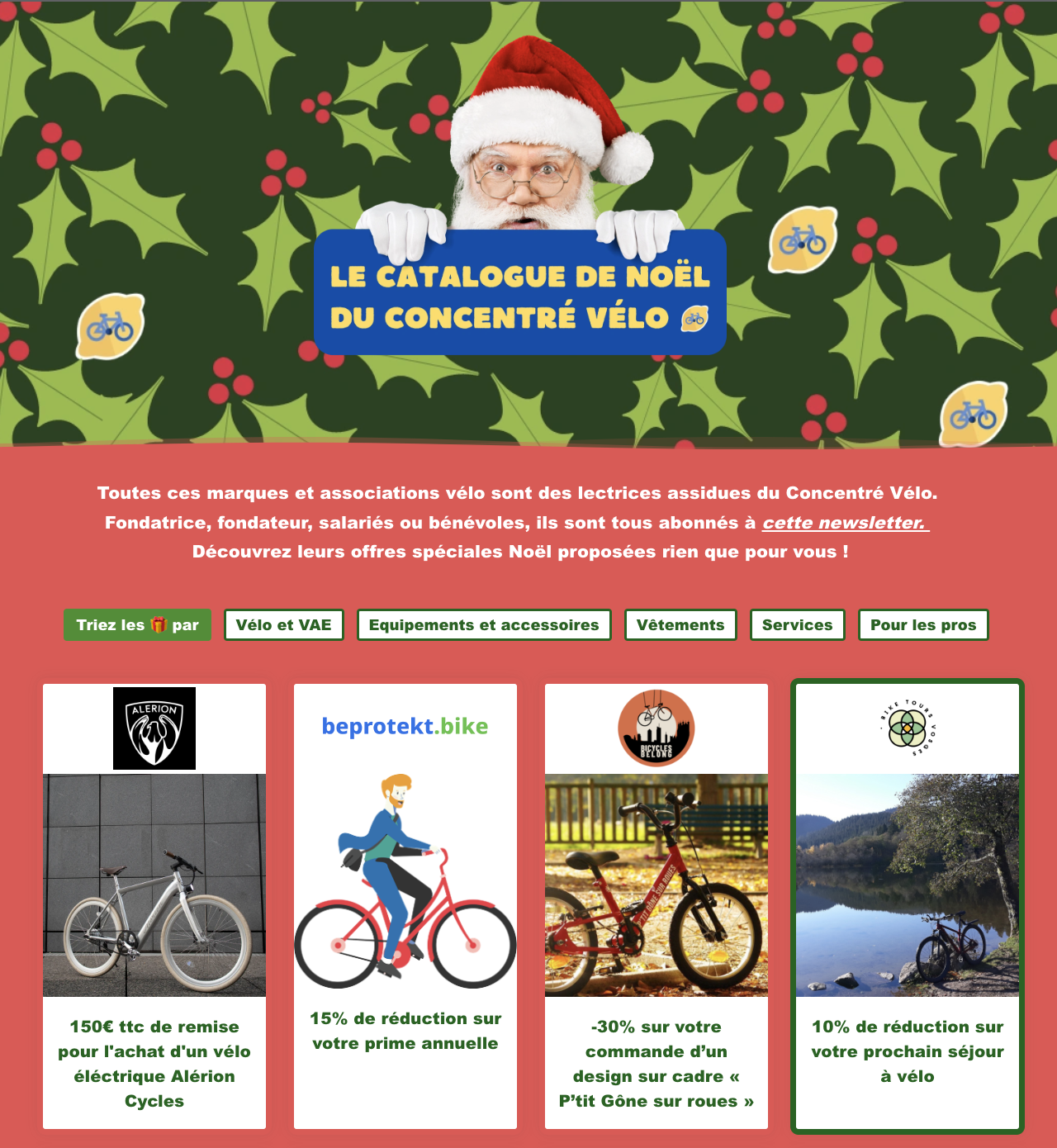
Beyond that, I'm trying to experiment with new funding levers. The latest one was my Christmas catalog. I wondered how to offer a purchasing platform to my subscribers. Since many businesses follow me, I thought their products could align with what the individuals in my audience wanted. So I created a Christmas catalog using no-code tools.
Concretely, what were the specific steps taken to produce the Christmas catalog?
I started by creating a test form that I sent to five companies and organizations from my network. I specified that the price for posting an listing was free, because I had no idea what the business model for this type of project would be. Everyone could participate based on their means and their perception of the value the initiative could bring. Out of the five people, two responded right away by paying directly. That was enough to tell me the project could interest other brands. So I made the form public and turned this Christmas catalog into a marketplace with somewhat kitschy colors. Indeed, it caught on: professionals started posting discount vouchers, offering used bikes, equipment and gear. In total, 30 companies participated with donations ranging from 5 to 250 euros.
This dual audience also allows you to distribute job offers. How does this lever work?
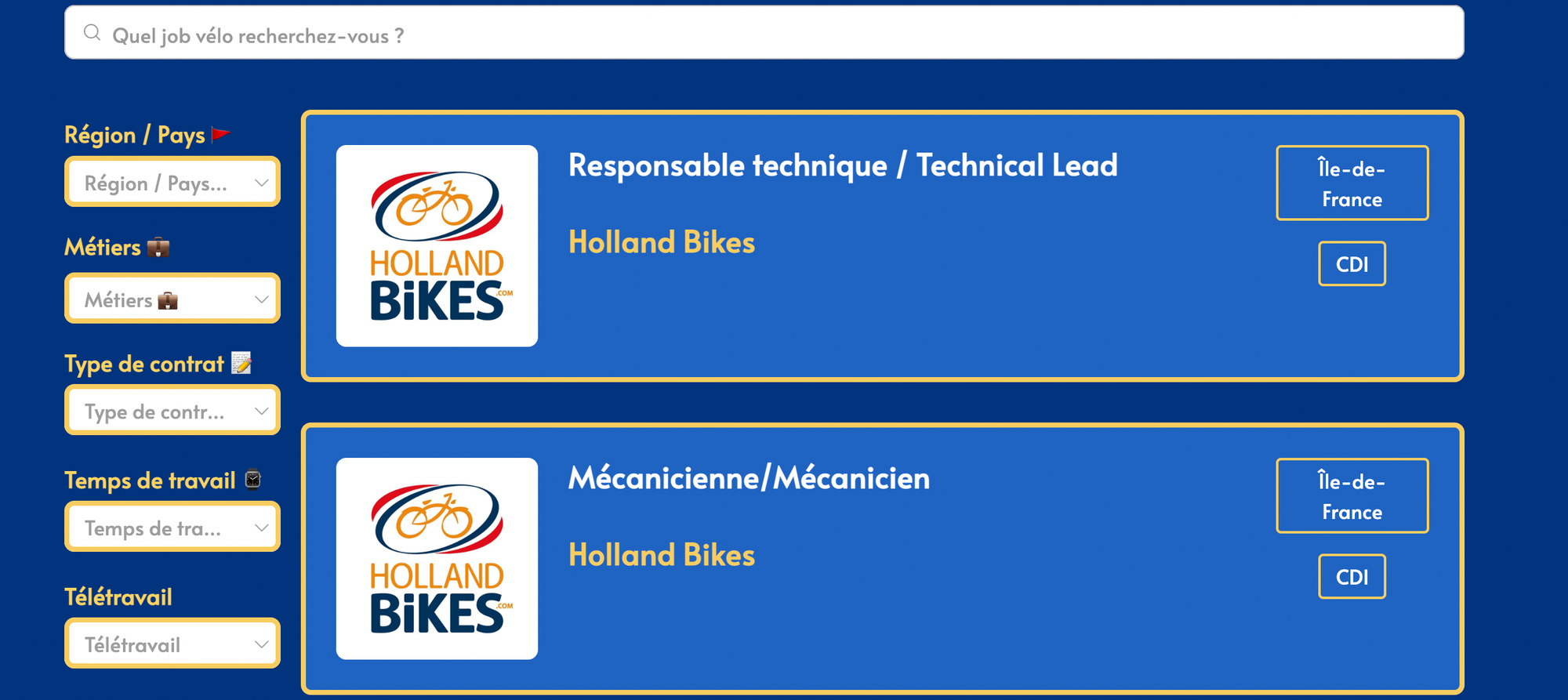
For three months, I had many conversations with bicycle sector entrepreneurs to help them find their customers. But at the end of these meetings, I was always asked: "by the way, don't you know a marketing manager, a mechanic, a communications officer who knows bikes?" Through my newsletter, I know people and I often had someone to recommend to them. At the same time, people were contacting me on LinkedIn because they were switching careers to work in the bicycle sector. Actually, it was all right in front of me. There's a problem, it's "impactful" and I have the advantage of having a highly engaged audience in the bicycle sector that mixes people who work in this field and enthusiasts. I started by conducting about ten interviews with potential candidates and recruiters to understand how they operate, like user research. I then put online a job listings page and I receive between five and twelve job offers every week ranging from internships to permanent positions, from bicycle manufacturing to retail to bike tourism. I even made a dedicated section for it in my newsletter. This channel brings me as much as newsletter sponsorships do. We're creating a different product with different stakes.
What advice would you give to those struggling to find the right business model for their newsletter?
Don't look for a business model—look for your first sale. Your model will develop once you've learned from your market by talking to people. Go through your subscriber list and identify those who are entrepreneurs in the sector you cover. These people already follow you and know you. Offer them the chance to sponsor an edition at a price of their choosing. Don't hesitate to knock on the doors of companies similar in size to yours. There are fewer internal validation systems in these businesses, which lets you speak directly to whoever will make the decision.
To go further
- What is a product-first approach? The News Product Alliance offers the following definition of a product in its glossary:
- Editorial + design + marketing + tech: at Médianes, we advocate for a "product" vision of media and are convinced that editorial projects must be conceived at the intersection of journalism, design, marketing, and technology
- This interview is the first in our series on independent newsletters. Find the interviews with Jean Abbiateci, from the newsletter media Bulletin, Léa Lejeune, founder of the feminist newsletter Plan Cash and the one with François de Monès, cofounder of the epistolary and political media La Disparition.


