


In the collective imagination, a Scop – Société coopérative et participative – is seen as genuinely wholesome. In this business model, employees own at least 51% of the capital and decisions are made collectively. In short, everyone has an equal say. You can speak freely, decide together, and most importantly, ensure that the company's profits don't end up in the accounts of external shareholders. But what's the reality in practice?
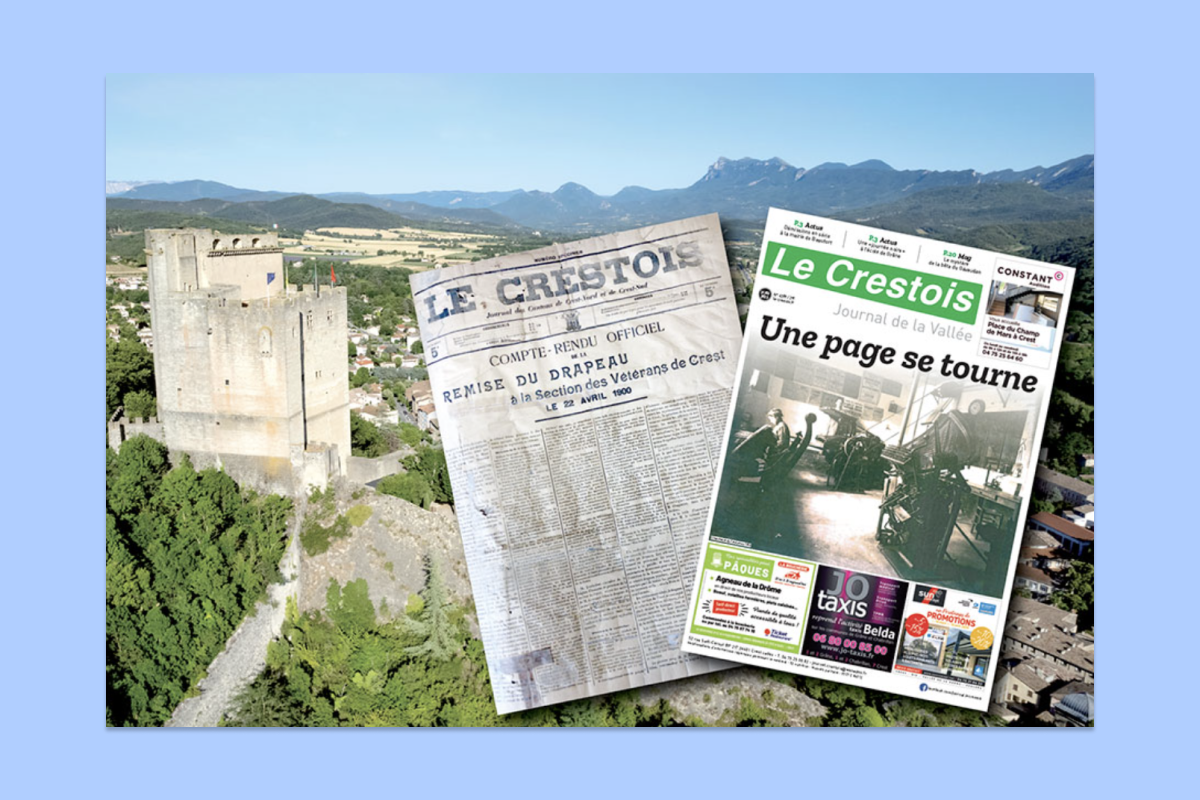
In France, there are approximately 2,600 worker cooperatives. Among these businesses, some are media outlets. Take Le Crestois, a weekly newspaper covering the Drôme valley that entered judicial receivership in 2023 and was subsequently bought back by its employees to prevent its closure. "The newspaper and the printing company that published it were suffering from the crisis and everything was falling apart a bit, recalls Laure-Meriem Rouvier, editor-in-chief. There were three of us journalists, and we were exhausted. I proposed to the owner that we outsource the newspaper's printing and that we buy back Le Crestois the three of us and develop its digital presence. He agreed right away. "
Financing
With the business model in place, the team had to think about funding. For that, it's like creating a media outlet, except this one already exists. The three journalists started by injecting personal savings, then took out a bank loan and a zero-interest loan through an entrepreneurial network while also seeking support from the Fund for a Free Press (FPL), a nonprofit organization dedicated to defending media pluralism that distributes funds to independent media. Most importantly, the idea appealed to the valley and readers rallied behind it. The team thus raised 50,000 euros in "participatory bonds," a loan contracted by the cooperative from individuals, earning 3% per year and repaid after seven years. And so, now, Le Crestois can never be taken over.
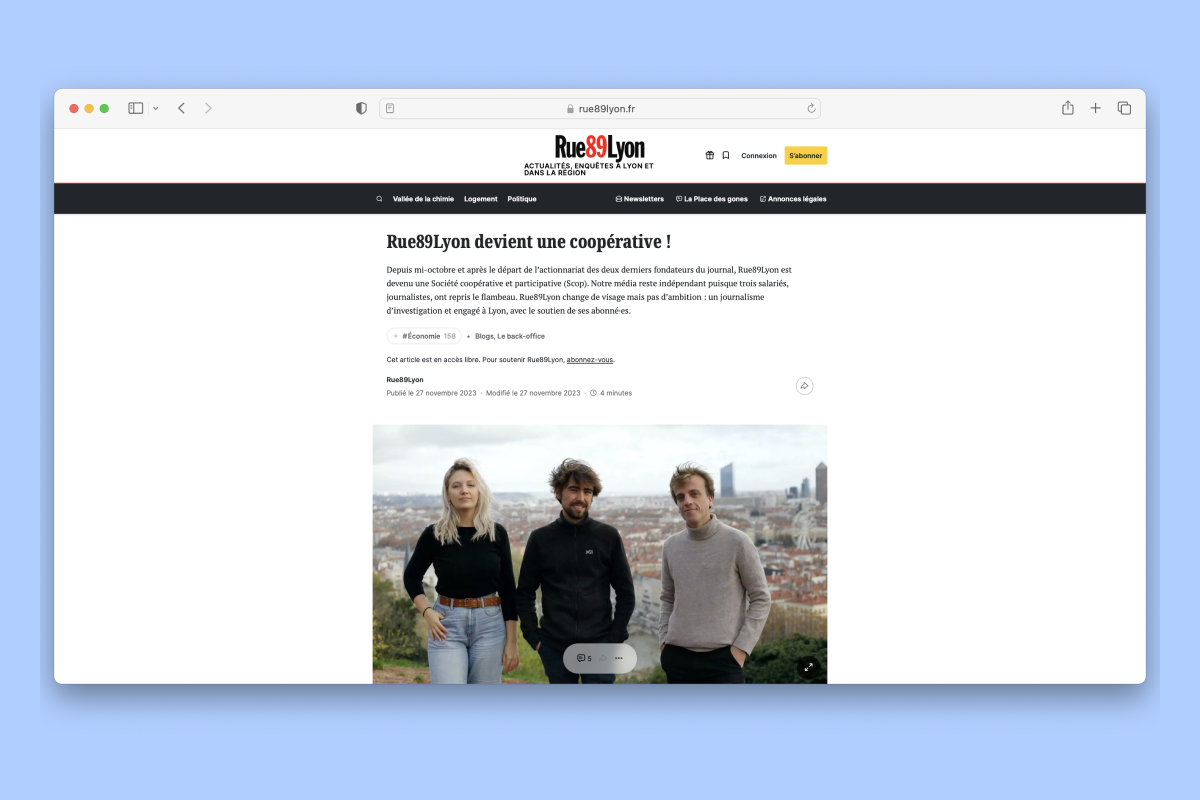
The story resembles in certain respects what the journalists at Rue89 Lyon, a local news and investigative media outlet, experienced. In October 2023, after the two founding members left as shareholders, three employees took over the media as a cooperative following economic difficulties. "The media went through a troubled period, we had to scale back, and change our business model by focusing on subscriptions. We also went from five to three employees because we were waiting for a loan that never came," explains Pierre Lemerle, editor-in-chief.
To stay afloat and carry out this transition, employees invested their savings into the company's capital and then turned to Le Crestois, approaching theSocoden, a kind of cooperative bank for worker-owned enterprises. "All worker-owned enterprises contribute to this system and the money is then used to finance new projects. In our case, Socoden granted us a loan of 17,000 euros." The newspaper now in turn contributes to the General Confederation of Worker-Owned Enterprises for 900 euros per year.
Democracy
A Scop is not just a viable option for businesses going through difficult times. According to the General Confederation of Scops, across all of them, " fewer than 10% come from restarting struggling businesses. The vast majority of Scop creations are new businesses or companies converted to Scop status following the retirement of the founding director ". The magazine Alternatives Économiques, founded as an association in 1980, thus converted to a joint-stock company with Scop status after seven years. " At Alter Éco, the cooperative model is tied to our editorial line. It's a space for workplace democracy: everything can be questioned all the time ", summarizes Jérémy Dousson, managing director of the publication.
That said, choosing a Scop doesn't necessarily guarantee everything will run smoothly. « It's a legal framework, but it's not all rosy. It remains work collectives with ups and downs », notes Jérémy Dousson. It's better to know what you're getting into before committing and to ensure that the values of democracy and equity are rooted within the company and its human resources. When Rue89 Lyon wasn't yet a Scop, its salaried employee-associates had already set up a rotating editor-in-chief system. « We rotate roles throughout the week: on one day, a journalist becomes editor-in-chief and manages the publication, social media, decides which stories to cover or not. On another day, another journalist takes on that role. Editorial decisions have always been shared, it's part of who we are », explains Pierre Lemerle. This makes it possible to diversify perspectives in decision-making and circumvent the rigidity of the traditional hierarchical structure of newsrooms. The environmental media outlet Reporterre has also adopted this system for several years.
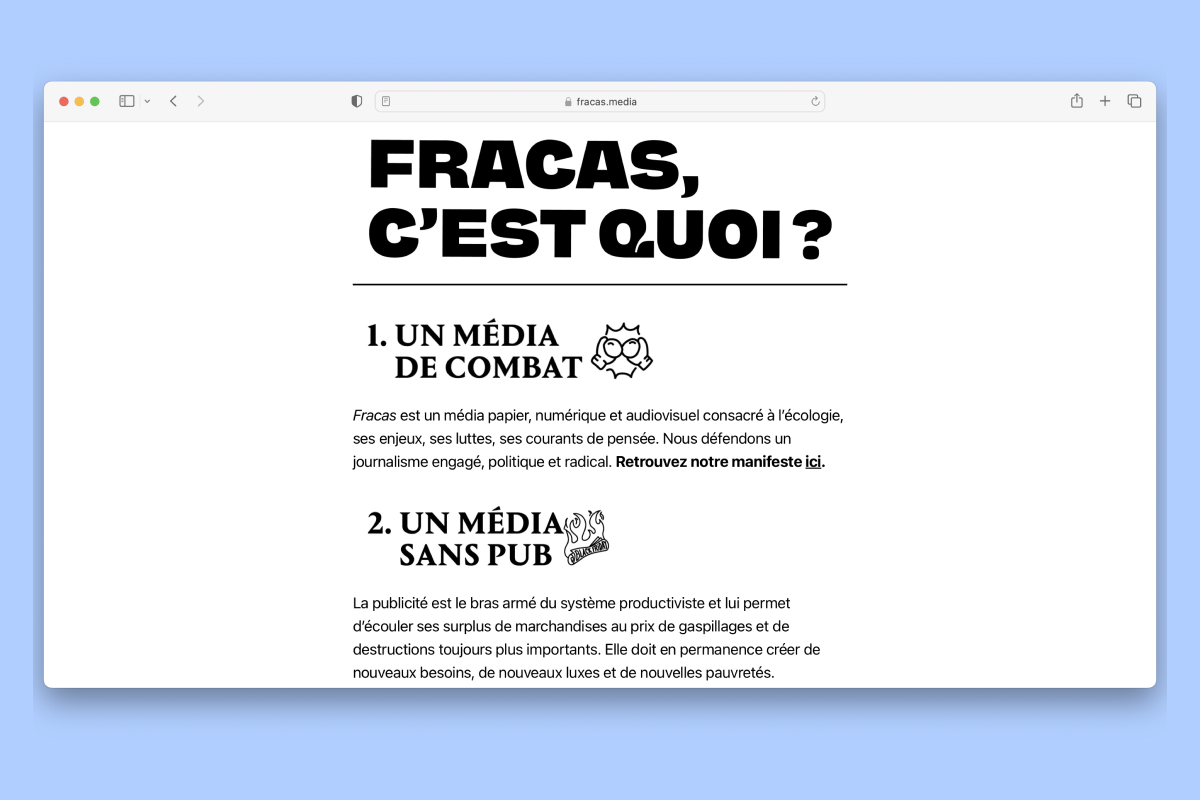
The idea of horizontal governance is also what attracts Fracas, a new media outlet covering print, digital and audio content dedicated to environmental causes and led by former employees of Socialter. "Through our political convictions and our respective experiences, we really wanted a model that goes against capitalist enterprise, which is defined by capital's overwhelming power over the company's destiny and its employees. In a classic business model, you can easily do whatever you want about account transparency, tell employees that everything is going badly and capture a good portion of the profits," explains Clément Quintard, co-founder of Fracas and former deputy editor-in-chief at Socialter. In companies with cooperative operations, it's possible to hold management accountable if you believe they're making decisions that put the company's or employees' health at risk.
Strategy
At Alternatives Économiques, a board of directors elected by an annual General Assembly meets four times a year. " At the last General Assembly, we discussed how to coordinate our website with our monthly print publication. There was a major strategic issue about our digital transition strategy. We also raised questions about workload and considered how the organization would evolve following planned retirements in certain departments", explains Jérémy Dousson. Editorial decisions, for their part, are made each week during editorial meetings. While these can be discussed at the General Assembly, they generally don't spark debate.
On the Crestois side, the partners meet every week as part of a strategic meeting. "We discuss the numbers. What can we put in place to increase sales? We also talk about how the company operates internally. Recently, we hired someone. We had to figure out who, how, and what for," explains Laure-Meriem Rouvier. The model leaves little breathing room for the young partners. " You have to switch gears all the time. Yesterday, I had to write four articles in three hours before diving into a meeting to discuss strategy, smiles Laure-Meriem Rouvier. I think about it on weekends too. But we knew what we were getting into. We buckle down for three years. It takes three years to see if a business works. " Next May, Le Crestois will celebrate its 124th anniversary. The oldest media ever launched.
As a journalist, managing a media outlet can raise some concerns. " Right now, we're working on our bylaws. It's like a board game. If you choose this, then that will happen… When you're not well prepared, it can seem like a mountain to you ", emphasizes Clément Quintard, co-founder of Fracas. The solution? Get expert support. Rue89 Lyon, Le Crestois, Alternatives Économiques and Fracas all turned to the expertise of the General Confederation of Coops. " They help us draft our bylaws and think through governance. We went to see them from the start. Their goal is also to spread the cooperative spirit ", continues Clément Quintard. Among the questions to settle: how long before new hires can become members? At Fracas, it will be two years. At Alter Éco, membership is included in the employment contract and is a mandatory step after six months. During recruitment, the third round consists of a cooperative interview in which the model is explained to prospective hires.
Transparency
For a media outlet, cooperative status ensures guarantees in terms of editorial independence since decisions made within it will never be dictated by external shareholders. The readership hears this argument particularly well. "In our audience studies, we find that 20% of people subscribed to our publication are so because it's a cooperative," notes Jérémy Dousson. "And our advertising that works best, that attracts the most clicks and readers, is the one where we indicate that Alter Éco is a media outlet that belongs not to a billionaire, but to its employees." The same observation holds for Crestois, for whom the transition to cooperative status made it possible to win over new readers.
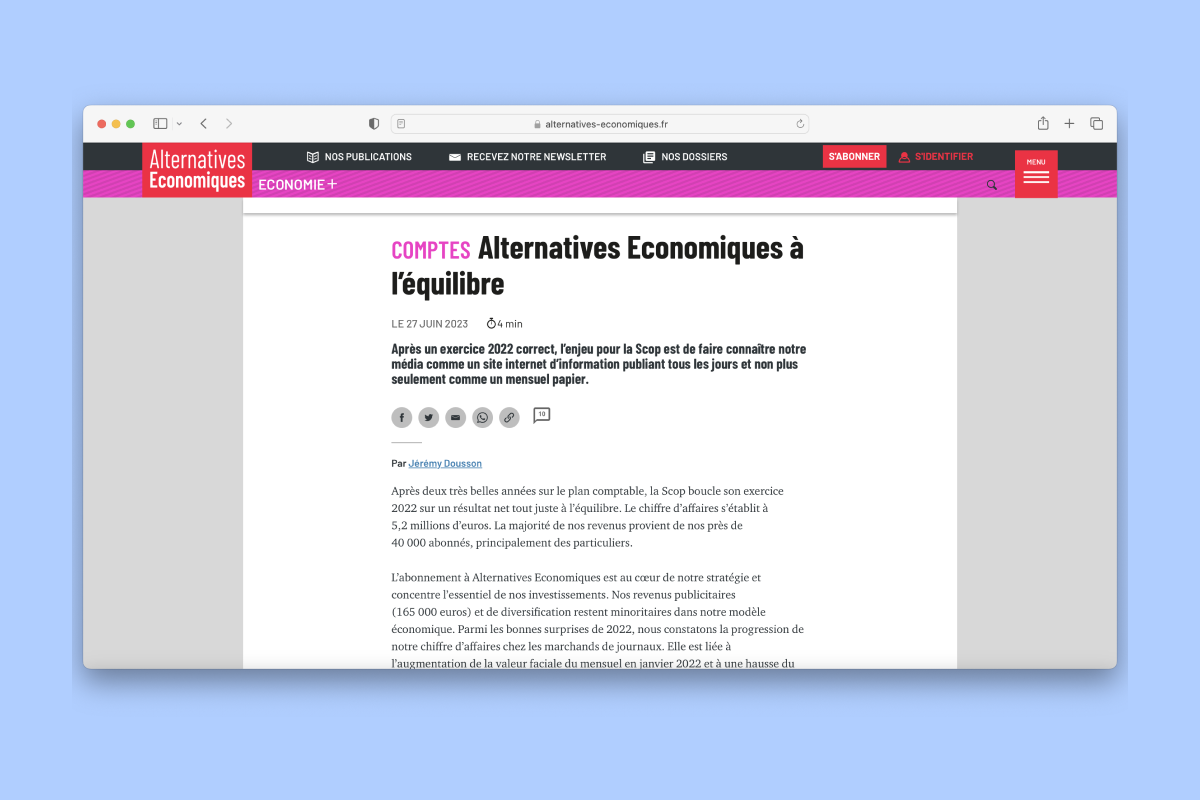
This model of governance also requires media outlets to demonstrate transparency. At Alternatives Économiques, the decisions that emerge from general assemblies are covered in an annual article on the magazine's accounts and strategy. "Since our media is a common good, we have a duty to inform our readers about the state of the cooperative," notes Jérémy Dousson. Last year, the magazine achieved zero net result, barely breaking even. When there is a profit, 45% goes to the cooperative's equity fund, 15% to dividends, and 40% to profit-sharing. The profit-sharing bonus is only triggered in the event of very strong results. At Alter Éco, in really good years, this sum represents an average of one month's salary. Good accounts make good cooperatives.
To go further
- From legal procedures to accounting, including the development of the business plan, Augustin Naepels, chief executive officer of Les Jours, details the essential steps to launch your media outlet, with an emphasis on management.
- Magazine and website, Alter Éco had to evolve to continue its development. How can you account for new audience behaviors? How do you acquire and retain a new audience? How do you launch on TikTok? Answers from Frédéric Désiles, strategic and commercial director of Alternatives Économiques, in this episode of our Chemins podcast.
- How can you finance your project while staying true to your target audiences and the values that underpin it? A practical guide that reviews existing economic models centered on audiences to help you define your own.
- This article offers 10 essential recommendations for independent media, and highlights key principles such as inclusivity, accessibility, and transparency. The idea? To work toward building horizons more aligned with society's needs and rebuild connections with audiences.
- Christelle Tissot is the founder of mūsae, a media outlet that demystifies and democratizes mental health for young generations. Management, structuring, disconnecting… For her, launching a media outlet cannot come at the expense of her mental wellbeing.


