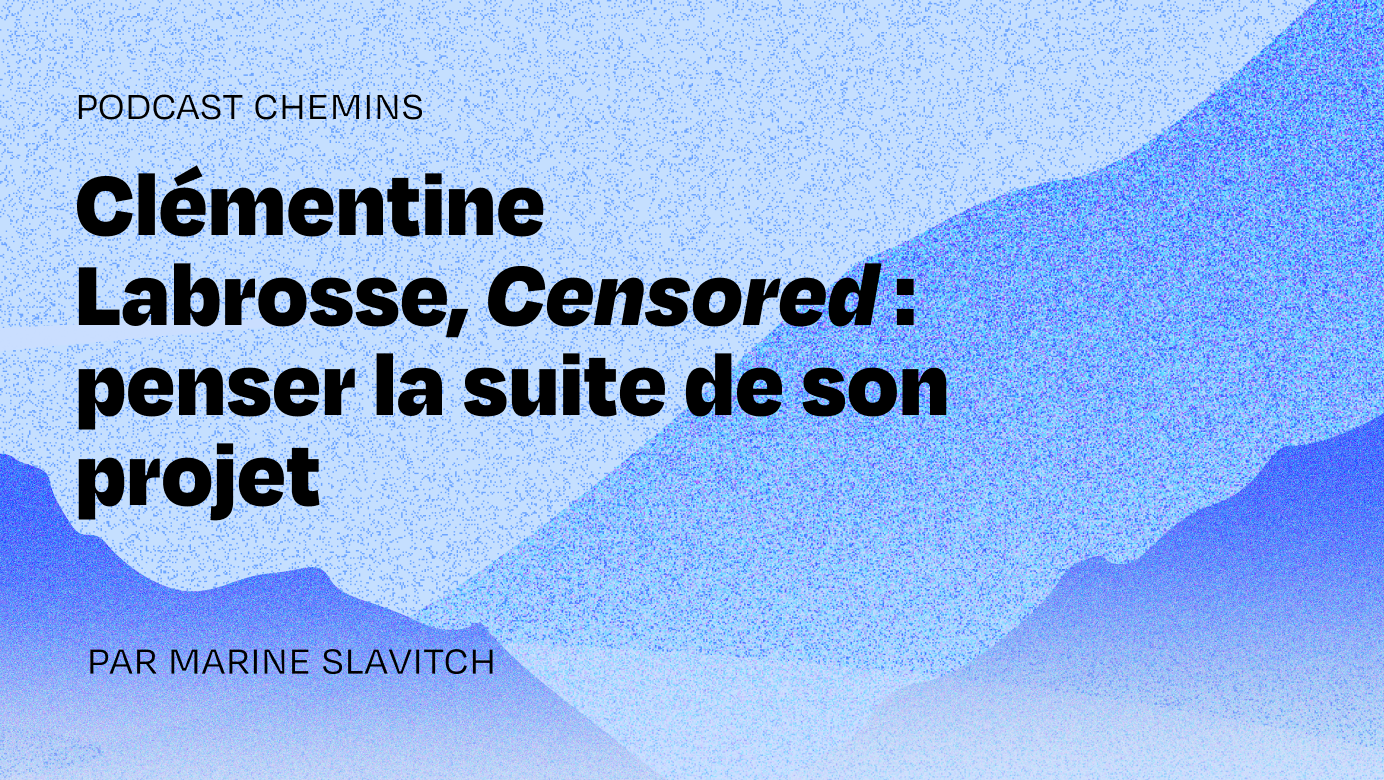
In this episode of season three of our podcast Chemins, I'm speaking with Clémentine Labrosse, co-founder of éditions trouble and of the feminist magazine Censored, which she founded in 2018 with her sister Apolline. In 2022, the co-founders chose to slow down publication to preserve their well-being and remain true to their values. A year later, Censored discontinues its print edition and announces a transition to a web platform. How do you balance editorial ambition with mental health, and reinvent a publication without compromising its core identity?
- Slow down to protect your mental health
Founded in 2018, Censored established itself as a distinctive magazine through its radical spirit and commitment to remaining true to an intimate and human vision of feminism and publishing. But this commitment comes at a cost. In 2023, Clémentine and Apolline Labrosse announced an important decision: to slow the publication pace of Censored, moving from two issues a year to just one.
At the time, they explained, in a newsletter addressed to their readers: "We don't want to grow Censored the way most people understand it, that's our choice, to stay at an ultra human scale, to keep an editorial project that's as ambitious as it is personal. We don't want to be 'entrepreneurs' ready to take over the whole world, we don't want to conquer anything"

This transition allowed them to reassess their approach in the face of pressure: " At that time, we were juggling multiple projects. We had both a book with trouble editions, which had ended under fairly difficult circumstances, plus a Censored issue to release, which we'd been volunteering for for six years. It was a bit too much. We didn't want to stop at all, we still had plenty of ideas, we really wanted to continue, but we realized we weren't obligated to impose a pace on ourselves that we couldn't sustain. We decided it wasn't a big deal. We sort of demystified this idea of slowing down and therefore changing our publishing schedule. "
- The end of print review and the digital transition
With its tenth issue, Holy Night, released in late 2024, Censored takes its final bow as a print magazine.

This decision reflects financial and organizational realities, and a desire to reinvent the project in a new form: a web platform. This new format will enable us to experiment with more flexible and responsive approaches, with an emphasis on artistic curation, event organization, and possibly exhibitions.
The financial weight of each issue played a decisive role in this decision: "Each issue costs us 22,000 euros to produce, with 14,000 euros just for printing. Money was our number one source of anxiety." Beyond the high costs, coordinating projects imposed significant mental strain. By late 2024, the team had launched a major raffle aimed at paying off a persistent debt to their printer.

Despite these constraints, Clémentine Labrosse refuses to see this transition as a defeat: "Ending something isn't a failure or a source of shame. On the contrary, it's a point of pride to know that we can move forward because we have plenty of other ideas. Everything transforms and everything is continuity. The real failure would have been to carry on and end up burned out." For her, stopping the magazine isn't a definitive end, but a natural and necessary transformation.
However, this shift involves seeking to preserve the essence of Censored in a digital universe, « which is difficult to explain, because it's the end of the magazine but not the end of its vision. (…) The question of art has always been present and has always interested us. The web will allow us to find greater efficiency and spontaneity. »

Meanwhile, the Labrosse sisters continue their work on their publishing house, éditions trouble, at a moderate and sustainable pace: "We're planning to stick to three books a year. (…) This pace allows us to automate a bit more to go faster without burning ourselves out."
- Staying true to feminist values in the face of economic pressures
The co-founders often refused to sacrifice their feminist principles for conventional business models. They experimented with alternative approaches, such as an "All Inclusive" cultural subscription.
" At one point we came up with this subscription formula featuring cultural objects from our curation. Essentially, you'd pay 150 euros a year and get our two magazines, two books, our merchandise, invitations to theater events, and so on. We thought through quite a lot of options. We wanted to work around things as much as we could, but we realized it was too complicated. Finding a business model for a magazine that relies solely on sales is miraculous. We had absolutely no desire to get into shareholding, equity stakes, all that."
Clementine highlights the difficulty of reconciling feminist activism and capitalist creation: " Elvire Duvelle-Charles's book, Feminism and Social Media, discusses it very well. (…) This entrepreneurship that considers growth the only measure of success—we found it contradicted our vision. At first, when we announced a new issue, there was this pressure to constantly bombard everyone, create formats, mockups, visuals every single day, monitor the algorithm, promote posts… You get caught up in the game so quickly it can become a bit dangerous. At some point, we simply decided: let's stop. "
- The importance of collective action and experimentation
Censored has always relied on collaborative work, partnering with around thirty people per issue. However, this format made it difficult to build deep relationships with each contributor.

« In a magazine, you work with around thirty people, but it's a fairly superficial relationship. That can be frustrating. With Éditions Trouble, by contrast, the connection with an author is deeper and can last for years. »
Clémentine also emphasizes the importance of one's community for overcoming obstacles. "It's super important to break the idea that you shouldn't show that you're vulnerable. (…) The collective is the strength to overcome doubts. Around us, plenty of journalists created media outlets and went through the same questions, the same anxieties as us. When you realize that you can just say "Hi, I'm writing because I actually have a question about this, what do you think?", it changes everything. Pooling resources is obvious."
To go further
- In this interview, Apolline Labrosse, Creative Director of the magazine Censored, reveals all the secrets behind the original and sensory covers of the project.
- In this conversation, Clémentine Labrosse questions the feminist dimension of printing, when paper becomes a tool of resistance and emancipation.
- For media founders, balancing the preservation of their mental health with the stability of their project sometimes represents a delicate challenge. Yet a healthy media outlet cannot be (properly) run by someone on the verge of burnout. So how can you protect your wellbeing and avoid passing your stress on to your teams when pressure mounts?
- Emmanuelle Josse is co-founder of La Déferlante, an independent quarterly review and newsletter that launched its publishing house in 2023. She is the guest of the third episode of the second season of Chemins, the podcast by Médianes.