What does the concept of “impact media” really mean? Often, we think of the media’s ability to highlight the stories of those who find solutions to social and environmental problems. Beyond editorial bias, a hallmark of constructive journalism, how can a media outlet concretely demonstrate its impact, from the ground up through post-production?
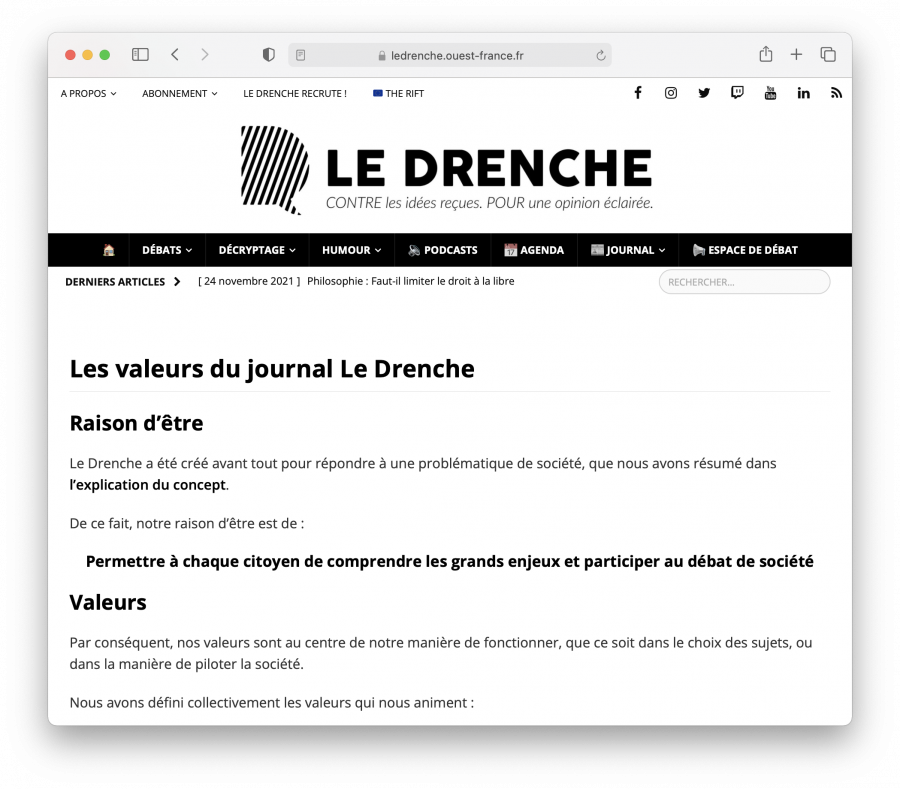
For Le Drenche, impact is a common thread that runs through everything, starting with the value proposition. “Our purpose is to enable every citizen to understand the major issues and participate in the public debate,” states the manifesto of this participatory newspaper. This ambition is even reflected in its articles of incorporation, as Le Drenche is an ESPI—a socially responsible news media enterprise—just like Les Jours, Next INpact, Marsactu, MediatiCo… and many others. This legal status, which came into effect in April 2015, this status, inspired by the social and solidarity economy, allows the newspaper’s staff to hold shares and requires the reinvestment of at least 70% of annual profits. In other words, “The majority of profits must be dedicated to the company’s development,” summarizes Le Drenche.
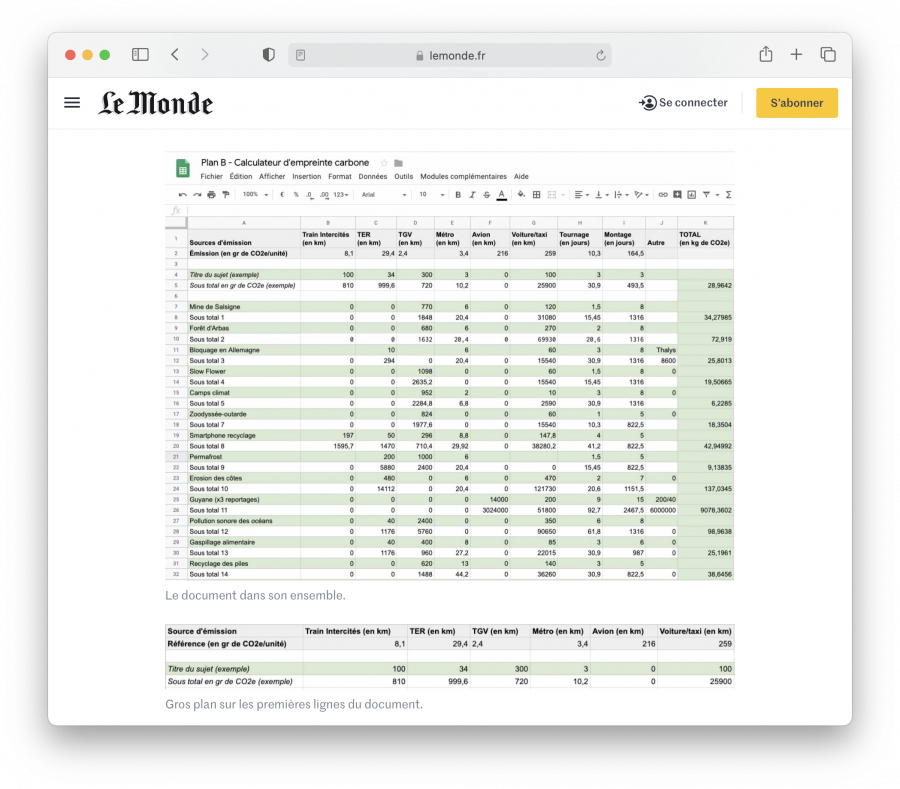
Le Monde’s video department is committed to ensuring consistency between its editorial line and its implementation. In February 2020, the team behind “Plan B,” a weekly series on major environmental issues, decided to calculate and publish its carbon footprint. The result? Air travel—necessary for certain reports—undermines efforts to limit car trips and reduce electricity consumption. Consequently, the editorial staff has decided to extend the duration of trips and cover more stories when travel abroad is unavoidable.
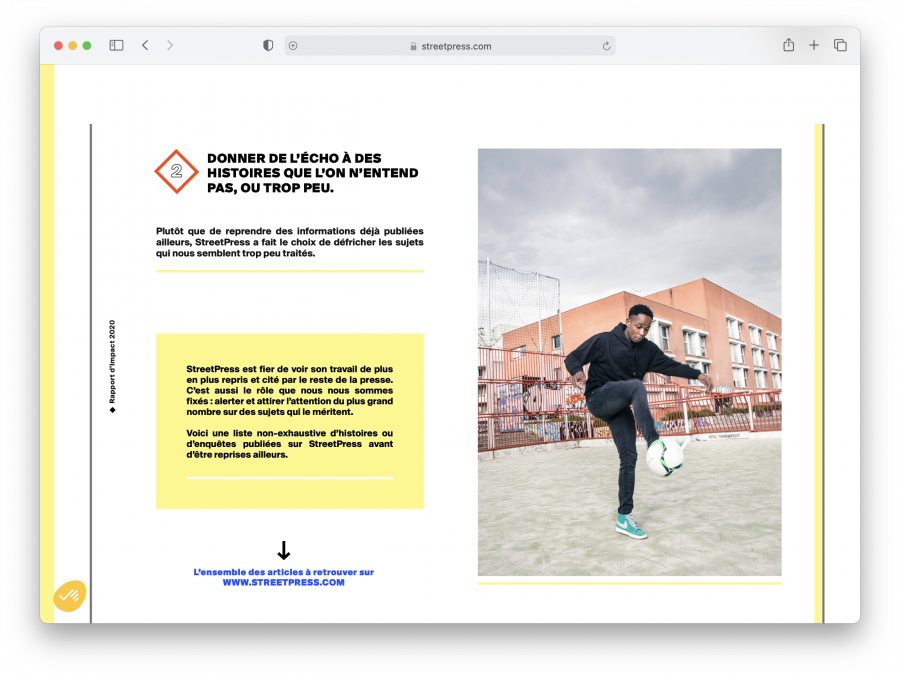
So what’s next? When the desire to make a positive impact is part of the value proposition, and when news stories and investigations align with that same editorial mission, it’s time to take stock. In late 2020, the independent media outlet StreetPress released its first impact report. The report details the concrete consequences of the published articles for the people interviewed on the ground. In particular, StreetPress highlights the opening of a judicial investigation following “the revelation of a system of abuse and racism in the cells of the Paris Tribunal.” The three police officers implicated were disciplined with warnings and reprimands. As for the regional daily press, the Centre France group is also weighing in by assessing the impact on its audience—from the chatbot launched during the municipal elections to the readers’ letters section. The same is true for Mediacités.
Whether in terms of editorial vision or business strategy, taking into account the impact of one’s media outlet is part of a virtuous cycle. For while the media are recognized as serving the public good, we must still succeed in translating this ambition into concrete action on a day-to-day basis. So, are you ready for impact?