


To stay connected with their audience, media outlets are expanding the range of formats that involve citizens. On-location broadcasts, a bus tour of France, community meetings, and collaborative news production— Médianes met with Reporters Without Borders, France Inter, Ouest-France, and Centre-France. These are all initiatives that are also being adopted by emerging media outlets.
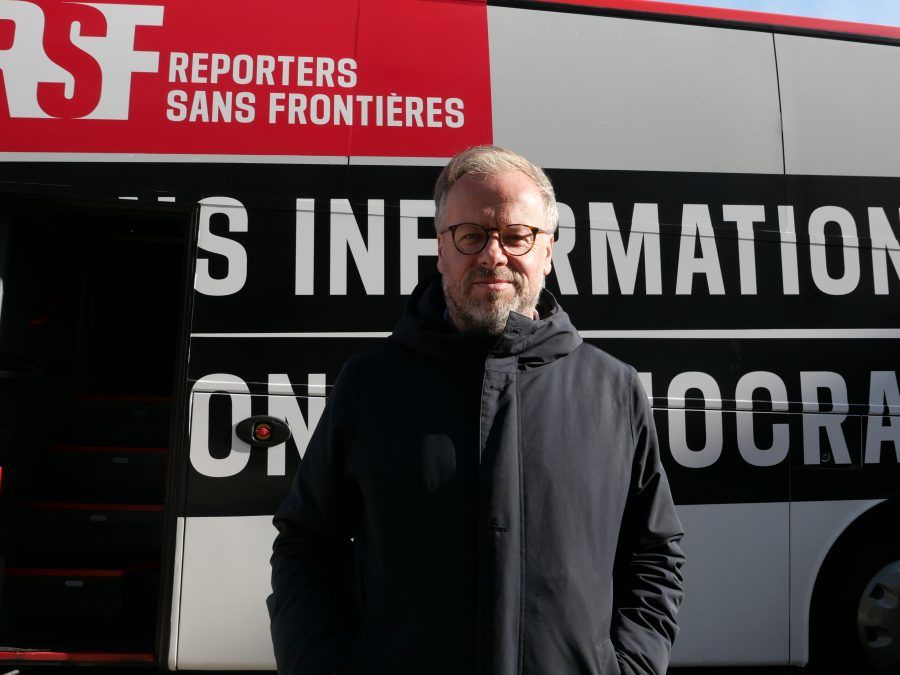
You can’t miss it when you arrive at the Place de l’Hôtel de Ville in Reims: the red bus from Reporters Without Borders (RSF). This Thursday, April 7, due to the wind, the team was unable to set up the photo exhibition—as they had in other cities—which was meant to attract passersby. Instead, coffee was offered. There weren’t many people on the streets, but that wasn’t enough to discourage Christophe Deloire, the secretary-general of RSF.
For nearly two weeks now, Christophe Deloire and a few members of the team have been on a tour of France. The goal of this event is to meet with citizens to discuss their information consumption habits, journalism in general, and the ways in which people in France stay informed. The timing was not chosen at random, as the initiative concluded on the eve of the first round of the presidential election. The idea is to draw on these discussions and turn them into a white paper that RSF will present to the President of the Republic in the near future. It will set out the expectations of the citizens interviewed regarding the press and media democracy, because “this is an urgent matter, and it seems more important than ever,” says Christophe Deloire.
"Mistrust has taken hold"
The secretary-general notes a sense of frustration among citizens regarding the media’s inability to explain to them the major shifts taking place in the world: climate, the economy, and geopolitics. Citizens also regret the lack of positive news. After coffee in front of the bus, RSF organizes meetings that bring together the public and journalists around fictional scenarios to discuss the media: “Fictional scenarios allow us to step outside the traditional debate and see that the search for solutions is more effective when it involves those who produce the news and those who read it, listen to it, or watch it.”
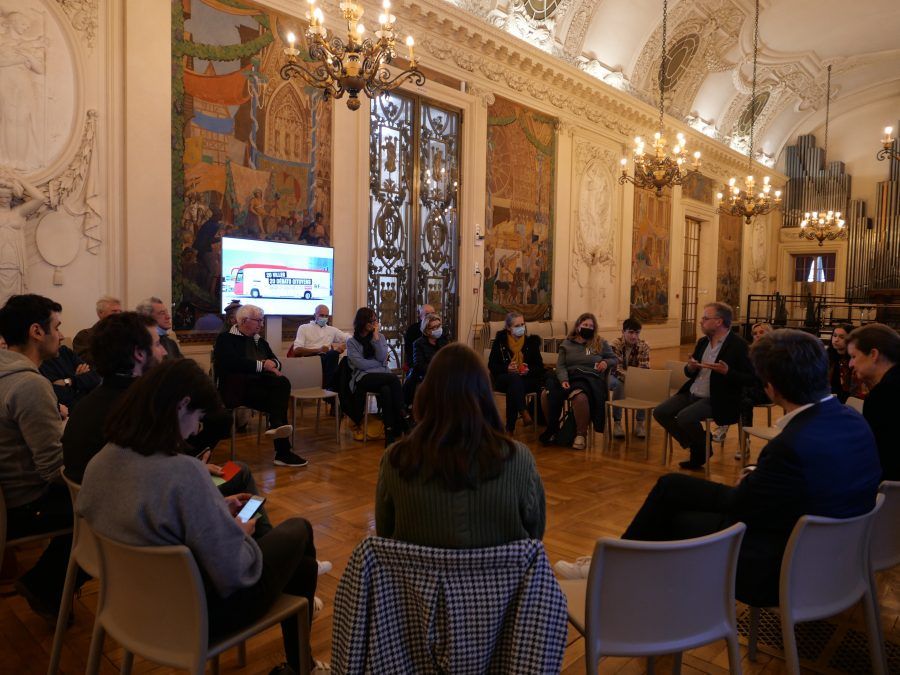
That evening in Reims, Thomas Sotto, the host of *Télématin* on France 2, and Cécile Mégie, director of RFI, were invited to participate in a discussion. The chairs were arranged in a circle in a large room at City Hall so that everyone would have an equal opportunity to speak.
Journalists and citizens, on equal footing
Among the many comments, journalists are accused of being too out of touch with the rest of the population. “There is a high level of expectation placed on journalists. For their part, newsrooms must be attuned to the concerns that traditional journalism no longer addresses and would do well to rethink their practices. But we must not pit mainstream media against fringe media. Everyone has a responsibility. “The big question we need to ask ourselves is: What is our relationship to events, and where do we shine the spotlight?” emphasizes Christophe Deloire.
And in fact, in the City Hall room where the citizens’ assembly is taking place, Thomas Sotto sets the tone as he addresses the dozen or so curious attendees who have come to share their views: “We want to listen and hear what you have to say.” This is also an opportunity for journalists to speak directly with those who ask to do so. While the discussion begins on a balanced note, the journalists quickly adopt an offensive stance to respond to the criticisms leveled at their profession and their practices. The goal of debates like this one is to begin to outline a solution, which is why it is so relevant to hold it at such a pivotal moment, as Christoph Deloire explains: “We chose to hold it during the presidential campaign because this is, in a way, a time of great democratic deliberation. And the geopolitical context also shows that information warfare can lead to actual war.”
On the Roads of France
From Rennes to Lyon, via Clermont-Ferrand and Florange, the bus didn’t stop only in major cities. That’s what Chloé Le Goff, RSF’s communications officer and the initiator of the project, is keen to point out: “We also went to villages like the mining town of Carmaux, or even Lunel. The idea behind this project is to observe different sociological realities; it’s good to shift our focus.” Among the standout moments, Chloé Le Goff recalls a visit to a school in Ploërmel, Brittany: “ The person who welcomed us to meet the students was quite moved because she is very committed to media literacy. She was touched that we came all the way to them to talk about journalism and democracy.” Ultimately, the idea of using a bus was more of a practical choice: “To move the exhibition around for fifteen days, it was the simplest option, but above all, it made it easier to reach out to people,” she explains.
The former magazine *L’Ebdo* had also traveled the roads of France for six months before its launch. The goal? To get to know the readers and involve them closely in the editorial process. The teams stayed overnight with future readers, and a documentary was even filmed about the project! It’s an interesting look behind the scenes of such an initiative.
"Getting out of the Parisian studios"
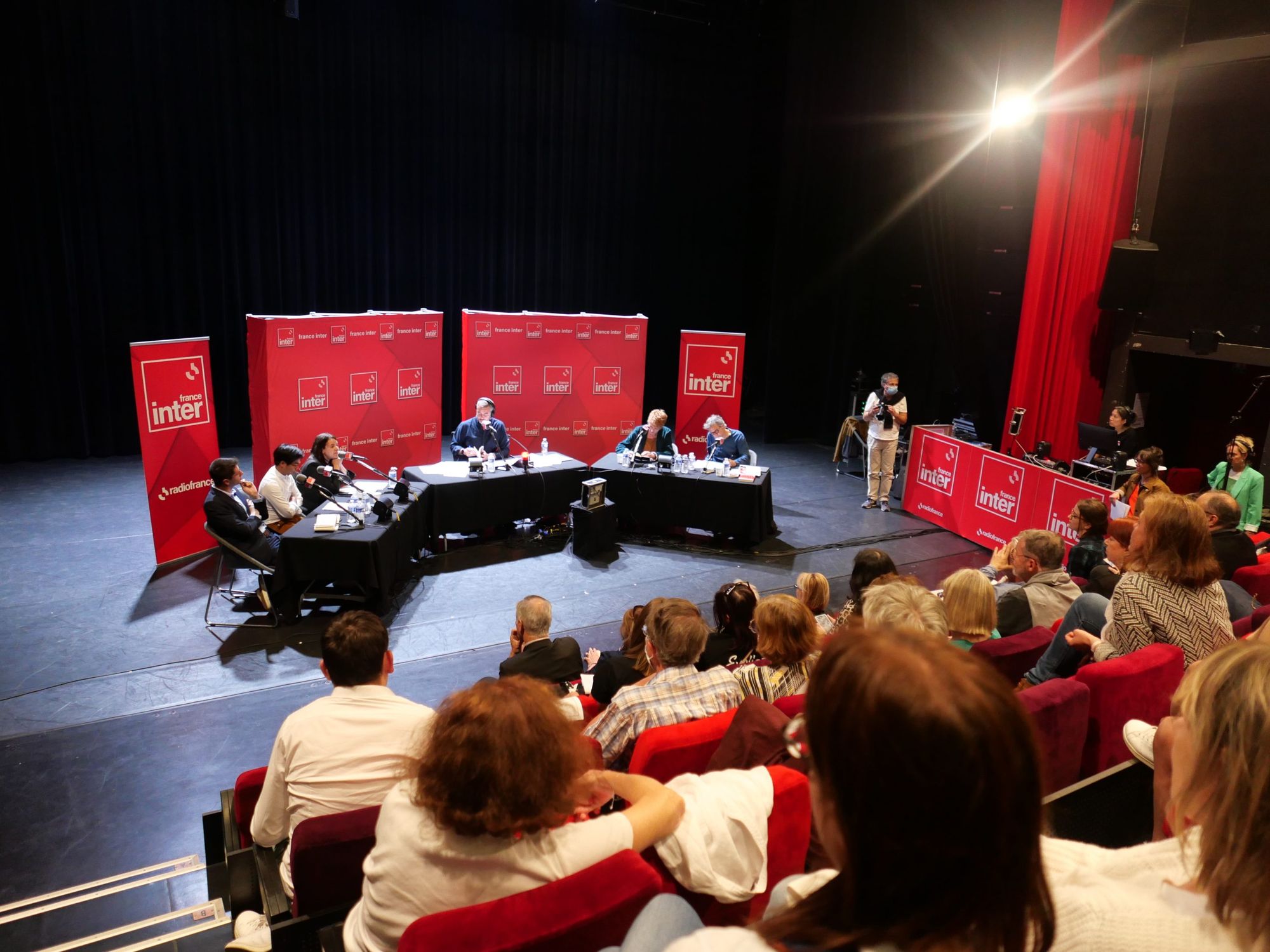
They don’t have a bus, but they get around anyway. The France Inter program *Le Grand Face-à-face* was broadcast from Cergy on May 13. Aired on Saturday from noon to 2 p.m., Ali Baddou interviews Natacha Polony, editor-in-chief of *Marianne*, and Gilles Finchelstein, executive director of the Jean Jaurès Foundation. And for the occasion, the show was renamed *Le Grand Face-à-face XXL*. Once a month since September 2021, the show has been moving to different cities: Saint-Brieuc, Arras, Valence, and Metz.
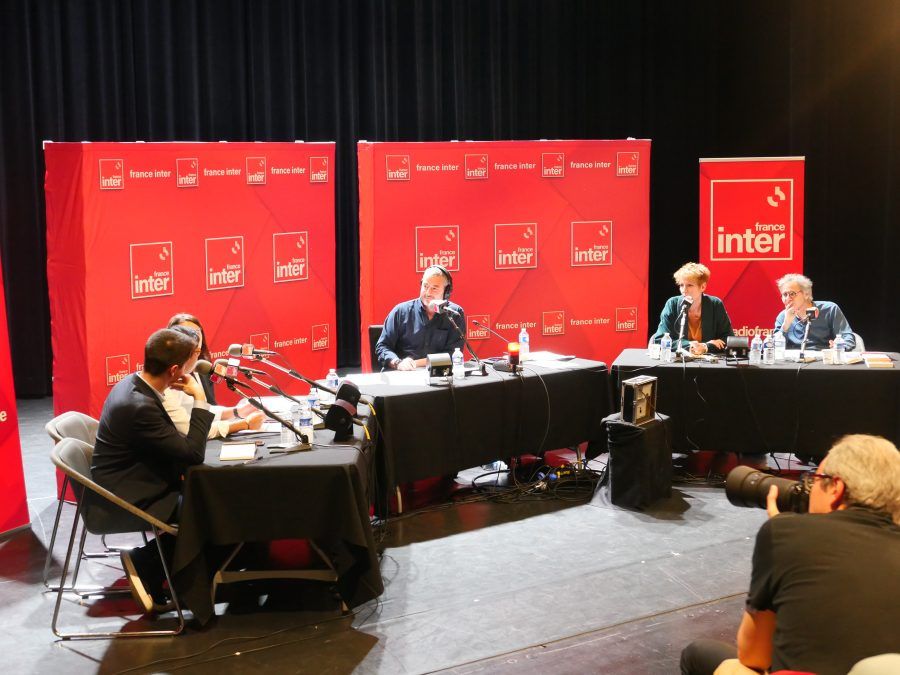
That day, France Inter set up its equipment in the Cergy theater. A portable mixing console and large tables covered with black tablecloths. About forty people were in the auditorium. At 5:00 p.m. sharp, the jingle played. The topic of that week’s debate was youth. Following the debate between Natacha Polony and Gilles Finchelstein, three guests took the stage to discuss the topic: Eva Sadoun, a tech entrepreneur and co-chair of the Impact France Movement, Maxime Lledo, a journalist and essayist, and Stewart Chau, director of political studies and public opinion at Viavoice.
Pass the microphone around and focus on interactivity
A fine lineup of speakers, yet one that leaves plenty of room for the highly engaged audience at the end of the discussion. The microphone is passed around among those who came to sit in on the recording. The mayor of Cergy is seated in the front row. It is mainly local activists and community leaders who take the floor.
At the end of the program, Ali Baddou discusses the importance for France Inter of moving some of its programs to other locations. “This project arose from two goals. First, we wanted to set the pace of the presidential campaign by organizing debates. We weren’t always satisfied with the ones that emerged in the public debate—especially the most stale and rotten ones from the start of the campaign. Second, after the second lockdown, there was a need for closeness—a need to get closer to our listeners, to reconnect through exchange and dialogue, quite simply. We wanted to reconnect with them to engage in debates about ideas. At France Inter, we’re constantly interacting with listeners on shows like *Le Téléphone sonne* or *La Matinale*, but this is different because the audience is right there.”
A way to reconnect with citizens whose trust in the media isn’t exactly at an all-time high? “I hadn’t really thought about that much; it was really just a desire for a breath of fresh air, to get out of the Parisian studios.”
When it came to choosing cities, the team behind “Le Grand Face-à-face” wanted to “avoid the usual stops that France Inter typically makes.” We looked for cities that resonate with the topic at hand. For example, Saint-Brieuc for the environment, and here in Cergy to talk about youth, where 50% of the population is under 30. “We’ve tested the format, we’ve experimented with it, we love it, and we’re going to keep bringing it to life,” concludes Ali Baddou. France Inter regularly engages with citizens on other programs as well, such as Bruno Duvic’s 1:00–2:00 p.m. show. Interactivity is at the heart of France Inter’s value proposition, whether in person or on the air.
Following the same model, the independent podcast studio Binge Audio organizes events to record several of its shows in front of a live audience. During the summer of 2021, for exemple, the Binge Audio Festival brought together four of their podcasts for special recording sessions in front of a live audience. Among them were: “Kiffe ta race,” “Le Cœur sur la table,” and “À bientôt de te revoir.”
"Our readers are our roadmap"
In the media, regional daily newspapers are well-positioned to claim a deep understanding of their audience; journalists interact with their readers on a daily basis while covering stories. In order to best connect with their readers, PQR newsrooms aim to involve them in the process of editorial improvement. This is the case at the Centre France group, led by Soizic Bouju, which includes eight publications such as La Montagne and La République du Centre. The group has a combined daily circulation of 300,000 copies across all eight titles. Julien Bonnefoy is the deputy editor-in-chief in charge of the group’s special projects. It’s a somewhat vague term used to describe everything related to reader engagement and the formats offered by the group’s newspapers. “Our readers are our horizon and our editorial roadmap,” he explains.
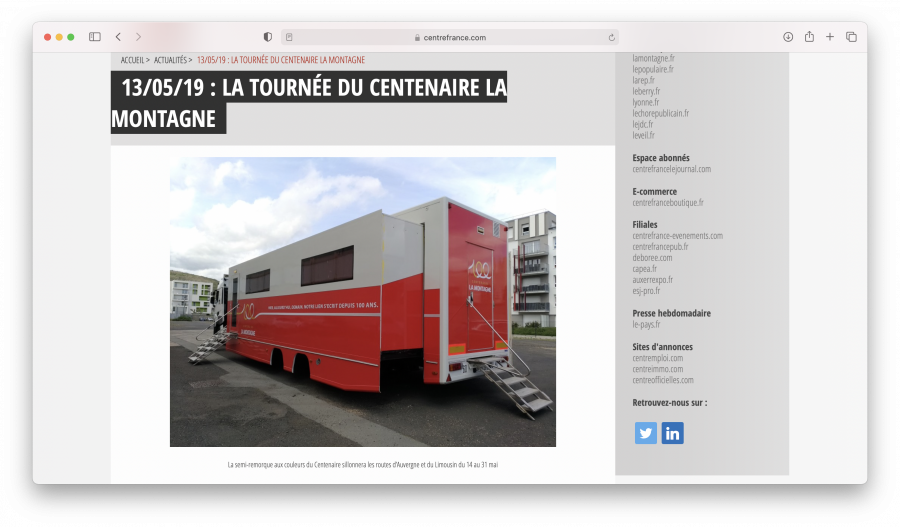
Three years ago, for the 100th anniversary of the newspaper *La Montagne*, the group also used the bus to meet with residents. For two weeks, the editorial teams and journalists made stops in thirteen towns in Auvergne and Limousin to meet with readers. In addition to these road trips, citizens are invited to the local offices. The goal of these meetings is to hear feedback from subscribers—both their suggestions and their criticisms: “The group aims to be helpful to its readers on issues related to everyday life,” explains Julien Bonnefoy.
Top Experts on Everyday Life
To illustrate this concept of utility in very concrete terms, Julien Bonnefoy cites several examples. Notably, the Paris-Clermont-Ferrand train line, which experiences delays very frequently. “This is an issue our newspaper is committed to; we’ve talked about it a lot, and we’ve published numerous articles on the subject.” The idea is also to bring about change. And for good reason: former Prime Minister Jean Castex came to Clermont-Ferrand to meet with about ten subscribers of *La Montagne*—not with its journalists.
The newspaper believes that readers are the best experts on everyday life. Journalists regularly turn to them for ideas for articles or investigations. One of the most recent such calls for input was in connection with the release of Victor Castanet’s book on healthcare scandals in nursing homes: *Les fossoyeurs*, published by Fayard. The editorial staff at Centre France issued a call for witnesses to readersthrough a questionnaire with the goal of collecting accounts of new cases of abuse in nursing homes. Julien Bonnefoy explains the process: “Anonymity wasn’t an option because we had to cross-check the details to verify the information. We received about a hundred accounts. In this specific case, we relied on our readers.” An investigative report was published following the accounts.
Co-creating Information
Centre France not only meets with its readers but also invites them to help shape the news. Still on the topic of health care, medical deserts particularly affect the departments covered by Centre France. For exemple, in *La République du Centre*, the newsletter *La Rep’ Prend soin de vous* draws on feedback from readers, because “they are the primary users of the hospitals.” We stay in touch with them beforehand to develop the story, during publication through reader testimonials, and afterward through ongoing dialogue. “With these investigative reports, we reach a wider audience, which also allows us to attract readers who don’t usually read us.” In this way, the editorial team fulfills its role as a mediator and watchdog vis-à-vis public authorities.
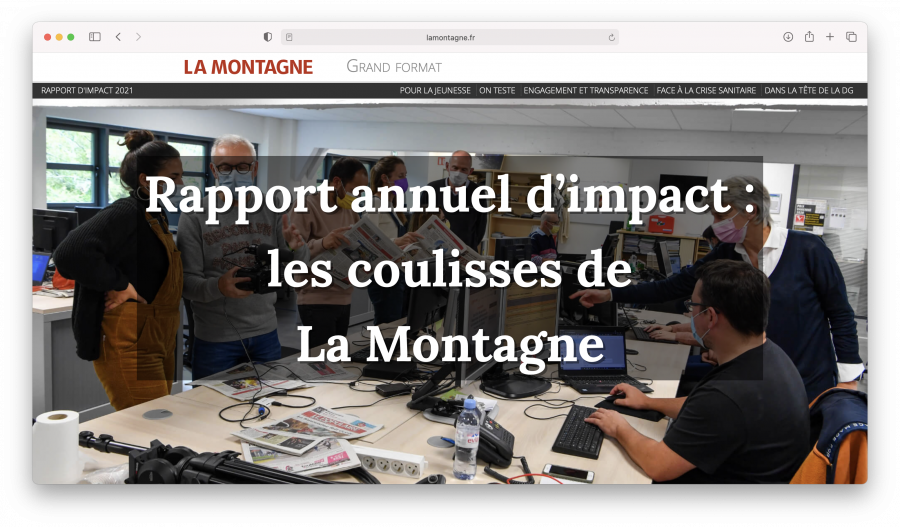
Every year, the newspaper La Montagne also publishes an impact report, which we shared in our newsletter. “Following its release, readers were invited to rate us based on their relationship with our newspaper, our independence, and so on.” During the legislative election season, local editions are particularly active. To mark the occasion, Le Journal du Centre is organizing four workshops with readers and debates in Nevers.
Other media outlets, such as Mediacités, also use this co-creation process. The Society of Friends of Mediacités brings together 138 readers who have contributed to support the outlet’s development and organizes informational meetings. Its “Veracités” column directly answers readers’ questions.
Increasing the Number of Meetings: The Ouest-France Case
For its part, *Ouest-France*, the leading national daily, is holding more and more events with the public, and “there have always been readers on organized tours through the hallways of the headquarters,” says François Vercelleto, reader relations manager. He handles reader mail, organizes meetings at headquarters, and facilitates them at local branches. And this position comes with one requirement: knowing the newspaper. And that works out well, since he’s worked in every department, “except sports and culture!” The position was tailor-made, has evolved, and has taken on a more editorial focus. During the first lockdown, for example, questions from readers about the practical aspects of the pandemic increased significantly. “Most of the feedback we receive concerns editorial decisions, word choice, and stories we didn’t cover. The feedback is constructive; it consists of reactions to current events, and we also receive personal accounts.”
The lockdowns provided an opportunity to innovate in our relationship with readers. As a result, Ouest-France has focused on video conferences with its audience on various topics: journalistic video coverage at Ouest-France, the readers’ letters section, and how Ouest-France covers the campaign. Before the pandemic, Ouest-France regularly met with its readers, whether at local offices, the newsroom, or media libraries.
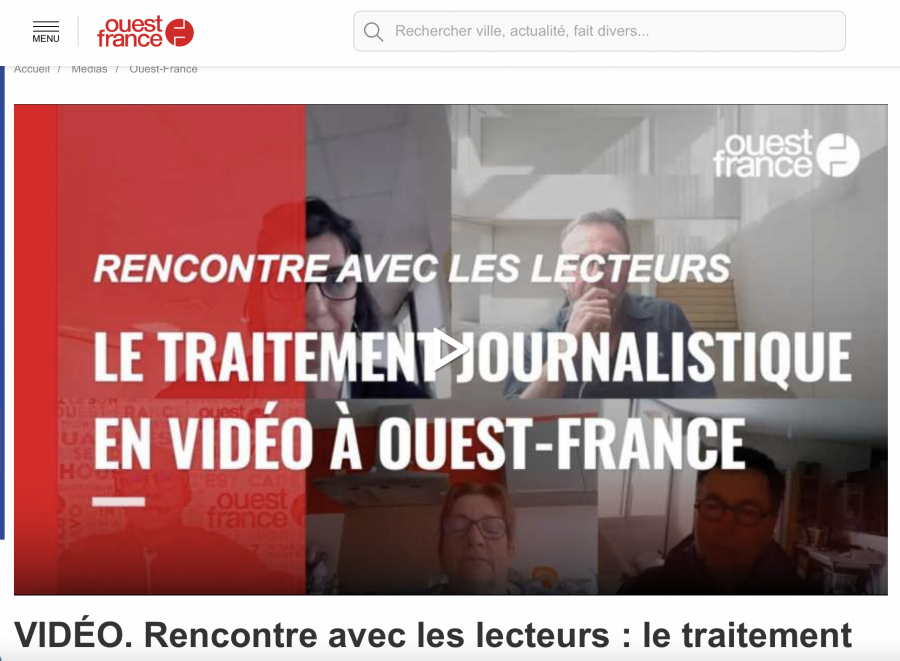
Historically, readers were invited to come and see how the newspaper is made, from editorial meetings all the way through to printing. On the website, the “La Place” section allows subscribers to interact with the editorial staff and ask any questions they may have. “Transparency and education to show how we work”—according to François Vercelleto, this is the formula that will help rebuild the connection with citizens.
Meeting with its readers is also the hallmark of many independent magazines, such as the feminist magazines *La Déferlante* or Censored at launch events, all over France. La Déferlante organizes gatherings and debates in bookstores and other alternative venues, and sometimes even via video conference to make them accessible to everyone. Without straying too far from bookstores—since their magazine is available among the books—Caviar, the soccer and society magazine, tends to choose bars for its launch parties. A wise choice for bringing together readers, most of whom are students.
Formats that bring citizens together can mobilize more significant resources, such as RSF with a bus or the on-location production of a broadcast. Even so, it seems feasible to organize meet-and-greets with one’s audience, to involve them in concrete editorial projects, and to listen to their feedback, concerns, or ideas, regardless of the outlet’s scale.
______________________________________________________________________
Editor’s Note: Médianes le studio worked with the RSF team in 2021 on the strategic and operational development of subscriptions to the “100 Photos for Press Freedom”; the team at La Déferlante with its strategic development since 2019; and the team at Censored since 2022.
To go further:
Whether through comments, participation in editorial meetings, or a dedicated platform, media outlets believe that readers also have something to say and value to add. Read more in the Médianes newsletter dated May 5, 2022.
Engage with your audience to address the crisis of trust? Check out La Croix’s annual survey.


