Want to go further or need some guidance? Discover our expertise or contact us via this form.
Reading this how-to guide assumes you are already familiar with the theoretical foundations of campaign mechanics and have defined your reasons for running one. For this, we refer you to our dedicated practical guide ⟶ ✊ Everything you need to know about crowdfunding.
Set up your campaign step by step
How do I run a fundraising or pre-order campaign? Follow the guide 👋
Ask yourself the right questions
About the project: Does my network know about my media project? Do I have a solid foundation to rely on for this funding? Can I deliver a clear and compelling pitch for my project? If you're not confident, you can use our dedicated practical guide ⟶ Telling your story
About your audience: do I concretely know who I'm addressing? For whom could my project be essential? What are the personae of my media. If you're unsure, you can use our dedicated practical guide ⟶ Defining your personae
About communication: Is my media present on social networks? Do I have a database of potentially interested people's emails? Do I have a professional online presence? Have I planned audiovisual content to showcase my project?
About the campaign: Did I organize myself for the campaign with a timeline? Did I estimate my project and campaign budget precisely? Did I think of credible and attractive rewards? Did I plan actions/events throughout and at the end of my campaign?
Define your financial and strategic objectives
Before you start working on your campaign operationally, it is important to:
- set the context (first campaign? what's in the news?…),
- define the objectives it pursues, the intentions, the strategic directions, the arguments to encourage audiences to contribute (the benefits derived from the contribution and the concrete impacts that these contributions will have),
- establish the main talking points,
- explore your communication instincts,
- and build a forecast calendar.
You should already have in mind the main argument around which you want to direct your campaign: it is a written expression of call-to-action and campaign objectives. Ask yourself what objective your campaign pursues strategically (raising awareness of the media, sustaining a team, promoting/selling a product…) and financially (what amount do you plan to raise)? In other words, identify the major stakes of this campaign and how to prioritize them: acquiring new audiences, retaining your existing audiences, converting and/or gaining visibility.
As part of a pre-sales/rewards campaign — It's important to set a specific target. The idea is neither to be too ambitious nor insufficiently so, but to find a realistic balance between the amount/number of pre-sales that will allow you to complete the project and your community's known capacity.
When setting your numerical target, several parameters must be taken into account:
- the amount you need to complete your project,
- the cost of producing your rewards,
- the cost of shipping your rewards,
- the platform commission and taxes, depending on your media status.
One thing to know about a pre-sale campaign on a crowdfunding platform: if the target is not reached within the set timeframe, all backers are refunded by the platform and you will not receive any of the contributions.
As part of fundraising campaigns — it's worth thinking through a tiered approach informally. The idea is to display the first tier and make it clear that the goals shown in the second and third tiers remain hypothetical: they represent achievable milestones only if the previous targets are met. The message should reinforce the idea that the goal has been reached but the campaign itself is not over. You'll need to explain what the additional funds collected will be used for, and make sure to communicate these new goals well through your updates (website, newsletter, social media, etc.).
Define your talking points
Now that the objectives are set, it's time to define the campaign messages (website, social media, email, advertisements), clarify the different messages, and refine them as you go. It's useful to be able to innovate in your messaging throughout the campaign. You can therefore alternate them by extracting and tailoring your contribution appeal arguments to distribute across different weeks: each week its own message. The challenge is to identify both the enduring persuasion factors for engagement and those specific to the campaign.
For example, you could feature a flagship message from which weekly sub-themes flow. To do this effectively, we recommend starting from your target audience to identify arguments that could encourage them to contribute financially. If you're unsure about identifying your target audience, we strongly recommend relying on our dedicated practical guide.
Build your project timeline
Creating a timeline before launching a campaign is critical for your organization. It involves:
- to establish its positioning;
- to identify your campaign objectives;
- to define your community by mapping it out (your circles) ;
- to list the objectives and reasons for your audience's engagement;
- to create a press kit;
- to list influencers and relay partners;
- to create a project page;
- to create, where appropriate, a launch and closing event;
- to build, where applicable, a website;
- of possibly creating videos;
- to strengthen your presence on social media, etc.
Build the campaign page
As part of consideration
- Polish your presentation. One of the keys to a successful crowdfunding campaign is building your project page. The presentation and funding objective should be clear and compelling enough to inspire backers to support you.
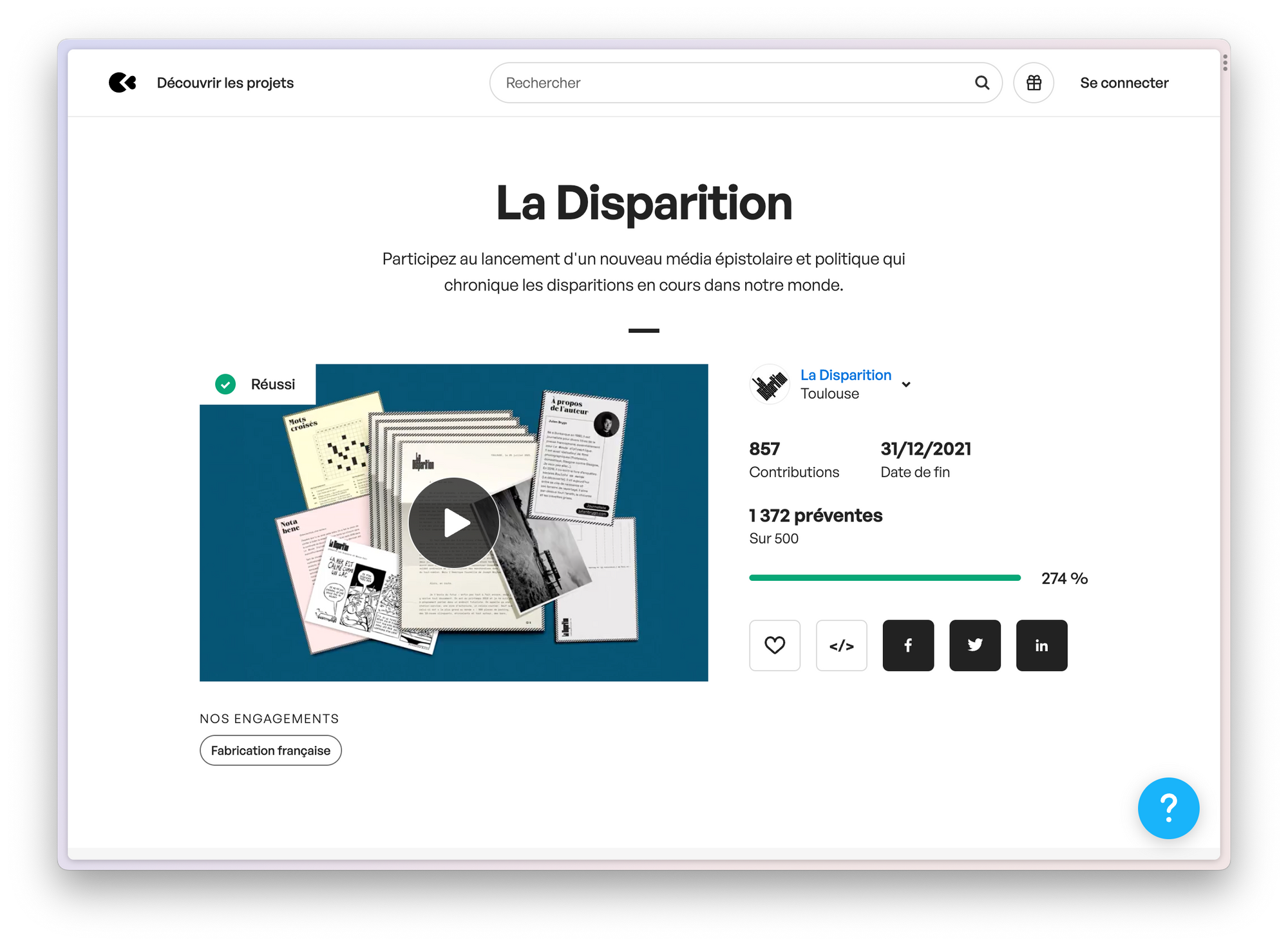
- The project, name, and a call to action or hook must appear quickly. Be clear, concise, and specific. Its goal is to engage potential supporters and present the project's essential elements.
- Visual design is just as important as text. Highly visual campaigns reflect the importance of their product's visual identity.
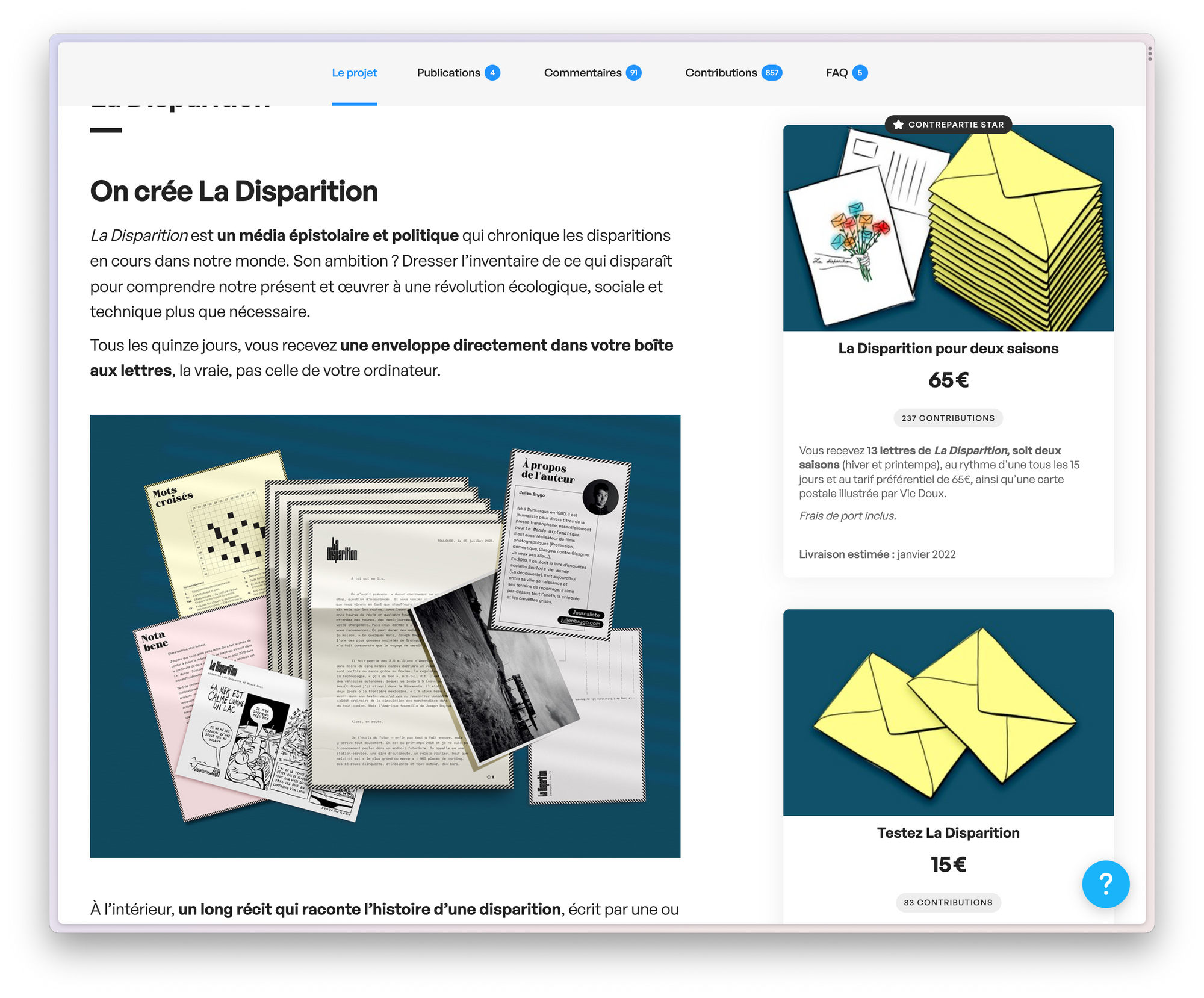
- A project presentation video is always welcome—it helps capture attention and bring your proposal to life. Keep it brief here too, between one and one and a half minutes. Most importantly, tailor your format to your project rather than following a generic template: this is a powerful tool because it creates empathy. But don't attempt one if you're not comfortable with this medium.
- And here comes the heart of the matter: the presentation text. Don't worry, you just need to meet a few useful requirements. First, tell the story of your project: its objective, its editorial line. Feel free to narrate your media's story, its origins, explain what it's about. Include keywords that will catch the reader's attention.
- If you're launching a magazine and the media already has an audience, introduce yourself again for those who don't know you and explain the project you're starting. If you're beginning a newsletter or magazine, specify what readers will find there. In any case, introduce who is behind the project!
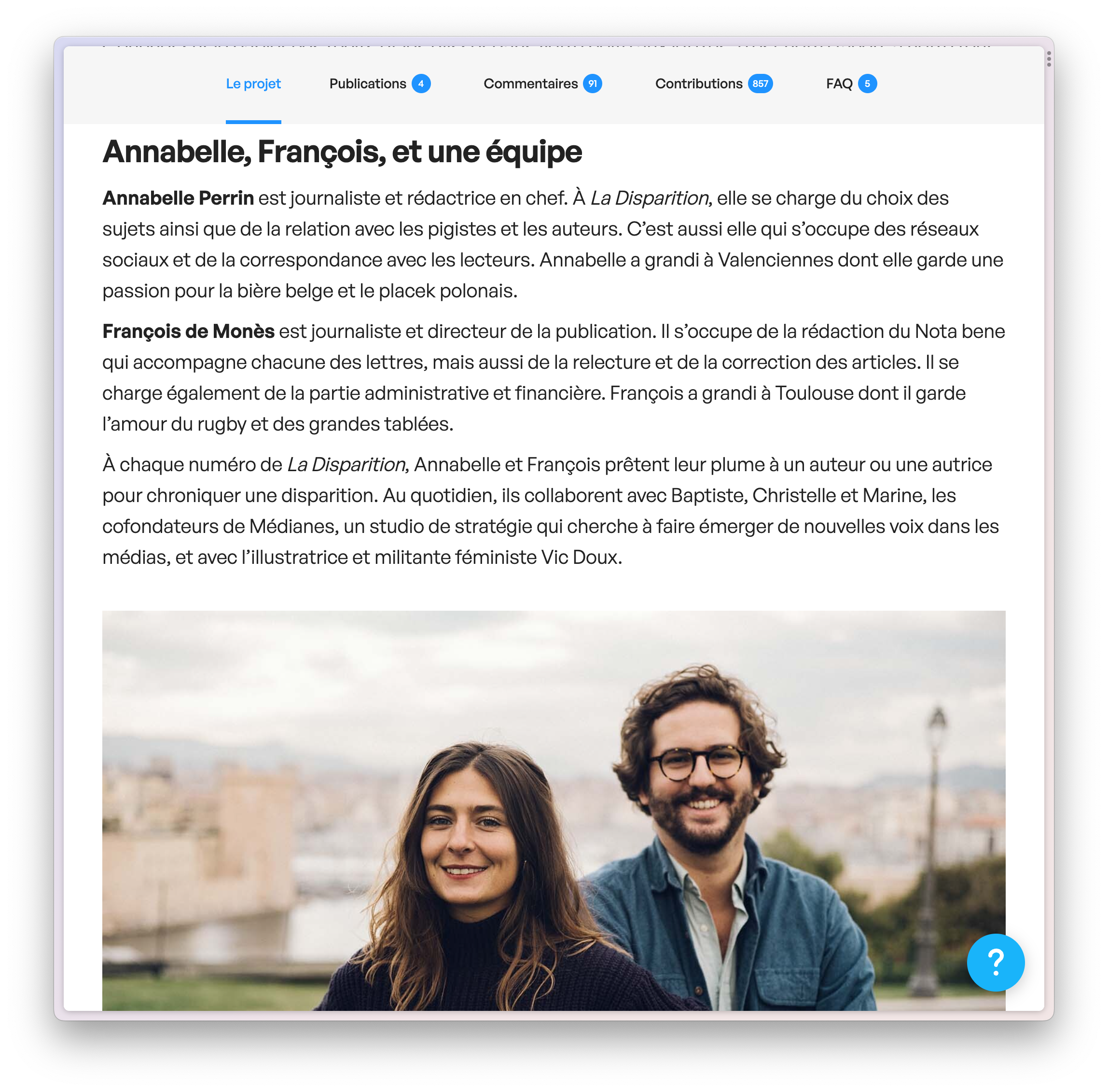
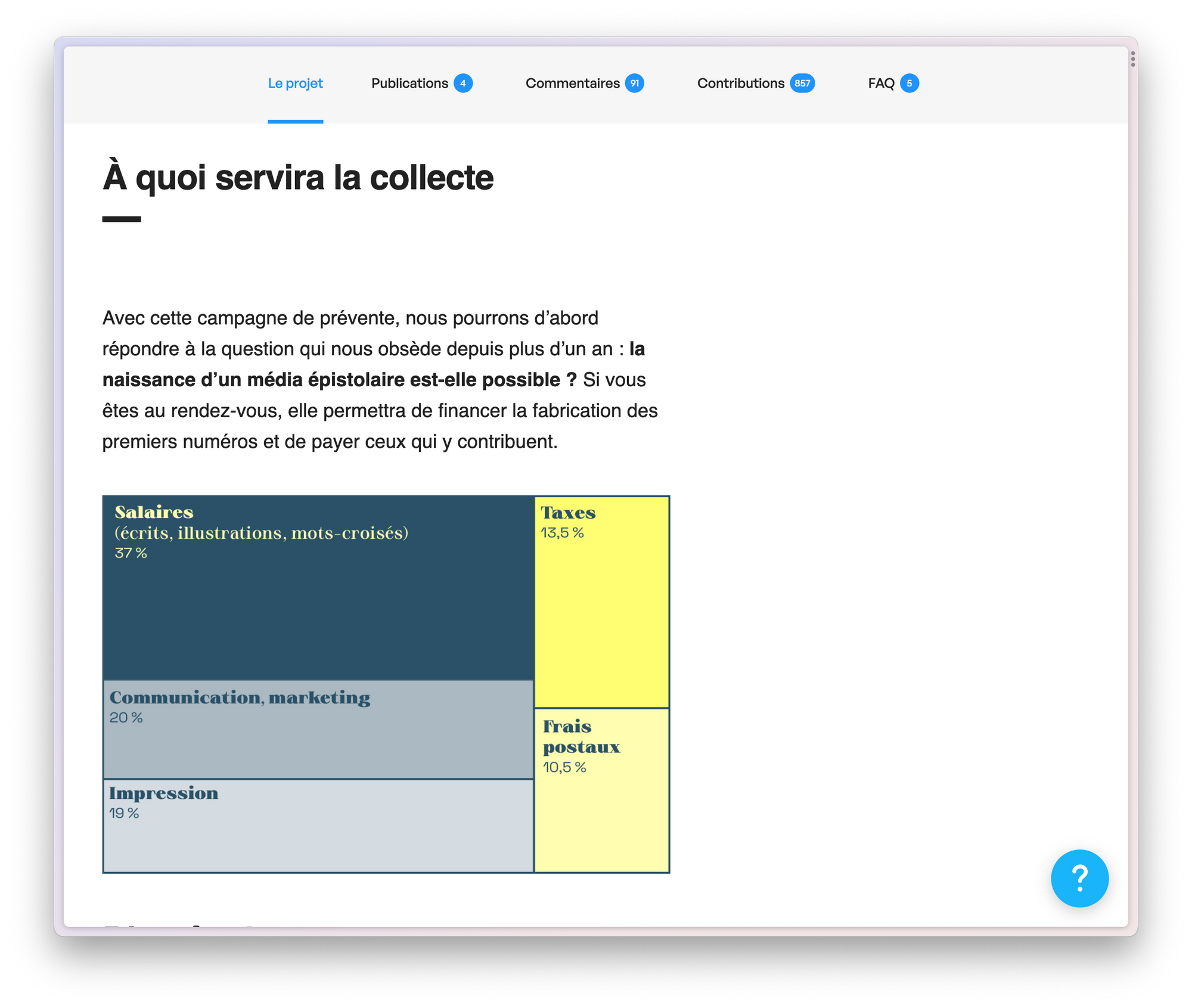
- Key final step: why? The purpose is to explain with complete transparency what your fundraising will be used for: concretely list what the money will be spent on.
- How should you define your rewards? Based on your financial goals and your audience's preferences and interests. The aim is to increase your average transaction value! Focus on the product—whether a magazine (pre-order or single issue) or a subscription with different terms: one issue, six months (two issues), one year (four issues), or a mix of subscriptions, single issues, special editions and products. If it's not a physical media, imagine relevant rewards: offer books by one of the authors/contributors, or an invitation to an evening event/discussion session.

- Rewards are important for engaging your future contributors because they stimulate interest and involvement. It's important to structure them in tiers, for example: 10 – 25 – 50 – 100€, because if someone was thinking of giving X euros, they'll give more if the next reward tier appeals to them.
- Don't let counterparts turn into a waste of time and money for you—focus on what's quick to send and doesn't cost too much to produce.
As part of the donation
The donation campaign page is the storefront of the campaign: all information should be displayed there: the title, subtitle, call-to-action button, progress bar (fill as of day 1, maximum target), campaign messaging, press contact(s)… In your messaging, be sure to clearly list the benefits of donating ("by contributing, you…"). Linking the "About Us" page to the donation campaign page will allow you all the more to bring your messages to life. To add concrete details (potential event, tax receipt, payment options…) and remove any potential confusion about the campaign's implications, we also recommend including a FAQ. This allows you to provide concrete information on a variety of questions.
After writing it, you need to integrate the donation appeal page. This is the technical implementation stage of the campaign.
Depending on your resources and available time, choose one of the following:
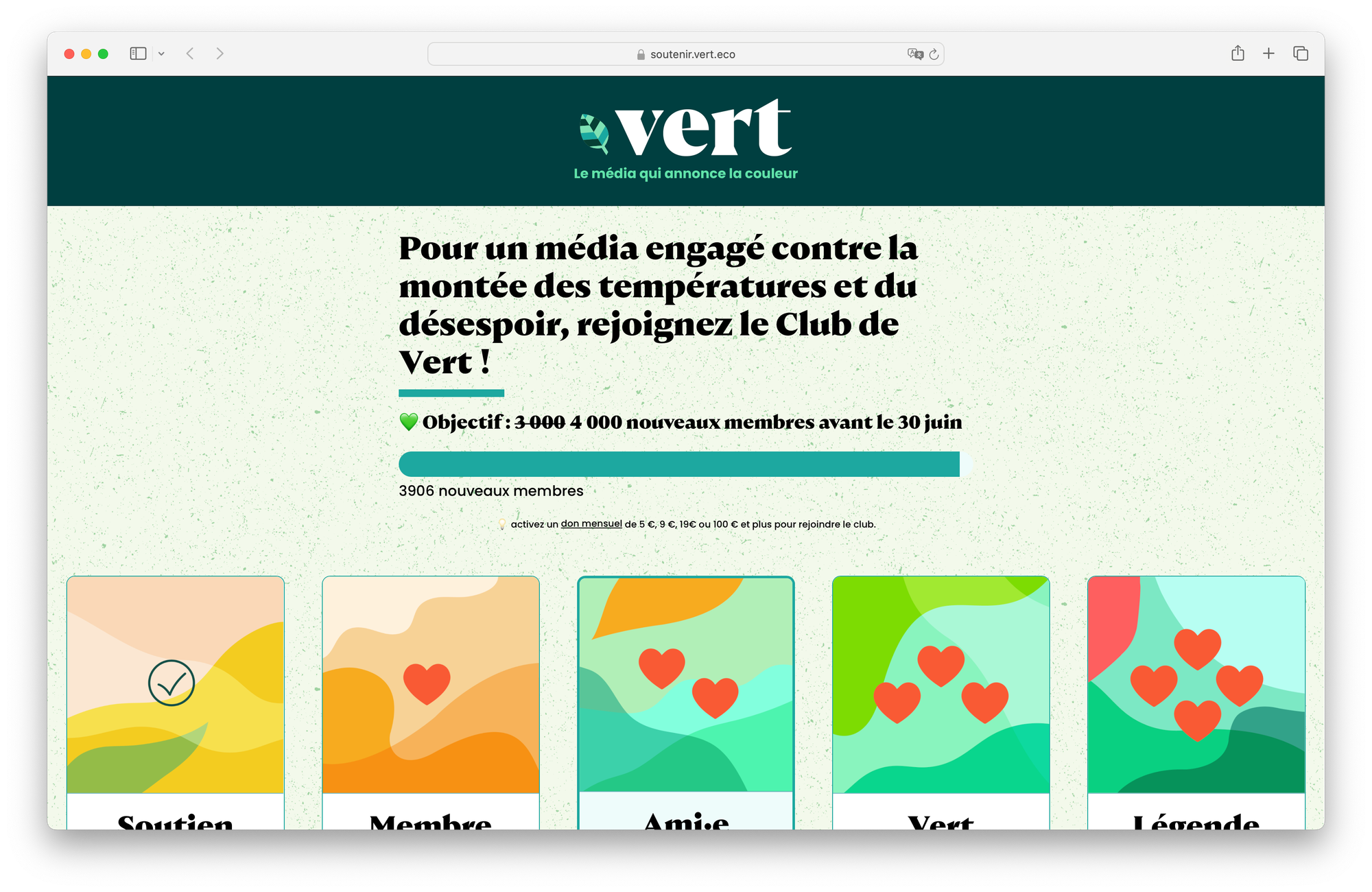
- integrate the page into your website (example with Vert: filling an article page);
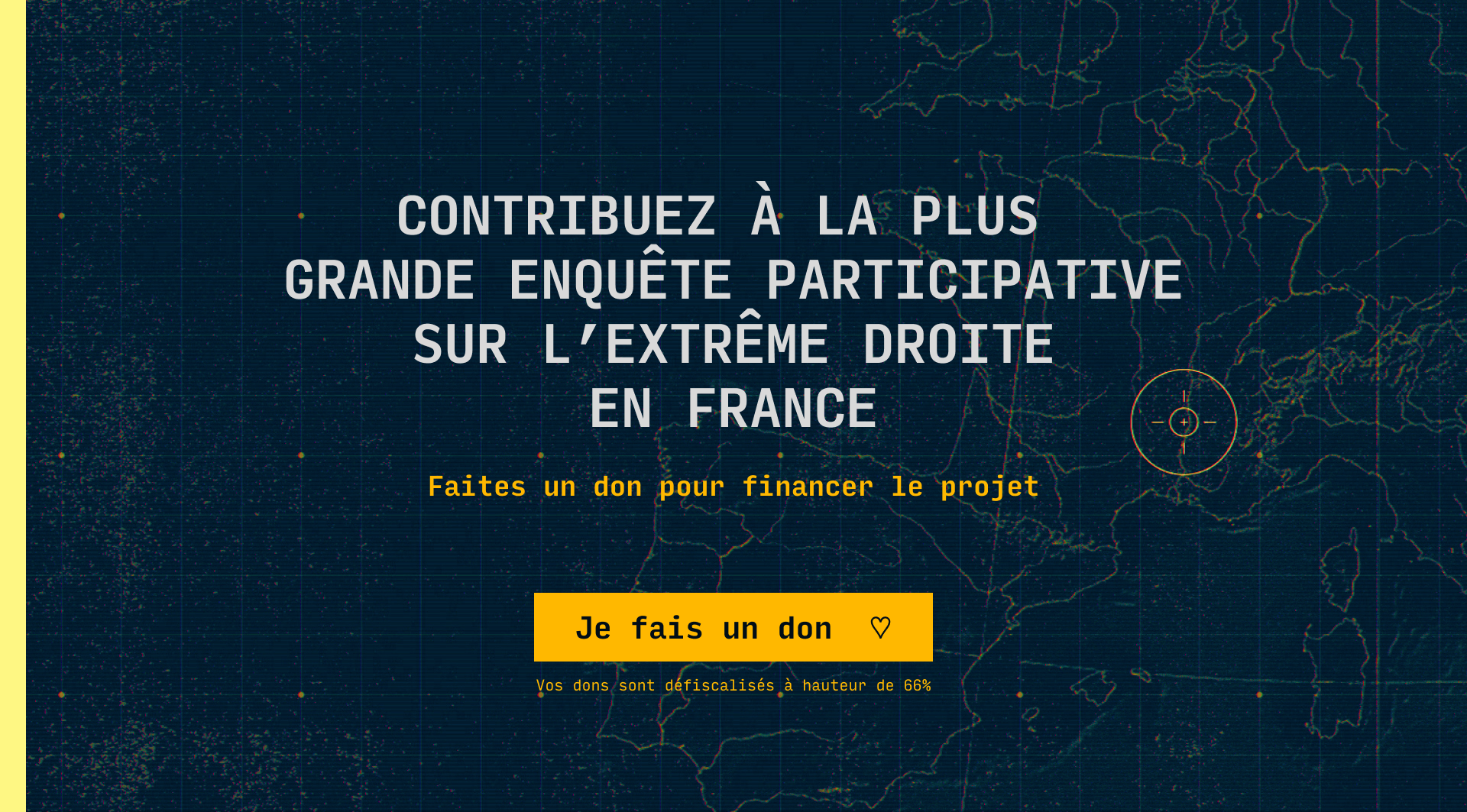
- create an external launch page (example with StreetPress);
Implement the campaign visually
You now need to build a visual identity dedicated to the campaign by using your media's graphic codes. To do this, refer to your graphic charter. Don't have one yet? This is a great opportunity to define its framework.
The goal is to highlight your media's editorial project and identify the campaign among the media's other publications. In the context of a launch, it should display the strong graphic markers of your project.
Identify the campaign's relay partners
This step is central to the successful distribution of your campaign: for your campaign to be seen and reach as many interested people as possible, it's important to communicate with people who probably already know you, but also to be able to reach out, across your network and your network's network, to people who might be interested. When a campaign launches, several levels of potential supporters are defined: these are the circles.
- Circle 0: your close circle, team members who support the project;
- Circle 1: your core target (main audiences / relay partners or partners you know relatively well and with whom you share common interests)
⬆️ These circles are the ones you'll communicate with most easily and which will give you the best success rate (bringing about 30% of your goal) because trust is already there, they are your close circle: family, friends, colleagues, your most loyal audiences, fans. They are your first ambassadors, your primary distribution and content promotion channel.
- Circle 2: These are friends of friends and your online community, those who follow the project on social media. This circle reaches more distant but well-disposed people: regular or occasional readers, acquaintances, friends of friends. These are actually targets to build loyalty with. These are close acquisition targets (audiences to acquire who aren't the first reached by your media project but may find answers to their needs / relay partners or more distant partners, known or unknown).
- Circle 3: These are people, places and institutions not directly connected to you but likely to be interested in the project: their interests align with yours. These are more distant acquisition targets, unrelated to your main audiences, relay partners or partners.
📌 Don't overlook your team: their role is essential to the campaign's success. Once team members have the campaign's editorial, graphic and technical framework and materials, ask them to share the campaign across their different circles on social media and by email.
Early birds: Note that in a fundraising campaign with rewards, it's worth defining a strategy around early birds, i.e. the first people who could contribute. The principle is to encourage early orders or contributions. The person benefits from this early purchase with a special offer or another advantage compared to other contributors. The advantage for the project initiator is being able to receive an inflow of funds upfront and gauge public interest.
🔗 You can map your relay partners using our contact file template (Google Sheets) ⟶
💡 Ask yourself
- How close is the relationship with the relay? (circle)
- What communities does the actor reach?
- Why do you want to address them (benefit gained)?
- What can you offer them (need and solution provided)?
- What request will you make?
- What channel will you use to make your request?
Showcase your ambassadors — Case study with Zadig
Once your relay contacts and ambassadors are identified and contacted, don't hesitate to highlight them in your email and social media campaigns! Like the magazine Zadig did for its crowdfunding in March 2023 to launch its new format.
Use appropriate tools
A few examples of tools we use daily at Médianes, the studio.
Notion: to set up a "base camp" for your project. Note-taking, calendar, kanban board, database, communication kit, etc.
Slack: to communicate daily with your team (or organize your topics if you're working alone!).
Microsoft Excel/Google Sheets: to create a comprehensive list of your networks and relay contacts.
Mailchimp/Brevo: to reach and easily segment your audiences based on their behavior as consumers of your media (subscribers, former subscribers, newsletter sign-ups, one-time purchases, donations, etc.).
Typeform/Tally: to generate surveys and collect information from your audience (rewards, etc.).
PhantomBuster: to extract your social media databases and collect data.
Implement a media and public relations strategy operationally
Now that you've identified your promotional networks, it's time to create content: template messages, press release, emails, media kit. For emails, you can integrate them directly into the template created for the editorial calendar defined in the next step.
Keep in mind that through media relations, you're not just addressing traditional media outlets: include notable relay contacts and ambassadors, whether through your subject matter angle or a professional angle.
- Write a press release. To do this, use the funnel method that goes from general to specific. The essential information you must include are: date, logo, media presentation and audience, campaign context, objective, campaign URL, press contacts.
- Create a press kit. To provide a newsroom with more information, present the team and topics from editorial and graphic perspectives, here's the solution: the press kit.
- Develop a press file and create template messages. You can define in advance the template messages to send personally to potential contacts on social media and build your press contact file.
You can use this document we created for this purpose ⟶ - Create a media kit. In the messages you send to your press file, it can be helpful to include a media kit. The goal? Save time. Compile everything that mobilized people might need (donation landing page, marketing email, links to launch social media posts, press release and visuals).
💡 Ask yourself:
- How close is the relationship with the relay? (circle)
- What communities does the actor reach?
- Why do you want to address them (benefit gained)?
- What can you offer them (need and solution provided)?
- What request will you make?
- What channel will you use to make your request?
Define your marketing actions and channels
To launch, manage, accelerate or restart your campaign, it's important to define the marketing actions to implement and the channels—yours or external—you'll use. Online or in-person events, email campaigns, social media campaigns (organic or sponsored), surveys, petitions, posters, etc. To define them, start with your targets, their habits, and imagine the most appropriate actions.
Focus on events
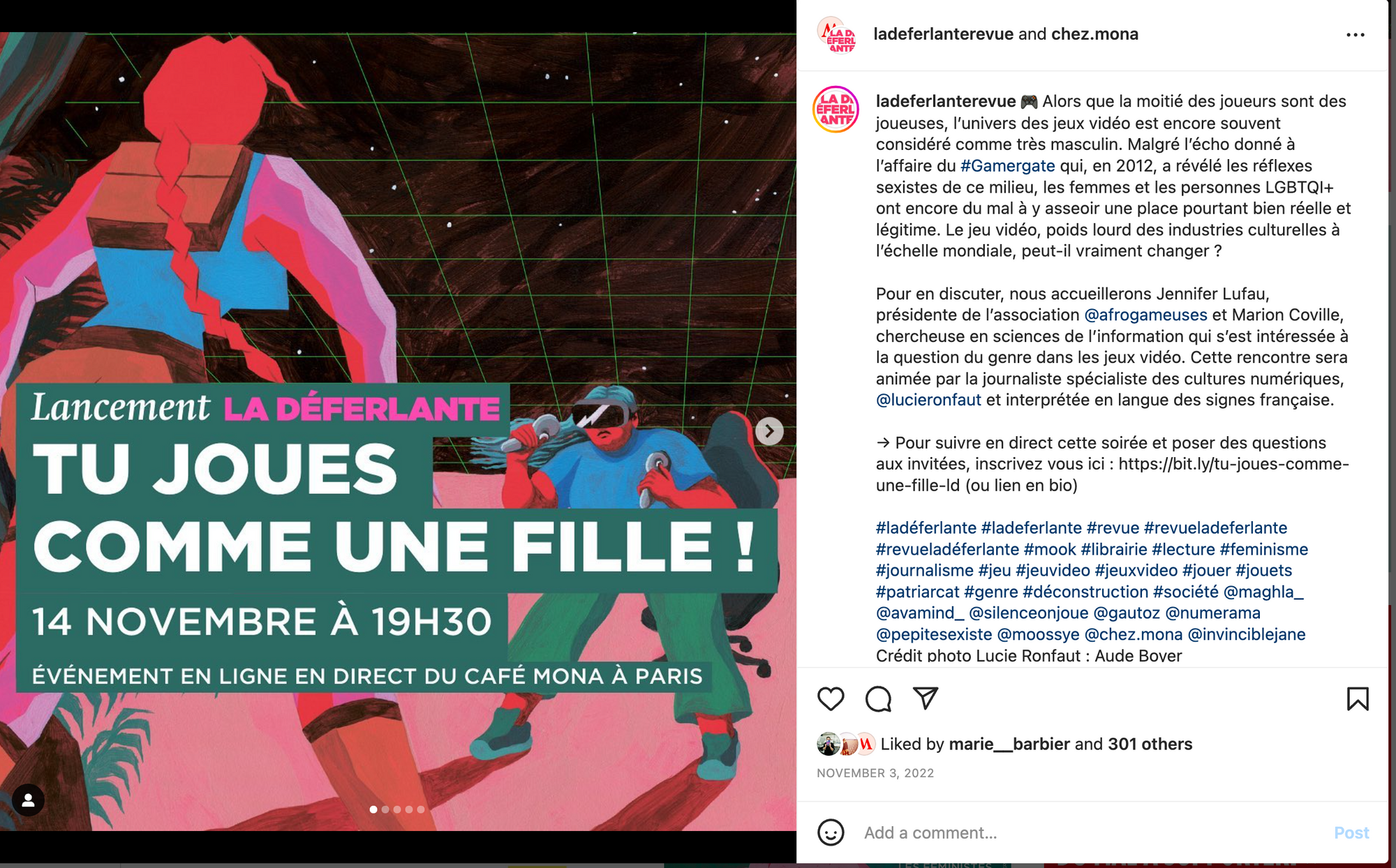
Events to launch the pre-sales campaign, like La Déferlante, a magazine dedicated to feminism supported by Médianes studio, which organizes an online and live event every quarter for the release of each issue.
Build an editorial calendar
It's important to plan ahead for your social media activity during the campaign period. To do this, you can use an editorial calendar: organize your content week by week, defining the channels (Which social network? Direct email? Email via Mailchimp? Brevo?), key messages (captions, email content…). If you're planning content on X (formerly Twitter), don't forget to keep it within the character limit set by the platform. This is also the time to decide when you'll launch your sponsorship campaign to boost your content on social networks.
To help you with these tasks, we've created a dedicated template.
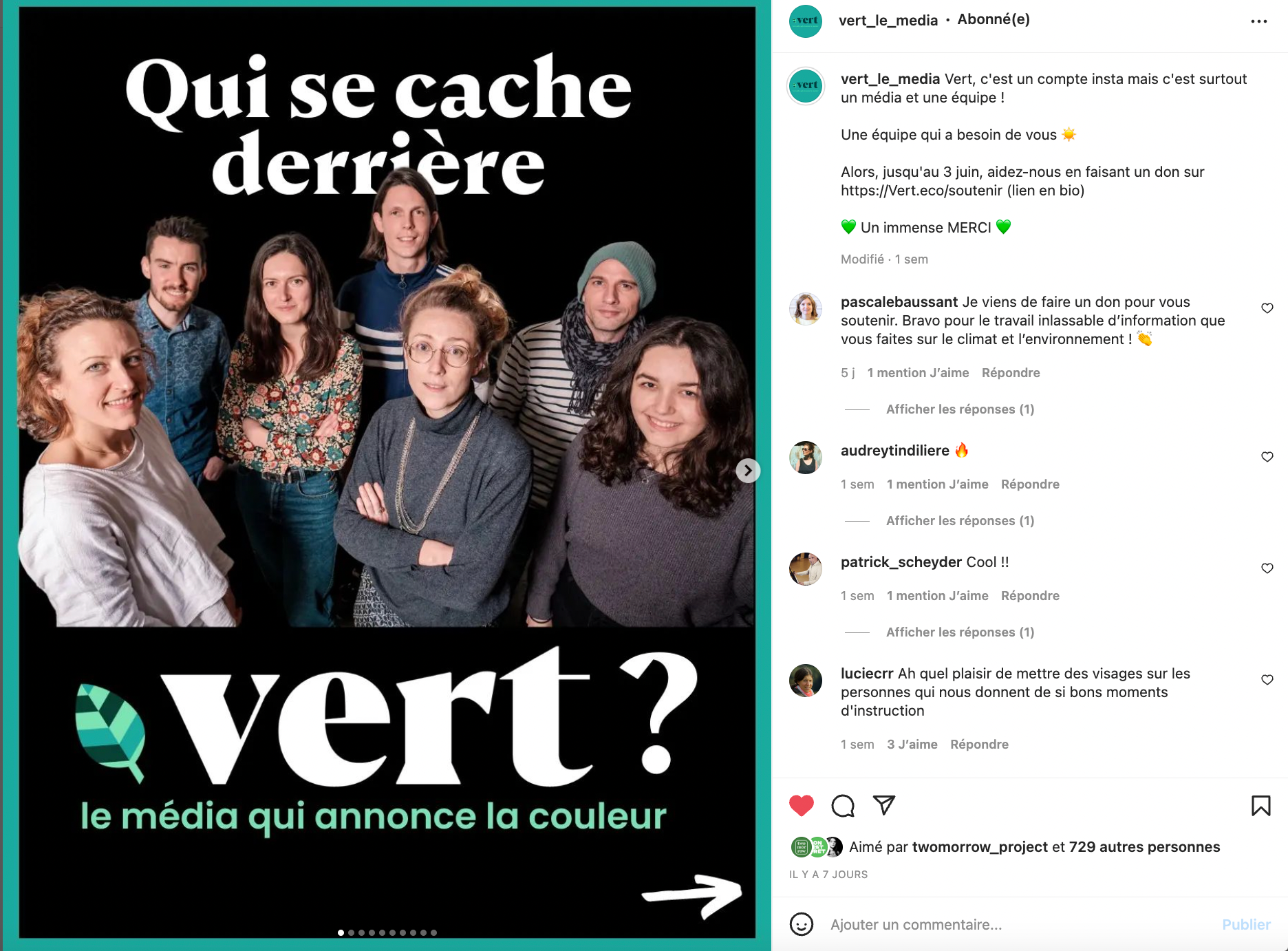
Example action: highlight the media team to embody the fundraising campaign on social networks
The case of StreetPress (2021)
- Tweet by Inès Belgacem, deputy editor-in-chief
- Tweet by Maria Aït Ouariane, video journalist
- Tweet by Matthieu Bidan, video journalist
I briefly talk here about my work at @streetpress. We're modestly trying to do our part in covering popular neighborhoods.
Our campaign ends on the 17th, help us continue our work if you're interested 🙏 https://t.co/KT96HitmmL pic.twitter.com/jEpEk1i1oO— Matthieu Bidan (@MatthieuBidan) December 14, 2021
On the Vert (2022) side:
Track your campaign
Tracking your campaign's progress is essential to refine your strategy and objectives as you go. A campaign's success cannot be fully anticipated: you need to see where it's working, where it's not working as well (channels, formats, audiences…). To learn all about KPIs, check out our dedicated article.
Email open rates, newsletter engagement, social media engagement rates, page traffic, number of pre-sales/donations per week, number of contributors/donors… All these metrics should be examined closely to gauge campaign effectiveness.
To keep track of emails and newsletters, you can use this template ⟶
Thank your contributors
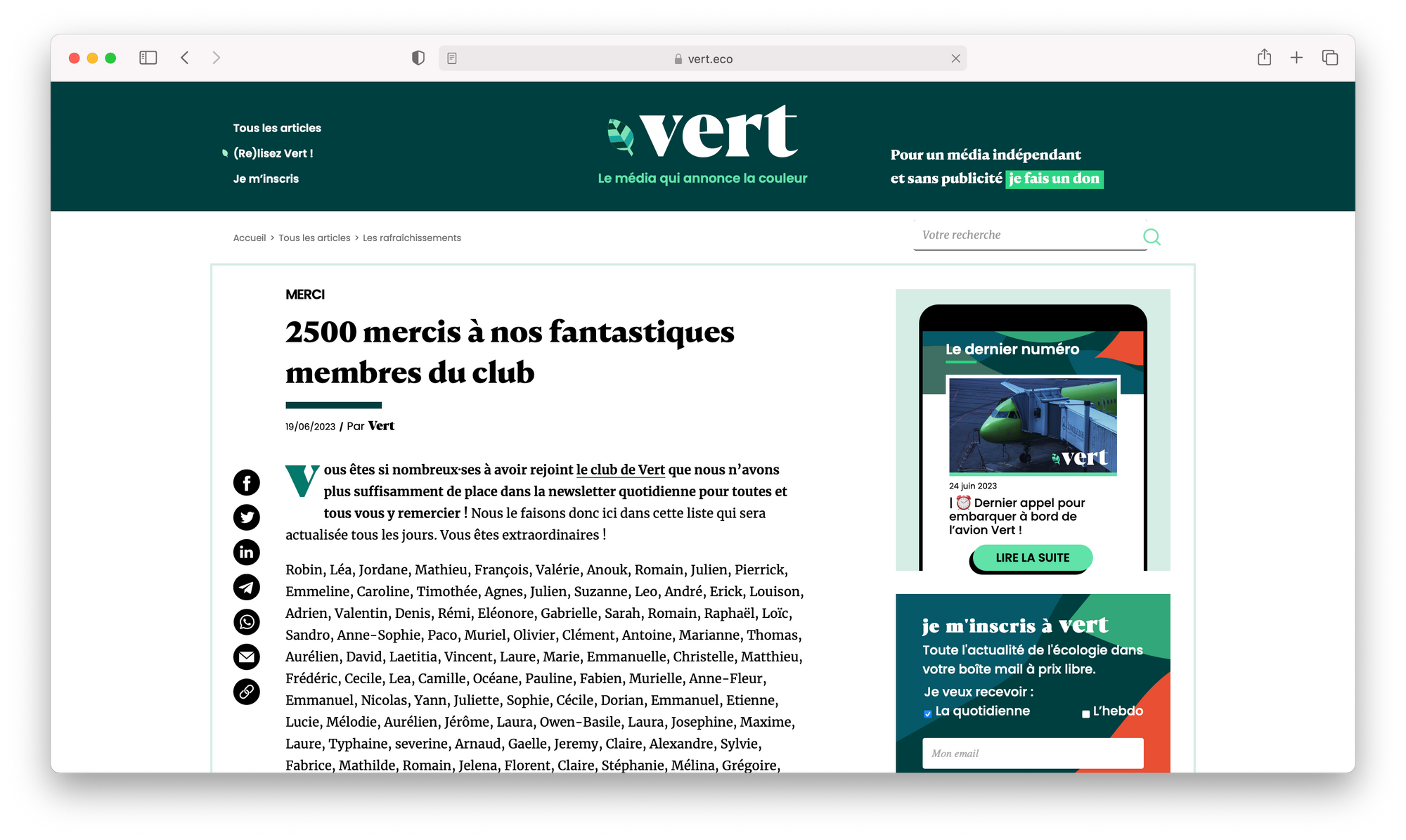
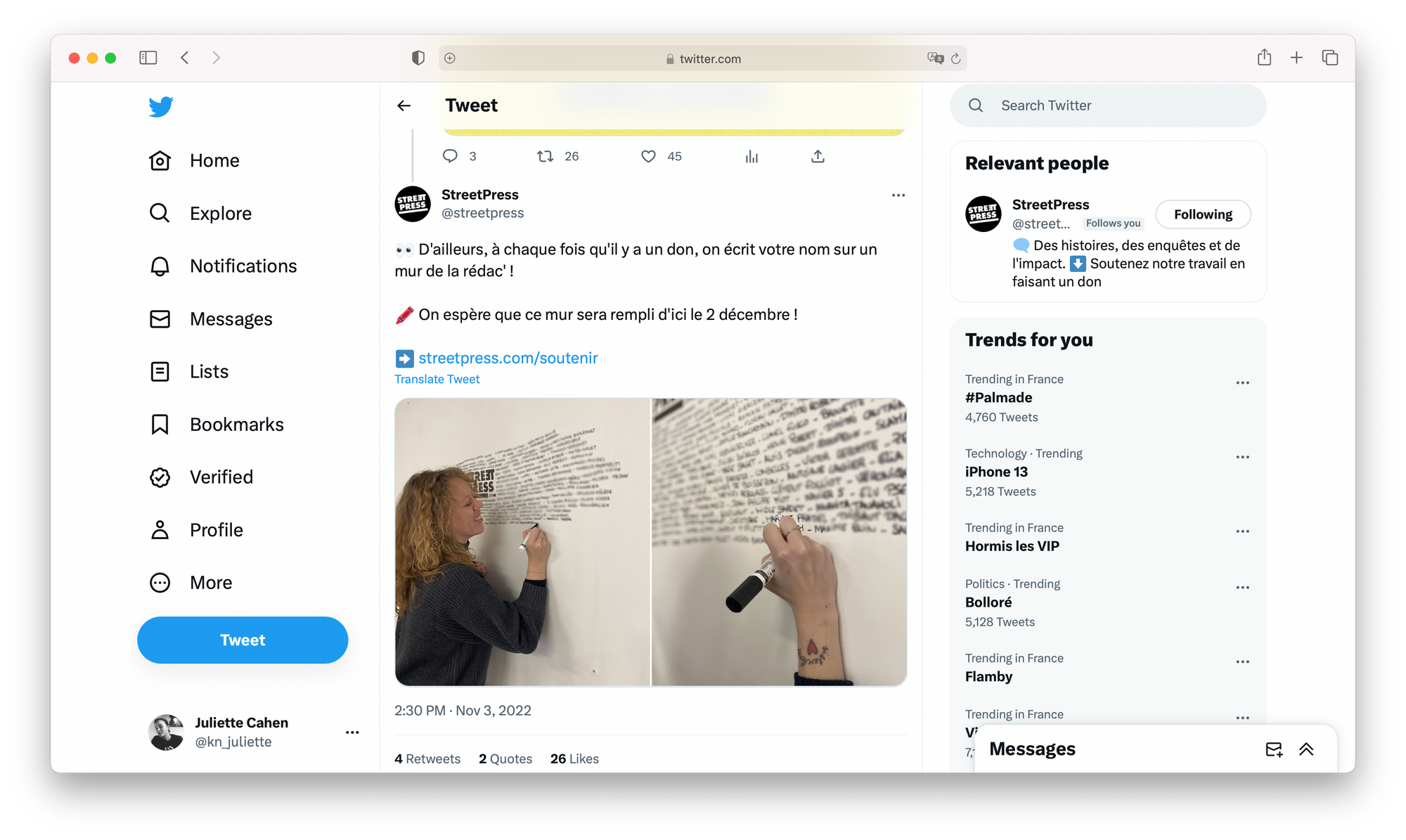
It's important to thank your contributors and donors to maintain your relationship with them and build loyalty, whether during the campaign or after it ends. This includes dedicated posts on social networks and dedicated emails. Some media outlets have also implemented interesting ways to display their thanks, like Vert and StreetPress.
Review your campaign results
Take time after your campaign to analyze the results in light of the objectives you set. To the extent possible, and depending on the tools you have, try to read the figures:
- What did the campaign bring you in financial terms (was the goal reached? What is the average donation/contribution amount? What are the particularly lucrative moments? etc.)
- Was the campaign successful in terms of community engagement (did the number of subscribers/readers/sign-ups increase? Is this significant compared to your audience's user growth rate?)
This time is important for drawing lessons and optimizing any future campaigns: was the sponsorship campaign launched at the right time? Was the schedule met?
I'm building my campaign step by step
Summary of resources provided
- Support page map ⟶
- Media kit mockup ⟶
- Reverse schedule ⟶
- Creative brief ⟶
- Contact file mockup ⟶
- Editorial calendar mockup ⟶
- Email dashboard ⟶