2023 was a year of major challenges for the press and its actors. One after another, various more or less publicized episodes threatened its freedom, undermined its independence, and weakened journalists' working conditions. Old news, you might say? Was 2023 ultimately any different from other years? We'd find it hard to tell you otherwise. But recent events suggest to us that these past months marked a turning point. Violent conflicts across the world, the rise of artificial intelligence, difficult economic conditions, and the grip of unscrupulous billionaires on the media have forced newsrooms to react, adapt, and defend their principles. The picture painted here seems gloomy, but from these challenges came surges of energy and awakenings that swept through the ranks of the press, and more importantly, our audiences. Admittedly, other challenges loom on the horizon. Texts eroding the safety of journalists and their sources have reared their head. The Bolloré juggernaut shows no sign of slowing down, leaving a trail of noxious soot in its wake. We are also concerned by the spread of hate speech, which is increasingly making its way onto airwaves and into newspapers, ultimately seeping into society.
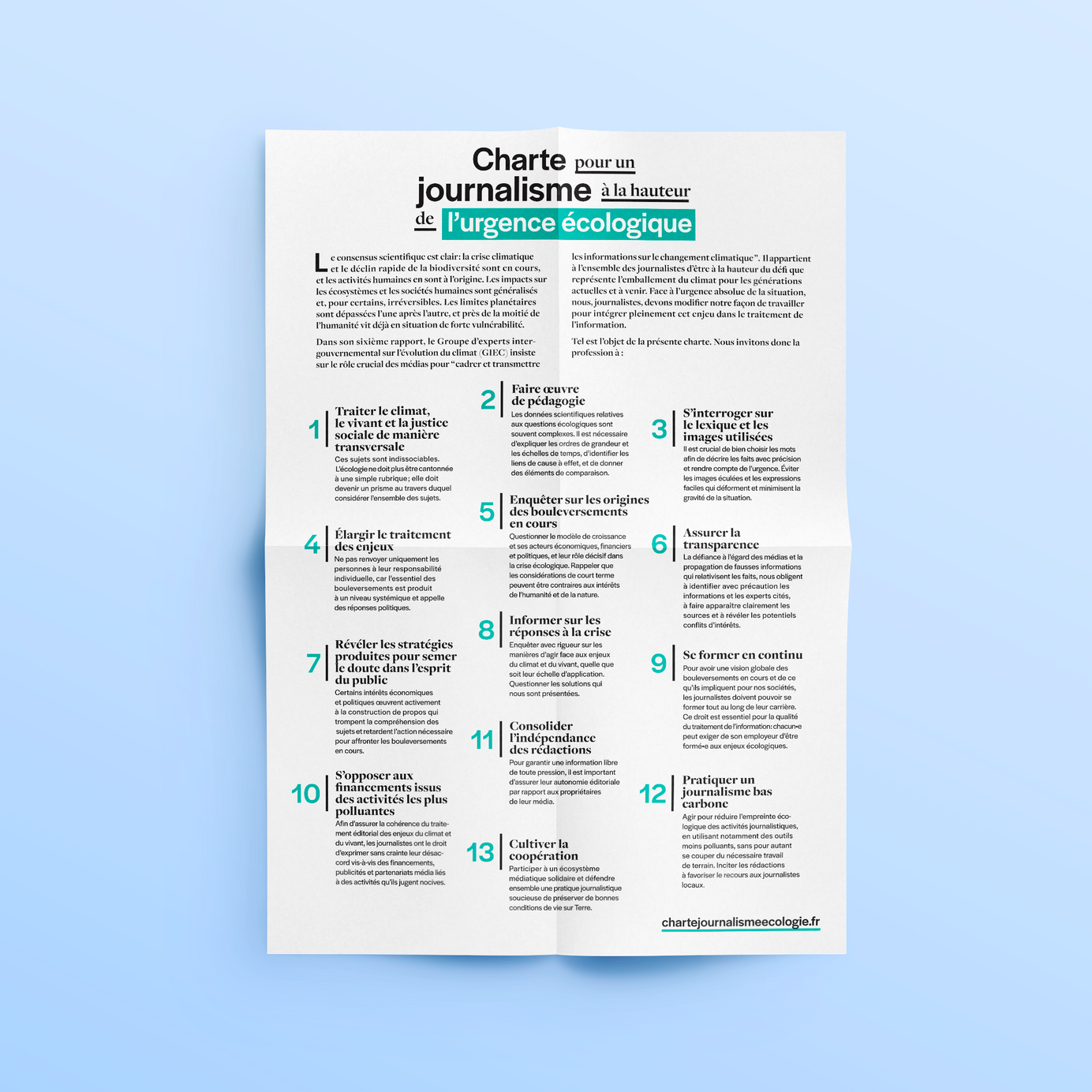
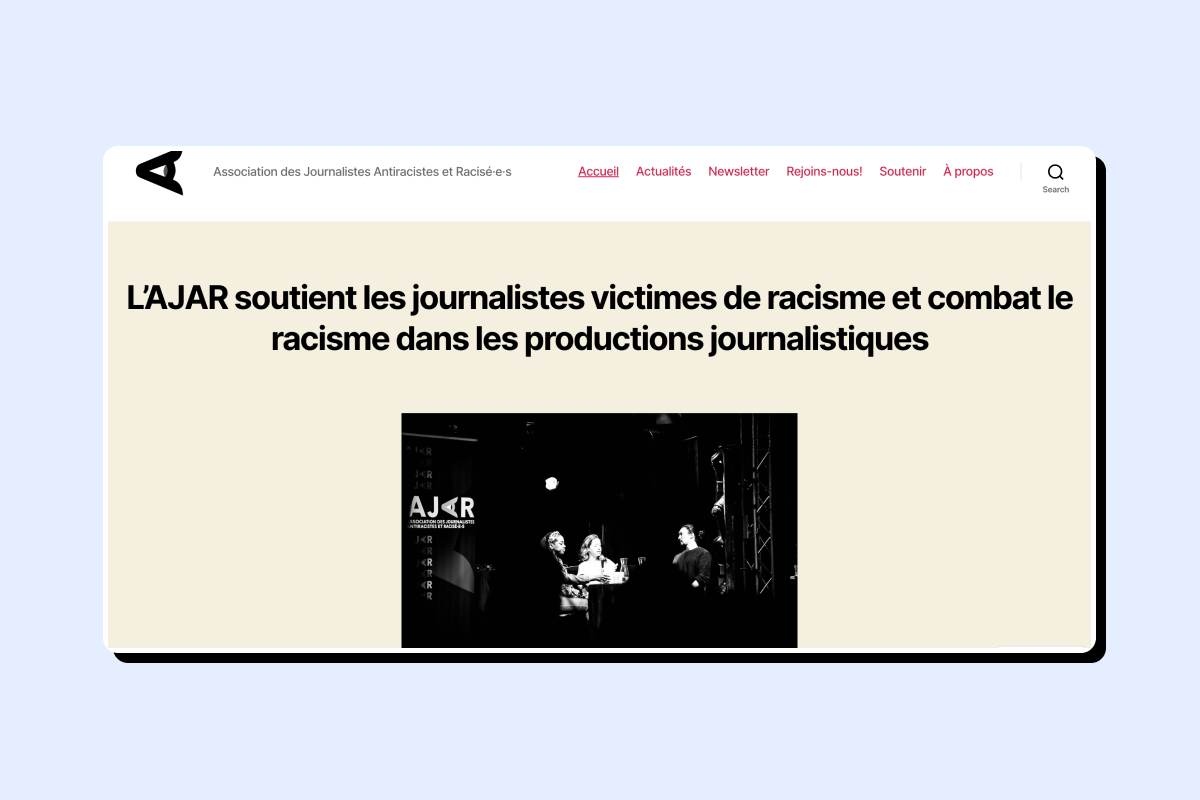
Yet these threats cannot discourage us; quite the opposite. Let's seize these challenges to move forward because, on the horizon, there are reasons to hope. 2023 was the year that saw the birth of AJAR, the Association of Antiracist and Racialized Journalists. It was the year of the historic mobilization of JDD's newsroom, opposed to a billionaire's whims. This year, the Charter for Journalism Equal to the Ecological Crisis celebrates its first anniversary, now counting 2000 journalists and media outlets as signatories. In recent months, General Assemblies of all kinds have flourished, such as those initiated by the Fund for a Free Press or by the Élysée, constituting a welcome initiative despite methods and ambitions of varying promise. We should also note the case of Olivier Dubois, a journalist abducted in the Sahel and released this year after 711 days in captivity. Yes, 2023 was also a year of successes and celebrations.
The past period and the one to come therefore represent an opportunity for the press to mobilize, to reaffirm the values that drive us, and to strengthen the safeguards that stand against our shared challenges. In short, to defend what defines a free and independent press to which we are firmly committed.
Let us celebrate the great diversity of media that continues to develop, both in their editorial approaches and in their economic models. In the coming year, we hope to be able, in our own way, to foster this diversity and support its players. To do so, we have identified a series of areas on which we want to work, with everyone, in the months ahead.
Continue work started on better coverage of the climate emergency
Throughout the year, Charter for Journalism Meeting the Challenge of the Ecological Emergency continued to receive signatures and encouraged the development of editorial projects aimed at meeting these imperatives. In 2023, other initiatives, such as Itinéraire.bis on travel, were launched and newsrooms like The Guardian have assessed their environmental impact with a view to reducing it.
Promote diversity and inclusivity
Insularity is a vice that the press struggles to shake off. According to a SNJ-CGT survey, 44% of journalists surveyed report having experienced discrimination based on their sex, gender, origin, religion or age. Diversity policies employed by major media outlets struggle to prove truly effective and too often confine themselves to short-term and precarious contracts. It must be acknowledged that on this issue, independent media are far from setting a perfect example. Fortunately, organizations exist to provide support and guidance, such as AJAR, Prenons la Une and AJL.
Advocating for better protection of journalists and their sources
This year, the handling of Ariane Lavrilleux's work on French weapons in Egypt proved that the protection of journalists and their sources is not guaranteed. Recently, the European Media Freedom Act made its way through European institutions despite alarming signals, and its clauses, with their freedom-restricting implications, could have facilitated the surveillance of journalists and their sources. We are concerned about these developments and hope that the States General can help strengthen our safeguards.
Apply sound management
We read far too often the accounts of journalists exhausted by their working conditions, faced with precarious or even illegal contracts, or victims of harassment and discrimination in their workplaces. Independent and committed press is, once again, far from being free of the vices it often intends to denounce, itself a victim of a certain left-wing boss syndrome. Building a press enterprise is far from a simple matter. However, this reality cannot serve as an excuse, despite all the passion and determination to succeed. The establishment of good working conditions is just as important as its economic viability and the quality of its editorial offering. A healthy work environment is an essential foundation without which a project will collapse. It will also make the difference in decisive moments. In the year ahead, we want to continue the work started on this subject and question more newsrooms about their practices as we have been able to do previously with Mediapart or Contexte.
More transparency and independence
The public is receptive to this, and we see it every time they are called upon to support us through fundraising campaigns. We also see it at festivals, events and conferences. This is why we recommend, even though it is not always easy, lifting the veil on internal matters and being transparent with a public that wants just one thing: to be part of it. We also want to enable those who could not fit into traditional structures to build their own editorial project, with a solid and independent economic model so that other stories can come to light.
There are many challenges ahead, and the twelve months of 2024 will not be enough to address them all. Other challenges will emerge and we will likely find ourselves, at year's end, with new wishes and new desires. We must face the facts: among the themes outlined earlier, some are beyond our scope and concern society as a whole. However, we can still do our part. To do so, let us continue pooling our efforts, sharing our practices, our resources and our methods, because we have so much to learn from one another.
Best wishes.