In this third episode of the second season of Chemins, we welcome Emmanuelle Josse, cofounder of the feminist magazine La Déferlante, launched in 2021. Two years and ten issues later, La Déferlante is developing its own publishing house to continue telling the story of feminist revolutions. What's on the agenda? Publishing 2 to 5 titles per year, ranging from essays to narratives to photo books. How do you manage launching a publishing house alongside your magazine? What are the key steps?
Key points
In total, for each issue of La Déferlante, around sixty people contribute simultaneously to article writing, illustrations and proofreading work. Tal Madesta, author of the first book published by La Déferlante editions — La fin des monstres — was precisely one of the magazine's regular columnists. Her voice won over the co-founders.
« All this team around the journal, that's a lot of people. By comparison, for a book like Tal Madesta's, we move forward as a tight-knit team. There's only one author to talk with. So it was relatively straightforward and made easier by the fact that booksellers already knew who we were. The journal sells very well in bookstores, we're at 5,000 copies sold per issue, which is rare for a journal. Women read a lot, feminists even more. »
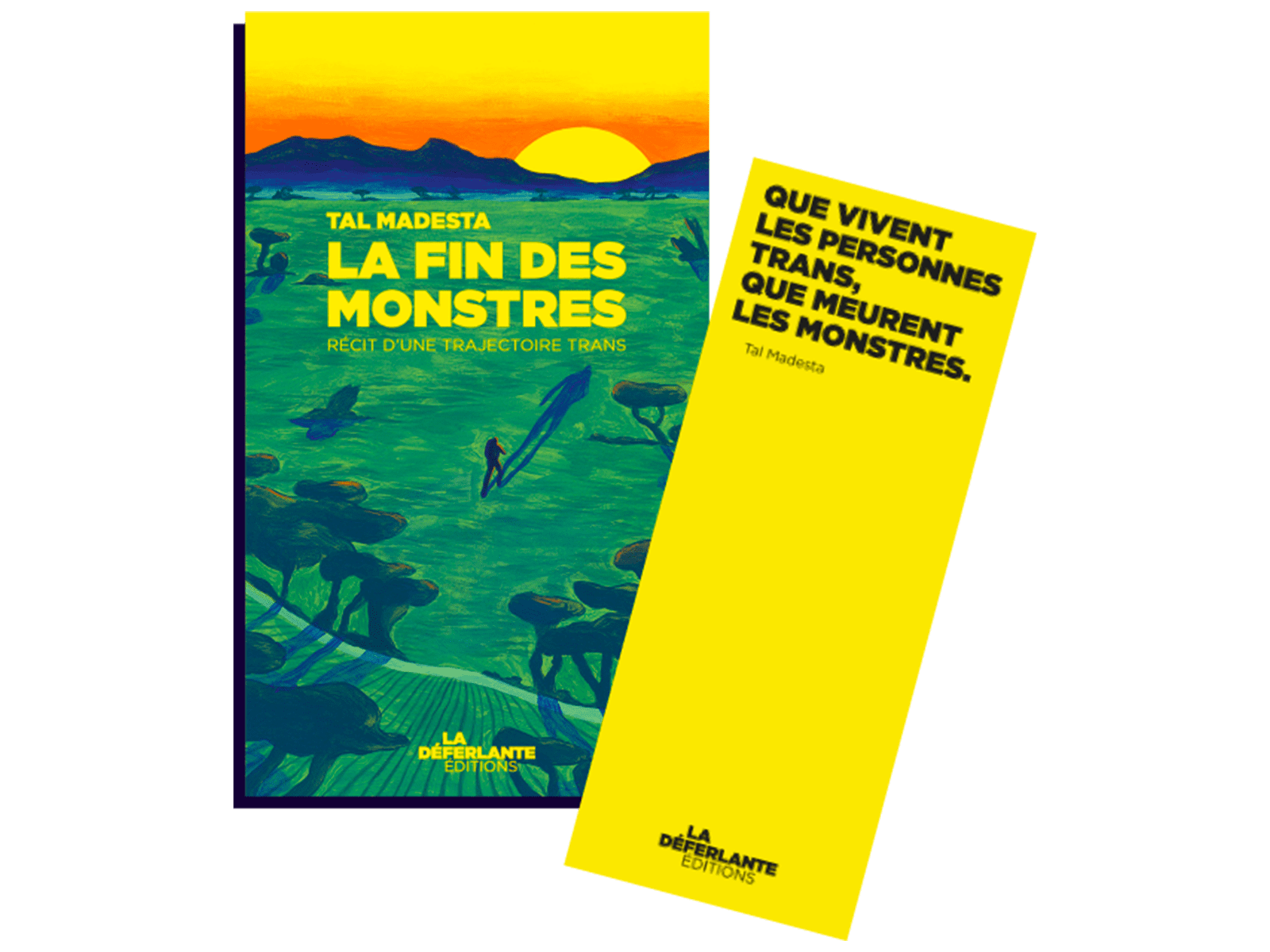
The content of the publishing house's books differs from that of the magazine.
« The publisher has no ambition to chop up the journal into pieces and turn them into books. If people make the connection between the journal and the books, all the better. Especially since we ran a communication campaign focused on both—it would have been a shame to pass that up. »
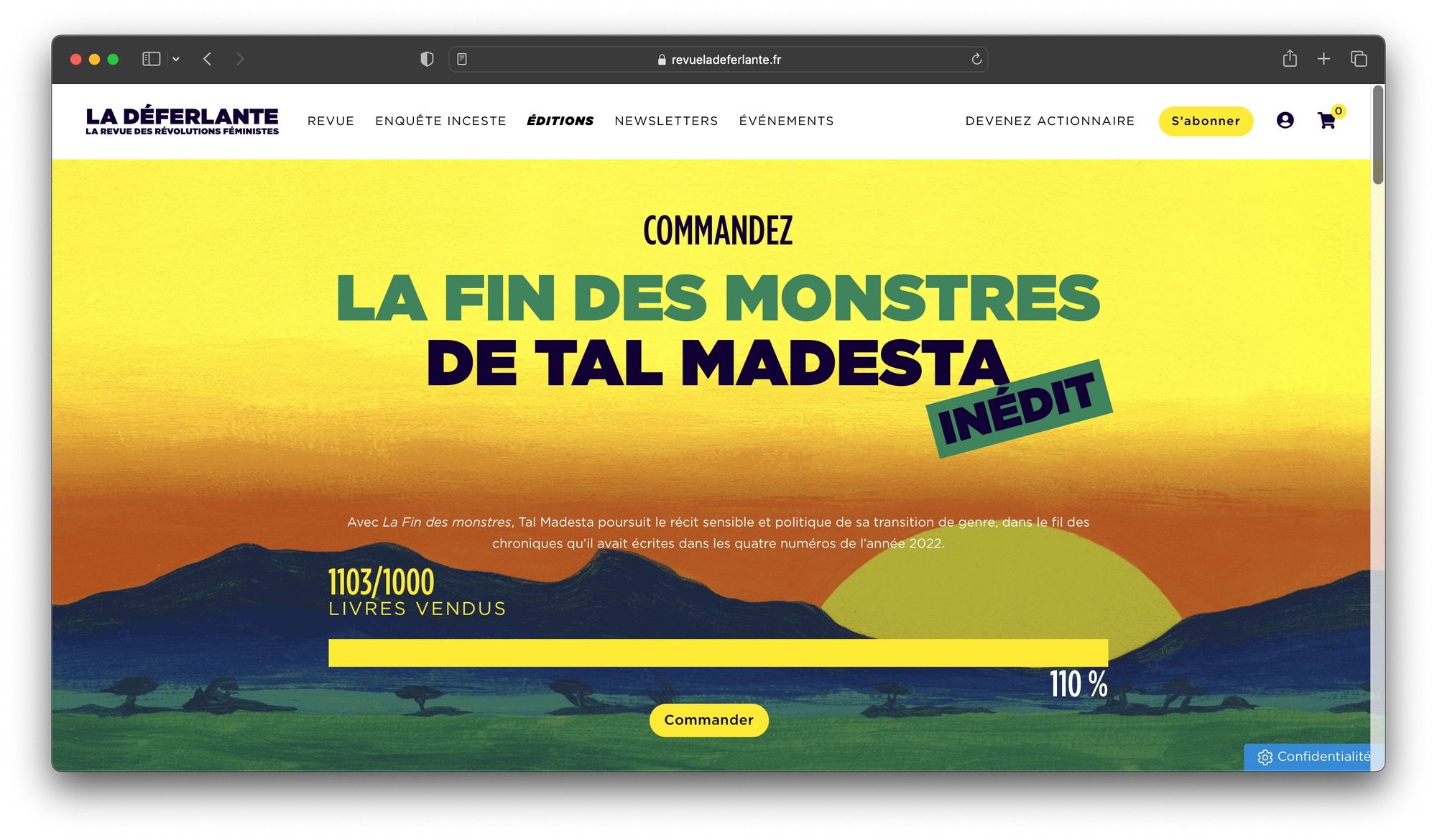
La Déferlante's team launched a pre-sale campaign before the book's release. A way to build their own schedule without cannibalizing future bookstore sales.
« The pre-sales campaign was a way to talk about the book ahead of time. Where the book economy differs from the media economy is that books depend on media as recommendation tools. By already having our media outlet identified, we had the opportunity to discuss it when we wanted, without needing press attachés. We also wanted our readers to have an element of exclusivity, to be the first to receive Tal Madesta's book. Later, in bookstores, this brings new momentum, it's a different audience. »
In bookstores, books are a gateway to the publication.
« Through books, history gains new momentum. At a bookstore, gold is space and visibility. And magazines are difficult to stock because they often have constrained formats. With the book, we return to a traditional format. That's also why we wanted to create a beautiful cover for Tal Madesta's book: it makes booksellers want to display it prominently. »
In-store tours are tailored to your needs.
« Tal Madesta often does bookstore events on her own. We don't accompany her. But that's specific to authors—some are very comfortable with these events, others less so. In this particular case, Tal Madesta had already published a book, so she knew the process well and was familiar with booksellers. »
The key? Surround yourself with the right people, take care of your creator, care for the work itself, and be willing to take a financial risk.
« You need to talk to lots of people, grab coffees with them, ask them about their work. The contract question is crucial: when you present yourself as a feminist publishing house, there's an equity issue to consider. The book economy is very tight, there's little money. When you launch a book, you cover all the costs upfront but you don't know if it will sell. You also need good support with book production: choosing quality paper, designing the cover, selecting the texture. And you need to care about your relationship with the author: their name will be on the cover, which is even more important when it's an essay. »
What does a typical day look like for a Bookseller Relations Manager?
« It involves notifying bookstores well in advance of a book's release, identifying stores where we could organize author events, and setting those up afterward… It's a strategic and operational management function. Next, we'll need to scale up our mailing and communications efforts. In practical terms, we need to find the time to continue supporting Tal Madesta's book launch: we're currently entering the rights management phase where we'll try to bring out a paperback edition and possibly explore an audiobook option too. On the other hand, we need to prepare upcoming publications: reaching out to authors, submitting proposals to them… »
To go further
- Find all episodes of season 2 of our Chemins podcast dedicated to accelerating a media project, featuring Cécile Sourd (Mediapart), Jean-Christophe Boulanger (Contexte), Lauren Boudard (Climax), Frédéric Desiles (Alternatives Économiques), Emmanuelle Josse (La Déferlante) and Valentin Levetti (Stupid Economics).
- Our survey of these media that are inviting themselves and reinventing themselves in bookstores.
- Our interview with Jean Abbiateci, founder of the positive news newsletter Bulletin who launched Le dico des mots extraordinaires in 2022, a book compiling the best of the most popular section among subscribers to his free newsletter.
Editor's note: Médianes, the studio, has been supporting La Déferlante in its strategic and operational developments (marketing, design and tech) since summer 2019.