
What is merchandising?
Merchandising, or the sale of branded products, is a commercial practice that falls under marketing. For your media outlet, this approach will help you build loyalty with your community, while also raising your profile — by featuring your logo for example, or spreading your message. Whether it's personalized products given to your team, partners, or audience, or products you're selling, it's a strategic way to enhance your company's value.
To optimize the creation of your merchandise, you should first consider the needs, uses, and sensitivities of your audience. The ideal is to offer a useful item that also aligns with the values of the people you're targeting. Also consider Kepner's 5Bs: the right product, in the right place, at the right time, at the right price, and in the right quantity.
Case Study
The feminist journals Gaze and Censored
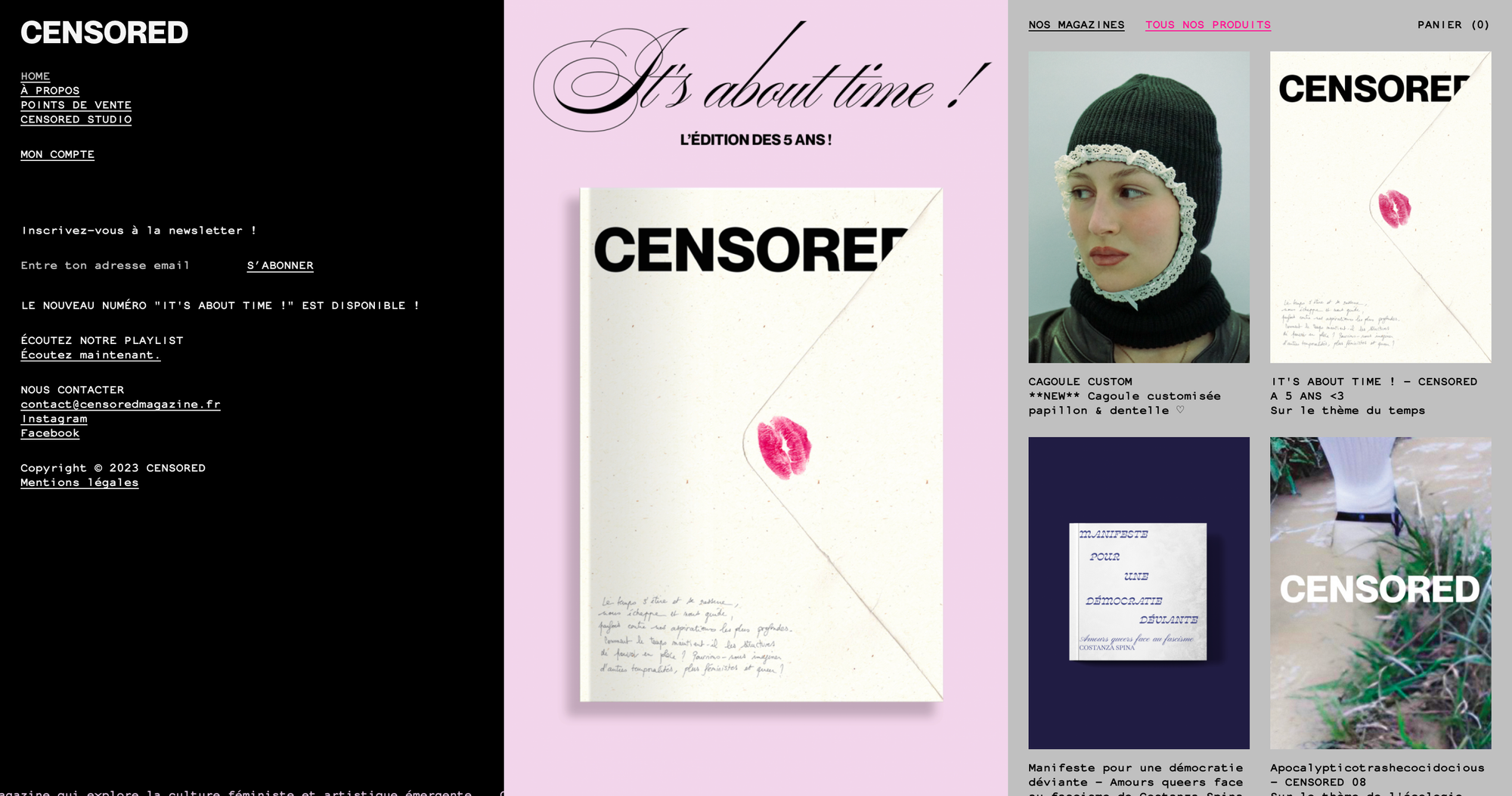
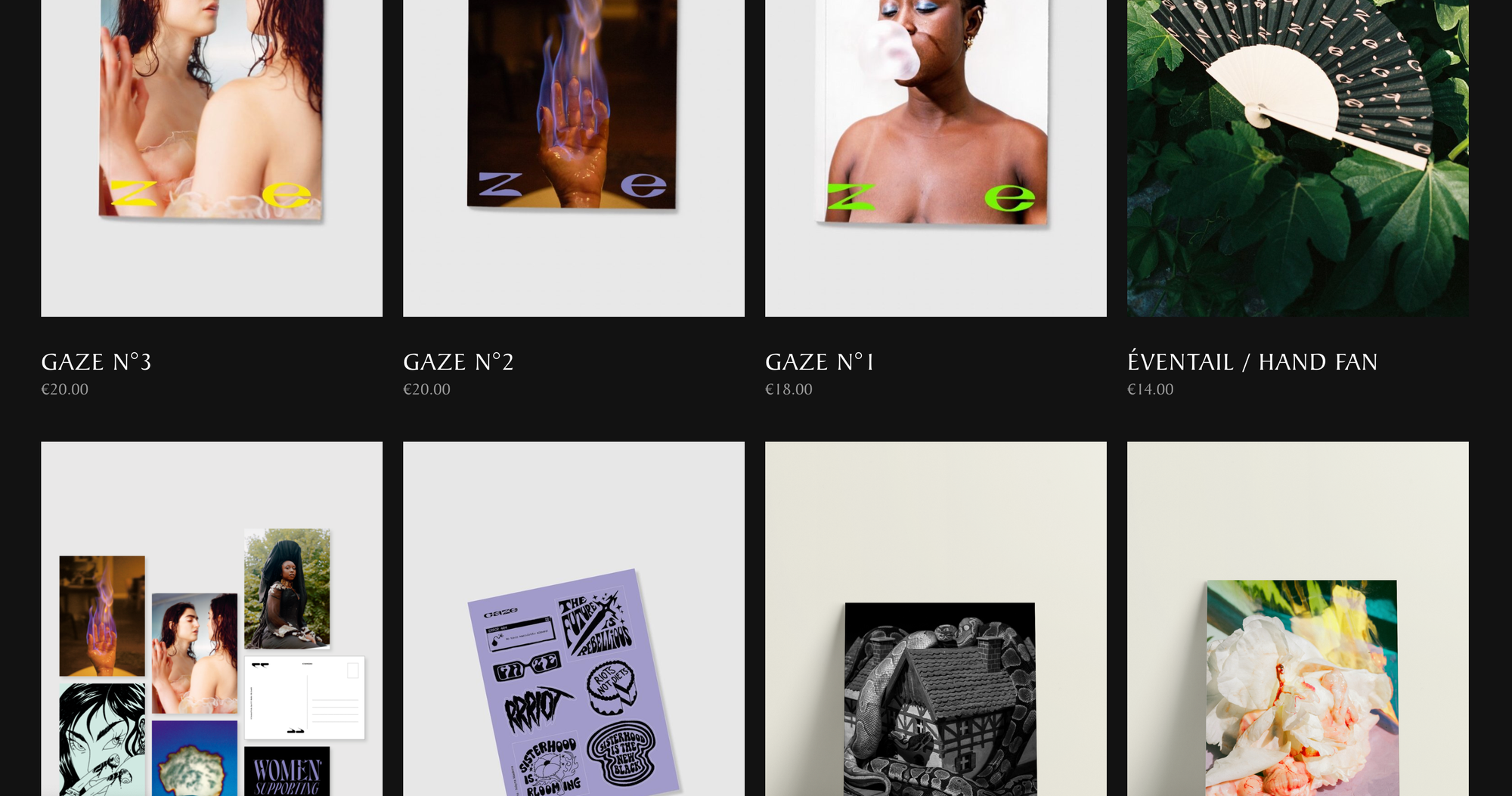
These two feminist publications, which champion feminist perspectives and minority struggles, chose to offer branded merchandise reflecting their editorial mission, with variations adapted to different budgets.
Gaze also offers t-shirts featuring emblematic feminist quotes as well as sticker sheets, postcards, posters, and reproductions of works by artists it collaborates with. All of this runs parallel to subscriptions, positioning these merchandise items within a broader strategy.
For its part, the magazine Censored is offering a limited selection this winter: just a knitted balaclava. At other times, the media has offered socks, scarves: items that last, produced in measured quantities to avoid excess.
Acquire branded merchandise
When?
For a key date in your media, permanently on your site to ensure steady revenue, or during an event campaign: many good opportunities present themselves.
Who is it for?
This could be as a gift for colleagues, for your team, for partners, in exchange as part of a pre-sales campaign, or for sale to your community.
Why?
To connect with your target audience, create indirect advertising that builds awareness of your brand, and add value to your media's editorial direction. Branded merchandise in your media's colors is an asset that helps bring people together and promote your work.
How?
Do it in a way that's true to you and that will resonate with your community. It's not about mindlessly churning out masses of stuff, but rather having a message to communicate by offering a well-made, fit-for-purpose object produced locally and thought through from start to finish.
What items?
These can be printed items: postcards, illustrations, posters, stickers, notebooks, or textiles: embroidered badges, fanny packs, sweaters, socks, or accessories: badges, pins, mugs, pens, keychains, or even food products like chocolate.
Coordinate the chosen object or objects with your image, but also with the campaign you are running and the themes you promote to justify creating these products. Whatever you choose, it is essential to carefully design the visual in order to make it a rich and interesting product that goes beyond simply placing a logo on it.
How to develop your merchandise?
The sooner you start, the better. Producing items takes time: market analysis, quotes, samples, marketing, manufacturing, delivery, packaging, labels, shipping… All of these tasks take considerable time that's best planned ahead for.
To get started on the right foot, create a project timeline — using an Excel spreadsheet, Google Sheet, or Notion — that accounts for all necessary elements along with your budget, deadlines, objectives, target audiences, priorities, and so on. Update it regularly as you progress.
Build your derivative products strategy, step by step
You can find below a practical document to implement the learning from this sheet in your own project. To do this, click the button and follow the instructions.
To go further
A few suppliers:
- merchery: the most original, offering a varied range of options from basic to premium, you'll find all imaginable products here. They also collaborate with brands like Rains, Patagonia and Moleskine. Good customer service, based in Brussels.
- genicado: products made in France and affordable prices, French customer service. CSR commitment and eco-responsible.
- atelierbox: eco-responsible and affordable products. Everything is made in France or Europe. There are also many partner brands.
- saxoprint: printed products (calendars, posters, cards…).
Before leaving
🛠 Done reading and completing this sheet? We need your feedback! A question or comment? Write us a message at [email protected]. Thank you for your help, the Médianes team.