Want to go further or need support? Discover our expertise or contact us via this form.
The newsletter, what is it?
A newsletter is an editorial product that takes the form of an email. Its objectives vary depending on the media project and the importance given to it.
A newsletter can be viewed as a way to strengthen your connection with a community, build reader loyalty, reinforce a commercial strategy, share behind-the-scenes stories of a project, generate subscriptions (directly or indirectly), etc.
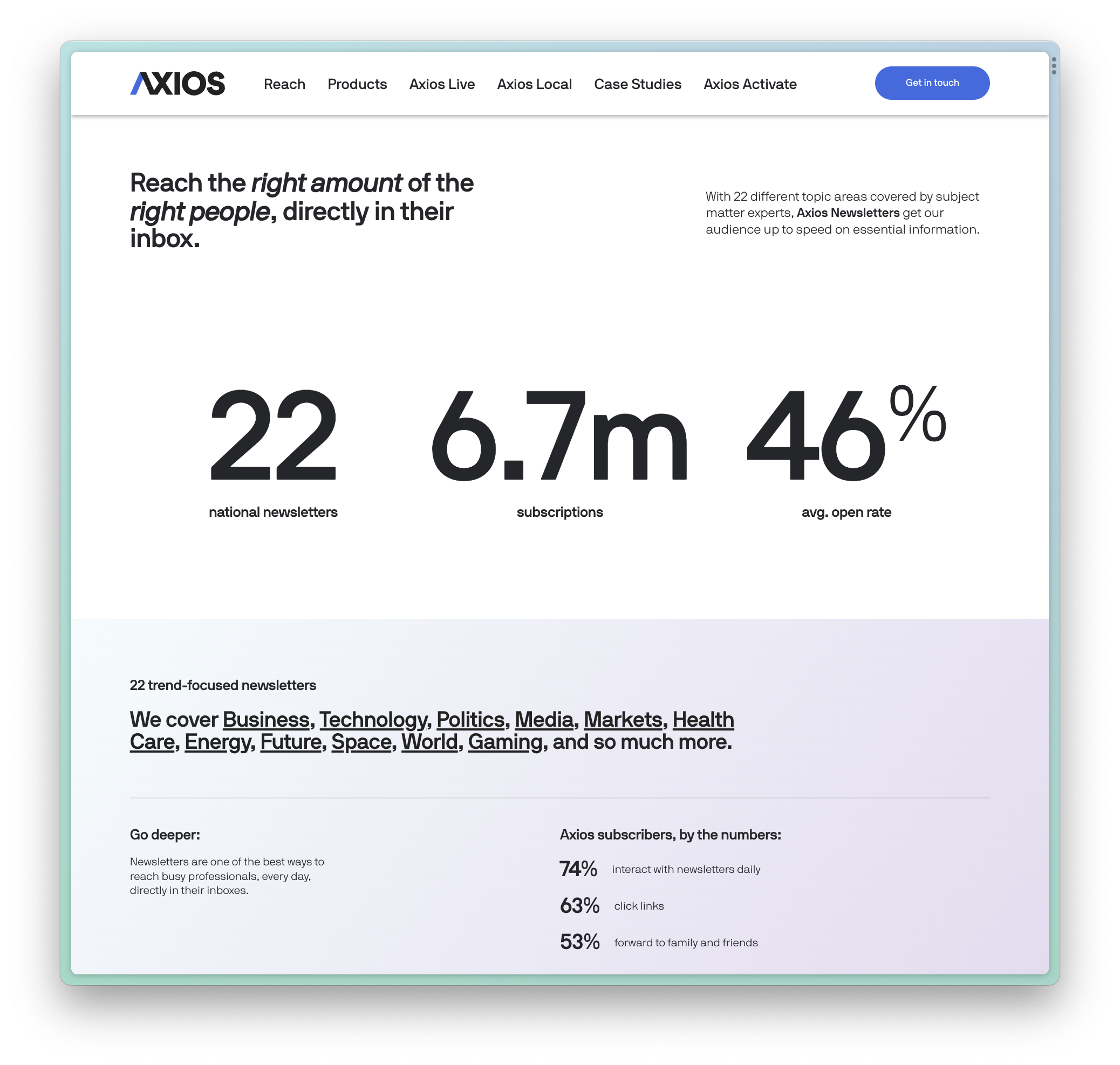
Beyond being a loss leader, the newsletter can also be the primary medium for a publication or the signature of a project, as is the case for the professional-focused media outlet Axios which has around twenty, or for the ecology-focused publication Vert — supported by Médianes, the studio.
Hands-on with Axios
Launched in the United States in 2017, Axios had 22 newsletters in 2023 covering energy, technology, and media news. Axios had nearly 7 million subscribers.
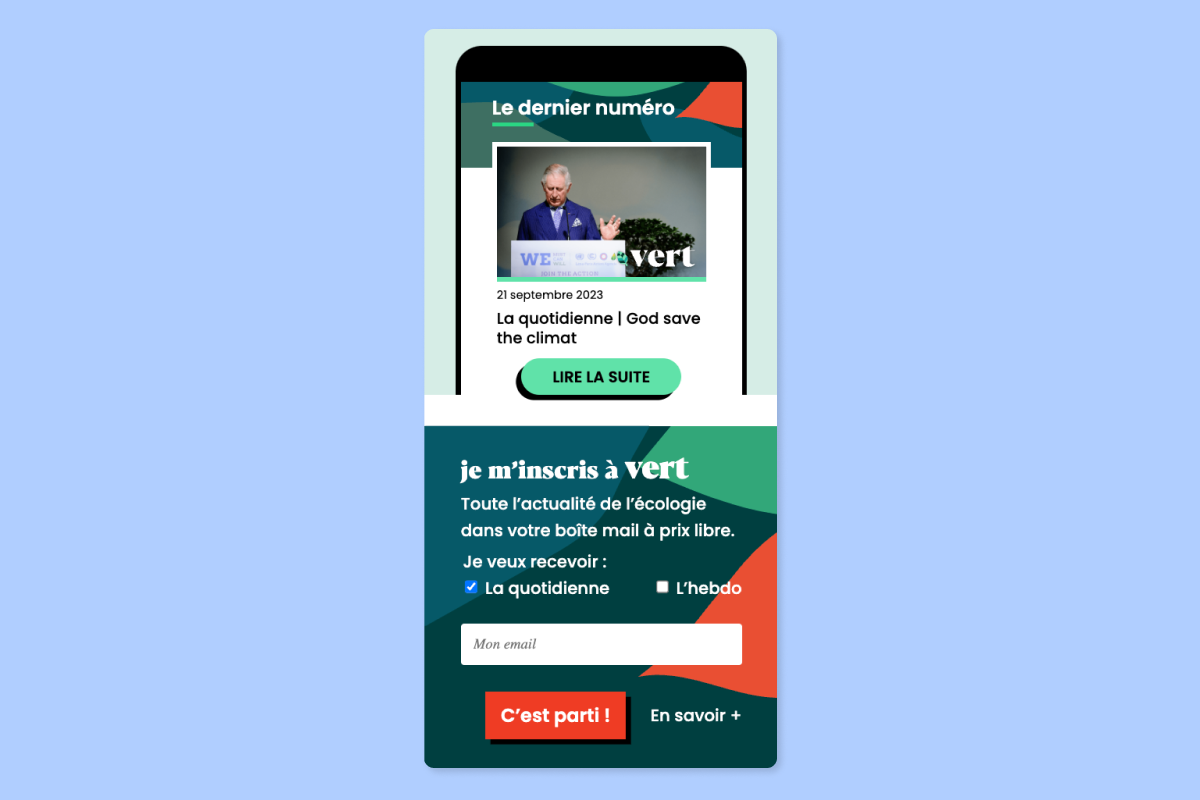
Practical guide with Vert
Vert launched in 2020 with the goal of reporting news through an ecological lens. Readers can sign up for the daily newsletter or the weekly one. Vert had over 30,000 subscribers in spring 2023.
Ask yourself the right questions
Target audience, positioning, value proposition, business model… to lay the foundations for a new editorial product like a newsletter, you can follow our step-by-step method for creating a media outlet.
Already familiar with this method? Discovering it for the first time? Great, we'll guide you step by step through a series of essential questions to develop your newsletter. So before you start designing your newsletter, go back to the basics:
- Why — What need(s) have you identified? What format, topic?
- To whom — For which audiences? To whom do you wish to provide service? Address?
- How — What strategy for your media? What engagement? What time to invest? What monetization source(s)?
- What are your goals — Build an audience? Retain a community? Sell products?
We invite you to clarify your project by answering a new series of questions you will find at the end of this sheet in a resource to complete to put your ideas into practice.
What are your inspirations?
Form, content, tone, mechanics, visual identity… As Pierre-Auguste Renoir said,
Which audiences are you targeting?
Who do you want to serve with this product? To get started on this project, it's essential that you've already identified and defined your audiences beforehand. It's certainly important to know who your media is intended for (a step required from the maturation of your media project onwards), but also which target audience your newsletter primarily addresses. If you already have a newsletter and want to optimize it, ask yourself for example whether you can name 10 of your subscribers, or whether you're able to describe your core audience and secondary audience. Working on the practices, habits, and consumption patterns of your target audiences will help you design your product better from an editorial perspective, and will also help you determine when and how to distribute it.
Where is this hearing located?
Where does she get her information? By identifying the platforms and moments when consumption happens, you'll be able to test your project against reality — you'll know whether you're making the right choice by offering this format (imagine discovering that your target audience largely doesn't use email!) — but also which channels to invest in to distribute it. Similarly, understanding what your target audiences read and listen to will help you identify what you can offer beyond your competitors (consider both direct competitors — newsletters sent in the time slot you're considering, for example — and thematic competitors).
Practical case with Medians
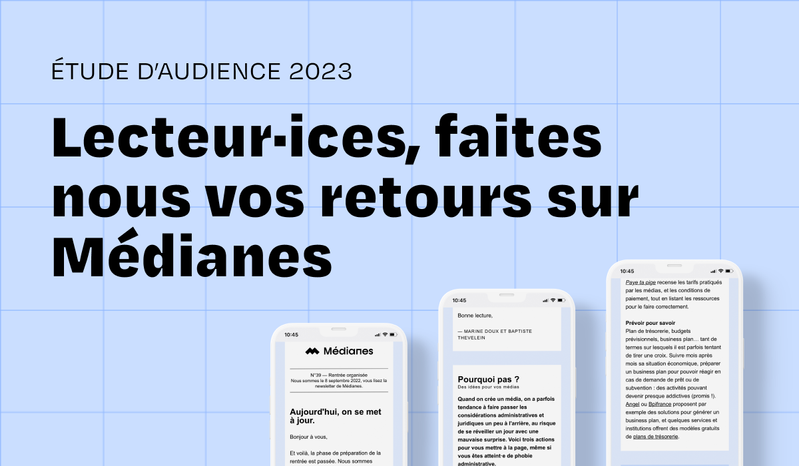
To learn more about our own audience (you 👀), and especially that of our newsletters, we conduct an audience study every year, such as this one in 2023. A way for us to understand the uses and habits of our audience: media founders, media leaders, marketing, product, and technical managers at established media organizations, and journalism school students.
If this subject interests you, we've shared a practical guide for conducting an audience study, with many examples.
What need(s) will your newsletter address?
What does your audience expect from a newsletter like yours? Now that you've identified your targets, ask yourself what benefits they can get from reading your newsletter: what are your audiences' expectations? Industry updates, advice, best practices, recommendations… what kind of content would they like to take away? What do they need?
What is the relationship between this newsletter's content and the content available on other platforms?
What will be this newsletter's place in our ecosystem? Is your newsletter designed as your flagship editorial product or does it complement another product? Do you have social networks to promote it?
This is the moment to lay out the pieces of your production and distribution strategy — the goal is to identify the points of contact between your content, your audiences, and your newsletter. Ask yourself how you plan to integrate your newsletter into your overall communication strategy — to do this, you must have thought through the templates of your various editorial products, meaning you must have established both the editorial and economic model of your project.
For example, a dedicated post on LinkedIn — does it plan to highlight a key article from the newsletter, or a special section? On Instagram, are the formats meant to be featured in stories, rather than posts?
Case study with La Disparition
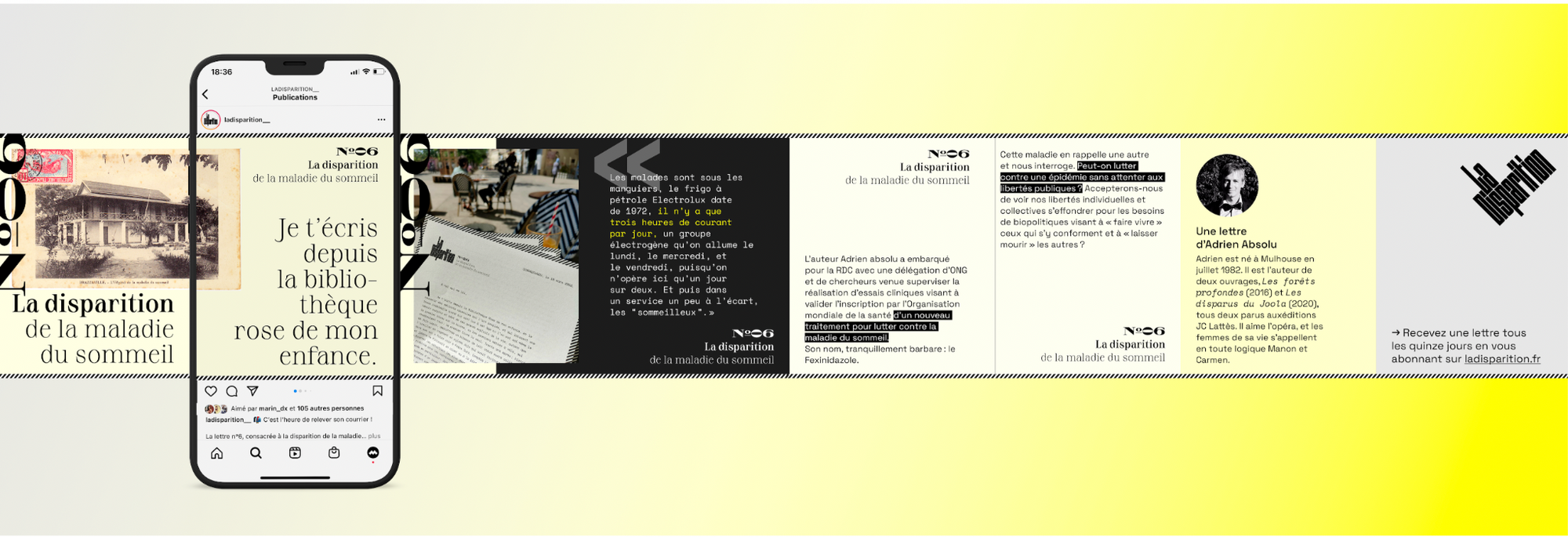
The epistolary media La Disparition — supported by the Médianes studio — chose for example to create carousels dedicated to the newsletter on Instagram: a good way to display its editorial markers and create desire.
And to learn more about the role of the newsletter in the strategy of La Disparition, you can read the interview with its co-founders François de Monès and Annabelle Perrin on our site.
Case study with Arrêt sur images
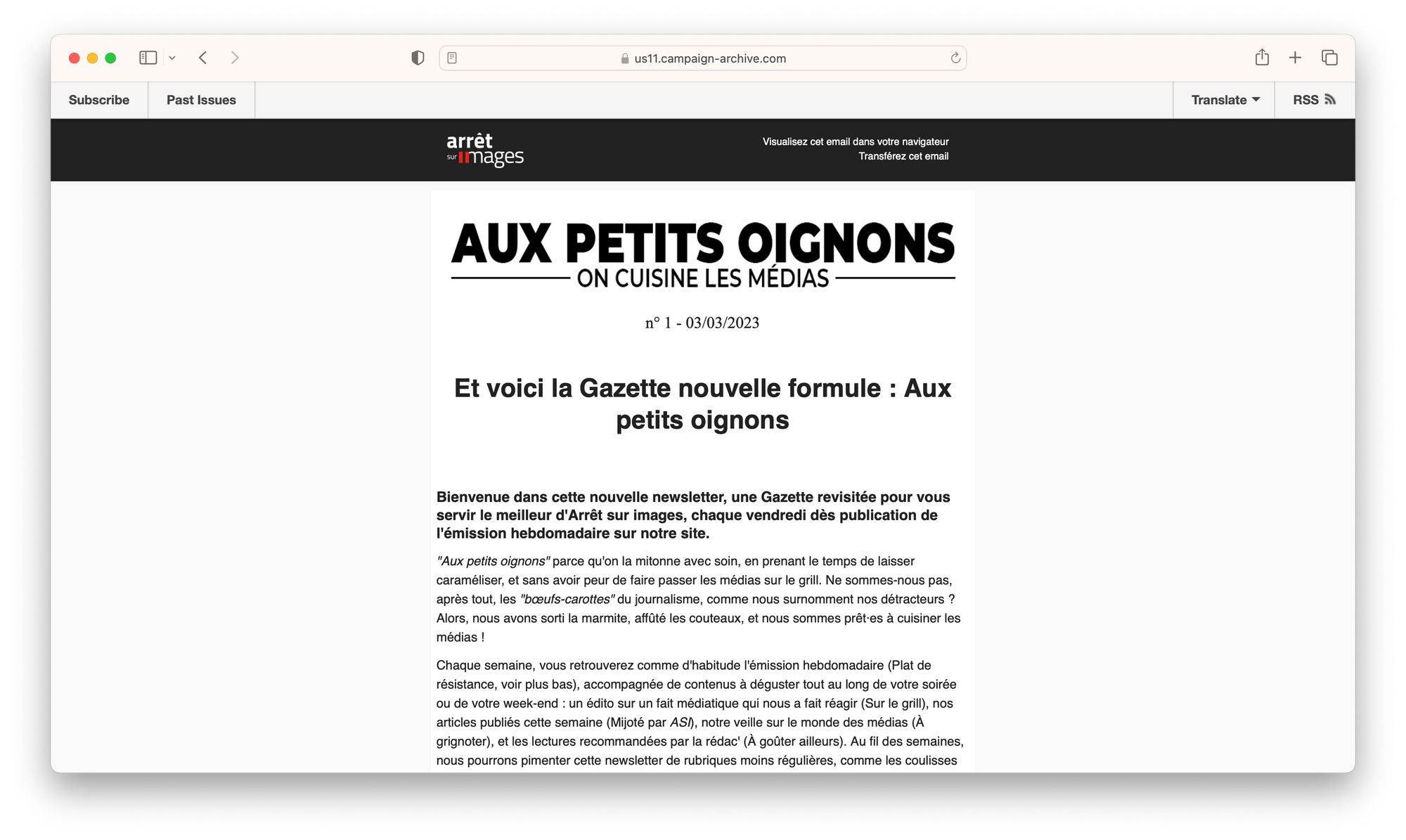
For its part, in March 2023, Arrêt sur images — supported by the Médianes studio — launched its new newsletter format: "Aux petits oignons" replaced "La Gazette", their original newsletter. Aux petits oignons is a weekly newsletter that decodes media discourse of the moment and shares information not to miss in the media. The idea was notably to have a media in its own right, rather than just a channel redirecting to the site.
Where will subscribers be when they read this newsletter?
This might seem like a minor question, but answering it will help you think about the day and frequency of distribution (Tuesday? Thursday? Evening? Morning? Sent daily? Weekly? etc.).
Could your audience be engaged on a Monday? Email inboxes are generally saturated that day; your newsletter, on the other hand, can be designed as an essential part of the start of the week — like a local newsletter recommending outings and things to do for the week.
Will your audiences be at their desk, on the metro? The idea is to identify when they'll be most available and engaged (which is less the case when you're cooking, dropping kids at school, or at fencing class!)
What tone and style will resonate with this audience?
How best to present content so it reaches these people? Pedagogy, seriousness, conversational tone, distance, humor, authenticity, surprise, sarcasm… What tone do you prioritize to remain consistent and reach your audiences? Is this newsletter meant to spark interaction?
Case study with Climax
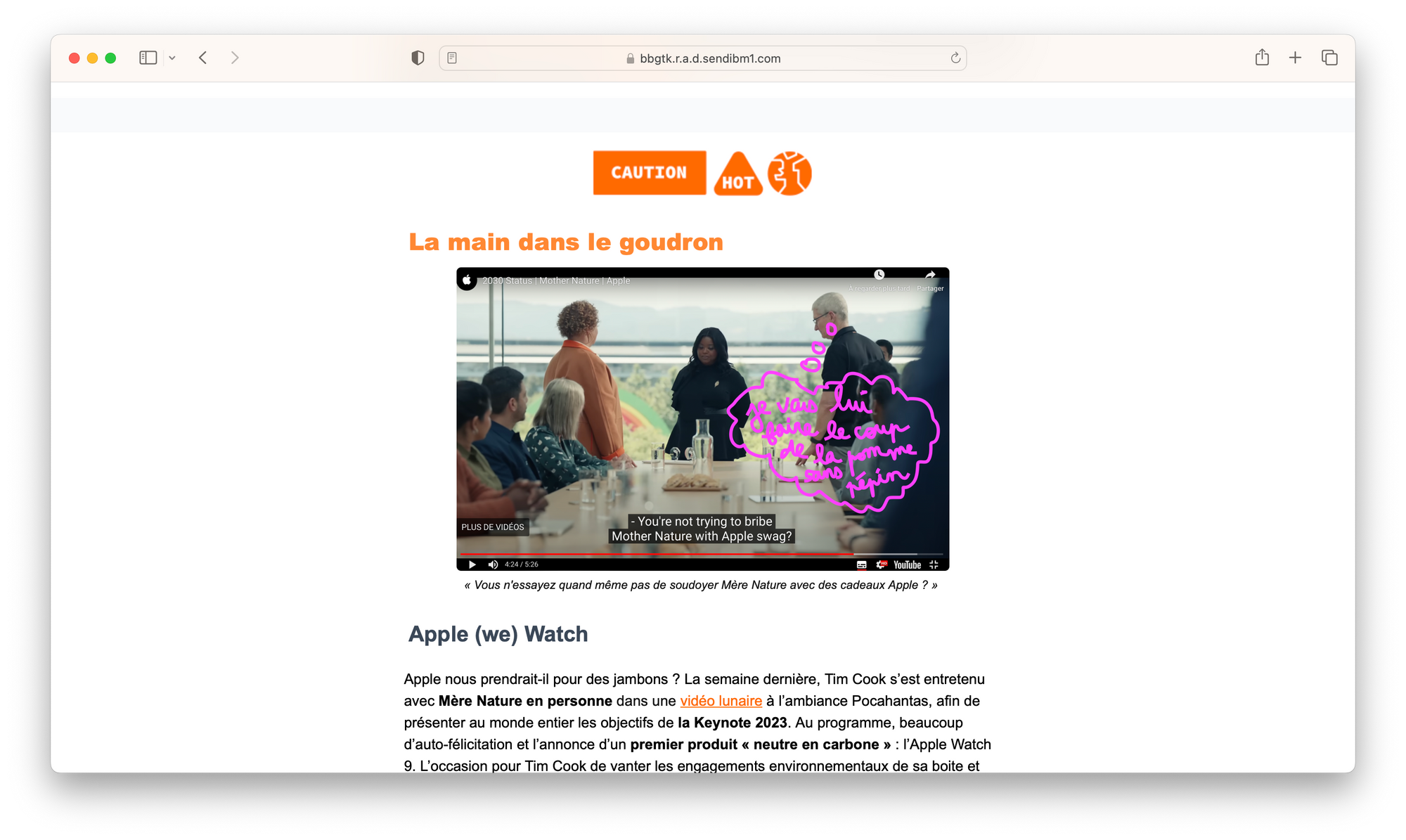
To stand out, the co-founders of the newsletter Climax — supported by the Médianes studio — chose for example to denounce political inaction on ecology by using sarcastic humor. Ecological policy is thus approached with a biting tone; a way to alert otherwise and denounce inactions.
🔗 To learn more about Climax:
- The report from our event "Launching and developing your media in the age of ecological urgency" with notably Dan Geiselhart and Lauren Boudard, co-founders of Climax
- Their interview to learn more about the transition from TechTrash to Climax
- Their feedback on choosing the fanzine — Lauren Boudard on the mic of Chemins, the Médianes podcast
What content and format will best serve this audience?
Time to think editorial! What formats and editorial direction do you want to establish and adopt? The challenge is to create editorial continuity with your other products/content, to have good structure, to think about
Practical example with Axios
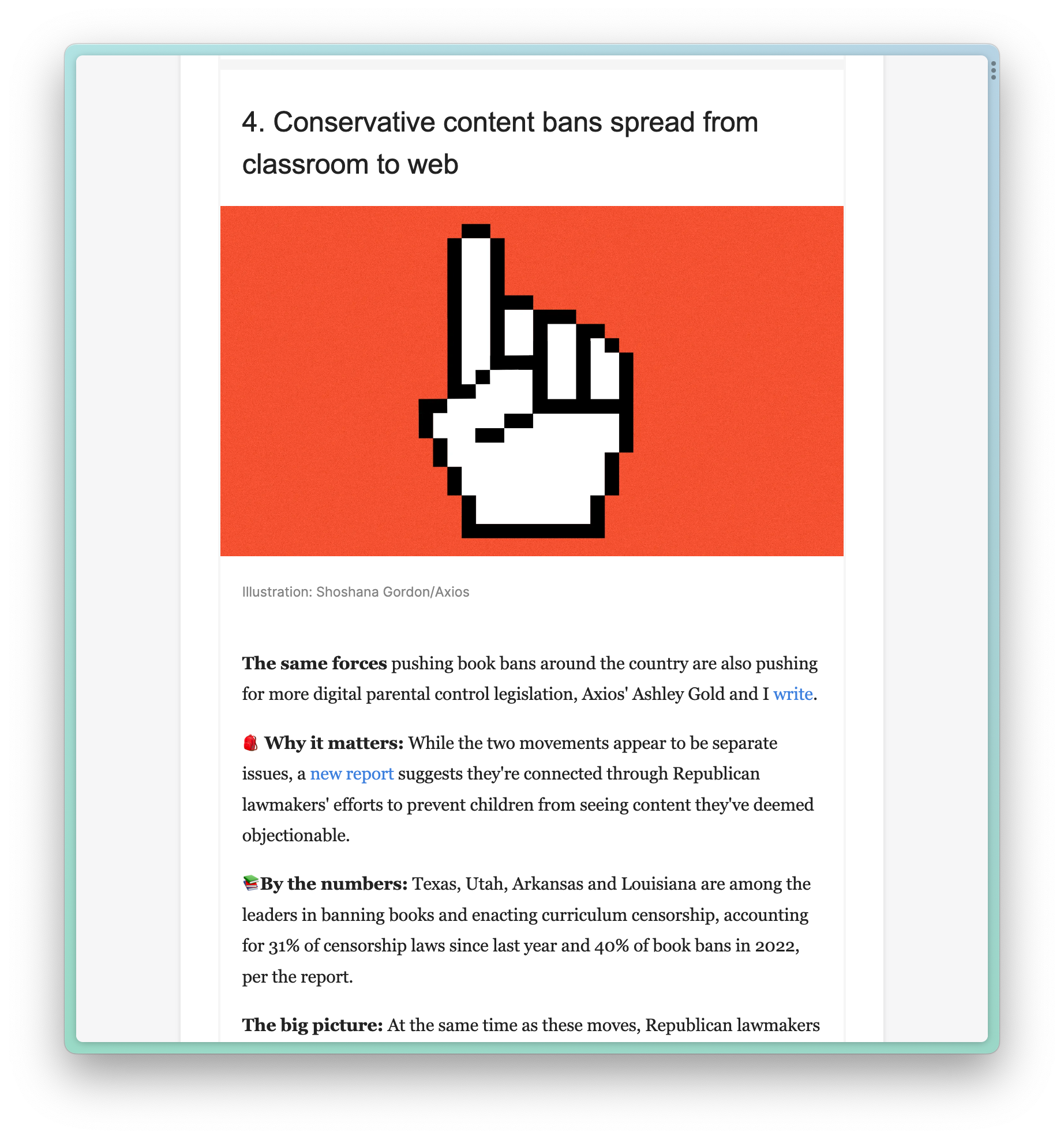
In its newsletters, the media outlet Axios targeting a professional audience (on specific verticals/topics) champions the logic of Smart brevity: a key concept for "saying more with less," which lies at the heart of their value proposition and enables them to stand out.
Axios does indeed manage to organize its content categorization in an efficient and spacious way: paragraphs are short and interspersed with bulleted lists. Among other notable elements: content embodied by its journalists, a local strategy (cities).
And for more information on Axios's newsletter strategy, check out this Digiday article.
Practical case with Medians
At Médianes, we have three newsletters, one dedicated to our behind-the-scenes content and case studies, and two dedicated to sharing our insights.
Designed as a service for media founders and leaders, the Stratégie de Médianes newsletter is also a meeting point for journalists, journalism students or those studying media, as well as marketing, digital, and product managers at traditional media outlets and creative agencies.
In autumn 2023, 2100 founders, executives, journalists, and media leaders read us daily, with an average open rate of 55% and a click-through rate of 12%.
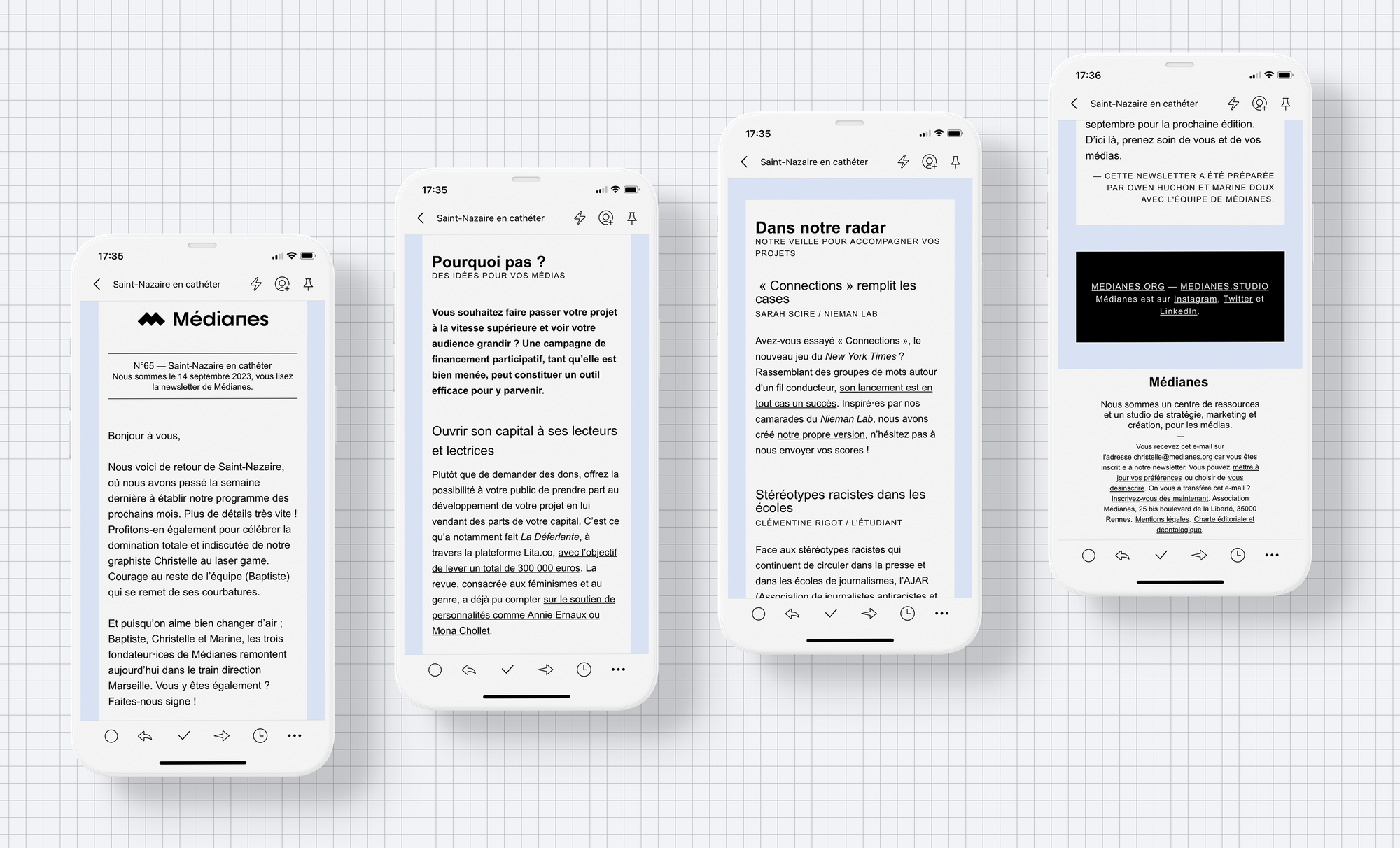
- Editorial A short personal editorial to tell today's stories, behind-the-scenes insights, and what's on the horizon.
- The strategy A trend to adapt in your media. A trend or idea broken down into 3 concrete actions and illustrated with examples from emerging or traditional media that have adopted it. This section is primarily aimed at media founders. They need tools and best practices, strategies and ideas for their projects, and to be part of a network.
- From the studio's perspective… Focus on a project. Spotlight and behind-the-scenes look at a project supported by Médianes, the studio.
- On our radar Our watch to support your projects. A selection of 2 or 3 articles/content pieces: an analysis article, a free and practical resource, and a case study. Here, we primarily address media leaders, marketing, product, and technical managers at established media companies. Their needs? Staying informed about the latest media trends, understanding the ecosystem to make decisions within their organizations.
- On Médianes Our latest publications. A selection of an article, a report, an interview, written by one of our journalists or a column by one of our columnists and published on Médianes' resource center.
- Briefly So you'll know. A highlight of initiatives, news or appointments not to miss. For example: the latest job offers in media, a new project, an event, a call for projects, media coverage, a practical tool to use… Here, we mainly target journalism school students who want to be inspired by media that align with their values and commitments. Médianes also addresses another need: finding a job, internship or apprenticeship in the media world. We regularly publish a job board on our website, social networks and in our newsletter. The latter is updated twice a month.
We invite you to post a scoping document that describes the templates and formats of your newsletter — this internal guide will be useful for establishing the product's editorial principles and will also serve you if you ever need to hand it over to someone else to take it over. Find the Médianes example here ⟶
Where will you recruit these subscribers?
Social media, ambassadors, press relations, personal accounts of team members, word of mouth, flyers, sponsorships… What touchpoints or customer journeys do you envision between your newsletter and your audiences? Answering this question will help you refine your distribution strategy. The idea is for you to associate each journey with actions to be implemented that will allow you to reach these audiences more or less directly (dedicate a regular post about the newsletter to one of your personal accounts, speak at an event, etc.).
What does success look like in three months? Six months?
Open rate, relay by a public figure, financial returns, number of subscribers doubling… Ask yourself what pride you would take from the project you've launched with your newsletter in three months, six months, a year… This step allows you to have a roadmap and set objectives for the medium to long term.
What goal will a newsletter help your organization achieve?
Are you looking to build customer loyalty? To increase product sales? To create a network? To gain credibility? It's important to define the objective or objectives your newsletter should aim for.
Case study with POLITICO
A newsletter can enable a media outlet to think bigger, as was notably the case with POLITICO's Playbook when the media launched in France. Launched in 2021, POLITICO's Playbook Paris surpassed 25,000 subscribers in February 2022. A daily political briefing sent every morning at 7am, Playbook is hosted by one or two journalists. POLITICO's Playbook franchise has editions in Washington, London and Brussels and brings together more than 600,000 subscribers. The Brussels edition, launched in 2015, now has more than 100,000 subscribers.
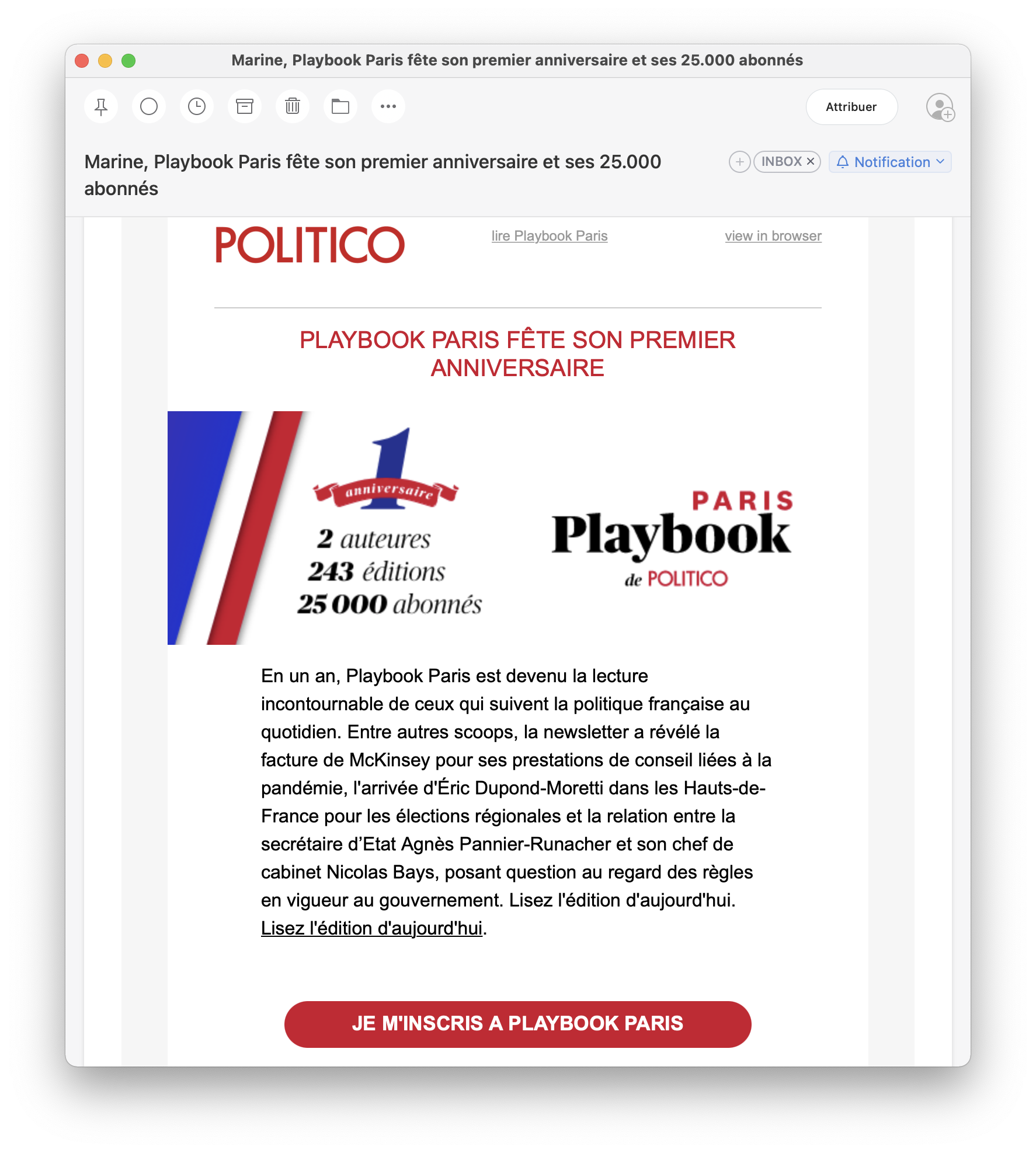
Note: Médianes, the studio, has collaborated with POLITICO in Europe since 2023.
Who is responsible for producing this newsletter day after day, week after week, month after month?
How does this fit into your team's workflow or business activities? Whether you're working alone or with others, it's necessary to structure a production and distribution pipeline for your newsletter.
Try to define a working method and a workflow/approval process:
- Divide responsibilities as much as possible: who is responsible for writing? Who handles proofreading? Who is in charge of integrating it? Distributing it? Is there a need to produce visuals? If so, who is responsible for that?
- Set procedures: depending on the newsletter send date, when should the first draft be edited? When should the person in charge of communications have received the necessary elements for distribution (texts, images)? Is a test email shared before the final send?
- Assess the maximum time you can allocate, and review the tools that can save you time.
A few best practices
Write a welcome email
Think about the email that will reach your readers once they've signed up: a first step in building their loyalty. Ideally, you'd have a genuine welcome email sequence (acquisition, conversion, retention) that embodies and stays true to your media's editorial line. What matters is saying more about who you are, your value proposition, your business model…
Our journalist Marine Slavitch shares practical cases in a dedicated article: the choice of embodiment at Axios, the promotion of Tapage's vision, and the development of a welcome sequence at This is Tucson.
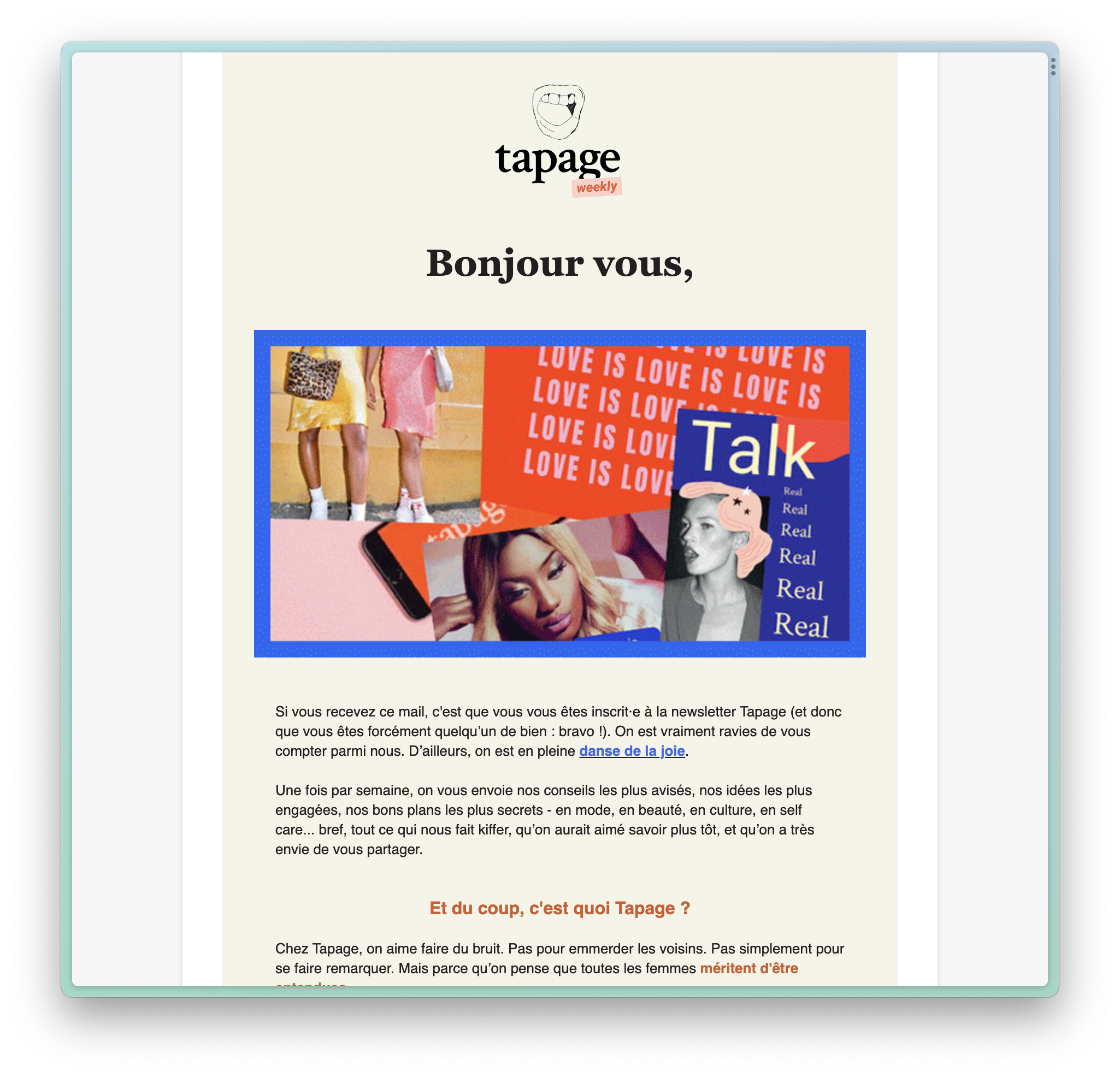
Think in cycles
You can choose to have an email sequence to promote a product, or launch a communication series around a particular announcement.
Case study with This Is Tucson
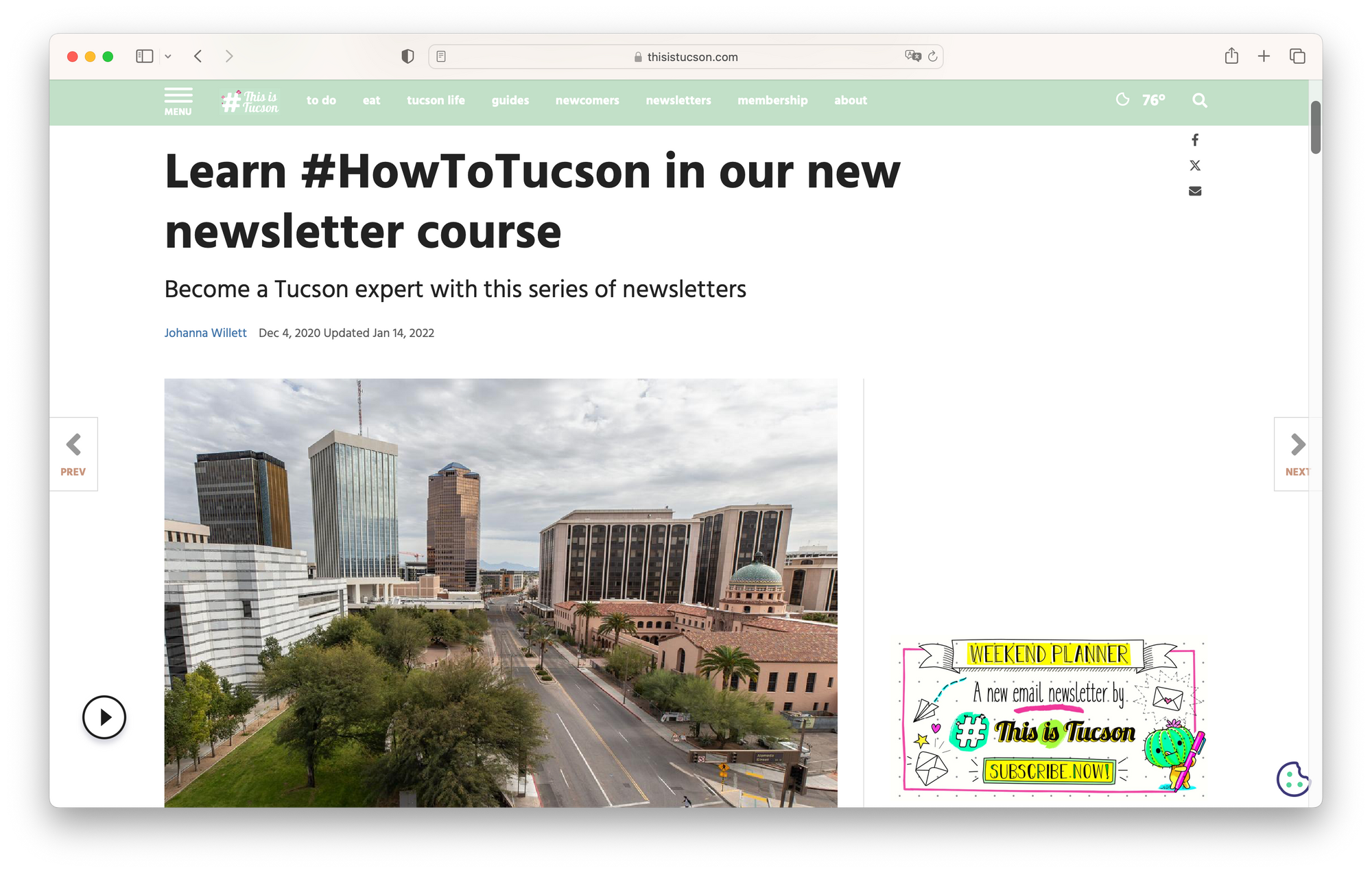
To answer questions from newcomers to Tucson, in the U.S. state of Arizona, the local community news outlet #ThisIsTucson launched a mini-guide in eight emails: "#HowToTucson". A great idea to adopt if you're pursuing a local strategy and want to become essential to your readers.
Case study with La Déferlante
To communicate around the launch of an issue, the feminist magazine La Déferlante, accompanied by the Médianes studio, uses the email channel and develops a dedicated cycle promoting the volume. This is notably the case for the fall 2023 issue "Inhabit" on modes of habitation and the notion of "home". These emails complement the media's newsletter.
- An email announcing the news and giving a preview of the table of contents
- An email introducing the contributors for the issue and special pre-sale offers
- An email inviting people to the launch event
- An email announcing the release in bookstores
- An email promoting the subscription and recapping the issue's table of contents
Find a name and tagline
To find a name and tagline for your newsletter, think of it as a media in its own right: it should be evocative and reflect your value proposition. To define the latter, you can consult our dedicated resource on the topic.
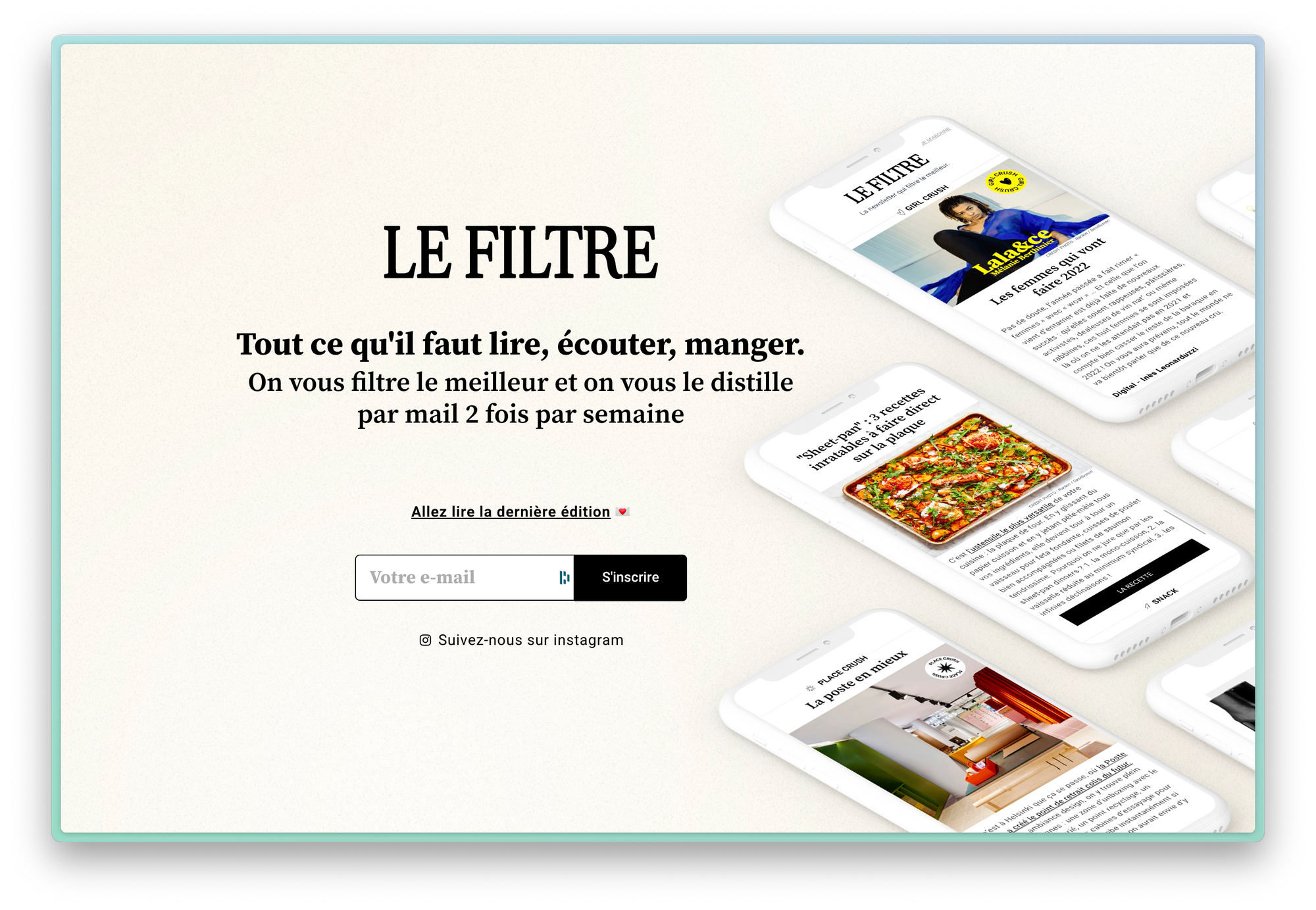
Good ideas are not what's lacking in the media landscape. Just look at the newsletter from the lifestyle media Le Filtre, "The newsletter that filters the best" which offers twice-weekly delivery of "Everything you need to read, listen to, and eat".
Tell your behind-the-scenes story
Demystifying the journalistic process, sharing the motivations driving your editorial team, highlighting the challenges encountered along the way… There are countless ways to tell your behind-the-scenes story. Once again, this approach strengthens the bond of trust with your audience. By personalizing their communication, media outlets foster this connection and also encourage readers to get more involved in the outlet's development. A smart strategy for humanizing the media and building audience loyalty.
Practical case with Kometa
In one of its newsletters, the publication Kometa, which puts Eastern Europe at the center of the map, revisited the behind-the-scenes of the project: its origins, the motivations and difficulties, all in photos. The newsletter channel enables and showcases a highly personalized tone—a smart choice for connecting with those who make the media in a launch context.
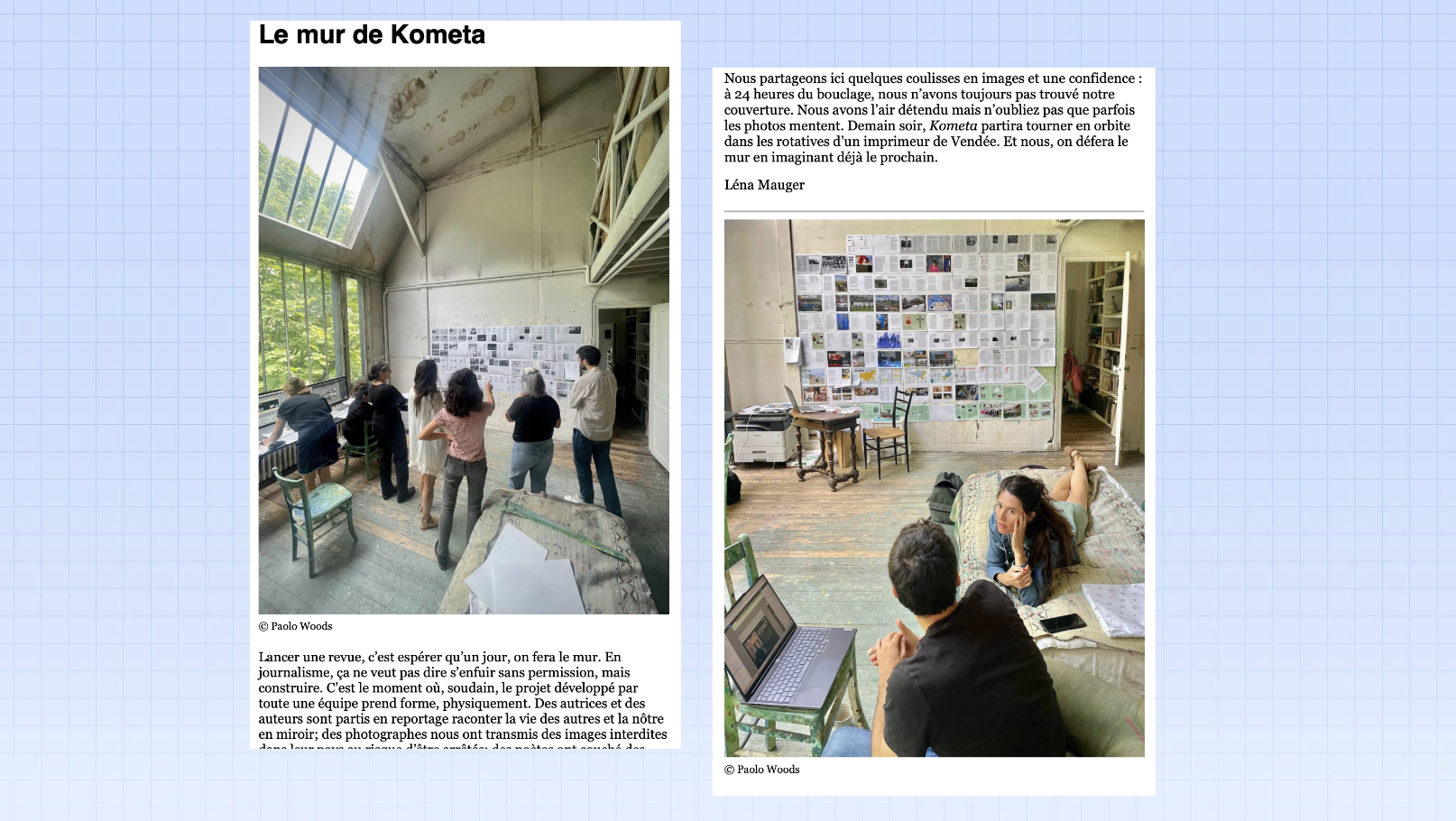
Note: the team at Kometa is supported by Médianes, the studio. You can learn more about our support services via this link.
Personalize your content
Whether your newsletter is written in the first person or by multiple authors, you have every reason to personalize your content. It's then up to you to define the right tone, suited to your voice and your readership's habits.
Practical case with mūsae
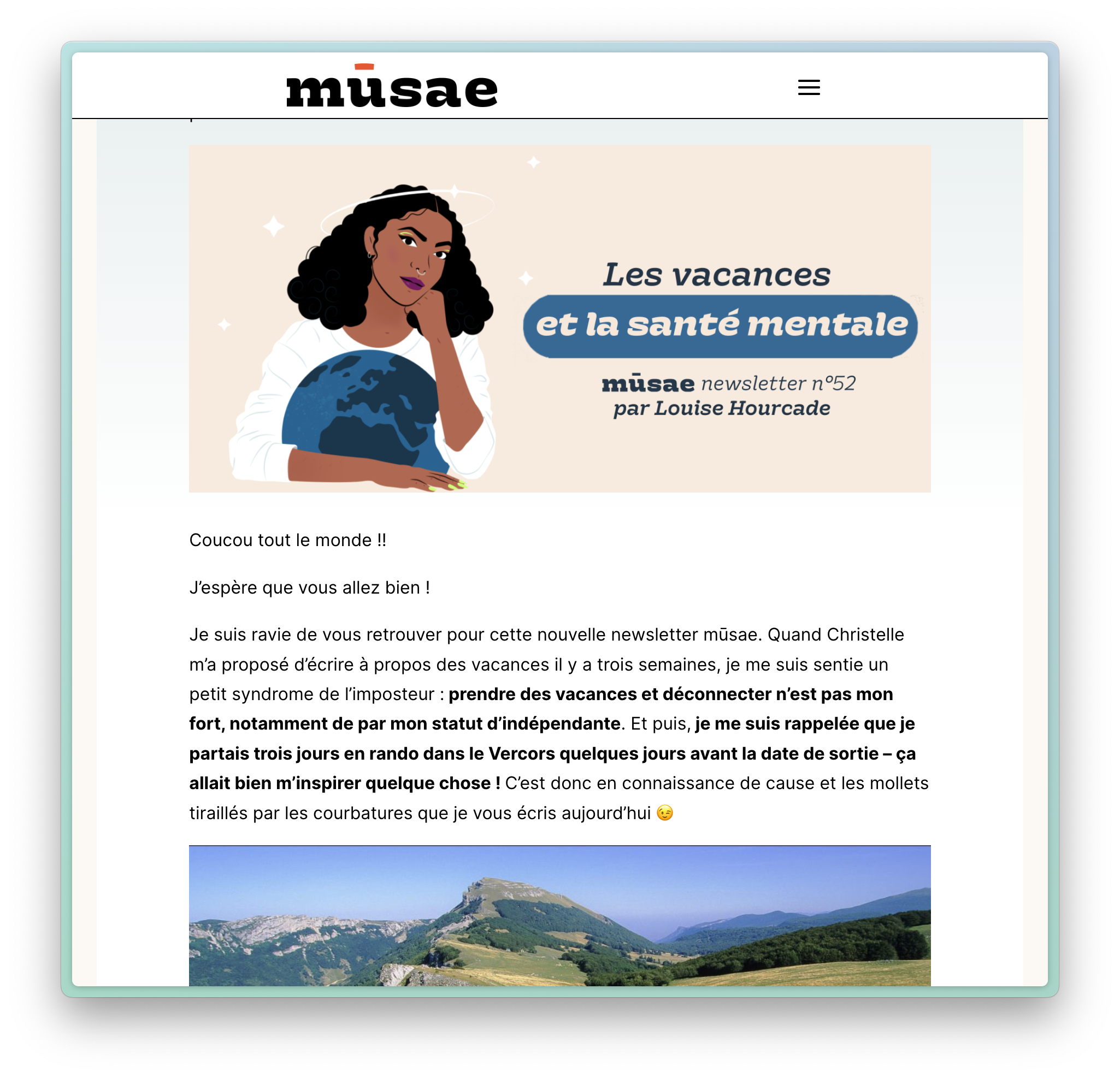
A media founded by Christelle Tissot and supported by the Médianes studio in its development, mūsae notably has a newsletter to demystify and democratize mental health. Regularly, the writing of this newsletter is entrusted to author Louise Hourcade, allowing the media to take on a different voice, with a tone and references such as in this edition dedicated to vacations.
Track your performance
Track your data! A good tool for doing this: key performance indicators—or KPIs (Key Performance Indicators). These are quantitative and qualitative measurement tools that help you manage your project and strategy day-to-day.
They allow you to measure a result or an impact; here you might measure, for example, the number of clicks, an open rate, an engagement rate, a conversion rate… It's thanks to these that you'll know if your newsletter is effective or not, whether you need to modify things in your strategy or completely change course. So make sure to record the quantitative data related to your newsletter in a dedicated document to track its progress.
⟶ To learn more, visit medianes.org: our journalist Owen Huchon demystifies KPI usage for you!
Create event moments
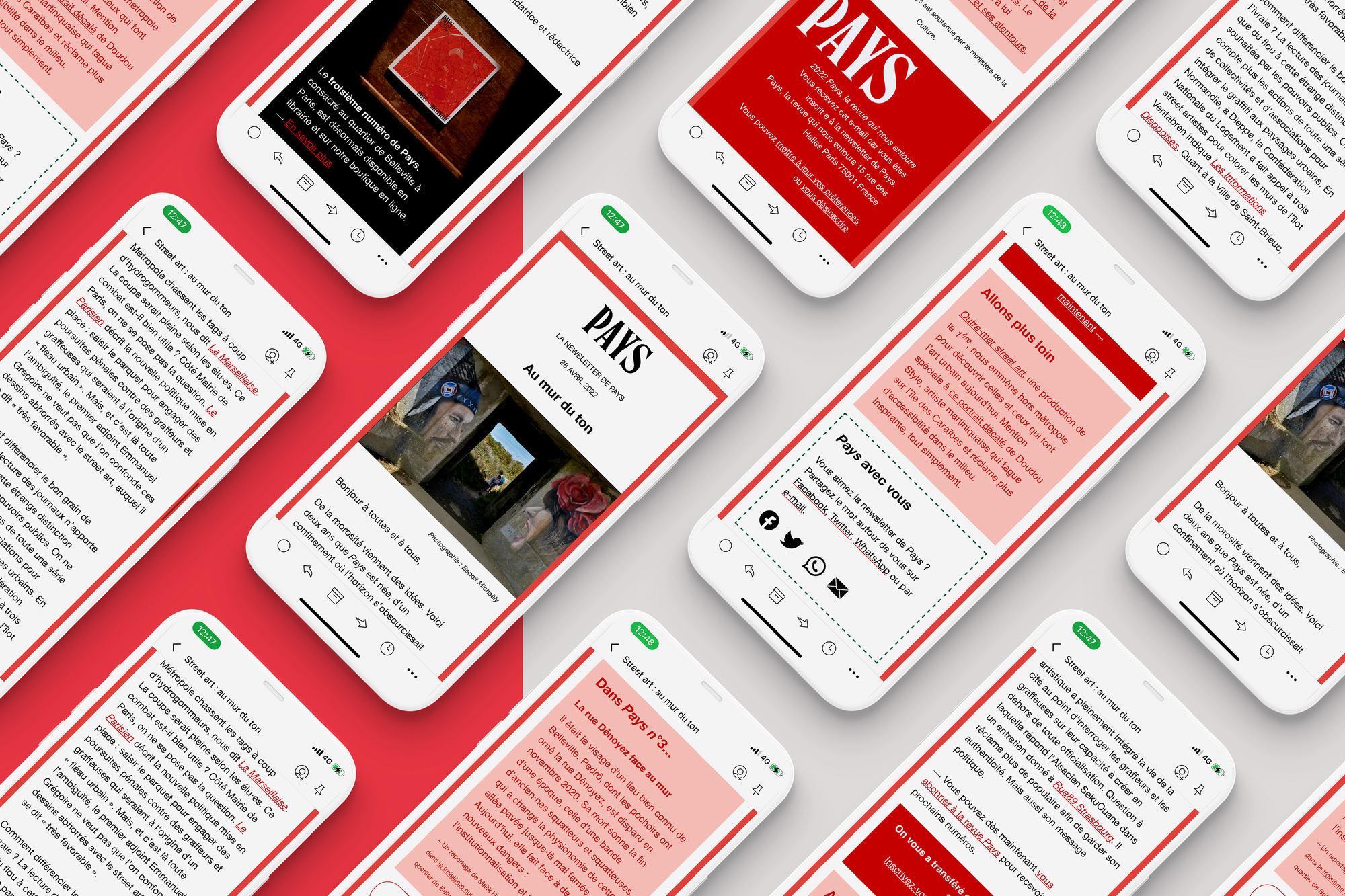
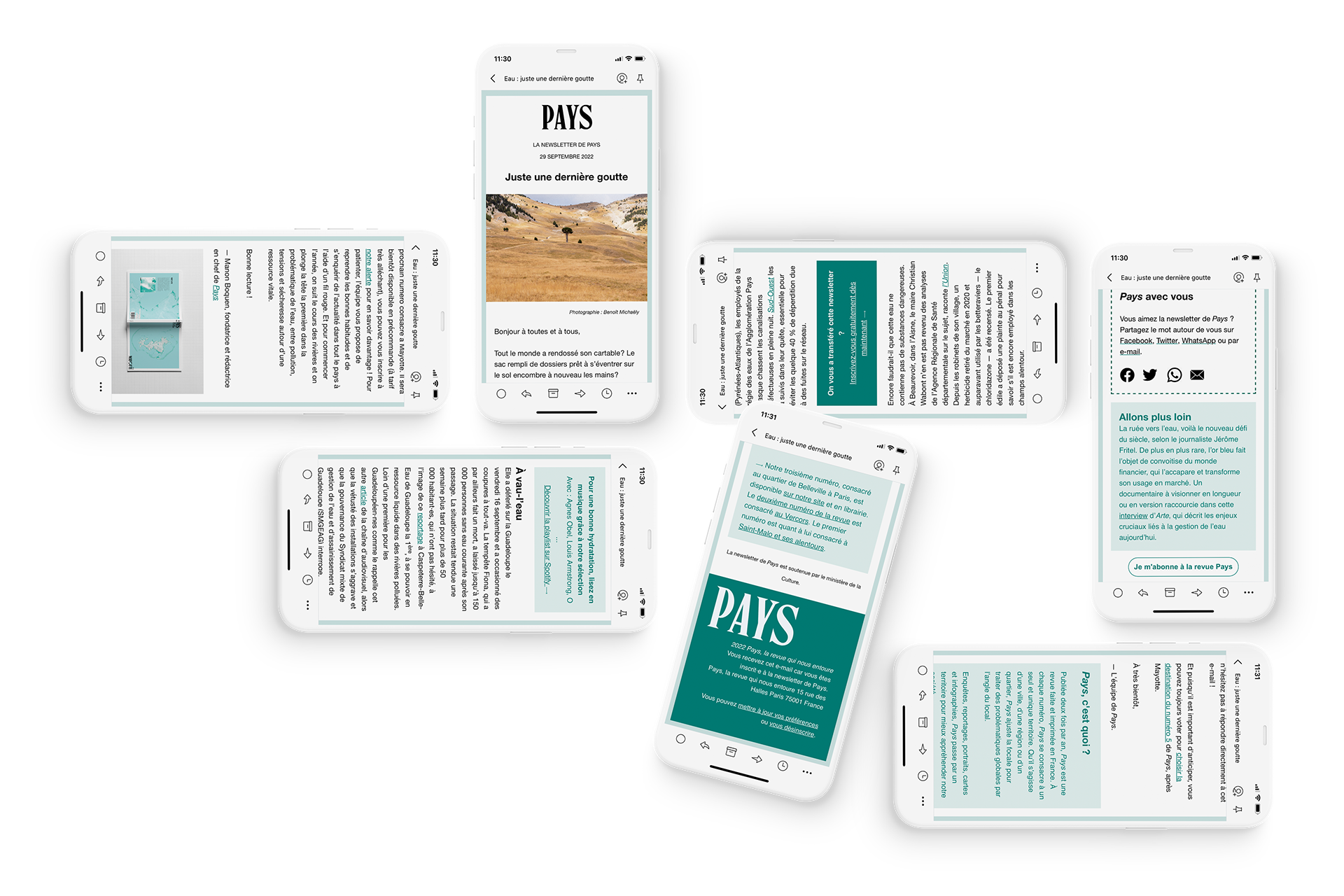
Colors, formats… You can decide that your newsletter changes form on the occasion of an announcement, a redesign, or any change in your media: a good way to mark the moment, as did Pays when launching its new issues.
Practical case with Pays
The newsletter from Pays, a magazine about territories co-founded by Médianes, presents in the form of a press review a topic addressed in one of the magazine's articles. With each new issue, its colors are adapted to the design of that volume, creating a visual alert about the upcoming release of a new publication. The newsletter can thus offer the possibility of presenting the issue and 5 reasons to subscribe to the magazine.
Case study with StreetPress
In winter 2021, the investigative and impact media outlet StreetPress launched FAF, a newsletter to combat the far right.
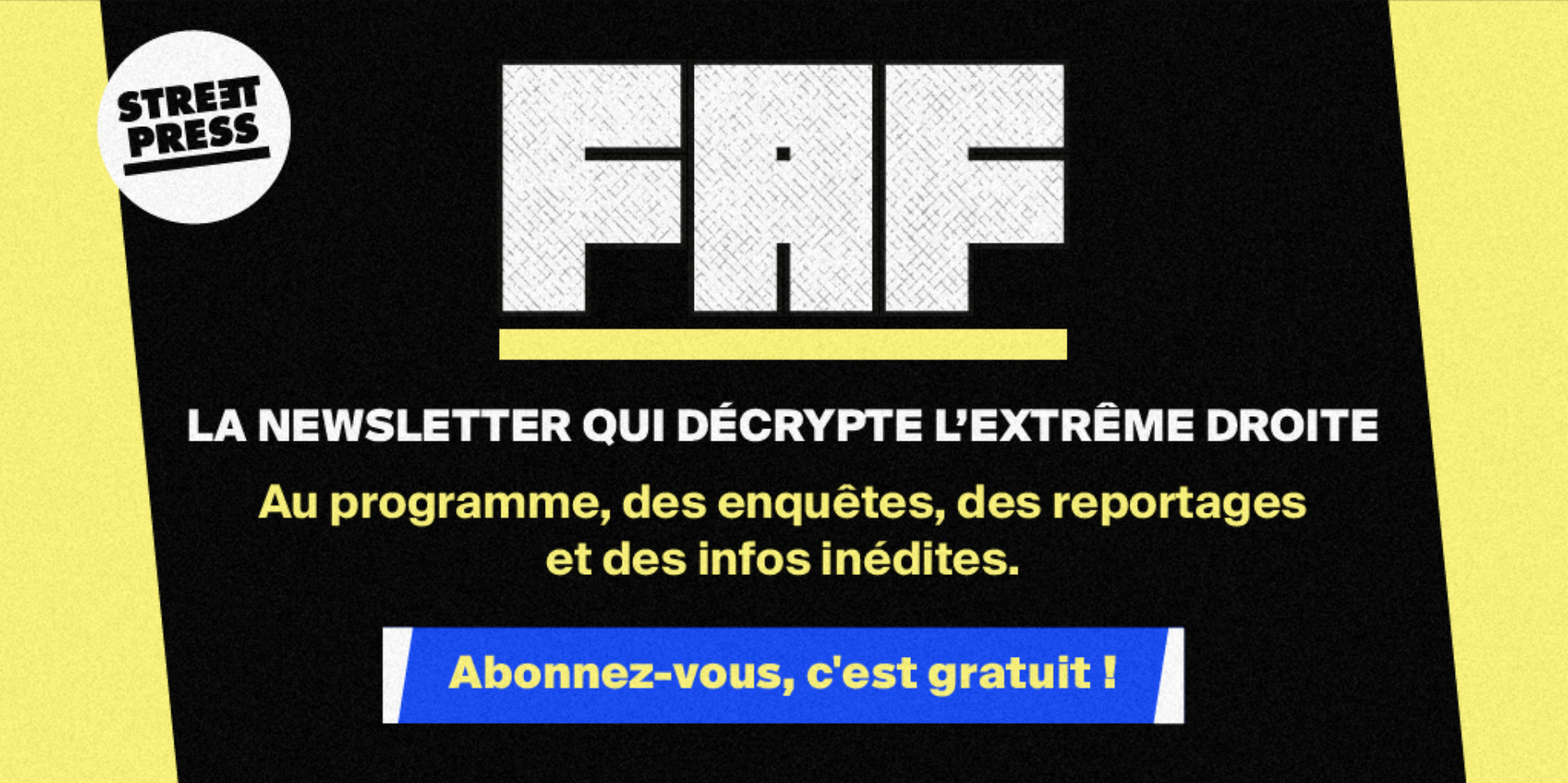
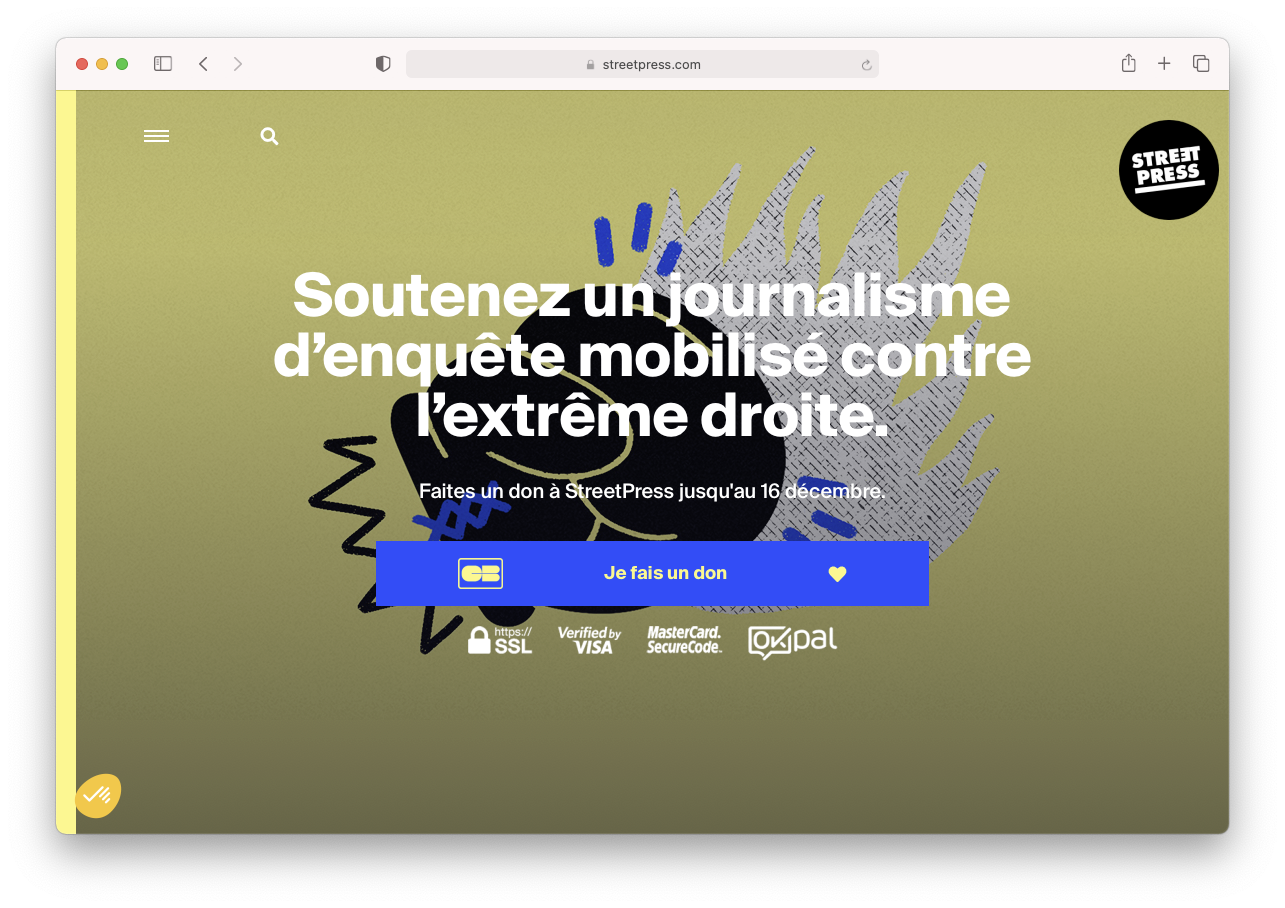
The media outlet — supported by Médianes — launched a fundraising campaign to finance the product, raising €75,000 against a goal of €48,000.
The fundraising campaign, centered on the argument of supporting StreetPress as a media outlet fighting the far right, helped to create buzz around the launch of the newsletter dedicated to the subject.
Create a dedicated signup page
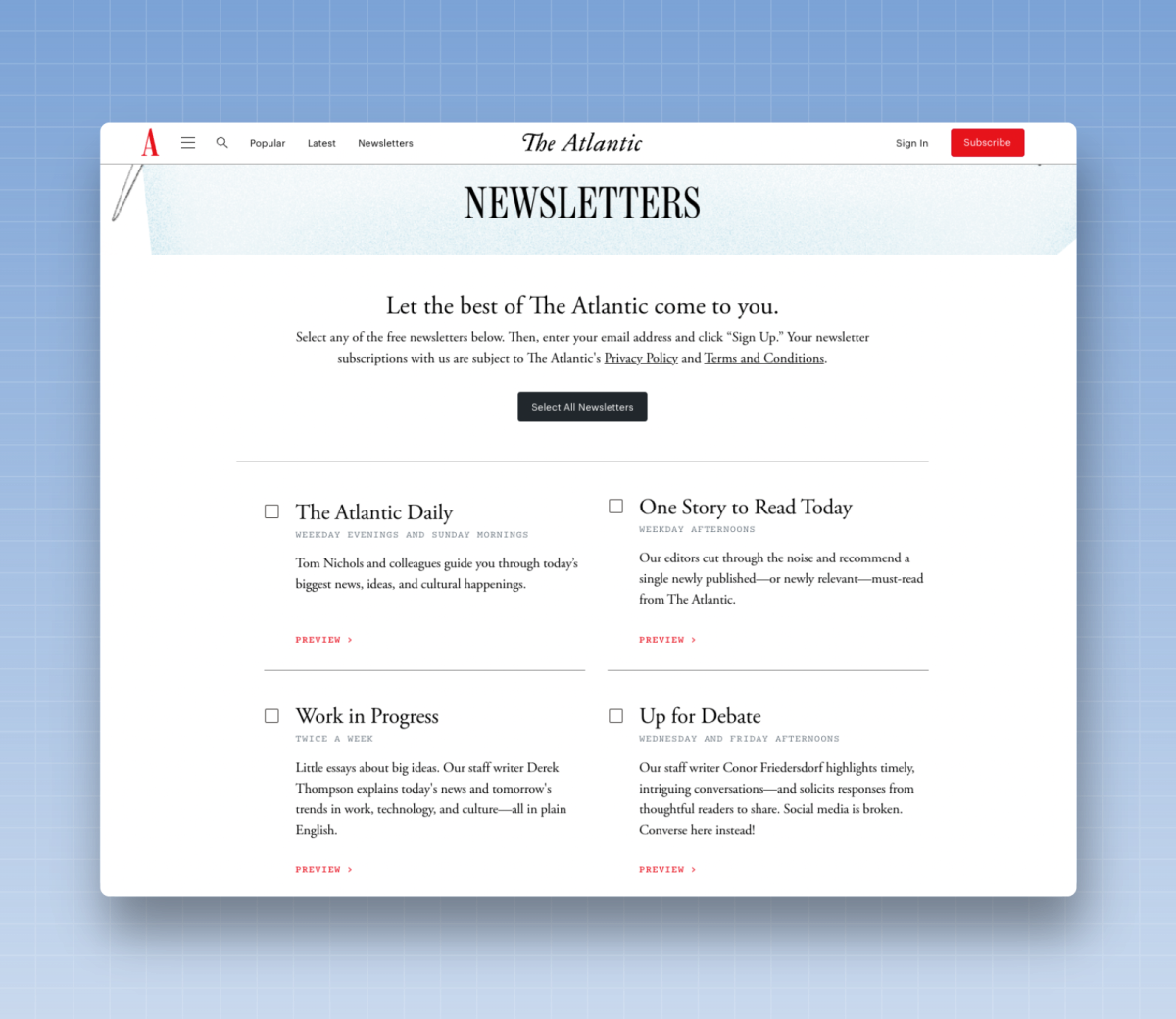
You can create a signup page for your newsletter; the idea is to clearly explain the service you're providing to your audience. If you have multiple newsletters, make sure readers don't have to enter their email address multiple times, as this will discourage many from signing up!
Case study with The Atlantic
The newsletter page of American media outlet The Atlantic allows readers to enter their email address just once and then select multiple newsletters. A way to streamline the signup process.
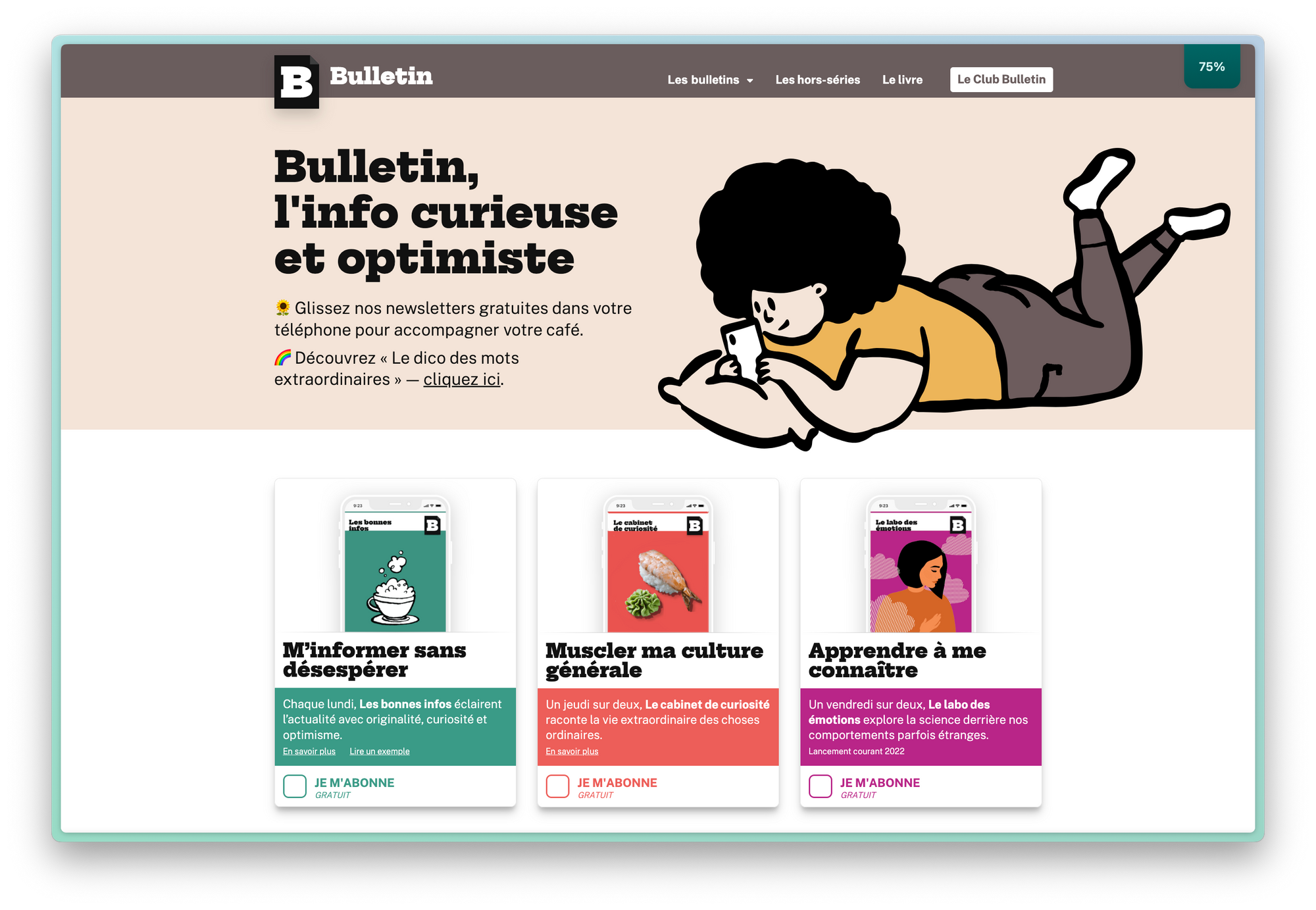
Case study with Bulletin
The optimistic newsletter media Bulletin offers, right from its homepage, to "choose [your] newsletters". What's interesting here is that it's less the newsletter title that's highlighted than the service provided: the focus is on reader benefits above all. To learn more about Bulletin's newsletter strategy, read the case study by Jean Abiatteci, its founder, in our pages.
Share your updates!
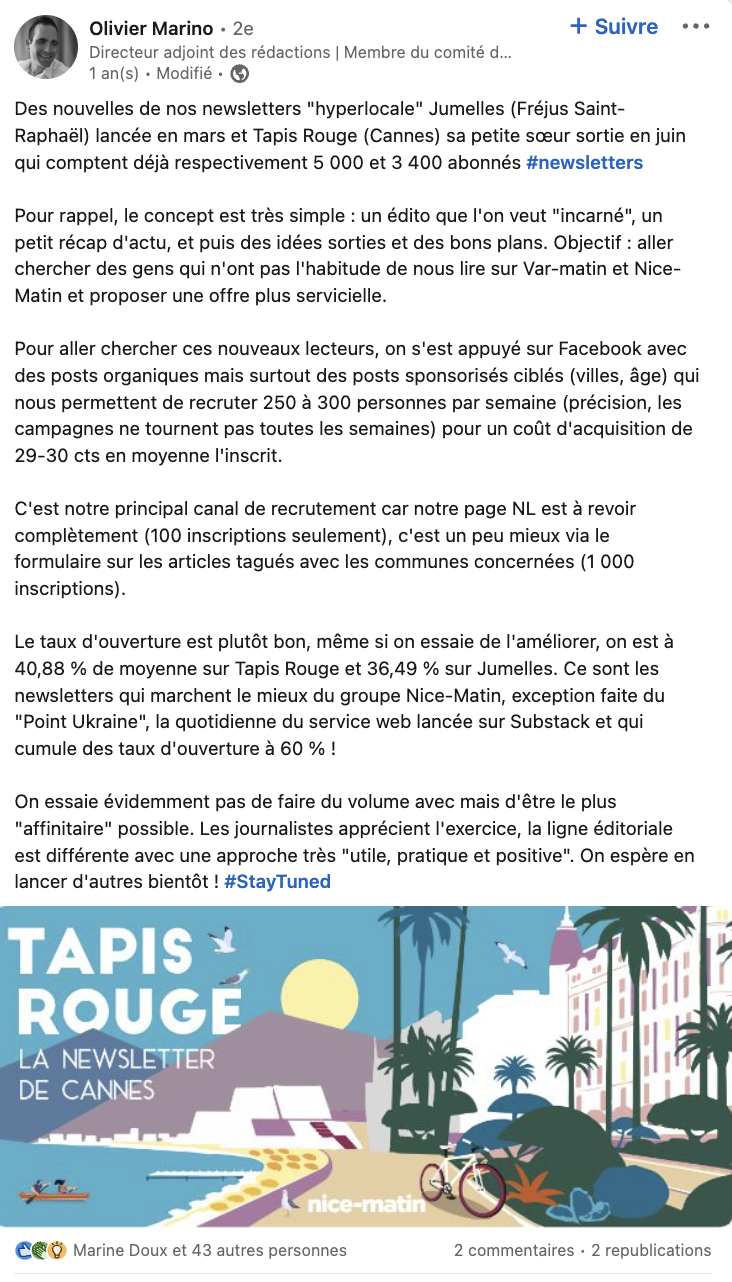
Highlighting key moments and figures to update your audience on your newsletter and its evolution is both an engagement driver and a way to launch a communication sequence to build awareness, particularly on LinkedIn. Many media leaders do speak up to discuss their strategy and inform their audiences (readers or professional audiences to acquire).
Choose the right tools
Follow best practices from a technical standpoint: poor newsletter management can cost you (unsubscribes, deliverability issues).
- To choose the right platform, we share our insights in this practical article.
- A tool for testing the deliverability of your emails: mail-tester.com;
- A tool for testing whether your emails might be blocked: dnschecker.org.
Create your newsletter, step by step
A practical document to apply the learning from this guide to your own project, inspired by our colleagues at NPR. Click the link to duplicate it automatically [Google Doc]
To go further
Understand the trend
- Le Parisien, Le Monde, Ouest-France, The New York Times…an analysis of the return of the newsletter in media outlets to read in La Revue des Médias from INA.
- An analysis of the marketing and financial interest of newsletters, found in the Reuters Institute for the Study of Journalism's Digital News Report 2021.
- Substack, Kessel…platforms offer payment solutions for newsletter authors. What are the results? Find our journalist Marine Slavitch's analysis of the Substack study conducted by the Tow Center for Digital Journalism (Médianes), and more recently on the Substack mirage.
Define your strategy
- How to make the most of the newsletter format? A few ideas and best practices for a well-designed newsletter.
- Tech and design challenges: 5 things to know to design your newsletter, to read at Médianes.
- How to launch a new newsletter after the success of a first project? A case study with TechTrash and Climax on Médianes.
- Examples of the launch of paid newsletters by existing media outlets, whether from Forbes or Mel Magazine.
- Creating accessible newsletters: a comprehensive guide to help you make the design and content of your newsletters accessible to the widest audience (Inbox Collective x Médianes).
- Designed as a promotional product for their ambitious print project, the newsletter from La Disparition has become an essential part of their media. Discover the founders' feedback.
- From newsletter to book: the example of the optimistic newsletter media Bulletin (Médianes).
- From newsletter to training: the example of the feminist media Plan Cash discover the model developed by Léa Lejeune and Morgane Dion (Médianes).
- The case study of Outride.rs, a Polish media outlet that developed an engaged audience by putting its newsletter front and center. (Membership Puzzle Project)
- The case study of Léry Jicquel, founder of Concentré Vélo, a newsletter about cycling culture news that has developed multiple funding levers for its newsletter, from sponsorship to job board to a Christmas catalog (Médianes).
- 5 practices to implement to develop your newsletter, shared by the American Press Institute, and focused on payment and loyalty strategies.
Optimize your marketing funnel
- 25 ways to make newsletter signup easier: a treasure trove of examples and best practices, prepared by Dan Oshinsky, founder of Inbox Collective.
- Examples and analyses to develop loyalty, trust and revenue through your newsletter (American Press Institute)
- 52 tips to grow your audience: a wide range of tools and advice to help you develop your newsletter and reach your audience. (Inbox Collective & Médianes).
- Bulletin, Les Jours, Morning Brew : a look at media outlets that have made sponsorship a marketing strength, to read on Médianes.
- Tips from the CEO of beehiiv, a newsletter tool to engage readers and grow your subscriber base (The Audiencers).