


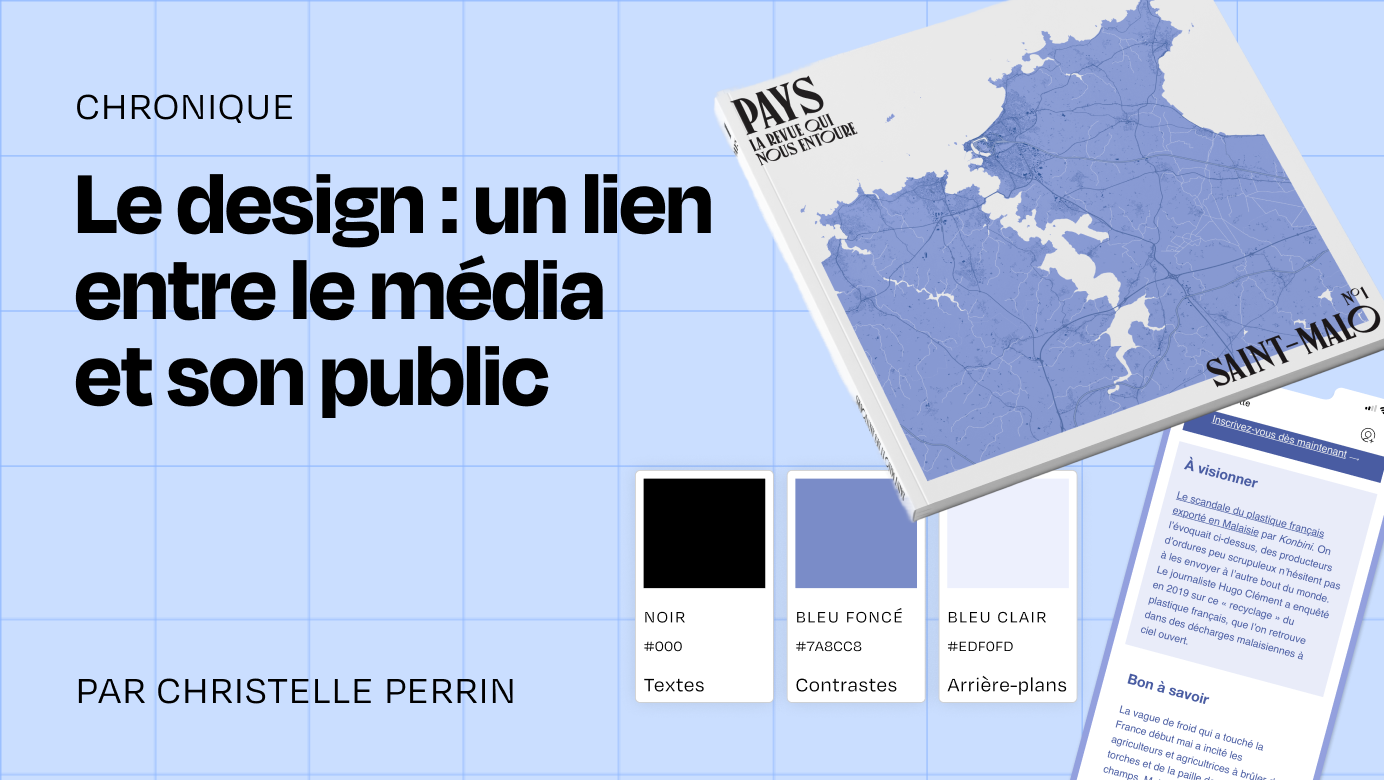
What is the purpose of design for a media outlet?
Graphic design, in general terms, consists of a visual composition (texts, images, shapes, colors…) conceived to convey a non-verbal message. It transmits information while evoking an emotion, in order to achieve a specific objective.
Visual identity, on the other hand, makes the media visually recognizable: typographic choices, color palette, iconography, logo design, layout principles. We also call this art direction, meaning the visual direction the media sets for itself.
It's the foundation on which we build a consistent presence across all platforms. The design of the website, newsletters, and social media flows from this artistic direction initially conceived for the printed magazine, then adapted to the uses and constraints specific to each platform.

It's pointless to have the world's best content if nobody reads it
Graphic design is not a superficial element. It's a strategic lever to integrate from the outset of media conception: it brings substance and form into alignment and conveys, at first glance, information about the tone and nature of the content.
A media outlet is first and foremost a product: it serves a function, targets specific audiences, and in a capitalist system must generate enough revenue to sustain itself. When structuring a media outlet, rather than basing decisions on our own tastes or desires for novelty, the first step is to clarify its positioning. What media outlet are we? What values do we embody? Then, we consider the people for whom the product is intended: who are they? What are their habits, tastes, desires? How can we ensure this audience feels invited and included?
The goal of design is then to propose an object that can visually express to the people it's intended for who we are.
Can you give too much prominence to design?
There is, in graphic design — particularly as we advocate for it at Médianes — a genuine commitment to engaging readers and the desire to serve them. This means prioritizing content over complicating its visual accessibility. Graphic design is a support, a container — never the subject.
The graphic choices selected should not complicate the team's work in applying and using visuals either. The design is not optimal if following the brand guidelines becomes a puzzle, if the files produced are heavy, unsuitable, and if creating them requires too much time and effort.

The art direction evolves with the medium
For a brand to be identifiable, its visual codes must be stable and consistent. That said, since pursued objectives or editorial positioning may change, the artistic direction can be updated to remain aligned with the media's evolution.
Visual choices can also be adapted when designing new media: paper, web, video, a newsletter, a podcast—each has different needs and uses, and you won't foresee every possibility from the start. The goal is instead to let this visual identity live and grow, evolving as the media itself does.
For example, if I start a podcast, I mainly need a logo, thumbnails for episodes, and a few templates for communication. I'd already need a visual identity, yes, but there's no point in thinking at this stage about what a web form would look like or the layout of a book we might publish someday.
A few questions to ask yourself
Imagining your media in a real-world situation can help gauge whether the design is appropriate. These are the same guiding principles for screen-based media, but let's take as an example a printed object that a reader would discover in a bookstore:
- As the target audience, would I see it among the others?
- If I see it, will I want to grab it?
- Without reading, would I have a first idea of what it's about?
- Would it interest me enough to open it?
- If I started flipping through, would the interior pages reinforce the impression I'd formed of it?
- Would it make me want to read it, and potentially buy it?
If the answer isn't clearly "yes", certain aspects of the graphic design can be adjusted.
You can also learn more about our expertise in graphic design projects on our studio's website.
To go further
- A strong and consistent visual identity—what's it for? What matters most in an art direction? Read our joint interview with Thomas Steffen (Le Monde) and myself, designers for the media.
- What makes graphic design distinctive for independent media? What vision do we champion? Here's our manifesto.
- Want to launch a print publication but not sure where to start?
- Lowercase, typeface, italic, cursive… We're taking you on a dive into typographic terminology.
- Looking for visual inspiration? We're sharing a collection of resources with you.


