


Original version published on August 26, 2019 on the blog run by the digital team of the Swiss daily newspaper Le Temps. This article is republished under Creative Commons CC-BY SA 4.0 license.
"My article? Well, it's meant to inform" or "We report on current events, that's our job, isn't it?" That's the typical reaction of a daily newspaper journalist when asked to explain why they're interested in one subject or another. Insufficient in an age of information overload, when a reader can turn to an infinite number of different sources in a fraction of a second.
We need to be clearer and ask ourselves why we should care about one issue or another, and how the subject serves our publication and our readers. For three years now, at Temps, we've been circling around this question (and have discussed it with several colleagues), but, surprisingly, only daring to ask it about new formats: what's the point of video? Why choose one narrative format or another based on the message to convey and the intended audience?
A recurring question since February 2019
We took the plunge less than six months ago, and we’re now addressing this issue every day for the forty or so pieces of content we produce. Not quite head-on yet—changing a 20-year-old ritual, the daily “briefing,” requires a bit of tact—but it’s a start. We took advantage of a change to our paywall (a freemium model), led by Thomas Deléchat, to add this small strategic twist to our meeting. Rather than immediately deciding, for each article, whether it will be behind a paywall or free, we focus on the objective we assign to it. The business model associated with each piece of content will stem from that choice.
The four objectives
Initially, we drew up a list of about ten objectives that seemed relevant to us. For the sake of clarity toward the 70 journalists involved, it was narrowed down to four. Each article must fit into one of the categories. Implicitly, each one also corresponds to a different target audience.
1. Strengthen the image of "Time" (free)
Addresses a major theme on which Le Temps aims to establish itself (the seven causes supported by the newspaper, the financial center, watchmaking, etc.).
- We know it won't be read en masse—neither by the general public nor by our subscribers—and that's not what we're after. It should position us as leaders in tracking this subject. It should earn us a prize or recognition from a well-targeted sector.
How to measure success?
- Number of third-party citations
- Links from external websites (backlinks)
- Quick recap
- Price or other recognition
- Social shares by influencers in the relevant sectors
2. Retain our subscribers (paid)
Covers a major topic for which people subscribed to Temps (literature, international politics, economics, etc.).
- The subject matter is relatively specialized: it doesn't necessarily speak to a broad audience but to the community of Temps readers (whose preferences are well known).
- Its added value compared to a news brief or a competitor must be immediately apparent. Ideally, from the headline or opening, you can tell you're getting a more analytical read, an original angle, cited experts, etc.
How to measure success?
- High reading time
- High number of page views among Temps subscribers
3. Reach a wide audience (free)
- Covers a subject of general interest.
- Fits into an ongoing debate.
- Beyond our standards for writing and rigor, added value compared to competitors is not the primary characteristic of our approach.
How to measure success?
- Page views
- Traffic from Google News
4. Reach new subscribers (paid)
- Covers a subject of general interest.
- Will spark reaction and fits into the wider debate.
- Starting with a very mainstream hook, the text, video, etc. must immediately demonstrate our ability to outpace the competition in terms of added value (expertise, style and presentation, angle,…)
- Le Temps has a duty of continuity: the promise made to future subscribers is "we are following this theme".
How to measure success?
- Number of shares and social reactions
- Percentage of subscriptions, newsletter sign-ups, or even “likes” on the Facebook page
- Average reading time
- Redirect Rate to Other Articles
As you can imagine, there’s a fine line between these various objectives. During briefings, we still don’t instinctively discuss these issues—even though they’re fundamental—when it comes to determining the angle (not too narrow for a general-interest article, very specialized for articles aimed at our most loyal enthusiasts) and the writing style. So far, we’ve avoided addressing a taboo question: what if, during the meeting, we realize we don’t know what purpose the article serves? We’ve avoided, for now, coming to the conclusion that we might have to abandon the idea of writing it.
Unfortunately, the most important goal for us right now in securing the future of our media outlet is also the hardest to pin down: What kind of article can drive new subscriptions? In our view, it must start with a broad enough question to lead to a clear (even dazzling) demonstration of *Le Temps*’s ability to address it in a way that is clearly superior to the competition. For these articles on topics of general interest, there’s a strong temptation to aim for a hit with the general public (and thus to classify them as “for a broad audience,” objective 3) rather than seeking to attract new subscribers (objective 4). In this case, we must dare to opt for restricted access, even if it has a negative impact on page views.
A distinct distribution strategy based on the objective
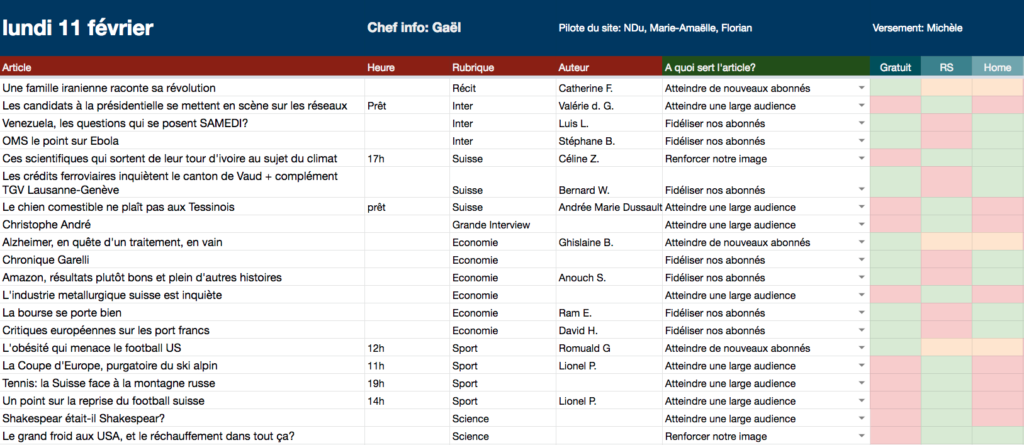
For each of these objectives, we have also established a publishing strategy designed to help us achieve our goals. Not everything deserves to be posted on Facebook, featured in the print edition, or displayed on the homepage. We know that each of these platforms attracts different audiences.
The table provides an overview of our “decision matrix.” The final decision is, of course, made on a case-by-case basis, and it may happen that an article published to enhance the publication’s image is free, even though the table places it in the paid section.
Generally positive reactions
Within the newsroom, the reactions were generally positive. An article by my colleague Adrià Budry Carbó summarizes the concerns and the general sentiment among the journalists:
The full article: “How Much Is a Journalist Worth? (More Than a Watermelon)”
Setting goals for an article forces us to ask ourselves questions that, over the course of editorial meetings, had been somewhat overlooked. The main one: Are we sure we’re providing enough added value in this or that article? Do we stand out from the competition? And if we’re simply following up on a story—yes, that can happen—we might as well admit it from the start and limit the time spent writing it.
But the best is yet to come: during a briefing, another one of our journalists broke a taboo (I promise you, this wasn’t scripted): what if we wrote the opening of an article differently depending on the objective and the target audience? What if a longtime reader of Le Temps were more familiar with party name acronyms than a casual visitor to our Facebook page, for whom we’d need to adopt a more explanatory style? What if we needed to be clearer about our added value right from the headline—that famous, largely unexplored territory of “editorial marketing”—when we’re trying to attract a subscription? And what if, in an article “for image,” we opted for a more expert writing style?
To develop our strategy in this area, we’re organizing an internal workshop. And we’d love to hear, in the comments, about any documented examples of similar approaches in other newsrooms! Not to mention the potential help from algorithms: after all, these tools now allow us to learn a great deal about the profiles of our website visitors (perhaps too much, but that’s another debate).
Variable Measures of Success
Pay journalists per click? Offer them a commission based on the number of subscribers converted by their latest article? Penalize them when they fail to meet their targets? As soon as the question of measuring success comes up, even the wildest ideas are considered—and some media outlets don’t hesitate to take the plunge. Our philosophy is different: we want to offer writers maximum transparency, but without tying their pay to the success—or lack thereof—of their latest piece. They should have access to the most relevant statistics for the specific article in question. They need to know that this is one criterion—but not the only one—in the editorial team’s assessment of their work. After all, in addition to the subjective judgment of the number-one reader—the editor-in-chief—why not factor in some feedback from thousands of customers and other visitors?
Statistics Are Not King
This is where one of the major problems lies for those who blindly rely on metrics from Chartbeat, Google Analytics, or Facebook: these tools don’t measure everything. We’ve often jumped headfirst into whichever platform offered us the most statistics. Without ever questioning their relevance or even their reliability. This is especially true when we believe that an article should raise the publication’s profile, establish it as a major player in the region, and even position it as the fourth estate—one of the noblest goals of our profession. How do we measure that? Can a dashboard shed light on the matter? The answer is no. We have to go for a walk through the state capitol, call our contacts, and respond to angry phone calls or letters—often still handwritten, trust me on this—expressing congratulations. These signals—to which algorithms are largely blind—are worth more than dozens of “likes.” Typically, in the case of long-form investigations with undeniable political impact, the number of page views is disappointing. More than once, I’ve found myself facing a journalist still reeling from his dive into thousands of pages of revelations, disappointed that his investigation hadn’t made the splash he’d hoped for, his eyes glued to our analytics tool. We had to look to other indicators to recognize that his work was important.
A "data analyst" to support the editorial team
Starting in October, a data analyst will join the editorial staff at *Le Temps*. He will report to the duty editor-in-chief, who oversees production for the week. Their role: to assign the right success metrics to each piece of content, focusing on subtle but insightful signals that don’t appear in the statistical summaries on the dashboards. Ultimately, we hope to be able to link a set of success metrics to each article within our tool and present the relevant figures directly to the author, rather than having them navigate between multiple dashboards. And in-depth analysis, along with the insights of colleagues, will always be more valuable than standardized tools.
Ideal starting point
This fundamental shift in our editorial approach has gone hand in hand with a profound technical transformation. Piano, the tool that manages our paywall, allows us to conduct more tests and personalize the user experience. Should the—commercial—path to a subscription be the same for everyone? Shouldn’t a casual visitor first be converted into a newsletter subscriber before we dare ask for their credit card number? At the other end of the spectrum, after how long should we start worrying if a long-time subscriber hasn’t visited our website or mobile apps? And how should we respond?
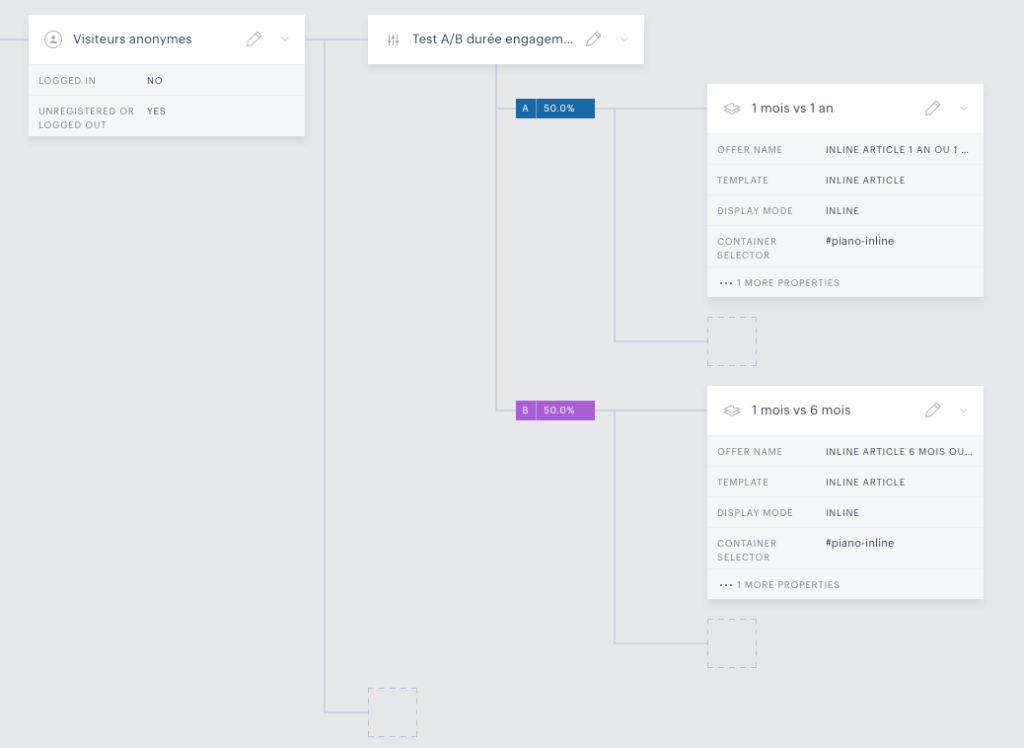
By linking the two areas—editorial content and business strategy—we have laid the groundwork for an approach that opens up a wide range of possibilities. And we’ll spend the next few months testing various approaches, guided by a single conviction: we must convince our audience that our articles, videos, and podcasts are worthy of their loyalty.


