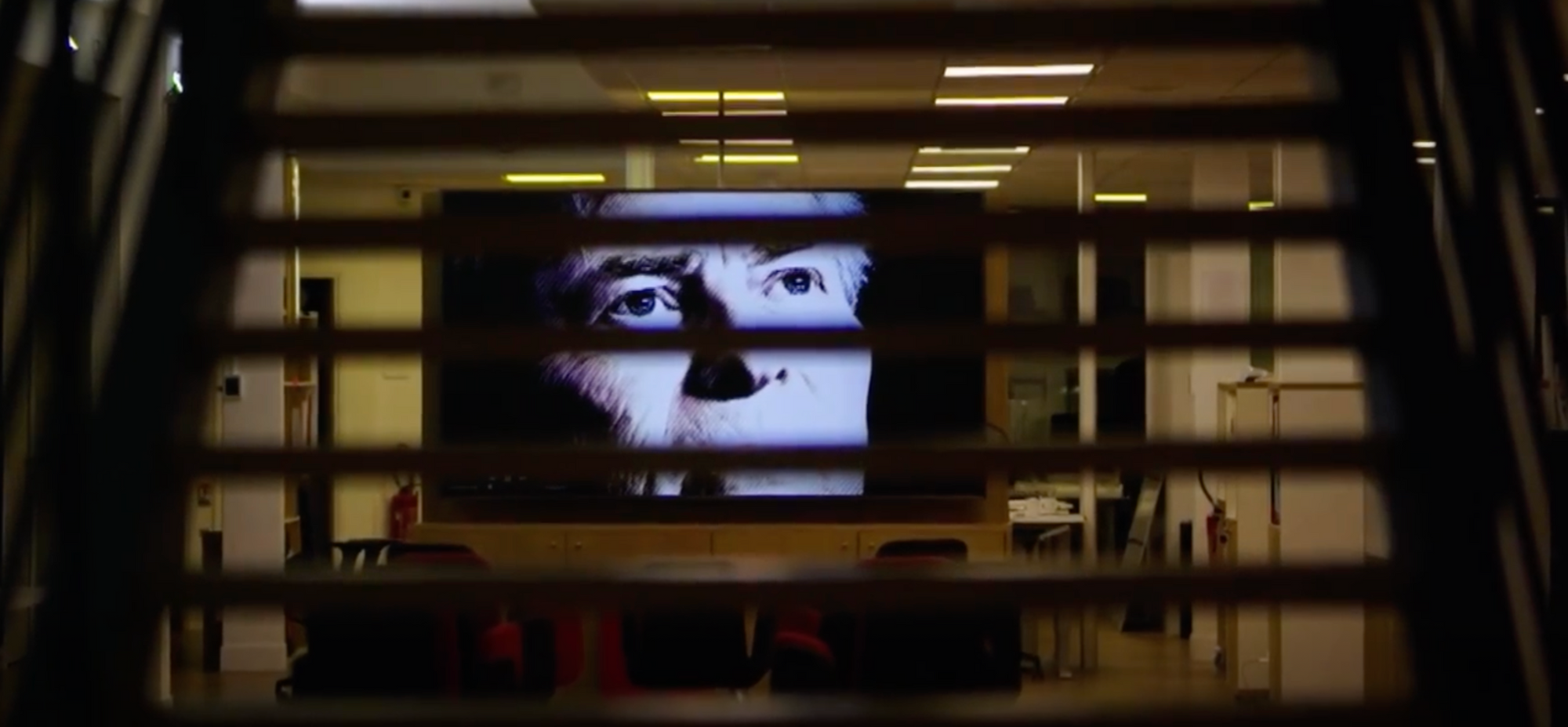
In theaters on February 16, the documentary *Media Crash*, They Killed Public Debate is the result of a collaboration between Mediapart and Premières Lignes. Through a mix of investigative reports and personal accounts, Valentine Oberti and Luc Hermann aim to expose the actions of major media shareholders—such as Vincent Bolloré and Bernard Arnault—and the influence of private interests on the news. Based on this observation, journalist Valentine Oberti analyzes the state of the current media ecosystem and explores possible solutions.
You produced this documentary on a fairly tight schedule—how did you plan and put it together?
Valentine Oberti: Thirteen years ago, Mediapart was founded based on the observation that media concentration was already taking place. As for the documentary, we’d been working on this project for a little over a year, and Michaël Haydenberg from Mediapart’s investigative unit wanted to make one on the subject. We teamed up with Premières Lignes and started it last September, so it’s the result of six months of work.
The goal is not to expose or denounce, but rather to show what can happen behind the scenes, to reveal practices, pressure exerted by media executives on journalists, and thereby highlight the censorship and self-censorship that this can lead to.
Right from the very first minutes, the documentary states: “There’s what you see, what some people want you to see, and what you don’t see.” Yet you said on France Inter’s *L’Instant M*: “There is no invisible hand.” Could you elaborate on that?
I reject the term “invisible hand.” In the actions of media moguls, everything is visible, yet they operate behind the scenes. Our goal with this documentary is precisely to shed light on how they can put pressure on journalists when they publish compromising information.
The documentary is divided into three parts: the arsonists, the secret agents, and the accomplices. Pressure is being exerced on several levels. Is the noose tightening around the journalists?
The more concentrated the media become, the tighter the noose gets. For example, with Bolloré’s takeover bid for Lagardère, external pluralism is diminishing and internal pluralism is under threat. The content on CNews and C8 has ideological objectives, raising the question of whether CNews is turning into an opinion channel and contributing to a shift of the debate toward the far right. The documentary defends the right to inform and to be informed—the most fundamental right in a democracy. It details the pressures exerted and the resulting deterrent effects: some journalists will give up on investigating or self-censor when they are not censored, while others will continue their work despite everything.
In your documentary, one segment revisits the case involving Fakir and the LVMH Group. There’s another segment showing that *Le Point* doesn’t publish any articles that run counter to Jérôme Cahuzac’s interests, even though he’s under investigation. Are only politically engaged and activist media outlets speaking out?
Not at all; a media outlet is not a monolithic entity. As the documentary shows, Le Monde published an article by journalist Maureen Grisot about Bolloré’s monopoly on the port of Abidjan. Then the Havas agency instructed its clients to stop advertising in the newspaper, resulting in a loss of 12 million euros over two years for Le Monde. A few months later, the newspaper published a feature article on railways in Africa; a story proposal by Maureen Grisot had not been accepted. But then, *Le Monde* published numerous investigative reports on the Bolloré Group and the Bolloré family, so it’s not all black and white.
The case involving Fakir and Bernard Arnault is both very serious and grotesque. Serious, because Bernard Squarcini is using resources to infiltrate the newspaper, and grotesque because those resources are disproportionate. Fakir is a non-profit newspaper run by about ten people in Amiens. Then there’s the media coverage of this affair: the Financial Times is reporting on it, while Les Échos hasn’t published a single article—and the owner of that newspaper is Bernard Arnault…
After watching this documentary, someone who is already skeptical of the media may feel even more convinced that the media has been bought off…
No, I actually think it’s the other way around. If we just let things happen and keep them hidden, it’ll be worse. It would be like saying that Mediapart publishes investigations into political figures and thereby fuels the “they’re all corrupt” narrative. It’s our responsibility to show how things really work. That way, we’ll rebuild our connection with our readers and actually open up a dialogue.
Now that we’ve established this fact, in practical terms, are there any possible solutions for overcoming hyper-concentration and self-censorship?
There are solutions. An initiative like the Fund for a Free Press is one of them. Companies that rely on public contracts should not own media outlets. Every media outlet must also respect the distinction between news and opinion. The Society of Journalists should be granted genuine legal protection. For example, we have, at times, had a very hard time interviewing journalists who could provide testimony for our documentary. Next, shareholders’ financial statements must be made public, and the acts of influence peddling and censorship in the press must be made criminal offenses. Finally, the allocation of public subsidies could be reformed based on legitimate criteria. It is not normal that, in 2019, 16 million euros in public subsidies for the press were allocated solely to Bernard Arnault’s media group, instead of helping independent and emerging media outlets that need it.
There are a multitude of emerging media outlets that are struggling to survive amid all these major news outlets. When you don’t have the resources, can you really conduct an investigation?
Emerging media outlets are full of vitality, but when you want to conduct an investigation, you need resources. I’m thinking of Disclose—I mention it because I contribute to their investigations—which had to seek out funding and sponsors so that we could carry out our work without pressure.
Some of these emerging media outlets are aimed at a savvy, media-savvy audience—isn’t that a vicious cycle?
I don’t know if this is really an audience that’s very media-savvy. On the contrary, these are people who are turning away from so-called mainstream news, looking for something else, and turning to emerging and independent media outlets. Even though there is hyper-concentration, these media outlets are flourishing.