💌
This article was originally published in Médianes' 10 Links newsletter, sent every other Monday at 2 pm. Sign up here (for free).
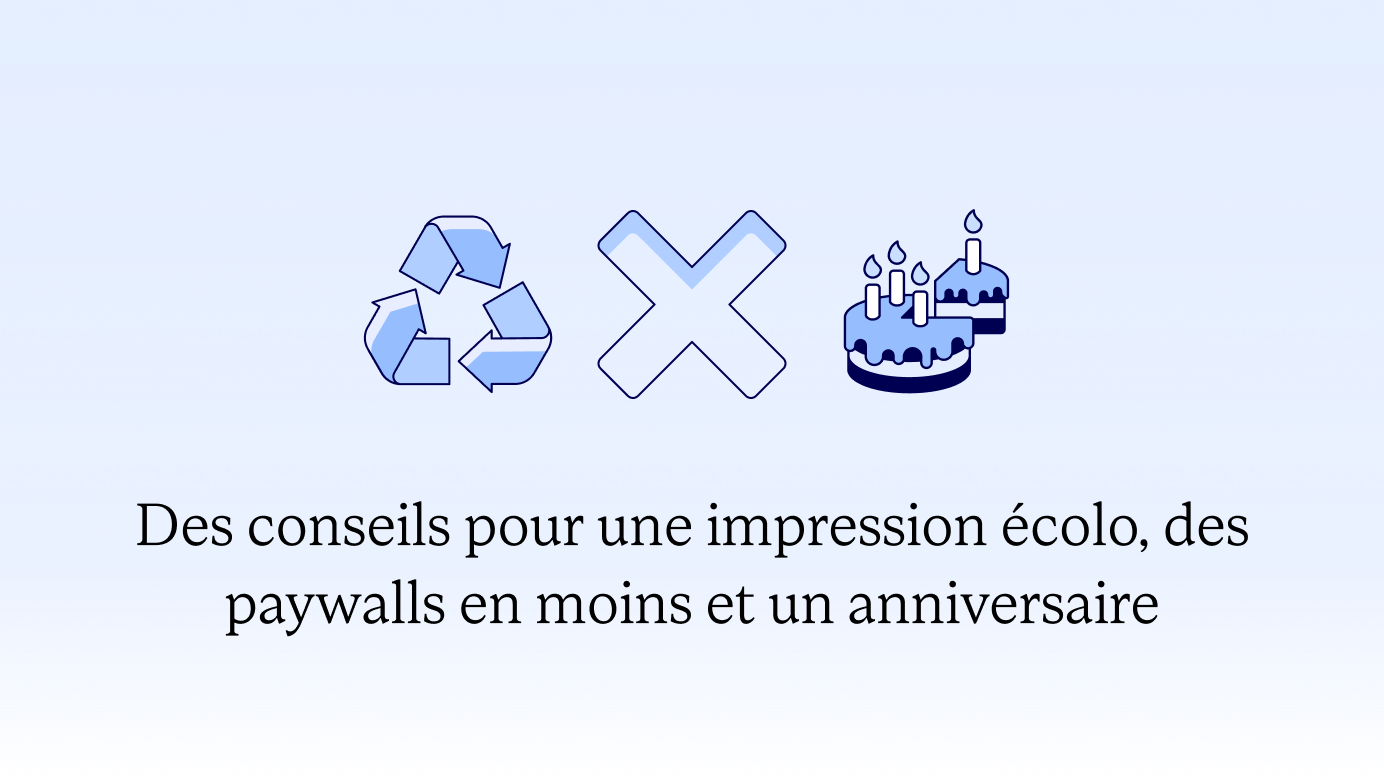
- BEHIND THE SCENES (Médianes) — This newsletter is celebrating its first anniversary! After more than 20 issues and hundreds of shared resources, we took the time to answer the questions you often ask us. An opportunity to tell you about the behind-the-scenes workings of this watchlist newsletter and outline what's next, both for Les 10 liens and for Médianes' overall offering.
P.S. Do you have any other questions or suggestions? Feel free to share them by replying directly to this email or by contacting me: [email protected]
- MODEL (Freedom of the Press Foundation) — How do you balance public interest journalism with the need to fund your newsroom? Wired's approach of removing its paywall for stories based on certain public documents offers an interesting compromise. A financial loss? Not necessarily.
- AI (Platformer) — Google is testing a new tool called "AI Mode": comprehensive answers to longer and more complex questions, drawing on information extracted from sites indexed by the search engine. Media outlets, don't worry about your traffic, of course. Google very generously offers users the option to visit the pages whose information it uses. But will they actually click?
- INFLUENCE (Below the Fray) — Forget the hushed salons and major television studios; the literary interviewer of the moment is none other than Dua Lipa behind her webcam. Discover how the artist, who hosts in-depth interviews with authors as part of her book club, manages to shake up the codes of this often elitist world, far from the prejudices that typically surround stars.
P.S. Interested in the topic of book clubs? The latest edition of our Strategy newsletter was actually entirely devoted to it!
- FAR RIGHT (Nieman Lab) — Budget restrictions imposed by Trump on USAid — the U.S. international aid agency — are weakening media outlets around the world. In El Salvador, Voz Pública could lose 70% of its resources while in Colombia, La Silla Vacía would lose a tenth of its budget. A reminder – if one were needed – of the concrete threat that the far right poses to press freedom.
- DESIGN (New York Times) — More than mere stylistic tricks, style guides also reflect the values and identity of a media outlet. The New Yorker, known for its rigorous adherence to typographic conventions, is modernizing (slightly) for its centennial: "internet" loses its capital letter and "Web site" becomes "website." Changes the magazine took care to explain to its readers.
- PLATFORM (Digiday) — If X or Facebook ease up on moderation efforts, Twitch wants to stand out by implementing anti-harassment systems and tools. An approach that encourages content creators from underrepresented communities to favor the platform, even though it isn't always exemplary.
- PODCAST (Current Affairs) — On his podcast, Joe Rogan regularly spins tall tales and invites personalities from all walks of life to do the same. One subject captures his particular attention: archaeology. Pyramids built by aliens, the existence of Atlantis, vanished civilizations… Stories that fascinate his listeners and that reveal much about our relationship with experts and science.
- PAPER (Bloomberg) — Flipping through a photo album or rediscovering an old concert ticket tucked away in a drawer can bring precious memories back to life. An emotional connection that neither e-tickets buried in our email inboxes nor photos automatically sorted on our phones provide. A phenomenon that also affects online journalism, which seeks authenticity with its readers despite the absence of a physical medium.
- PAPER (Low-tech Magazine) — What's more environmentally friendly: printing a book or publishing articles online? The Low-tech magazine, committed to sober publishing methods, offers some answers by explaining how it "compressed" its publications through font and image optimization. The link not working? The site runs on solar energy and may therefore be temporarily unavailable.