
Donation, membership, subscription… Many media outlets finance themselves through their audiences in order to maintain independence (from major press groups, platforms, etc.). Readers or listeners pay to consume information in more or less direct ways by donating, joining as members, or subscribing. We return to these models in a practical guide dedicated to the definition of the business model: reading it beforehand is required to help you first determine your primary revenue source.
📌 Why diversify your income sources?
In addition to your primary business model, the idea is to secure other revenue streams for your project. The key is to avoid depending on a single source: dependence creates model fragility. If one day your primary revenue source weakens or disappears (whether due to your actions or external factors), you could face financial difficulties.
To diversify, many options are available — you can act at the level of your news organization's structure, the products you develop, the services you offer… We present you with a non-exhaustive list of diversification strategies observed in the media world.
💶 What diversified revenue sources?
Build an agency model
Some media outlets choose to develop an agency alongside their media activities to benefit from an alternative revenue stream through service provision to third parties (brands, institutions, etc.). They thus become content producers (promotional, advertising, informational) for third parties (sponsors, advertisers, institutions in particular) in a B2B service sales model.
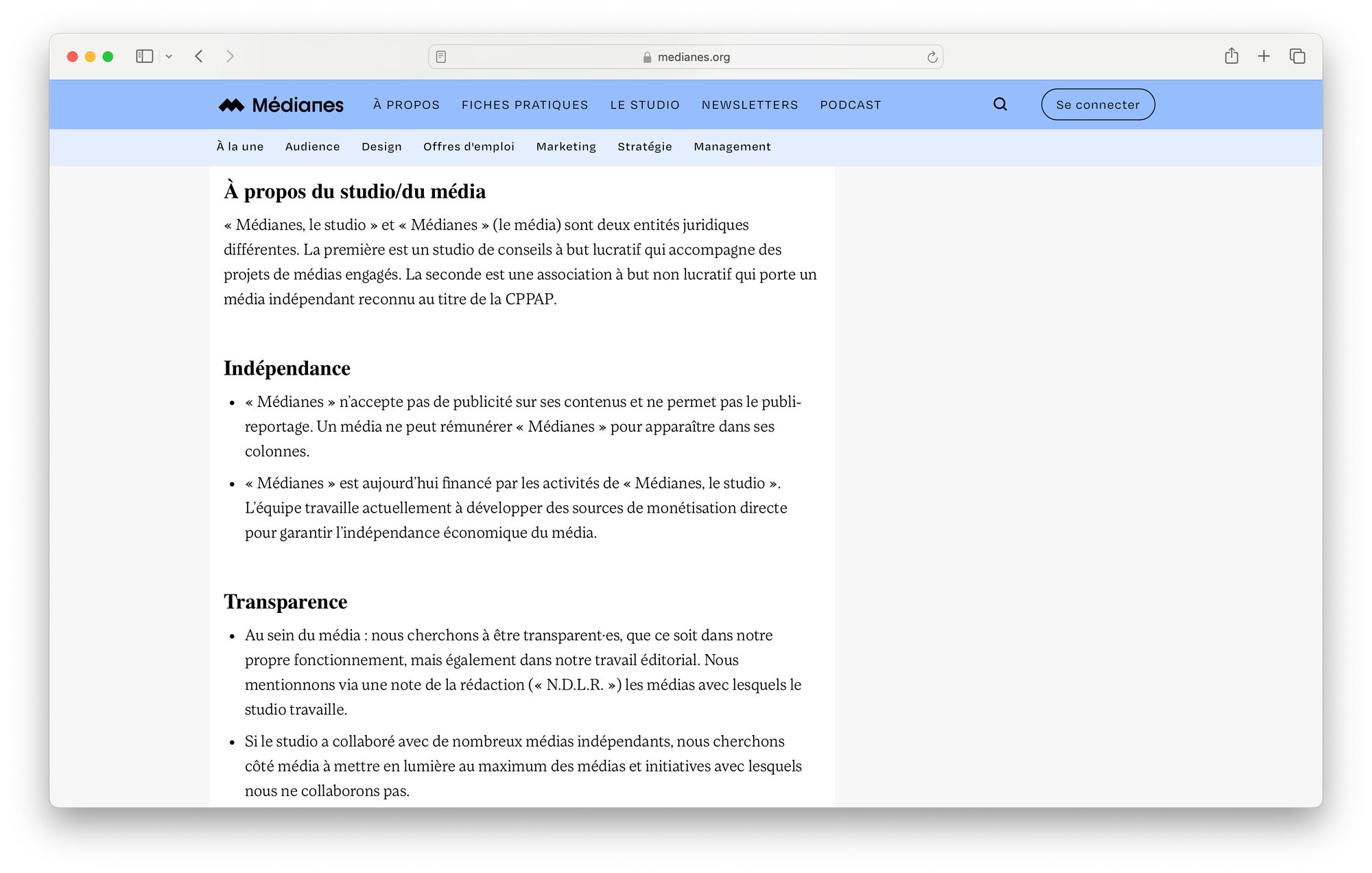
Keep in mind: the potential blurring of lines between the two structures. If you are considering developing a hybrid media and agency model, make sure to clearly distinguish between the two. This is essential both to be transparent with your audiences (readers or listeners on one hand, and clients on the other), so they understand the project as a whole, but also for independence issues between the two structures.
Case study with Louie Media
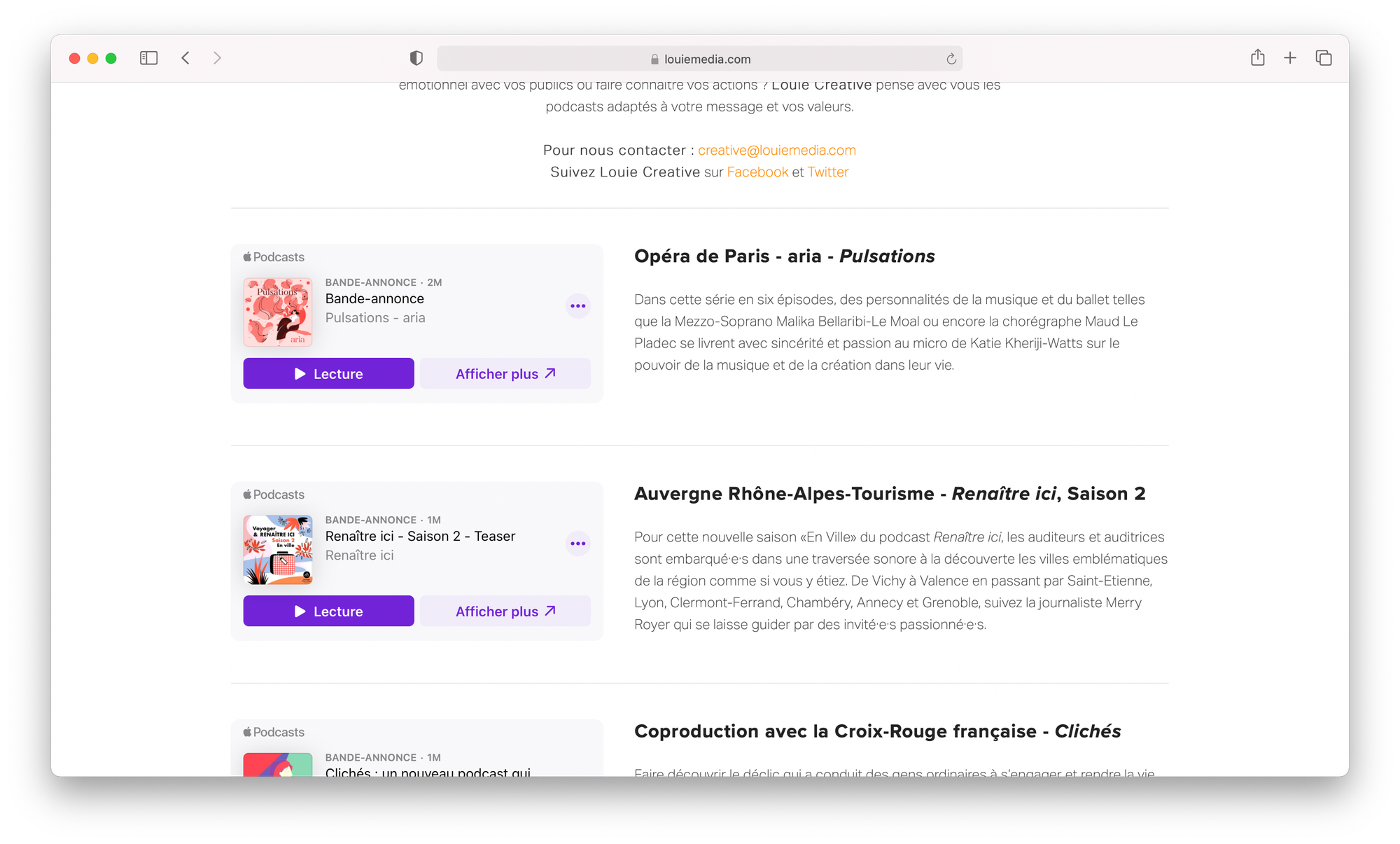
The podcast studio Louie Media developed an agency division, Louie Creative. The idea? Produce podcasts for brands (brand content), media outlets and institutions, or allow them to benefit from Louie Media's qualified audience through sponsorship. In practice, sponsored content takes the form of pre-roll, mid-roll or post-roll advertising inserts in podcasts. In this way, Louie Media offers a service activity that allows it to monetize its expertise (particularly in audio). This activity is carried out alongside its journalism activities.
Choose your edition
Declining an existing product, recognizing the work of contributors (authors, photographers), launching your own publishing house… Many media outlets choose to diversify their revenue through books: a good way to align the economic model with the editorial promise of the project. Developing publishing requires a strong brand, a particularly well-known editorial product, and a developed community.
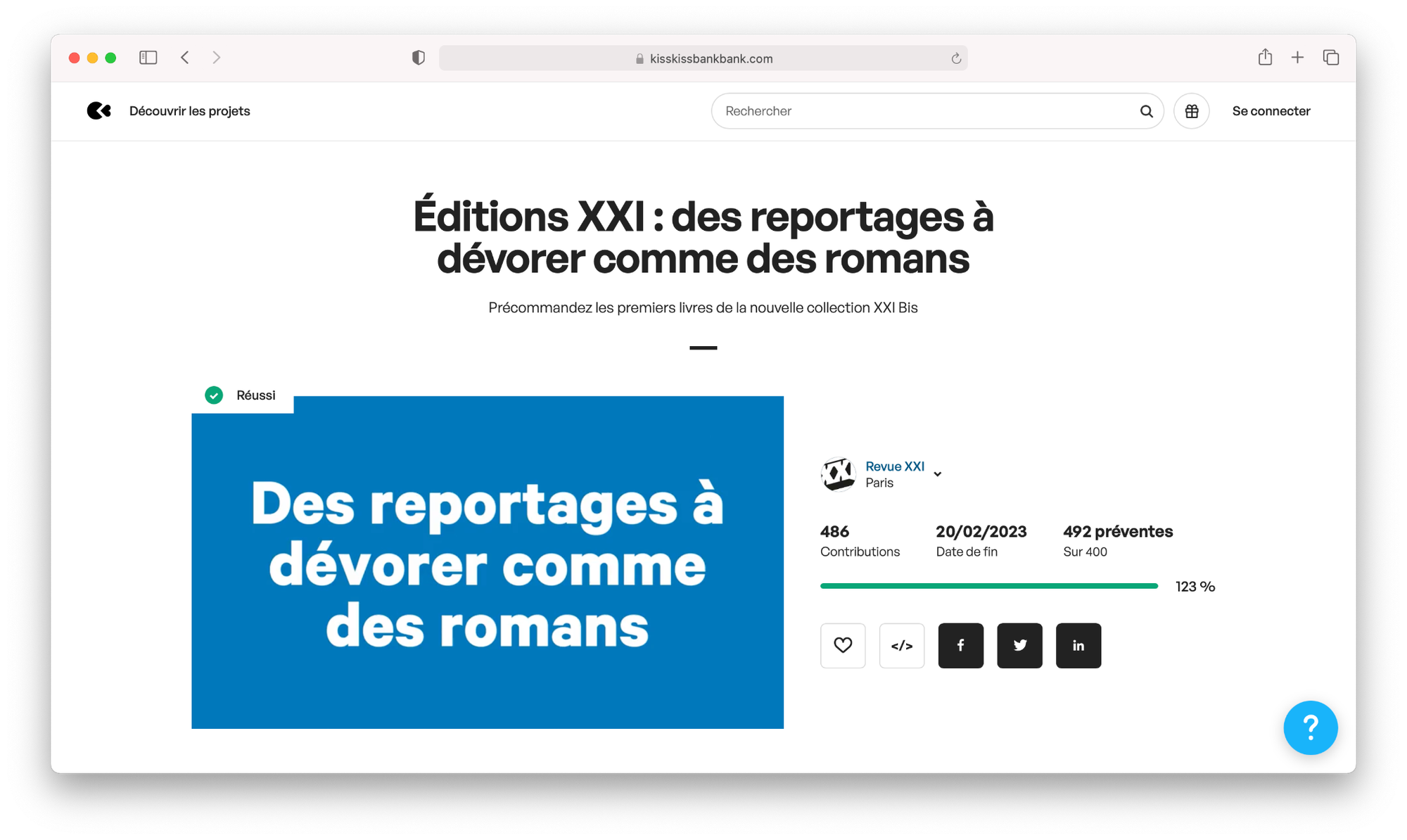
Case study with XXI
In spring 2023, narrative journalism magazine XXI announced the launch of its publishing house and book collection: XXI Bis. The objective? "[…]create a collection of long nonfiction narratives, sold individually in bookstores, to document this reality at the edge, in the cracks, between destruction and construction." A launch carried out through a pre-order campaign on KissKissBankBank, to buy books before their official release, and subscriptions to XXI. A good way to showcase the media's editorial expertise.
Note: Médianes, the studio supported La Déferlante in creating the publisher's digital resources in particular; Censored in defining its strategy and Les Others on financing matters.
Open up capital to its audiences
Opening your capital to your audiences is a way of making your model cooperative: readers are invited to become shareholders of the media outlet. This initiative strengthens the sense of belonging to a community and audience engagement, as they become true partners in the media venture and key players in its success. The approach also promises everyone the ability to contribute to building a media company that truly reflects their values and concerns. A concrete way to empower readers… and to preserve editorial independence by reducing dependence on potential advertisers or investors.
Case study with La Déferlante
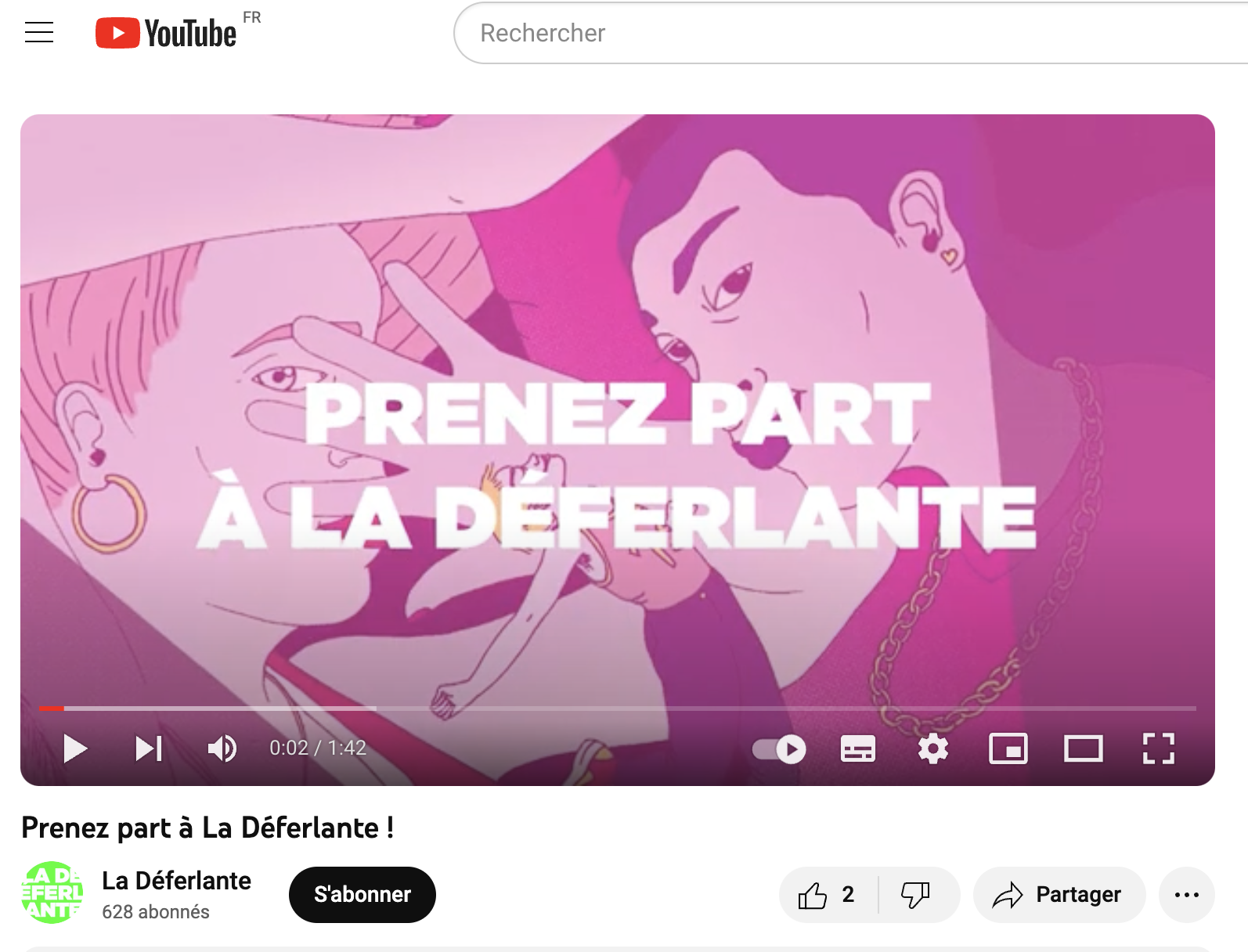
In summer 2023, the feminist media outlet La Déferlante — supported by the studio Médianes — launched an ambitious crowdfunding campaign to open its capital to readers, in partnership with the platform Lita.co. The objective is clear: raise a total of €300,000. Rather than seeking donations, La Déferlante offers its audience the opportunity to actively participate in the project's development, highlighting a key argument: fighting reactionary ideas. This initiative benefited from the support of influential figures such as Annie Ernaux and Mona Chollet, strengthening mobilization around it.
⟶ Our journalist Marine Slavitch interviewed Emmanuelle Josse, cofounder of La Déferlante.
⟶ How do you promote a magazine launch through a newsletter? We look back at La Déferlante's case in an article.
⟶ In a dedicated guide to crowdfunding campaigns, we revisit the case of La Déferlante, which chose to launch on KissKissBankBank.
⟶ The report from our Web2Day event in June 2023, which featured Marie Barbier, cofounder and co-editor-in-chief of the publication.
Offer paid events
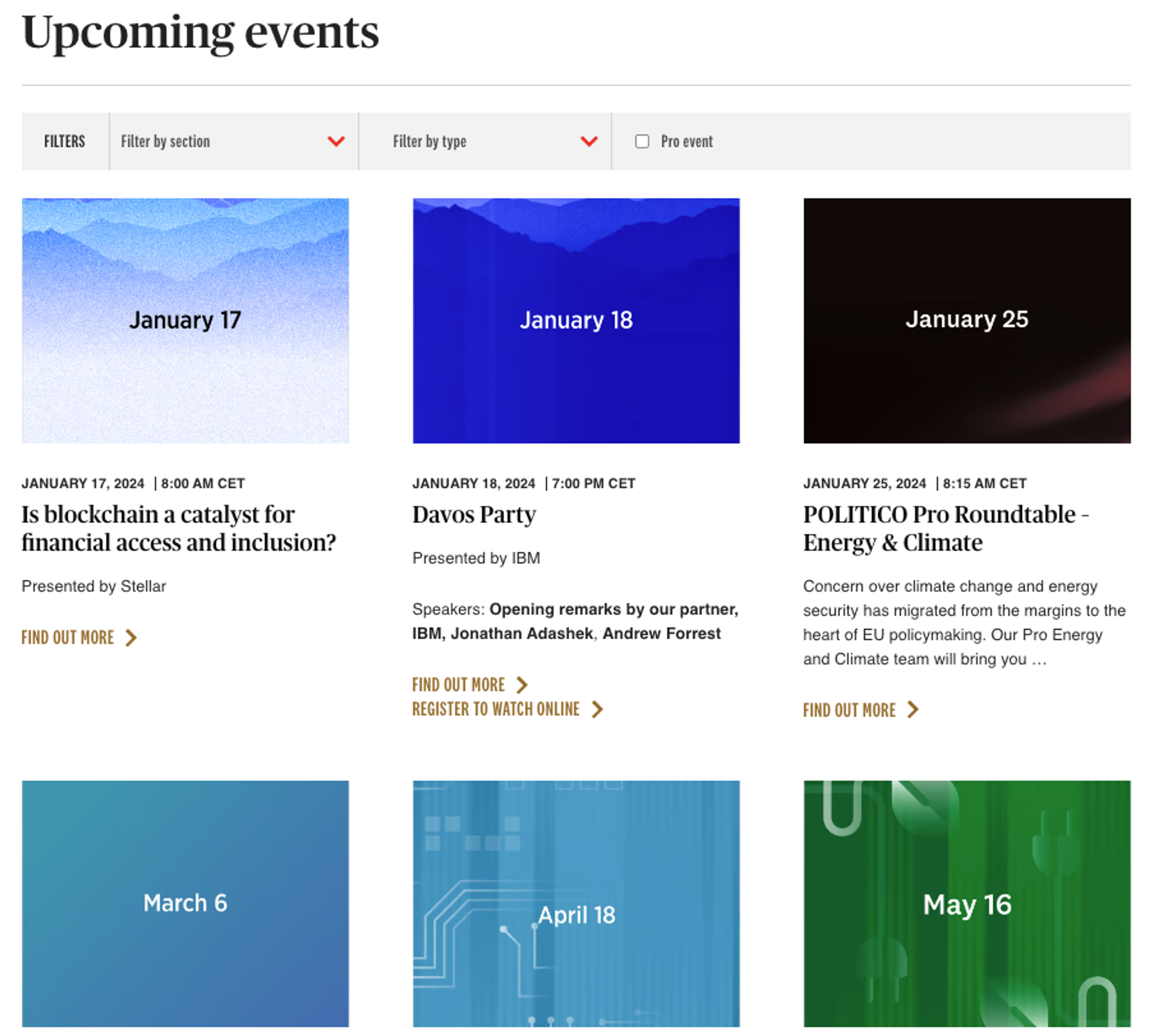
At POLITICO, events consist of thematic roundtables where global opinion leaders and influencers come together to discuss key issues, big ideas and trends emerging from a given subject. Beyond news in the form of articles or newsletters, POLITICO's offering for professionals and decision-makers also allows them to operate on another front: networking through events. An additional way to stay informed, a key argument for accepting to pay.
Propose a new editorial product
Whether developing a new product or extending an existing one, ask yourself what steps would be good to put in place to generate direct or indirect revenue from your editorial offering.
Practical case with Vert
Vert, the leading media outlet on ecology, launched in late 2022 a campaign on KissKissBankBank to launch a series of posters titled "Disorders of Scale". Among the projects mentioned at the time was developing a "poster library".
Vert chose to use crowdfunding to finance a product. While posters are now available for free on the media's website, the campaign raised money — a way to diversify revenue streams with the launch of a physical product, the first of its kind for Vert. Vert relies on donations, grants, services, and B2B subscriptions (businesses, schools, etc.).
⟶ Check out our two practical guides on the subject: Everything you need to know about crowdfunding and Running a crowdfunding campaign.
⟶ La Déferlante, Zetland, Keene Sentinel… good sources of inspiration for funding a project through a crowdfunding campaign.
Bet on the object
Many media outlets offer merchandise products that complement their flagship editorial offering. This merchandising approach has gained particular momentum in the magazine sector. Some media companies have even become known primarily for their products rather than their editorial content.
Case study with Climax
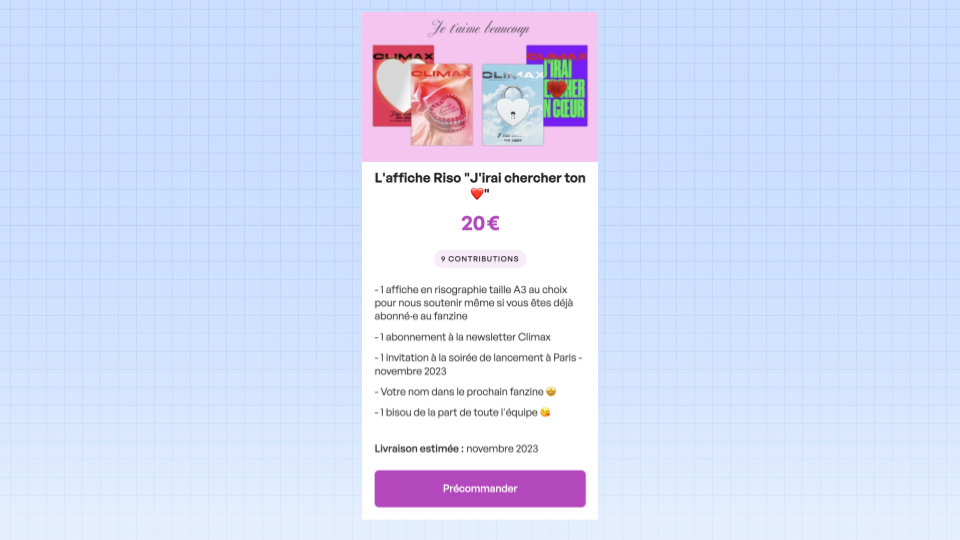
As part of the launch of the fourth issue of Climax, the publication offered a series of rewards: riso posters, newsletter subscription, invitation to the launch party, contributor mention in the next issue, digital access to a sold-out issue… Climax, which stands out for its strong visual identity, offered contributors the option to purchase posters, not included in a package that included the magazines. A good way to broaden the audience: audiences passionate about graphic design can be found outside the publication's community walls.
Practical case with Reliefs
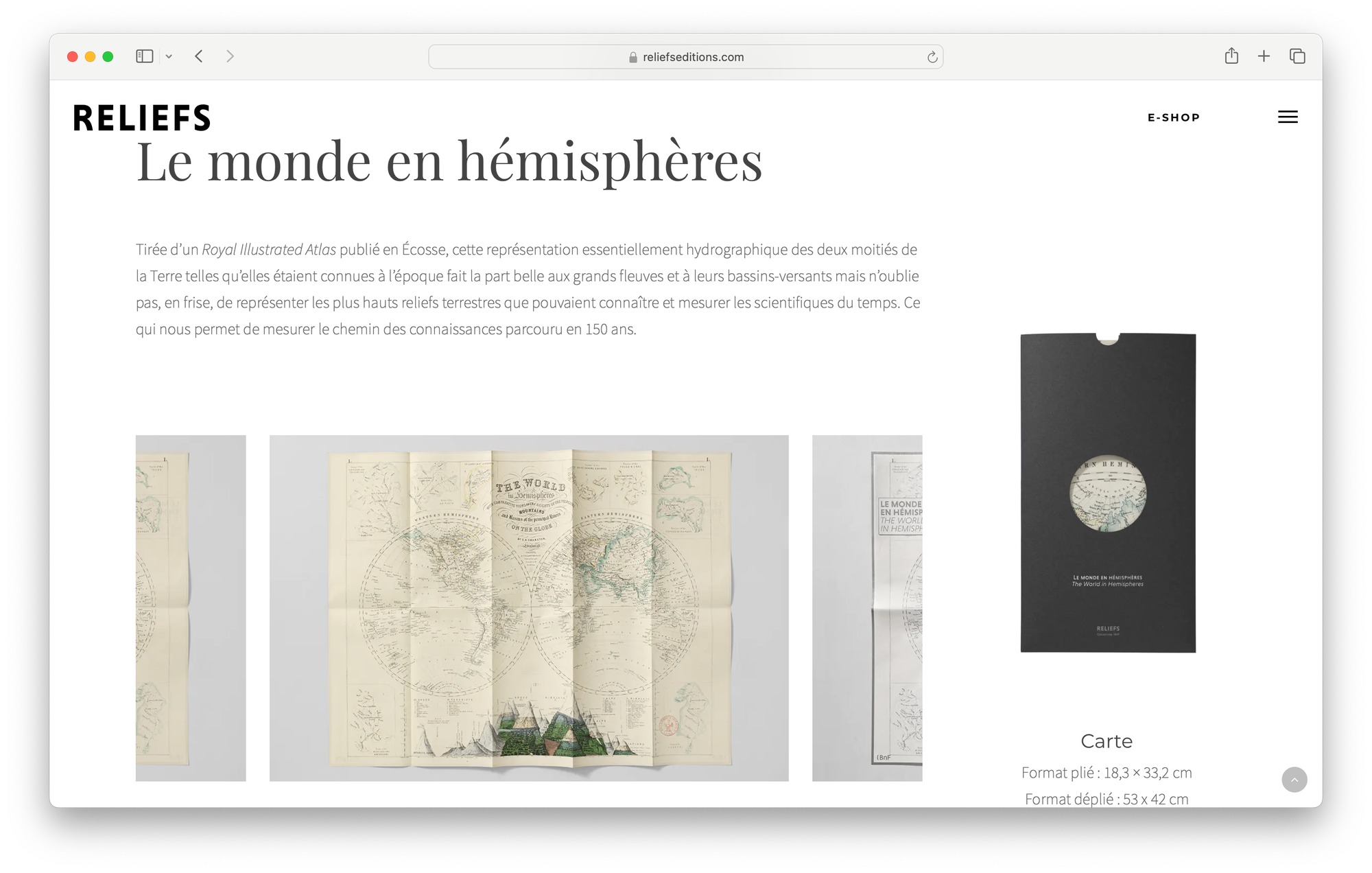
Reliefs is a magazine that, through arts, history, literature and sciences, takes an interest in great travelers, adventurers and nature. The maps of Reliefs have perhaps become more famous than the magazine itself. By focusing on cartography (an undertaking carried out thanks to a network of cartographers, illustrators and artists), the media has opened itself to a new audience.
« Each of Reliefs' annual collections corresponds to a series of historic geographic maps published in poster format. With a map on the front and its story on the back, the Nostalgic Geography collection responds to the section of the same name located in the magazine's opening pages. These cartographic treasures, sourced from around the world, are printed on high-end papers. The Nostalgic Geography maps are distributed in an elegant folder.» Excerpt from the Reliefs website.
Propose a service offering
Some media outlets choose to offer service packages to their audiences and prospects in order to find alternative revenue streams beyond the sale of their flagship product. This represents an original new offering that leverages and highlights the media's expertise.
Case study with the New York Times
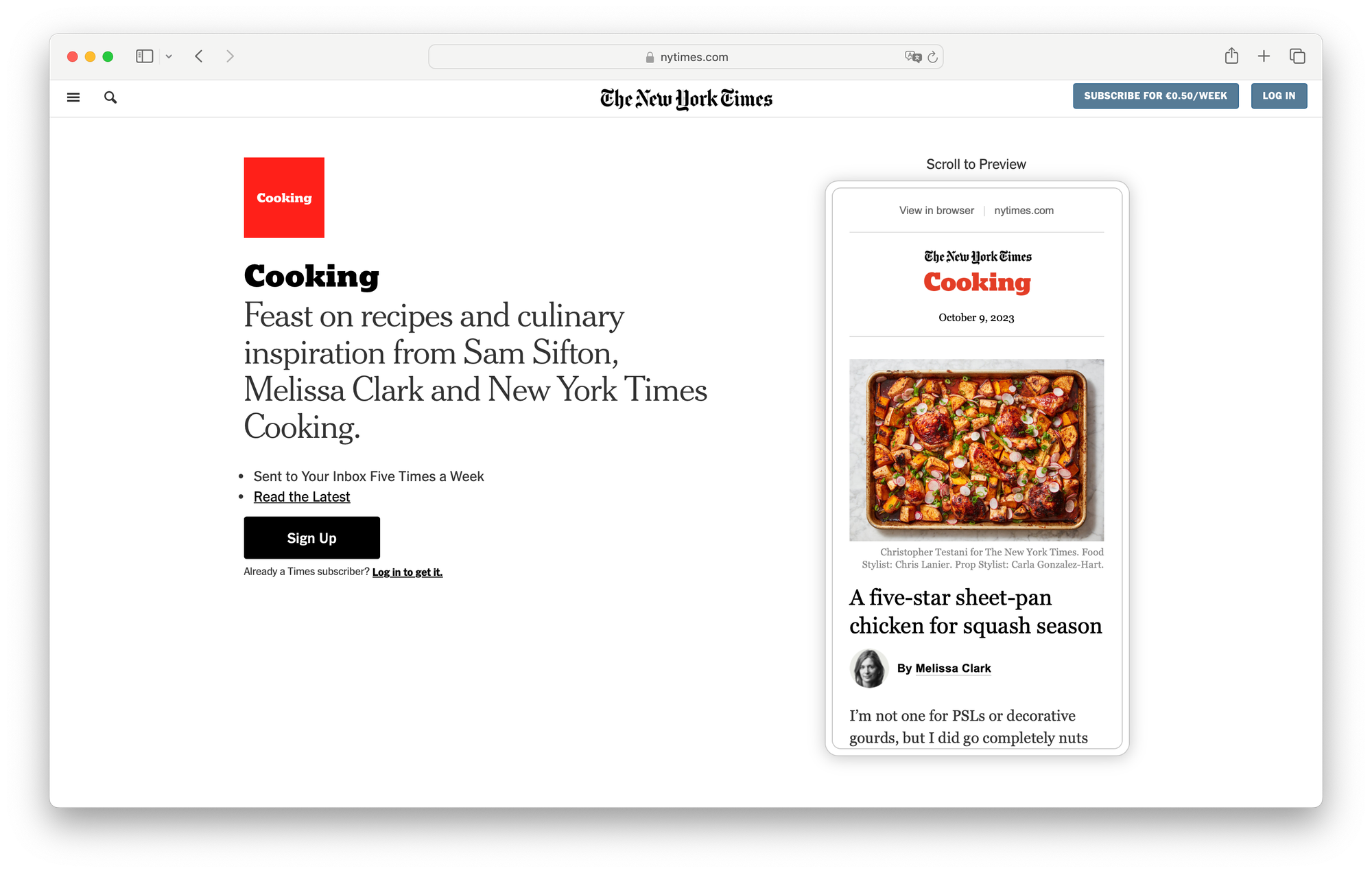
By the end of 2021, the New York Times had 8.8 million subscribers. Among them, 2.1 million subscribed exclusively to its online services. The NYT had notably diversified its brand by creating a cooking-focused offering in 2014. The American newspaper offers a paid subscription for $5 per month, centered notably around recipes: Cooking. In the third quarter of 2020, Cooking had nearly 600,000 paying subscribers. Cooking has acquisition potential for the newspaper—it targets audiences living in rural areas whereas digital subscribers to the New York Times come essentially from major metropolitan areas. The NYT also created a dedicated free newsletter, which became the NYT's second newsletter. Among its other offerings: the online shopping service Wirecutter or games like Wordle and The Athletic.
✏️ Use our educational resource
A practical document to implement the learning from this sheet, as well as the one dedicated to defining the business model. Click the link to automatically duplicate it [Google Doc]
🔎 Learn more
- Practical cases, advice… everything you need to know about designing and selling branded products.
- Not dependent on platforms: The importance of valuing your content to monetize your audience: read on Medium. [In English]
- Books, games, t-shirts, scarves… A few examples of products sold by the media to give yourself (or others) without restraint
- Diversification to support funding for its flagship editorial product? Experience report from Léry Jicquel, founder of Concentré Vélo
Before you go…
🛠 Finished reading and filling out this form? We'd love your feedback! Have a question or comment? Send us a message at [email protected]. Thank you for your help, the Médianes team.