


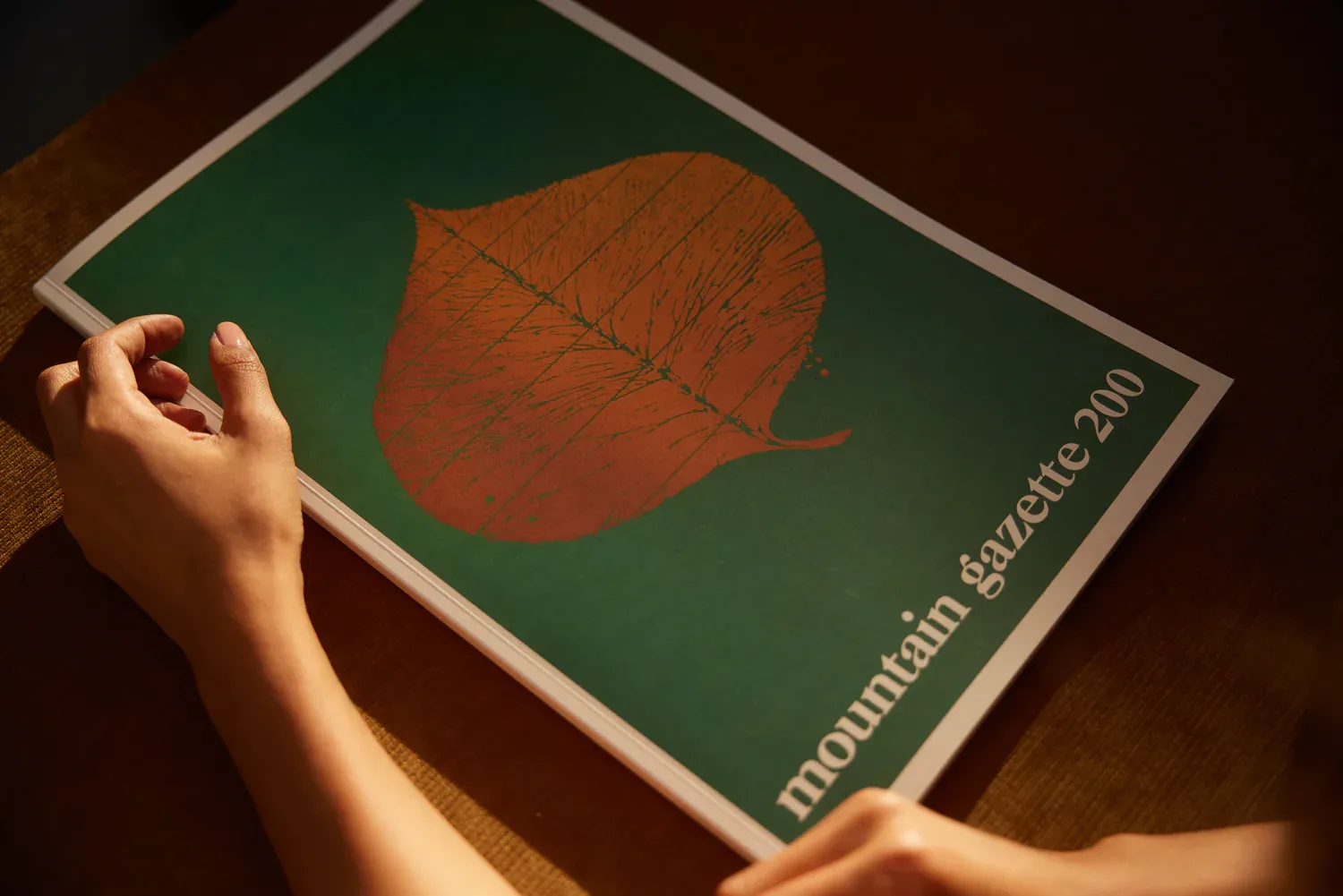
Sometimes there are publications worth reopening. While flipping through the early issues of the Mountain Gazette, published in the 1960s, Mike Rogge was struck by one thing: the treatment of outdoor culture has changed considerably. And for the better. "Today, when we talk about nature, we're inherently connected to the environment, climate change, and social issues. We have a responsibility to address these questions, which wasn't the case before," observes the journalist. Sometimes it's wise not to cling to certain habits of the past.
Mike Rogge lives in North Lake Tahoe, in the heart of nature, about two hundred kilometers from San Francisco. Initially a sports journalist specializing in mountain sports, he founded Verb Cabin, a company that produces films about outdoor culture. In January 2020, he acquired the Mountain Gazette.
Mountain Gazette, published twice a year, has a long history behind it. First launched in 1966, it initially brought together mountain enthusiasts – almost exclusively men – from across the United States and especially the West, but disappeared in the late 1970s because the publication struggled to find financial support. Relaunched in the early 2000s, as efforts fell short of its ambitions – to be economically viable – and lacking readers, the publication ceased once again in 2012.
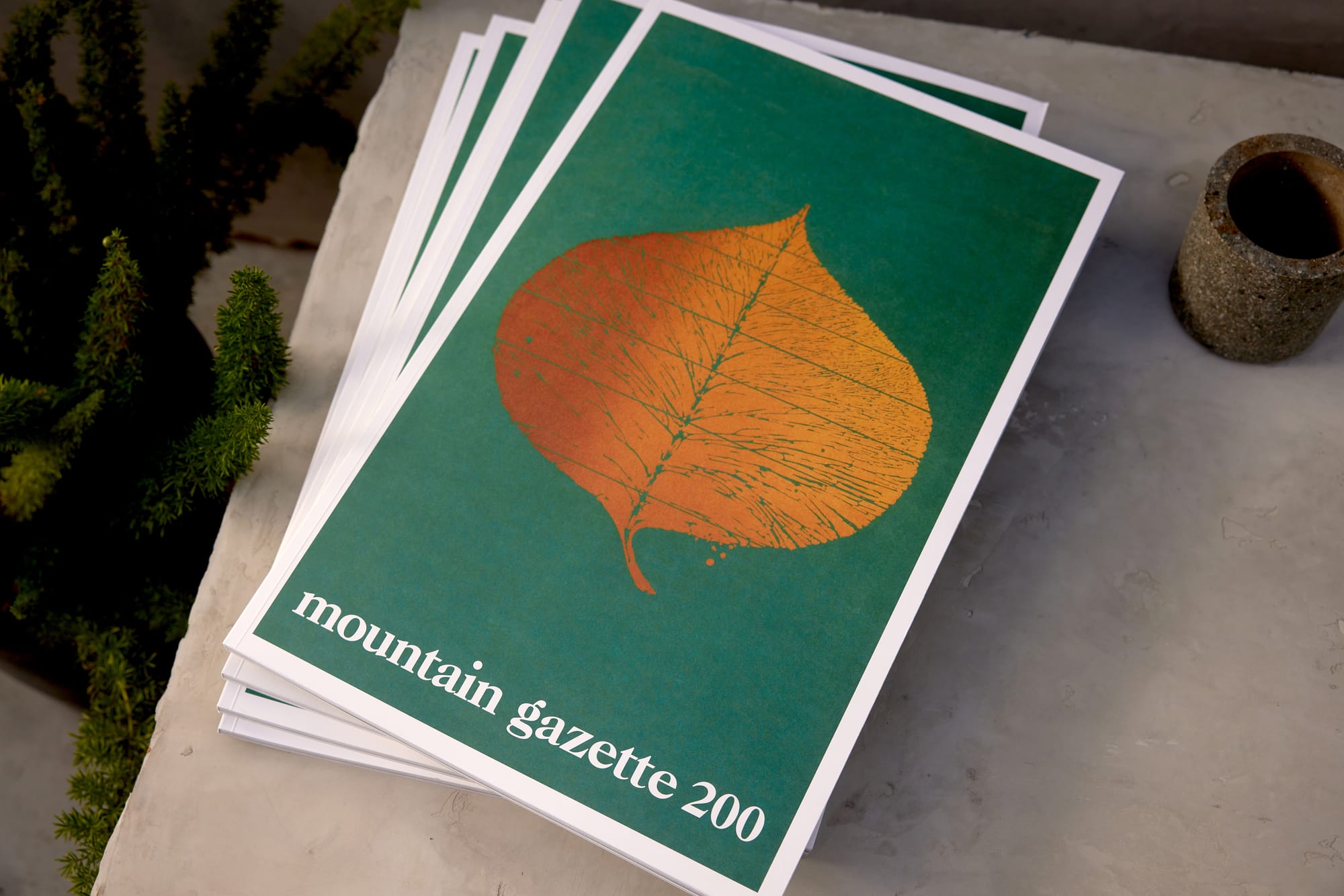
When Mike Rogge buys back the Mountain Gazette, his value proposition rests largely on the magazine's history: preserving its historical DNA while adapting to today's readers and achieving financial balance. From the start, surprisingly, he has no trouble finding subscribers: "We needed 1,000 subscriptions in the first year, and we got them in six weeks," he says happily. When he took over, he inherited the list of email addresses from former subscribers, which let him restart operations. "We used mailings and social media".
Talk about community rather than audience
The main observation was that the readership of the Mountain Gazette in the 1960s was predominantly white and male. « We wanted to broadly diversify it and we succeeded. Our current readers are in their thirties », notes Mike Rogge. To find out, the team surveyed its community to understand what they wanted. « A survey is a good way to know your audience and to know who reads us »
As the Membership Puzzle Project points out: "without audience research, you [media leaders, editor's note] will tend to answer questions about your audience's characteristics and what they want based on your organization's priorities or internal influences, or on assumptions about your audience". It therefore seems necessary to treat your readership as a kind of editorial compass.
At no point during the conversation does Mike Rogge use the word "audience." Instead, he uses "readers" or "community." This is no accident, since for him, the priority of the Mountain Gazette is to "connect people with each other." He also clarifies that there isn't a single community within the readership: "Certainly everyone shares one thing in common: they're all interested in outdoor culture, but some will have an environmental focus, while others might prefer investigative reporting, for example."
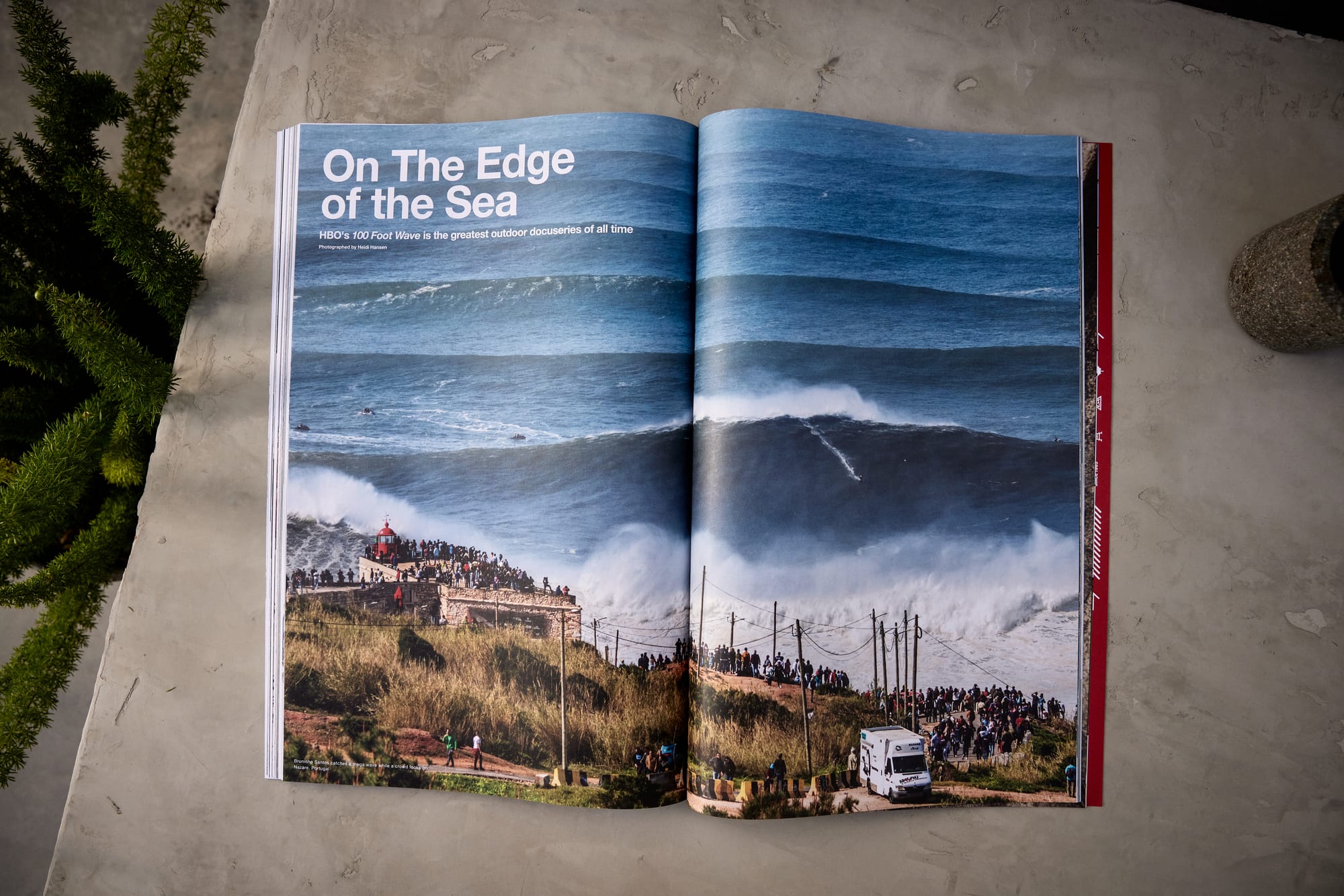
He then talks about "micro" or "sub-communities." The idea is that everyone finds something of value in a part of the magazine. These sub-communities are very helpful because they allow you to create a specific segment within the magazine. Although there's no point in catering to every sub-community, it can help to define certain parts of the editorial line. However, it remains important to prioritize these segments, especially when dealing with an independent media outlet like Mountain Gazette. It's a matter of resources.
Get involved and connect
This notion of community also echoes the distinction between public engagement and community engagement as Ariel Zirulnick notes in the Nieman Lab 2022 journalism predictions: public engagement "focuses on building habits, audience loyalty and revenue". Community engagement, meanwhile, "involves understanding the gaps in one's ecosystem and how the media outlet can fill those gaps". Thus, the public (or audience) carries a quantified connotation while community relates more to editorial transparency toward readers. It's about building a qualitative relationship with them, with the intention of engaging them, for example editorially, beyond a monetary link.
For Mike Rogge, this connection with the community also allows him to rebuild trust with readers, in a context where media are increasingly the subject of distrust and where the public is also more volatile. Another way to engage the public is to organize events. "I would very much like to do so, but the United States is very large and the Mountain Gazette team is scattered around the world."
In Italy, news site Will Media launched the Will Meets initiative during summer 2021, a kind of reader tour organized throughout the country, both in major cities and in more remote locations. 20 meetings were organized, bringing together 1,500 people in total. As editor-in-chief Francesco Zaffarano notes, these meetings were "an unprecedented opportunity to build a better relationship with our audience and make it more fruitful. It allowed us to show our readers that we care about their opinions and expectations […] it also proves to be a unique asset in developing our editorial strategy". The news site thus discovered that its audience's concerns were not always what the editorial team had imagined.
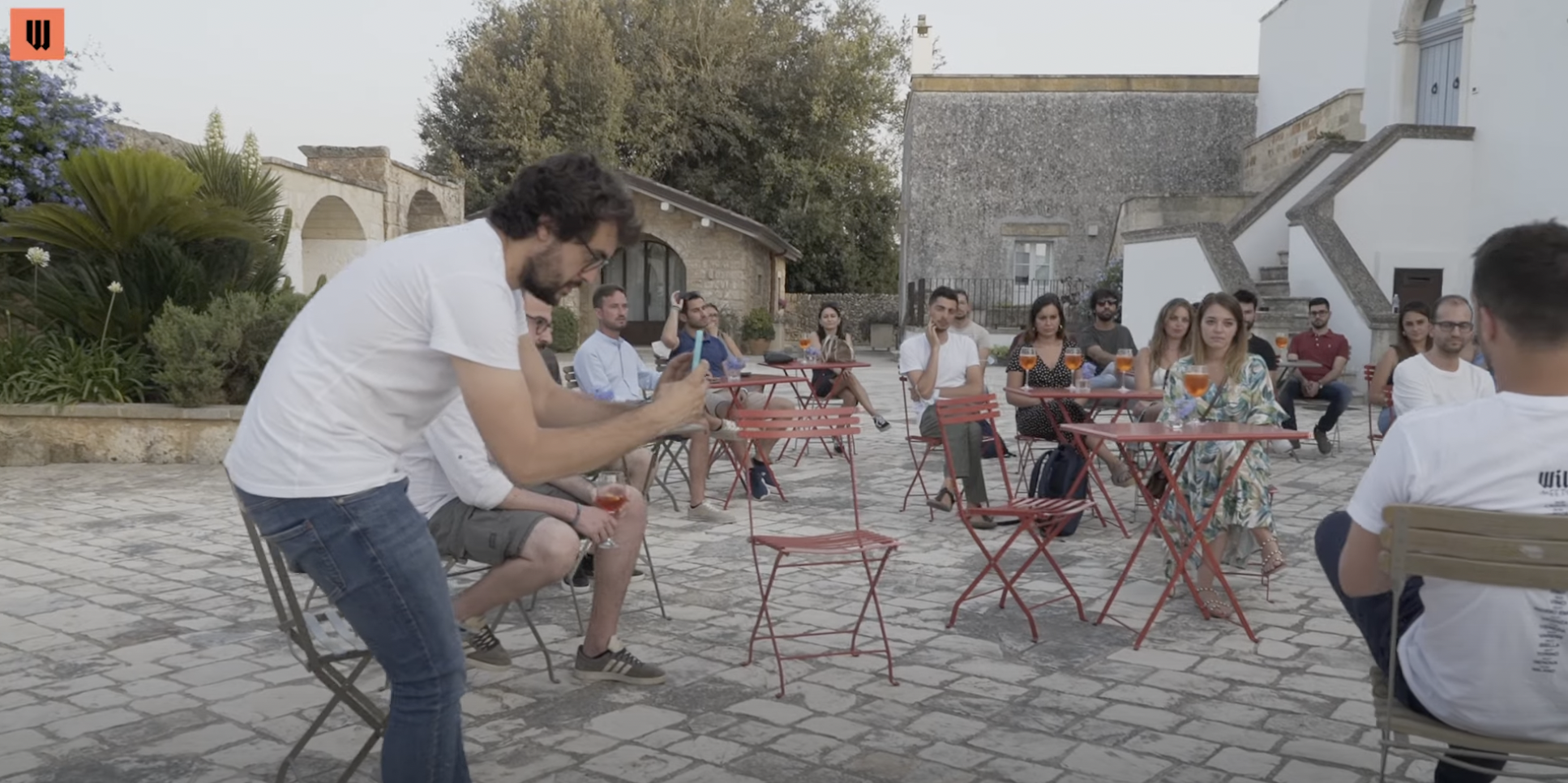
These events allow the media outlet to refocus its proposition, but also enable readers to meet one another who, in the particular case of the Mountain Gazette, share a passion for mountains. It's a way of fulfilling the initial promise: connecting people together.
Mike Rogge does not wish to disclose the number of subscribers to the Mountain Gazette. That said, he asserts that the magazine ranks in the top 5 most-read magazines in northern California and that the renewal rate is 91%. Issue 200, released in summer 2023, sold 12,000 copies, with about a hundred remaining in stock. An annual subscription costs 70 dollars.
Derivatives to diversify your portfolio
Note that no advertising appears in the magazine, on the website, or on the Mountain Gazette's social media. Yet a few pages in the magazine are dedicated to brands. Mike Rogge prefers to speak of "partnerships. Brands that interest me, that make sense in relation to our product".
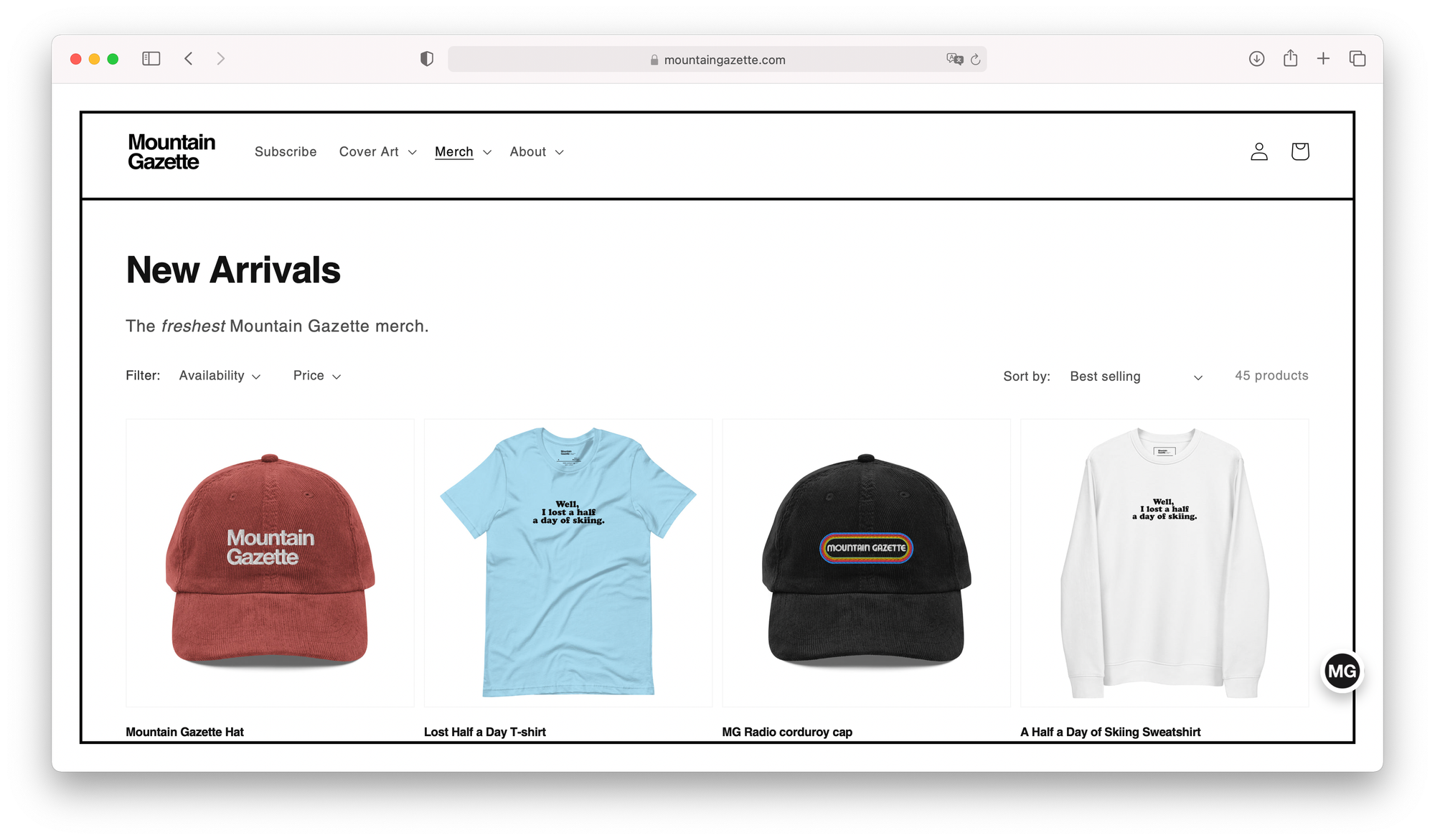
The publication also offers a significant range of branded merchandise, emblazoned with Mountain Gazette: mugs, t-shirts, beanies and caps. Since the magazine likes to build on its history, it's also possible to buy posters from the covers of past issues. These products don't generate much revenue—primarily because it's fun to do, the journalist explains. We've actually spent a bit too much time dreaming up these products with artists, given what they bring in. He advises thinking carefully about where to invest energy to keep a publication going, especially when you have a small team. Additionally, Mountain Gazette doesn't rely on donations. "We don't have a Patreon account, for example".
The team also doesn't focus its energy on social media. "Social media should be a showcase, but certainly not part of our journalism work". He refuses to publish articles on the website or on the Instagram account. The proposal relies entirely on the promise of print. Mike Rogge operates on the principle that Instagram should simply create desire, give a few clues about what the Mountain Gazette is.
« Respect your readers »
So that the print model doesn't appeal solely to an already highly curious audience of independent press seekers looking for alternative gems, Mike Rogge counters that "you have to respect your readers. Don't assume people are idiots the way some media outlets do. Outdoor activities are first and foremost about emotions and encounters. The goal is to capture all of that in a print magazine, a beautiful object." This way, readers find their passion in it above all, regardless of their relationship with the media.
This passion story is also generational. Sometimes it was grandfathers and fathers who read the first versions of the Mountain Gazette, and now it's the children who inherited this love of nature and are the magazine's new subscribers. The Mountain Gazette actually brings this transmission to life through its podcast Library to explore the archives of the magazine by interviewing people who have contributed, or are currently contributing to the magazine, about their relationship with the publication.
In France, there is a media outlet that also takes an interest in outdoor culture: Les Others. In 2020, they explained to Médianes the importance of their connection with their community. Les Others tested one of their projects with volunteers before officially launching the Recto Verso hiking maps. Now, thanks to the strength of this community, Recto Verso has even become a media outlet in its own right.
To go further
- In 2022, Médianes participated in Web2day discussing community and audience engagement alongside teams from Monde and New York Times.
- The Membership Puzzle Project offers a guide that provides insights into audience membership.
- The sale of merchandise can take many forms. hasMédianes found several examples for you.


