


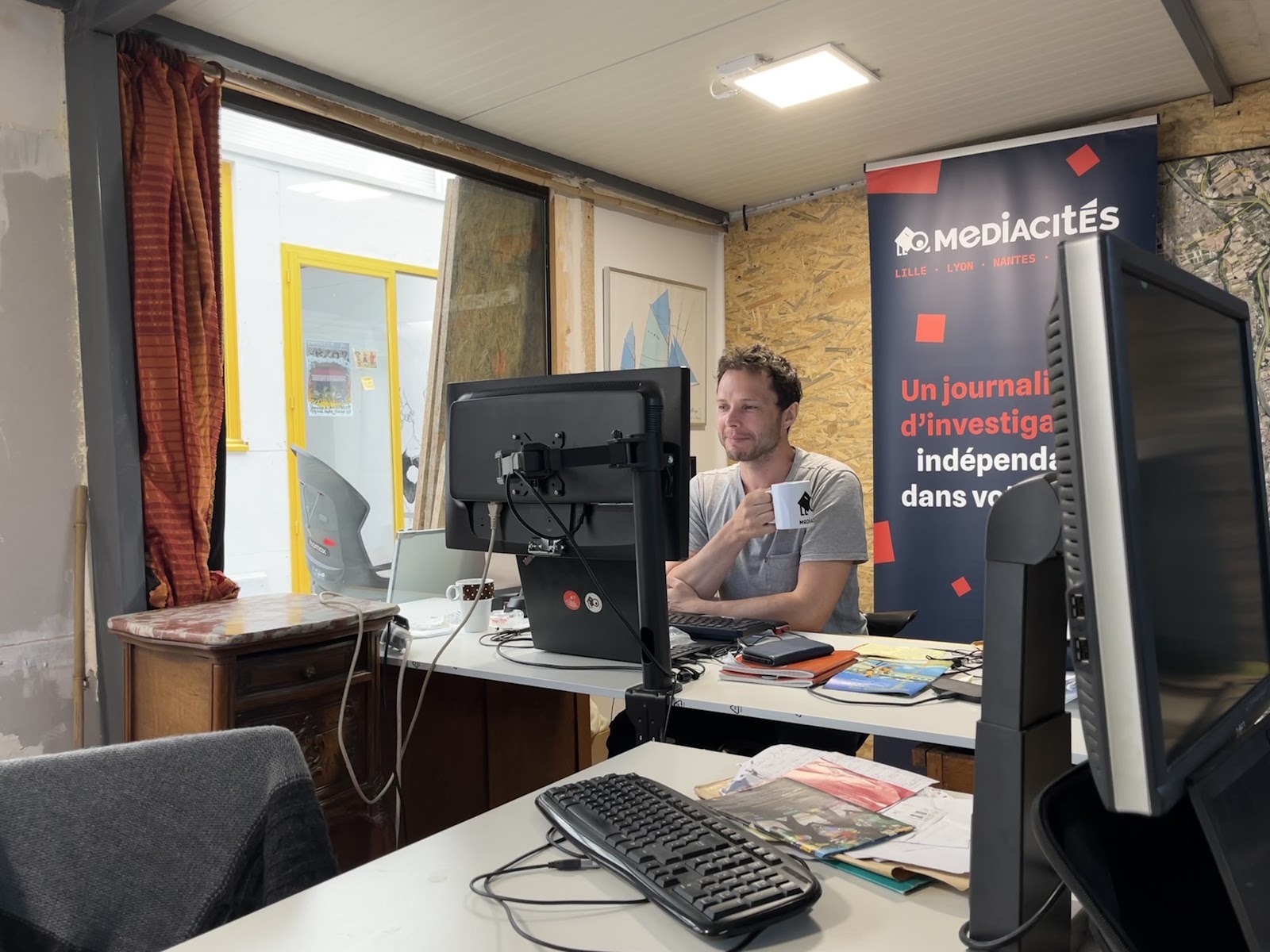
Since September, the Mediacités Toulouse team has set up shop in a space in the northern part of the city, shared by various businesses and associations, ranging from a bike repair shop to a journalists' collective. "Actually, it's a former gherkin factory," explains Gael Cérez, the editor-in-chief, settling into one of the office couches, "it's nice and the rent isn't too expensive". On one of the walls, a large map of the city and its surrounding suburbs. Soon, perhaps, they'll need to add the A69 to it. The highway project, which emerged in the early 2000s, is a central topic for the media.
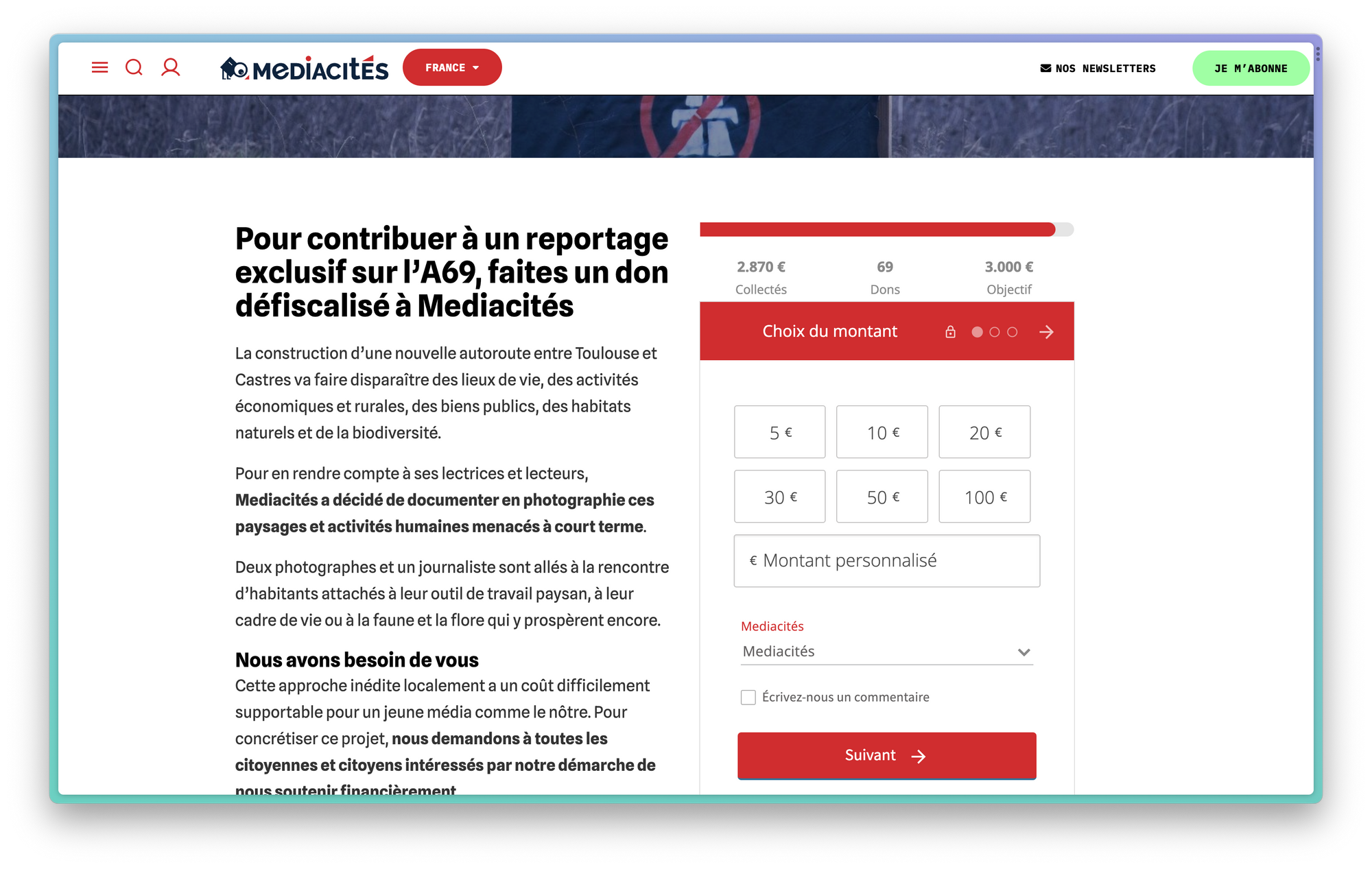
« It's a topic we've been covering since Mediacités was founded, says Gael Cérez. There was suddenly a lot of national press interest in the subject after Sainte-Soline. So we tried to find a different angle, by looking at what the A69 will destroy ». As the idea of producing a photo report on the subject takes shape, the question of funding quickly becomes pressing. Estimated budget: around 3000 euros for an initial installment, 5000 euros for a complete project. A significant investment for the media outlet, whose monthly budget for freelance contributors amounts to only 1500 euros gross, but which will allow three journalists to be paid, including two photographers, mobilized over several weeks. To make the project a reality, Gael Cérez imagines and launches a fundraising campaign, whose first milestone, set at 1500 euros, would allow the free publication of an initial series of photos. The campaign, launched at the end of June and with no set closing date, has raised just under 3000 euros. On July 10th, an initial series of around ten photos is published on the Mediacités website, accessible free of charge in exchange for an email address.
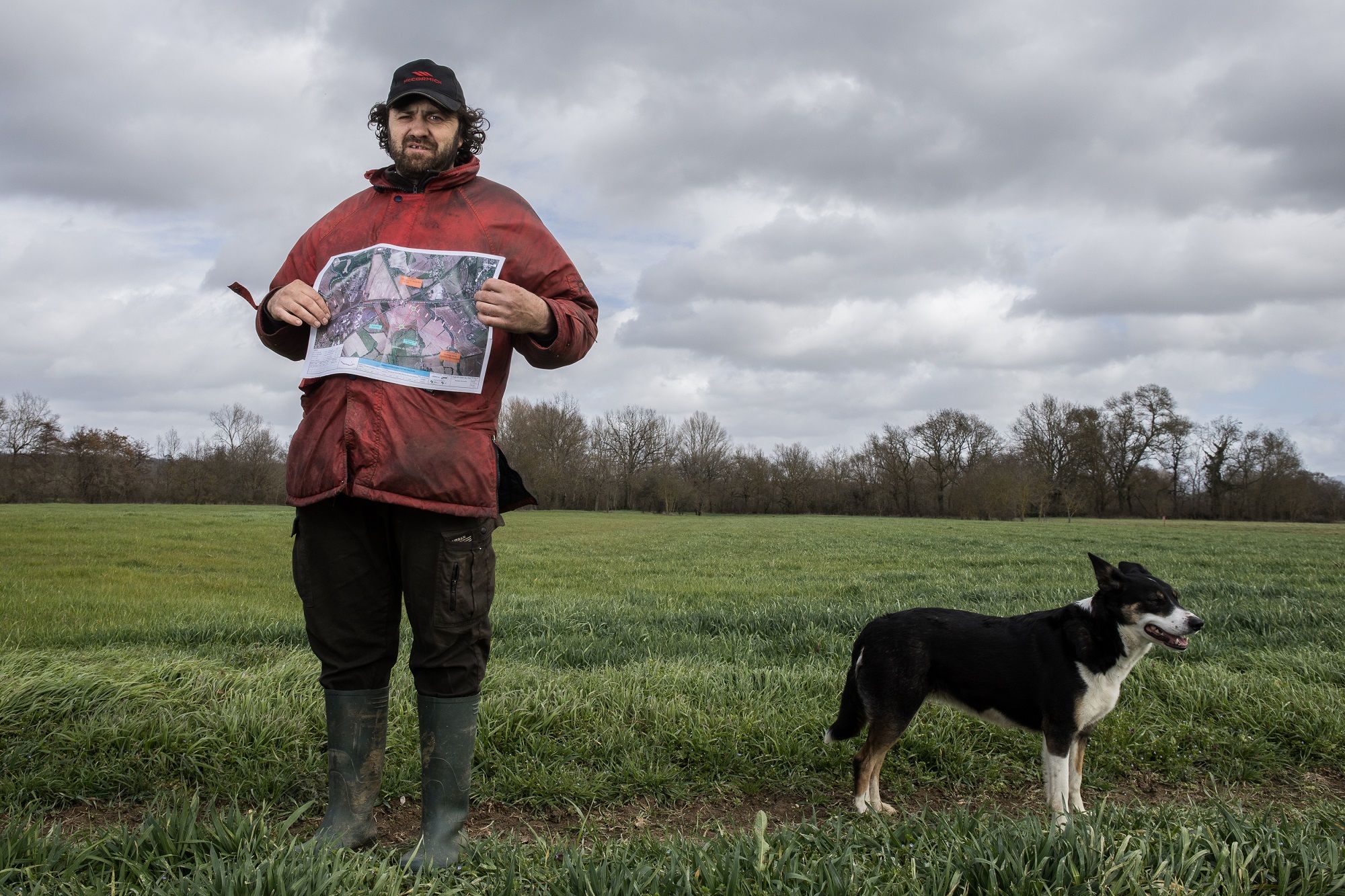
Frédéric Scheiber, independent photographer, is one of the journalists who contributed to the production of this report. Having previously worked for several media outlets including AFP in the region, the highway project is a subject he has already had the opportunity to cover and is familiar with.
In favor of the ongoing fundraising campaign, he hopes it can help demonstrate the difficulties the press faces and the costs this work entails: "We get everything for free, we read and scroll (…) I think it's good because it helps fund journalism, but it's also a bit sad that we've come to this".
A tightrope walker's number
Initially, the campaign displayed a final target of 10,000 euros. "In hindsight, it was a bit too ambitious," admits Gael Cérez with a nervous laugh, who in any case does not dispute the experimental nature of this operation: "It was a trial run for us". The media outlet had to juggle other fundraising campaigns, completed or upcoming. In 2022, searching for new subscribers, the media was running a campaign accompanied by the hashtag #ISaveMediacités. Behind several investigations, Mediacités must also turn to its supporters when the site faces defamation lawsuits, as was the case for example in Lyon. "We're going to launch another campaign in September," recalls Gael Cérez, "we're going to try to reach the same audience and we need to let people breathe a bit".
Mediacités, which relies mainly on a combination of subscriptions and donations, is nonetheless questioning the limits of this business model. "It's a comment that was made by members of our Friends Society: if you're already a subscriber, why pay again? (…) There's surely a limit, but we don't yet know where it is" explains the editor-in-chief, clarifying that it was important to present the project as a standalone product. Because this type of initiative, especially if it were to be repeated, could have the drawback of giving the impression of an incomplete media outlet, with articles available à la carte, which is precisely what Mediacités would prefer to avoid. "We really conceived and presented this project as a side project to our main offering," he adds, assuring that members and subscribers continue to support their campaigns, including the photo reportage on the A69, despite their previous investments.
The media also faced technical and administrative challenges, such as access difficulties to the donation space for non-subscriber readers and a transition within the marketing team that somewhat slowed the campaign. "We know that a donation campaign needs to be hammered home every day, but clearly we weren't in that mindset" concludes Gael Cérez.
Teachings
« As for donations, we haven't tallied things up yet but we're not reaching 3,000 euros right away, nor 5,000, he admits, but it's neither a complete failure nor a complete success, it's full of lessons (…) if we'd raised less than 1,500 euros that would have been truly disappointing ». This modest enthusiasm can be explained, according to him, by a low-key communications campaign run on a shoestring budget. Apart from taking part in an event in Toulouse alongside Extinction Rebellion as part of the campaign promotion, the team sent a few emails to its subscribers, posted messages on social media and issued a press release.

But by his own admission, the choice of photography as a medium could also explain a slow campaign start, "It shows in the article's readership numbers. Our readers aren't attached to that. But that doesn't change the fact that it had to be done" he admits. For now, organizing a similar initiative in the future remains up in the air and would require some adjustments: "It's not completely off the table either, but if we were to do it again we'd do something more hard-hitting".
" I'd certainly like to continue, Frédéric Scheiber says on his end, because it's a good subject and the testimonies are interesting ". He means it: a report of this kind funded by readers, working as close to the ground as possible, is certainly expensive for independent media but strengthens the bond with the public. A new fundraising appeal will also depend on how their subscriber numbers evolve. To date, Mediacités is still below its target of 8,000 subscribers.
EDITOR'S NOTE: At the time the interviews were conducted, Mediacités had raised a total of 1,810 euros. At the time of publication of this article, the amount raised has reached 2,870 euros.
To go further
This article is the first in a series on crowdfunding. While we prepare new articles and practical guides on the topic, you can consult
- our practical guide to choosing a business model for your media ;
- an interview on trends and practices in media crowdfunding campaigns ;
- Plan Cash's online media feedback on defining their business model.


