In this second episode of the second season of the Chemins podcast, we welcome Valentin Levetti, co-founder of the YouTube and Twitch channels Stupid Economics. For 7 years, the media has made economics accessible to over 273,000 subscribers on YouTube and 13,000 subscribers on Twitch. With no ads and no sponsorships, the media is now funded by monthly support from its audience. How can you accelerate an independent media channel on YouTube? How can you turn transparency into an asset in your business model?
Key points
- 2023 will be the year when Stupid Economics reaches break-even. The media had no economic ambitions originally. What were its three major milestones?
« The first turning point was when our videos started getting views. That's when we measured how much interest there was in our free educational work. The second was publishing a video about the Suez Canal. The video got 50,000 views, which was huge for us at the time. Media outlets picked up our information, the video caused an uproar in Egypt, and the Egyptian government even responded to it. That's when we realized YouTube could have real impact and broad reach. With our videos, we can reach people we wouldn't necessarily have reached through traditional news channels. That's when we decided to go all in. Then, in 2018, the CNC offered a grant for web creators. We applied and won the maximum amount of 50,000 euros, which allowed us to grow and fund an entire season of Stupid Economics. »
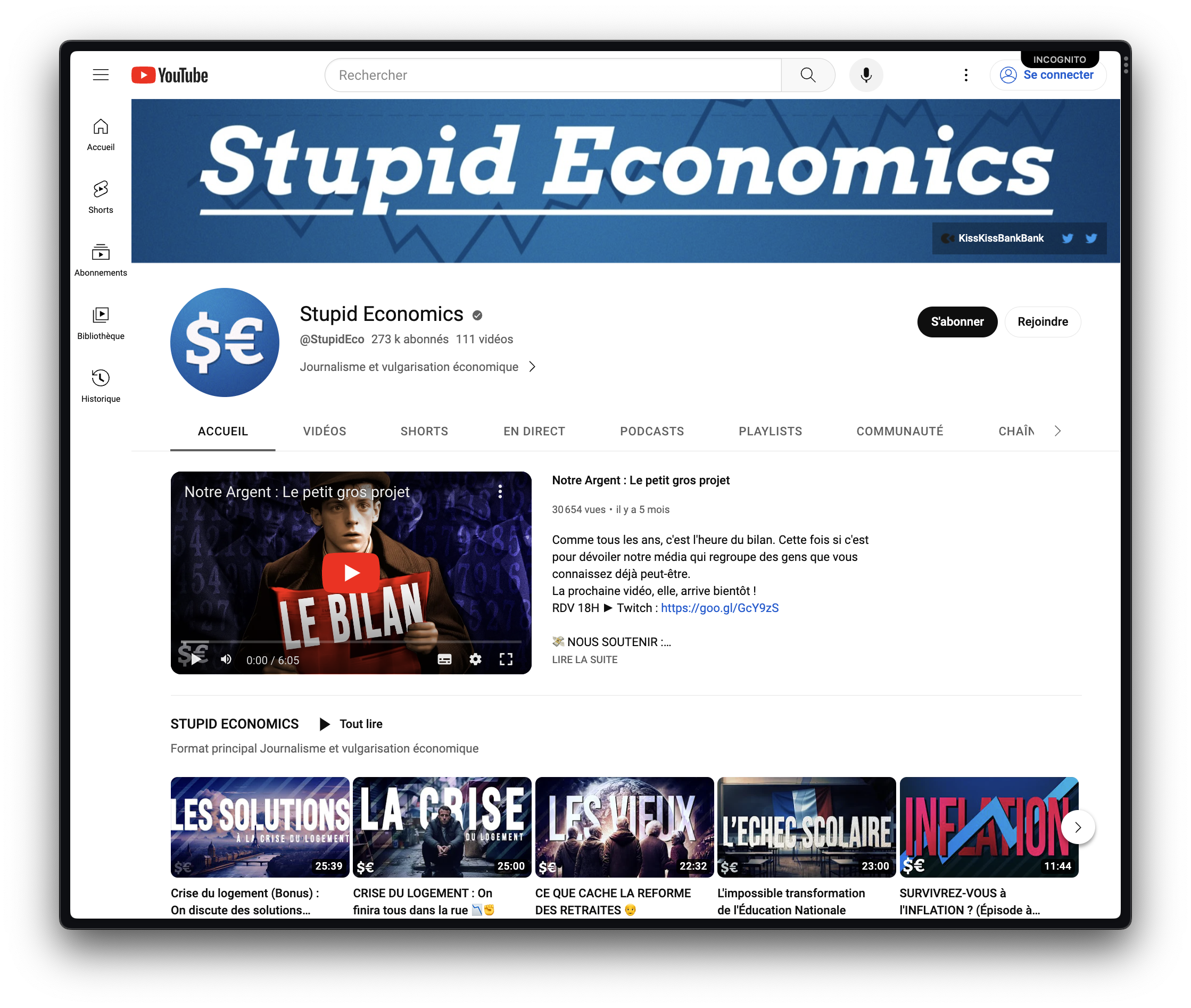
- Stupid Economics is a free media outlet funded by audience support. Subscriptions are optional and flexible: everyone can choose how much they want to give monthly or as a one-time contribution.
« We encourage people to make small monthly donations of €1 or €2. Our only marketing strategy is the idea that if 1% of subscribers fund the channel at €1 per month, it will stay free for the other 99%. We believe the public misunderstands economic issues because they're poorly informed and because these topics are presented very poorly. Creating a paid media outlet focused on economics would make all of this even less accessible. »
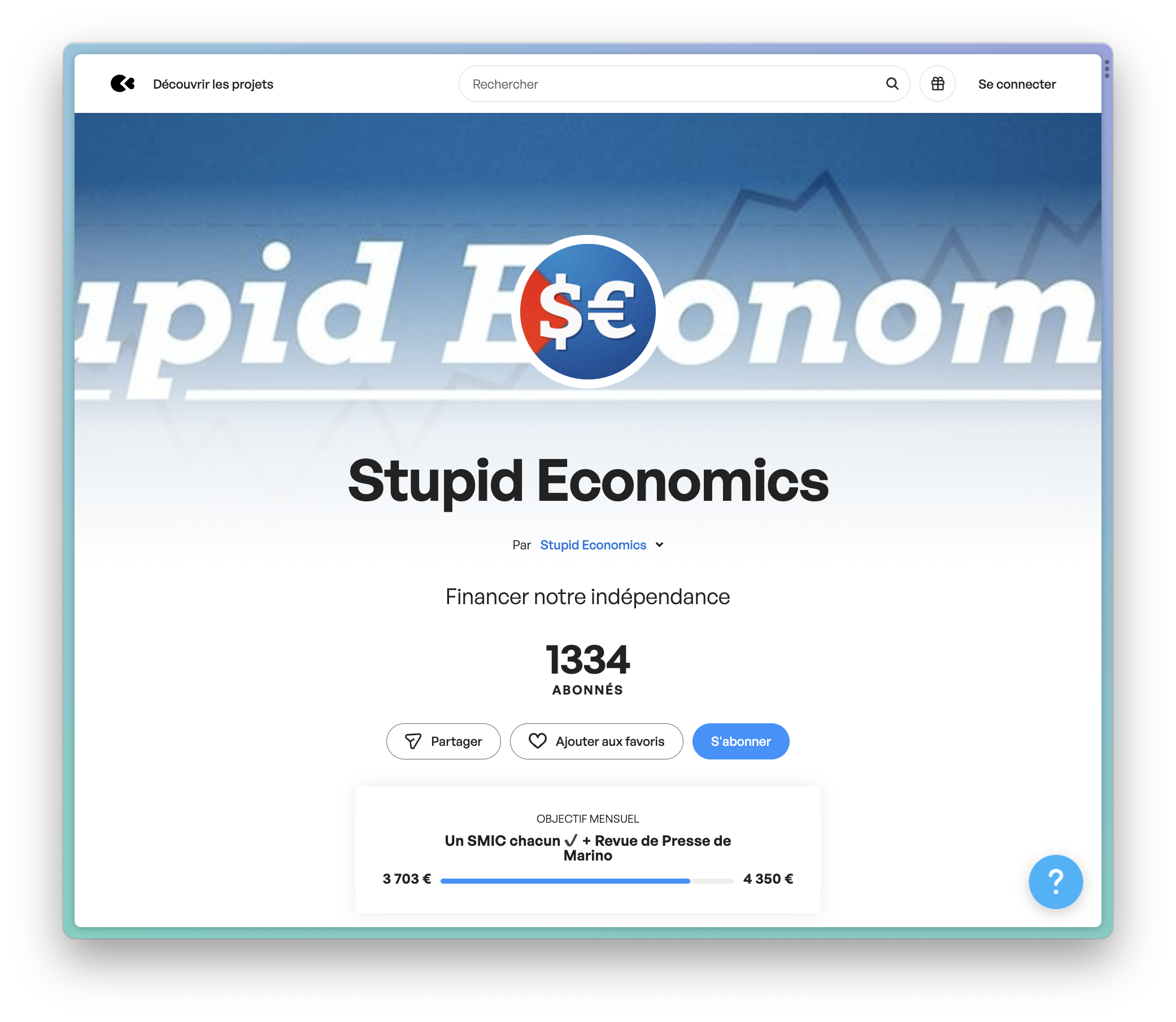
- The average support is €2.70 per month. These contributions represent €3,600 per month, which represents approximately 1,300 people.
« We're very happy about it. We prefer steady, ongoing support over large one-time donations that give us no certainty for the future. »
- Stupid Economics recently had to switch to the KissKissBankBank funding platform following the sudden closure of Utip – the platform the media outlet had been using until then. A real stock market crash. Yet the media suffered no losses.
« People completed the transfer in just fifteen days. We're always worried that among the people funding us, some might forget they're giving us a euro a month. That's when we realize how much people care about the work we do: these subscribers mobilize themselves and are always there. We've even had to send them emails asking them not to increase their support, because the emergency creates an unintended marketing effect where people think we'll lose money with Utip shutting down. We have real stability, and that's extremely reassuring. »
- Over the course of the year, YouTube pays less than 3000 euros to Stupid Economics for ads automatically placed by the platform at the beginning of videos, which is roughly 6% of the media's revenue.
« We never decide which ads will be shown in pre-roll on our videos. So we thought about removing these ads. But when you choose not to monetize your videos, YouTube gives you less visibility. Since there's no conflict of interest between our content and the ads that run, we prefer to keep this source of revenue as a year-end bonus. It's the only advertising we accept. »
- The content of Stupid Economics will never be sponsored, on the other hand.
« As journalists, we refuse to use our voice to promote a brand. And if it's not the journalist who says it, that creates another problem. The same analogy applies to the media outlet. It's a basic principle: there must be a very clear separation between editorial and advertising. In our case, that's impossible. And besides, we have no desire to sell products to our audience. »
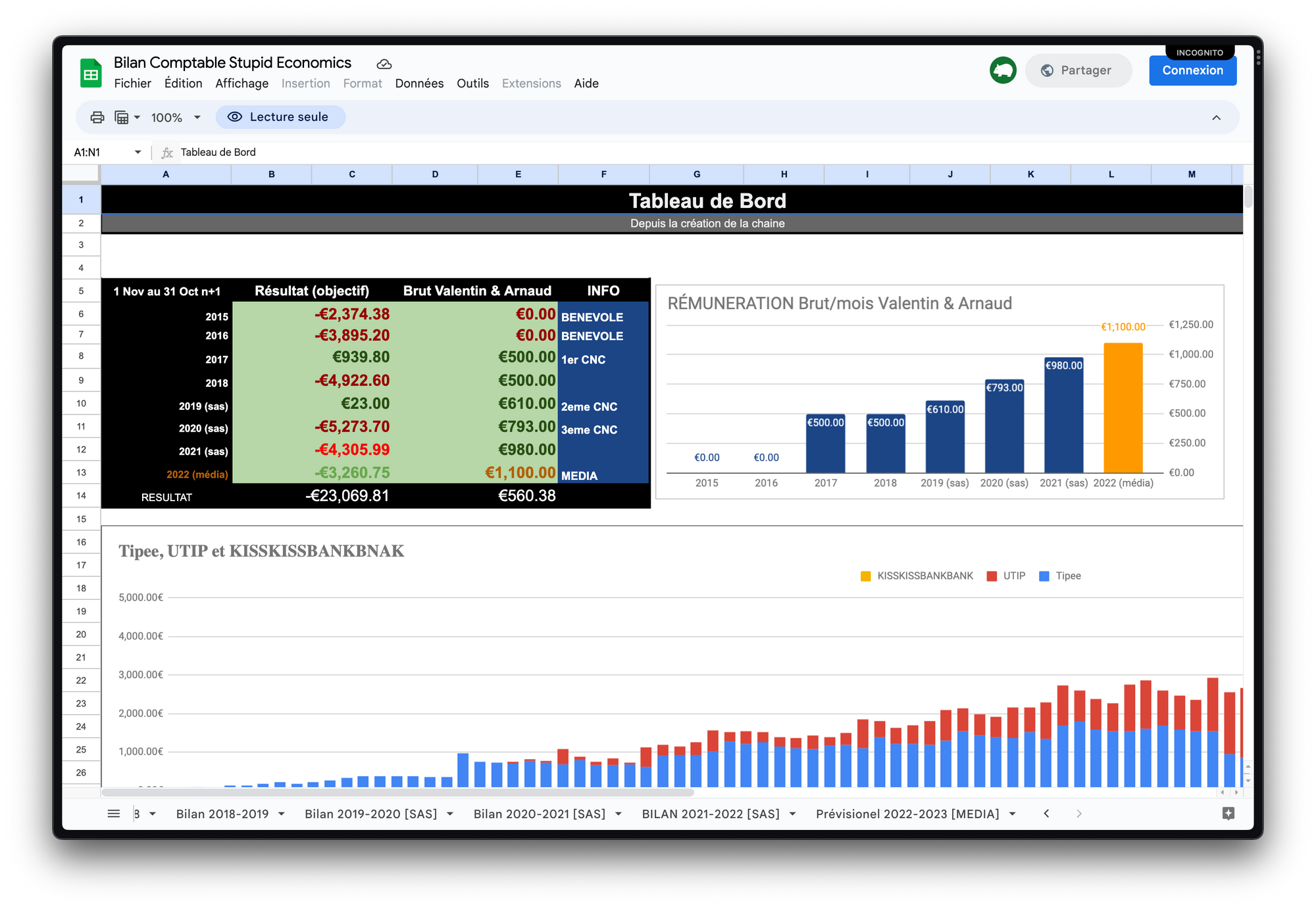
- Since its creation seven years ago, the media outlet publishes its financial statements at the end of each year, its budget forecast for the following year, and an explanatory video on its channel.
« This is part of our vision: since our audience funds our media, they should know what we do with their money. And it helps clarify a question that matters—how much does it cost to make videos on YouTube? What are the expenses? What does a content creator's accounting look like? Editing software, licenses for music and images used, legal fees,… This lets us demonstrate this to our audience. »
- The KissKissBankBank page for Stupid Economics makes clear that all volunteer work is unacceptable and that the goal is to ensure the team's sustainability. At the same time, surveys are highlighting this question of volunteering and management within independent media.
« The end never justifies the means. The only people who can take risks on a media outlet must be shareholders and do so with full knowledge of the facts. Conversely, all people who are subordinates — journalists, technicians, editors — must be paid and benefit from collective agreements. A business rests on its human resources. We must take care of them. »
To go further
- Find all episodes of season 2 of our Chemins podcast dedicated to accelerating a media project, featuring Cécile Sourd (Mediapart), Jean-Christophe Boulanger (Contexte), Lauren Boudard (Climax), Frédéric Desiles (Alternatives Économiques), Emmanuelle Josse (La Déferlante) and Valentin Levetti (Stupid Economics).
- Marsactu, Contexte, The Markup, read our article on transparency issues in the media and on the importance of acknowledging mistakes with cases from Monde, Arrêt sur images and the New York Times.
- To learn how to create your media project in five steps, consult our practical guides.