


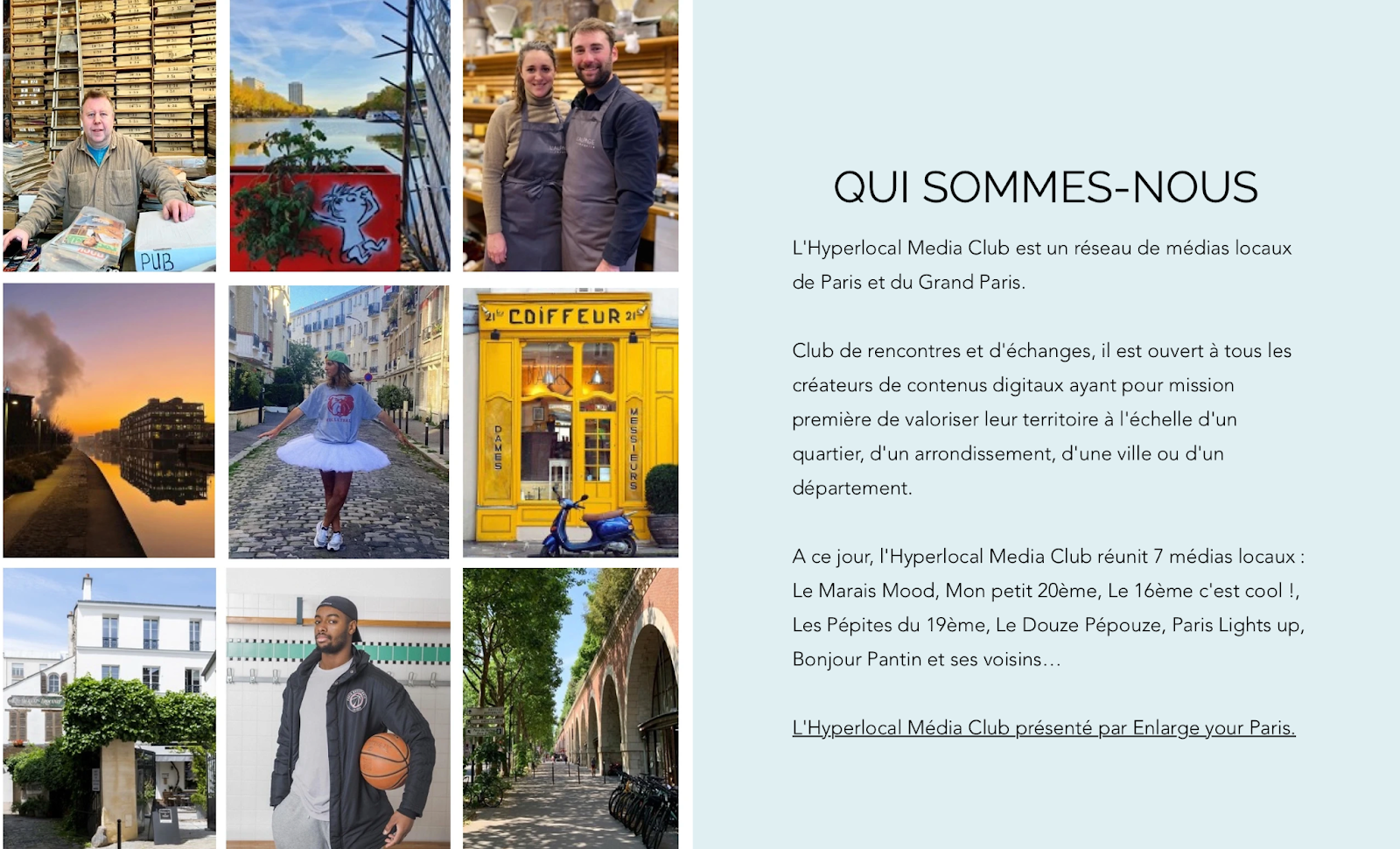
It's 11 a.m. in Bagnolet, east of Paris, when members of the Hyperlocal Média Club begin settling into a co-working space rented for the occasion. Coffee cup in hand, topics are already flying around the meeting table: transport, food, local politics. All of them have created a local media outlet in Paris or its surroundings and have chosen to come together, exchange ideas and share their experiences. The structure is still in its infancy, doesn't yet have official status and is only just beginning to organize itself. "Actually, this is the first time we've gotten together like this," Pierre Villetard admits with a smile. "Before, we'd meet up in a bar over a drink. It was nice, but at least now it feels a bit more professional." A consultant in the advertising sales sector, he also co-founded Bonjour Pantin, a media outlet covering the city's news and local tips. With Pauline Pellissier, founder of Mon Petit 20e, they jointly serve as spokespersons for this young collective of seven members, of which only Paris Lights Up and Mon Petit 20e have so far obtained press company status. For the most part, they work alone on developing their media outlets, which focus on "lifestyle" topics (food, local tips, education, events), and have advertising as their main source of income. Founded last year, the collective is now beginning to make a name for itself with advertisers and local institutions.
Although such initiatives remain rare in France, they are already experiencing success across the Atlantic. In New Jersey, in 2020, several local media outlets chose to establish a network to "meet information needs for underserved communities". Since 2022, in Delaware, a coalition of media organizations has been working to pool their efforts in order to address "polarizing" topics "by equipping the community with nonpartisan and independent data, information and ideas". Last year, the city of Minneapolis also saw the creation of a group of six media outlets: Twin Cities Media Group. One of its members, Charlie Rybak, is the founder of Southwest Voices, an online news outlet he founded with the aim of filling the void left by the closure of the local newspaper, Southwest Journal, which was forced to shut down in 2020 after a year upended by Covid-19. "At first, we just met with other media founders," Charlie recalls. Through these conversations, we realized that a lot of people were facing the same challenges. That's when we decided to sit down together and talk about it".
Reclaim advertising
During these exchanges, one topic stands out more than the others: advertising. From now on, part of this activity is delegated to an employee hired by the collective, who handles relations between media outlets and advertisers. The collective offers advertisers a "package" starting at $2,500. Since the amount is shared equally among members, each media outlet implements the equivalent of $500 in advertising on its website or in its newsletter. A system that requires some organization but that proves effective, according to Charlie, who claims their revenues have increased since it was implemented.
Beyond simply funding their activities, the initiative launched by these local media outlets also aims to bypass entities such as Google and Facebook. As a study by the London School of Economics and Political Science, “Hyperlocal News: Beyond the Hype,” points out, while local advertising promised “significant financial returns for local news sites,” the reality is quite different. According to the study’s author, Carina Tenor, “most of this local revenue went to the digital giants Facebook and Google.” This observation is echoed by Jessica Armbruster of Rocket in a blog post announcing her collaboration with Twin Cities Media Group: “As business owners, we know all too well that feeling you get after buying ads on Facebook and Google—the two mega-corporations that have swallowed up local newsrooms’ advertising budgets over the past decade. You ask yourself: ‘Did I just throw my money down the drain? Did I just throw my hard-earned money into some kind of digital black hole?’”
On the Hyperlocal Média Club side, the question of advertising hasn't been settled yet, but it takes up part of the discussion about the collective's role and future. Pierre Villetard is planning to set up a system similar to an advertising agency with a contact person who will liaise with advertisers and manage several advertising tools. For now, it's still in development, because each media outlet is at a different stage of maturity when it comes to advertising and needs to see itself reflected in the advertiser.
Based on the free online information model, advertising plays an important role in funding their activity, whether in the form of banners… or even sponsored content.
Around the table, everyone agrees that this commercial aspect is necessary for the sustainability of their media outlets. While some have professional experience in communications and approach this part of their activities with enthusiasm, others hope to spend less time on it in the future. Pauline Pellissier and Kathia Barillot (Le Marais Mood) are among those who had experience in journalism before launching their project. For Pauline, "my real problem as a journalist, having attended journalism school and not business school, is that suddenly I have to be both the sales manager of my media outlet and the editor-in-chief of my media outlet". Simon Thollot, founder of Paris Lights Up, agrees. Absent from the meeting and reached by phone, he admits with a laugh that this is not "the part of the job that [i]nterests me the most […] it's a lot of time for not necessarily many results. Having a shared advertising service could be interesting".
Imagine collaborative journalism
Members of the Hyperlocal Média Club take pride in the diversity of backgrounds each person brings and see in this variety an opportunity to share skills and experience. For now, collaborative article writing is not at the heart of the project. For the collective, the structure remains primarily an identity specific to their relationships with local authorities and advertisers, even if members don't rule out the possibility of creating a shared Instagram page where they could post their stories. "We didn't see it as a media outlet", notes Raphaële Bortolin, founder of Pépites du 19ème. That said, certain topics did receive joint coverage when they had the potential to interest multiple readerships. "We did it for the supermarket comparison, Pauline recalls, it was Pierre's idea, at the beginning of inflation".
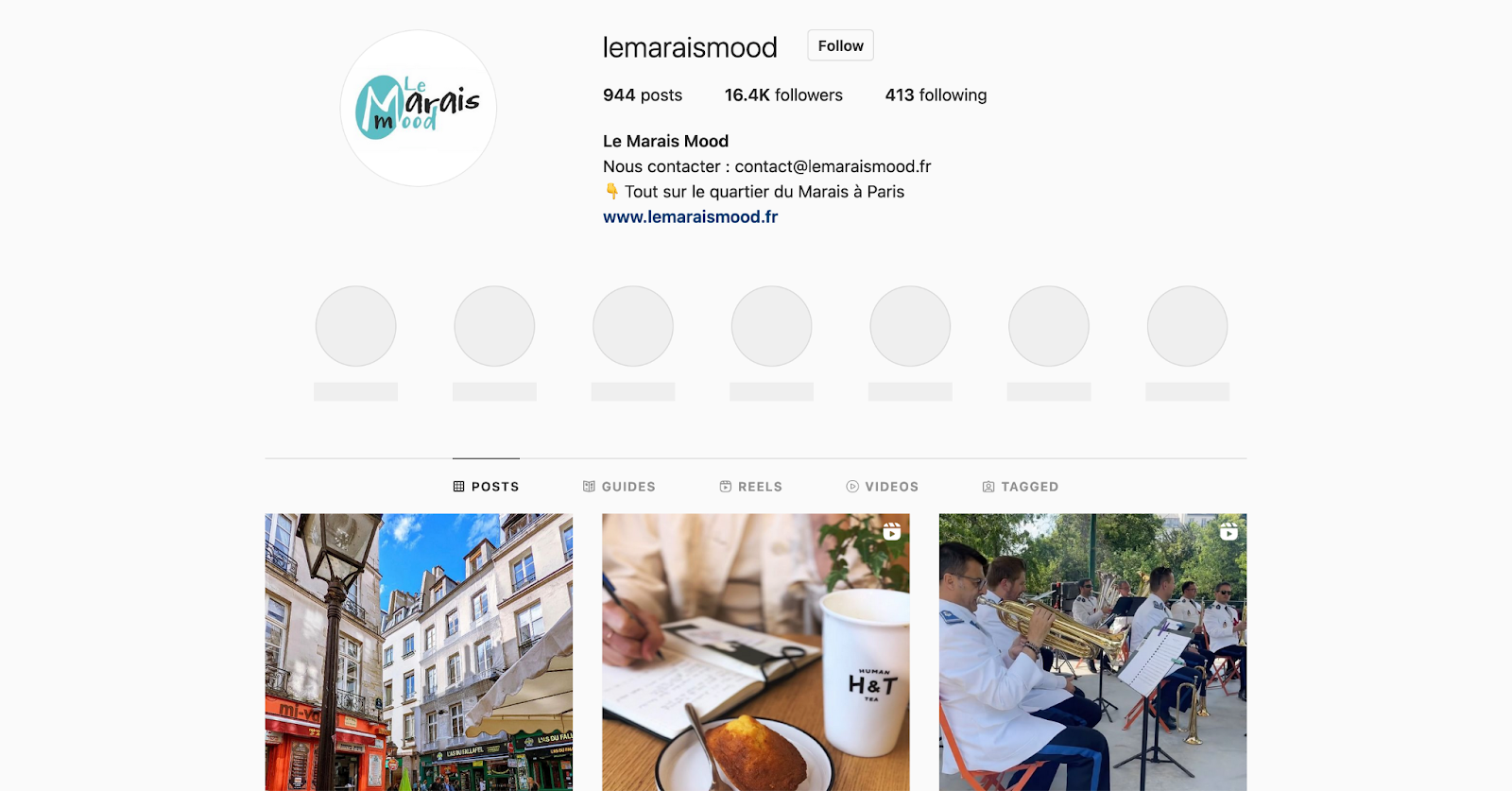
Beyond shared content, the Hyperlocal Média Club may be led to work with larger newsrooms, clarifies Pierre Villetard: "We're in talks with France Bleu Paris to have a weekly slot for hyperlocal news updates: one day covering the 16th, one day the 19th, one day the Marais, etc".
Finance new projects
While financial stability is currently also a central concern for Twin Cities Media Group, collaborative journalism remains the next step for Charlie. "If we take care of finances first, then we'll be able to develop new journalism projects because we'll have put in place a certain number of additional resources that can fund the time to dedicate to that".
When asked about potential collaborations with other major media outlets, he shows enthusiasm: « We'd like to have more partners in the future to gain strength and resources, to help more media outlets… As long as we keep doing this, we'll have more and more opportunities. I've seen what the BBC does and I find it very exciting! ». Since 2017, the British broadcasting group has launched an initiative, called Local News Initiative, aimed according to him at « supporting public service journalism, supporting local democracy and improving journalism skills ». 150 organizations have joined the scheme, which for example provides local journalists with training in data journalism or videos produced in the regions by the BBC. A model that appeals to Charlie: « That's the future […] Collaborative journalism will help us make our media more resilient. »
Editor's note: Médianes, the studio, supported projects from the Mediastart incubator, including Mon Petit 20e which was a winner. Its founder, Pauline Pellissier, also contributed to the issue of Pays dedicated to Belleville, a publication co-founded by part of the Médianes team.


