



Trust in media has reached historically low levels. We've heard this repeatedly through various reports and surveys. Rather than focusing exclusively on combating misinformation or adopting ephemeral formats, we believe it's time to turn toward concrete approaches that have already proven themselves within independent and committed media outlets. This article proposes 10 essential recommendations for independent press, and highlights key principles such as inclusivity, accessibility, and transparency. The goal? To work toward building horizons better aligned with society's needs and to rebuild connections with audiences.
1. Playing the transparency card
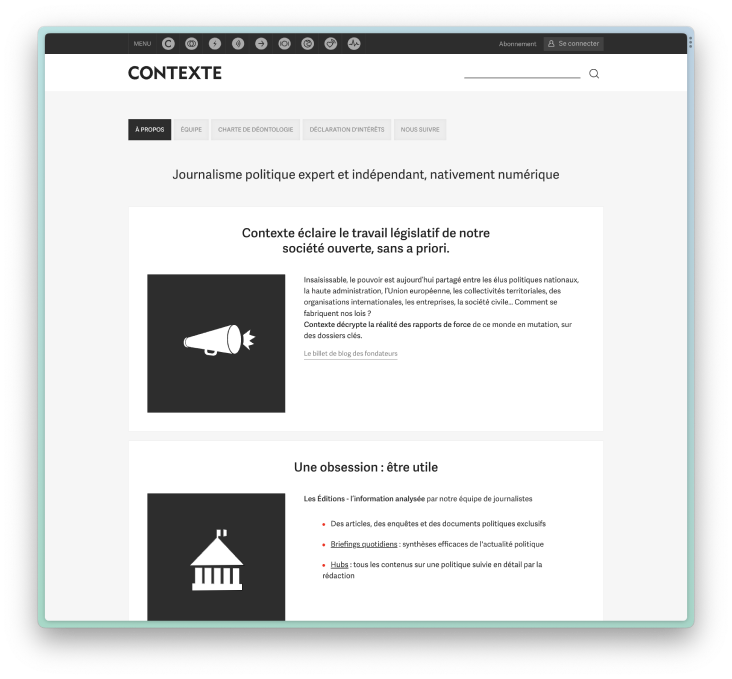
To show its credentials to readers, Contexte has a code of ethics and publishes the media's interest declarations as well as the stake held by each shareholder. Contexte also shares, through its blog and the voice of its CEO, Jean-Christophe Boulanger, the company's results.
Why is it interesting?
Betting on transparency is a winning strategic choice in multiple ways. In our wildest dreams, a media outlet would be able to clearly present its journalists' declarations of interest and explain their editorial decisions, their working methods, and even their past errors. This approach stimulates engagement and fosters a relationship of trust between media and their audience.
To go further
On Médianes:
- Against distrust, transparency is key, notes Alice Antheaume, executive director of the School of Journalism at Sciences Po and co-author of the Reuters Institute's 2023 Digital News Report.
- The emergence of generative AI has highlighted the need to establish rules for the use of these technologies in newsrooms. Here are a few approaches to writing your own charter on AI use.
- By acknowledging your mistakes transparently, you strengthen your audience's trust and demonstrate your commitment to ethical practices. A few examples of media outlets that corrected their errors.
- Interest declarations and company account publications: Jean-Christophe Boulanger discusses Contexte's strategy on the mic with Marine Slavitch in our Chemins podcast.
Seen elsewhere:
- Jean Massiet details the funding of the Backseat show broadcast on Twitch.
- The FAQ for Arrêt sur images aims to answer readers about behind the scenes of the media.
- This transparency portal explains the editorial choices of Norwegian newspaper Verdens Gang to readers.
- StreetPres releases a detailed impact report each year to assess what the media accomplished that year.
- Serge Michel, founder of Heidi.news, takes the floor to give an update on the media outlet.
- Enough! speaks about its difficulties meeting the objectives of its annual fundraising campaign.
2. Pool your resources
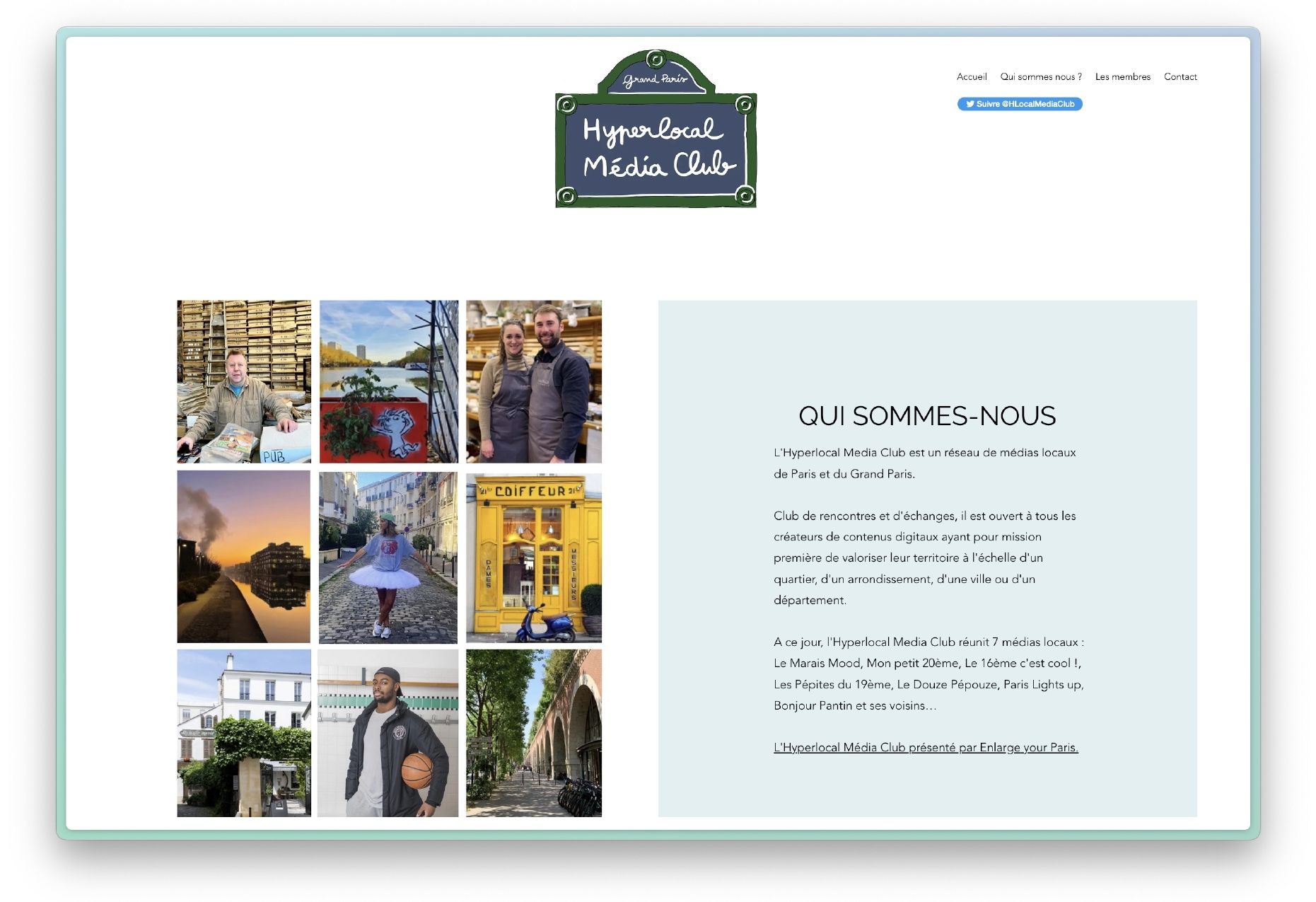
Last year, the city of Minneapolis witnessed the birth of a consortium bringing together six local media outlets, named Twin Cities Media Group. Among the initiatives being considered, there is notably a unique group advertising purchase that allows each member media to reduce costs. Meanwhile, the Hyperlocal Média Club, a network of Parisian local media, prefers to focus on collective exchange sessions to grow together.
Why is it interesting?
By pooling their resources, these media outlets gain the ability to reach new audiences and jointly develop new formats, while reducing their operating costs. In a particularly challenging context for the press, marked by rising paper costs linked to inflation and the challenges posed by the Covid-19 pandemic, the sharing of resources appears as a worthwhile initiative that makes media more resilient in the face of today's challenges.
To go further
On Médianes:
Serving limited geographic areas, some media outlets practice what's known as "hyperlocal" journalism, staying as close to the ground as possible. Some now choose to pool their efforts, for practical, economic, or journalistic reasons.
- On the occasion of major events like the presidential election, certain newsrooms team up to build editorial projects together. A behind-the-scenes look at the "alternative election night coverage" with Loopsider and StreetPress.
- With around forty media professionals, the Itinéraire Bis collective aims to encourage the press to change its practices to account for the consequences of climate change in their current coverage of travel and tourism.
Seen elsewhere:
- A spotlight on Ping, a hyperlocal information distribution platform that helps independent publishers get paid for their content.
- French and European media outlets, including StreetPress and ereb are members of the Sphera network to produce new European stories, closer to people, closer to young audiences.
3. Improve your management practices
Mediapart has for some time strengthened its HR department and practices. A strategy more than welcome for an investigative and revelatory media outlet that must be, more than ever, consistent. Agreements on working hours, self-reporting time management tools, charters on the right to disconnect, remote work… With its status as a reference in the independent media ecosystem, the outlet is today setting an example.
Why is it interesting?
Because management is often viewed as the weak point in news organizations. The issue also has another dimension, equally crucial, regarding emerging media, where employee overinvestment is still too often treated as the norm. To foster the success and sustainability of emerging media, while also ensuring the well-being of professionals who work there, the key is management.
The quote: « The end never justifies the means. Only people who can take risks on a media outlet should be shareholders and do so with full knowledge of the consequences. On the other hand, all people in subordinate positions — journalists, technicians, editors — must be paid and benefit from collective bargaining agreements. A company is built on its human resources. We must take care of them. » Valentin Levetti, co-founder of the online media outlet Stupid Economics, speaking to Marine Slavitch on our podcast Chemins.
To go further
On Médianes:
- How can we be as demanding in management as we are in journalism? Cécile Sourd, Chief Executive Officer of Mediapart, answers Marine Slavitch's questions in our Chemins podcast.
- Whether you're about to welcome an intern or a financial director, have you taken time to think through the key steps to facilitate your new hires' onboarding? The keys to creating a smooth onboarding experience.
- Since 2020, the Médianes project has been developed remotely, and the team has gradually grown. We wanted to organize our work according to a few principles that we're sharing with you today. Here is our own case study.
- For nearly three years now, the Médianes team has been experimenting with and using various tools in their daily work. We want to share these with you, perhaps to give you ideas or spark discussion.
Seen elsewhere:
- At Contexte, a culture of subsidiarity is implemented, not delegation. In other words, the power to decide belongs by default to the person who does the work. The news organization details its way of working on its Welcome To The Jungle page.
- Trust, respect, justice: what is inclusive management?
- Higher education can prepare us for many things, but management is often not one of them. Tips for becoming a better manager.
- The importance of training all journalists in management.
4. Open capital to its audiences
The feminist media outlet La Déferlante recently launched an ambitious crowdfunding campaign aimed at opening its capital to readers, in partnership with the platform Lita.co. The objective is clear: to raise a total of 300,000 euros. Rather than soliciting donations, La Déferlante is offering its audience the opportunity to actively participate in the project's development, highlighting a key argument: the fight against reactionary ideas. This initiative has benefited from the support of influential figures such as Annie Ernaux and Mona Chollet, strengthening mobilization around this campaign.
Why is it interesting?
Opening up your capital to your audiences strengthens their sense of belonging to a community and increases reader engagement, turning them into genuine partners in the media venture and key players in its success. The approach also promises each person the opportunity to contribute to building a media company that truly reflects their values and concerns. A concrete way to empower readers… and to preserve editorial independence by reducing reliance on potential advertisers or investors.
To go further
On Médianes:
- Want to take your project to the next level and see your audience grow? A crowdfunding campaign, when properly managed, can be an effective tool to achieve this.
- Prerequisites, objectives… This practical guide walks you through launching your donation or pre-sale campaign from a strategic perspective.
- Steps, resources… This practical guide supports you in launching your donation campaign or pre-sales from an operational perspective.
- Unable to rely solely on subscriptions to fund expensive photojournalism, Mediacités is asking its readers to contribute to its production through donations. A new initiative for the outlet, rich in lessons learned despite modest results.
- How do you manage launching a publishing house alongside your magazine? Listen to Emmanuelle Josse discuss the funding of La Déferlante's publishing house with Marine Slavitch on our podcast Chemins
- Beyond the financial goal achieved, what makes a successful crowdfunding campaign? KissKissBankBank and Ulule shed light on these campaigns.
Seen elsewhere:
- Plan Cash announces its equity crowdfunding campaign to finance its application.
- Basque local media outlet Mediabask announces it will share ownership among its subscribers, employees, and partners.
- A portion of the media enters into the capital of Marsactu and invites its members to participate in an online conference to answer their questions.
5. Integrate ecological requirements into your business model
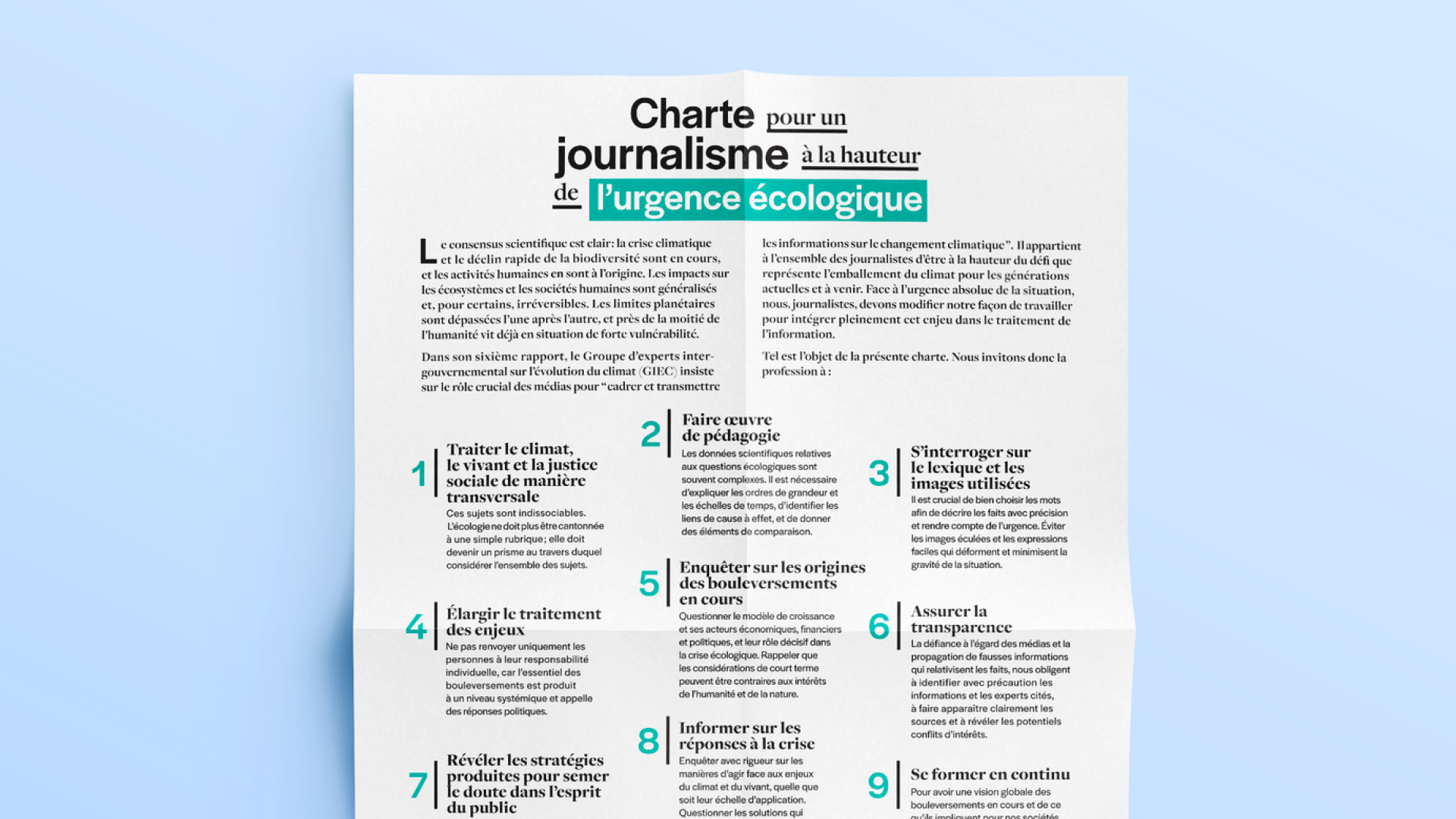
The media outlet dedicated to adventure and nature, Les Others embeds in its value proposition a commitment to encouraging its community to travel differently, in a more responsible way and with respect for the environment. Careful vetting of advertisers, signature and commitment to upholding a Charter for journalism worthy of the ecological crisis, a pre-order system rather than newsstand sales to avoid destroying unsold copies… its choices reflect a clear and coherent vision.
Why is it interesting?
This is a matter of responsibility and a response to the growing necessity and expectations of society in terms of sustainability. This integration reflects an awareness of the impact the media industry has on the environment and can also engage a community of readers who share the same vision, thereby strengthening the media's positive impact. A concrete way to promote environmentally responsible journalism and contribute to raising awareness about the urgency of the ecological crisis. And again, to build trust, transparency is key. Our dream? An annual sustainability report for all media outlets.
To go further
On Médianes:
- The Charter for Journalism Fit for the Ecological Emergency calls on the profession to stop confining climate crisis coverage to Environment sections alone and instead incorporate it into cross-cutting reflection throughout the entire publication.
- Selecting partners, implementing a pre-order system, training and raising awareness in the community… The media outlets Vert, Climax and Les Others explain how to launch and develop your media in the age of ecological urgency.
- Launched in 2007, Reporterre covers ecology and believes that the ecological question is the essential political question of the early 21st century. Its founder, Hervé Kempf, answers questions from Margaux Vuillet in our Chemins podcast.
Seen elsewhere:
- Since the publication of the Charter for journalism equal to the ecological emergency, several media outlets have committed to training their newsrooms on climate issues. Coverage from France Télévisions, where these training sessions enable encounters between journalists and scientists.
- To better understand the issues related to the ecological crisis, the BBC offers courses for journalists.
- Since its launch three years ago, Vert has made ecological urgency its lens for reading the world. Read its impact report.
6. Embrace interaction
The media outlet for media criticism and investigations Arrêt sur images recently launched on the Twitch platform to explore media news and share behind-the-scenes content from the newsroom. A recurring format that gives audiences full voice and allows them to reach new viewers, while sharing their expertise.

Why is it interesting?
Opening the newsroom doors has long been seen as inappropriate by journalists. Readers now respond to this lack of dialogue with distrust. What if we started opening the doors? Giving audiences a voice and allowing them to express their comments and questions strengthens loyalty, engagement and trust towards the media. This feedback is invaluable and also allows you to improve content quality and its relevance to your target audience. Moreover, by keeping your door open, you also encourage people less familiar with the media to enter and take an interest in what's happening there. An essential approach for maintaining an open, constructive and evolving conversation with your audiences.
To go further
On Médianes:
- Readers have a different role in a media outlet depending on the place you choose to give them. Comments, participation in editorial meetings or dedicated platforms, some media outlets believe they also have things to say and added value to contribute.
- At HugoDécrypte, WTFake and Tortoise, audiences are increasingly integrated into the editorial process.
- More often imposed than chosen, interactions between editorial teams and readers arising from the digital transformation of media nonetheless offer unprecedented opportunities to build audience loyalty.
- Faced with the power of platforms, many media outlets have lost control of their audiences. Editorial teams, product teams and editors, what if we took back control?
Seen elsewhere:
- The magazine Bobine invites its readers to vote for the cover of its next issue.
7. Revealing behind-the-scenes insights
In one of its newsletters, the magazine Kometa looked back at the behind-the-scenes of the project: its origins, motivations and challenges, all in photo form. The newsletter channel enables and highlights a highly authentic tone — a shrewd choice for connecting with those who make the media in a launch context.

Why is it interesting?
Demystifying the journalistic process, sharing the motivations that drive the editorial team daily, highlighting the challenges encountered along the way… There are countless ways to tell your behind-the-scenes story. Again, this approach strengthens the bond of trust with the public. By personalizing their communication, media outlets foster this connection and also encourage their readers to become more involved in its development. A smart strategy for humanizing the media and increasing audience loyalty.
To go further
On Médianes:
- Media outlets are entrepreneurial ventures that sometimes struggle to communicate about themselves. Yet this is a matter of public interest and an important marketing tool. Booska‑P, Les Jours and Gimlet reveal their behind-the-scenes, and this approach works.
- To move away from push notifications, build audience loyalty by offering exclusive information, or develop a community by encouraging your readers to respond easily, SMS messages are true engagement drivers.
Seen elsewhere:
- France Télévisions opens its doors to the public for European Heritage Days.
- La Lettre A introduces its team in a thread on X (formerly Twitter).
- BFMTV reveals its behind-the-scenes in a video format designed for social media.
- Have you considered opening a professional Instagram account? A clever idea for showing the behind-the-scenes of journalism.
- Arrêt sur images offers a live Twitch stream to tell the story of the structure's handover to its employees.
- In this podcast, the environmental media outlet Reporterre tells the story behind its investigations.
8. Promoting accessibility
Are you familiar with the FALC method? It's a writing approach designed to make information easy to read and understand, both in its writing and presentation. In 2019, a group of students from ESJ Lille, supported by Médianes, experimented with this approach to information through the blog Falctu. The video-on-demand platform Cortex, launched in April 2023 with the aim of improving the representation of people with disabilities, also uses this method.
Why is it interesting?
There is an urgent need to create truly accessible media. For people with disabilities, the challenge is to guarantee full inclusion in access to information. The key? Offering content tailored to the specific needs of individuals with visual, hearing, motor, or cognitive impairments. The same accessibility challenge applies to understanding: by presenting information clearly and comprehensibly, without jargon or unnecessary complexity. For media covering complex subjects like economics, this is also a way to broaden their audience… and contribute to a more inclusive society.
To go further
On Médianes:
- Website, social media, transcripts: an overview of best practices for accessible media.
- « Our only marketing is the belief that if 1% of our subscribers fund the channel at 1 euro per month, it remains free for the other 99. We think the public misunderstands economic issues because they're poorly informed and these topics are presented very badly. Creating a paid media outlet for economics would make it all even less accessible », describes Valentin Levetti, co-founder of the YouTube channel Stupid Economics on our podcast Chemins.
- Creating and distributing an effective newsletter is an art that requires careful attention to detail, from deliverability to accessibility. A conversation with Christelle Perrin and Baptiste Thevelein.
Seen elsewhere:
- The podcast More Than This (Vox Creative) takes a bet on immersive transcription.
- The magazine Pays offers to buy suspended magazines. How does it work? « You entrust us with 10 copies of Pays — Mayotte so that they can be redistributed locally, in Mayotte, by us (associations, libraries, schools…). You will be informed of how your suspended copies of Pays are used. »
- Create contrasting design, ensure text alternatives are present… Tips for making your site accessible to people with disabilities.
9. Demonstrate inclusivity
The Association of Lesbian, Gay, Bi and Trans Journalists published a charter calling on the media to cover LGBTQIA+ topics accurately and with respect for individuals. Among the signatories are Le Monde, L'Équipe, Libération, Les Inrockuptibles, Slate, Mediapart. The association also created a toolkit for editorial teams. It includes tools and resources to help journalists choose the right words, end the invisibility of lesbians, respect trans individuals, and better address non-binary identity and gender fluidity.

Why is it interesting?
Supported by journalists' associations, newsrooms are only just beginning to grapple with inclusivity challenges: both in terms of representation within their workforce and in how they distribute voices across the articles published in their pages. What's at stake? Reflecting society as it truly is and ensuring balanced coverage of the issues affecting it. Working on inclusivity means enriching your ideas and strengthening your ability to meet the needs of all your audiences, while combating unconscious bias.
To go further
On Médianes:
- Originally a journalist in the political section, Lénaïg Bredoux has been, since 2020, editorial director for gender issues at Mediapart. Or gender editor, depending on who you ask. The investigative media outlet has put concrete policies in place, and even though newsrooms are becoming aware of the changes to come, progress remains slow.
- The imbalance exists both in articles and in newsrooms. A journalist and a sociologist discuss the issues related to inclusivity in the media.
Seen elsewhere:
- Heidi.news has created a tool to track the proportion of men and women cited in articles.
- This site makes it easy to find expert women on the subject of your choice.
- Le Temps explains its choice to use inclusive writing and responds to questions from its readers.
- The Prenons la Une association presents its Anti-racism Charter for journalists.
- In response to the reality of racism and lack of representation in media, over 160 journalists come together to create the Association of Antiracist and Racialized Journalists.
- La prépa La Chance works for greater diversity in the media.
10. Request an Audience
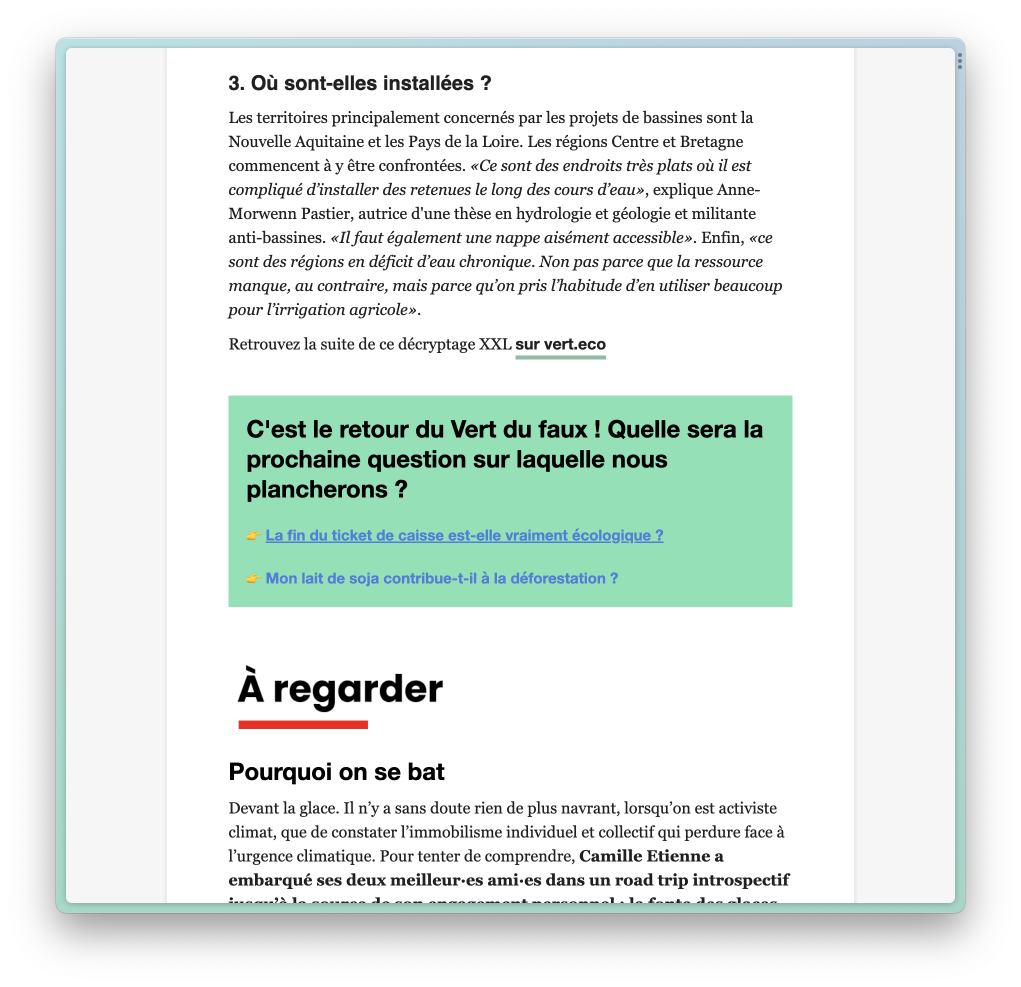
On Instagram stories, with polls, audience surveys, and more. The general ecology media outlet Vert regularly asks its readers to vote or gather their feedback.
Why is it interesting?
This strategy makes it possible to offer information that increasingly resembles its readers and addresses their concerns. By engaging them, the media can also create a new point of contact with readers who then feel fully included in the project.
To go further
On Médianes:
- A practical guide to learn the method, best practices for conducting an audience study and concrete examples to inspire you and create your own.
- More often imposed than chosen, the interactions between editorial teams and readers born from the digital transformation of media nonetheless offer unprecedented opportunities to build audience loyalty: rather than abandoning the field, let's see how to rebuild the connection.
- From market research to audience studies, discover the practical cases of La Revue Écossaise, La Déferlante and The Atlantic.
- Having THE right idea. It seems Les Others found it. Recto Verso is hiking maps, but that's not all. Thomas Firh explains how this idea was born and the importance of community in the project's development.
Seen elsewhere:
- What place for user research in a news organization ? Gina Bulla, Executive Director of User Research at The Atlantic answers questions from The Audiencers.
- How to redesign your newsletter based on your audiences' needs: the example of Documented.


